Author: admin

  • What is Custom Software Development? A Complete Life Cycle Guide

    What is Custom Software Development? A Complete Life Cycle Guide

    What is Custom Software Development_ A Complete Life Cycle Guide-1
    [ez-toc]

    Our day-to-day life is rationally contingent on technology. We can observe that most businesses including the established and the startups rely on custom software development to strengthen their market existence & start operating online.

    With the custom software development, you can enable your business to adopt a better-organized roadmap which helps to make business operations advantageous and resource-efficient.

    In order to develop software with particular features, you need to plan ahead and follow a procedure. Planned and protocolled steps create an SLDC (Software Development Life Cycle).

    Companies in any industry can reap numerous benefits from choosing the right custom software development process. The healthcare industry, online banking, and other business sectors are among them.

    Software bugs may be introduced unintentionally if a software development company UK fails to follow all protocols involved in this process. It is, therefore, necessary to understand the entire process when searching for a reliable software development company UK.

    Let’s first understand what custom software development is, and then we will move forward to the SDLC.

    Custom Software Development – A Brief Overview
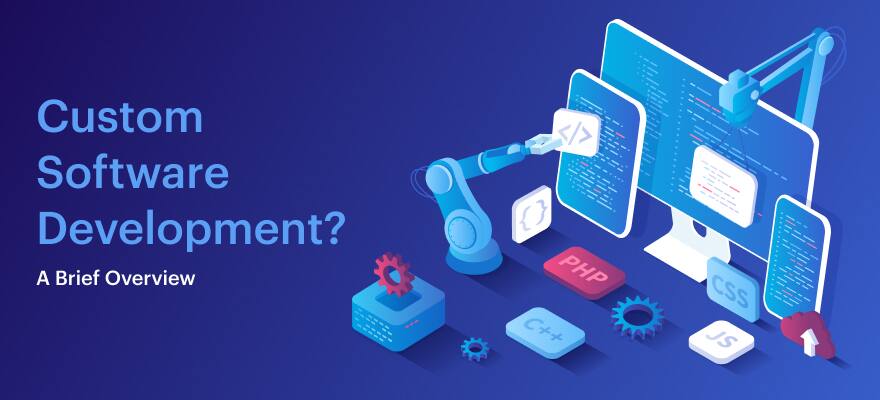
    In custom software development, users, functions, or organizations are designed, created, deployed, and maintained. The development of custom software differs from commercial off-the-shelf software (COTS). A COTS satisfies a wide range of requirements, making it easy to package, market, and distribute.

    However, custom software is developed by the software developers for a particular set of requirements, such as:

    • A manufacturer requires field service equipment for maintenance
    • Banks or customers require a unique functionality in an online booking app

    A study says, there are 26.9 million custom software developers globally who can skyrocket your development part.

    Custom software development is usually conducted by in-house software developers or outsourced to a third party. It is the same process and methodology for developing custom software as it is for developing any other type of software. 

    As with any other software project, a custom project would go through similar steps such as requirements gathering, code development, testing, and deployment, as well as follow similar methodologies.

    What is the Software Development Life Cycle (SDLC)?

    In software development and maintenance, the Software development process refers to a structure that includes all activities, tasks, and processes. The structure covers the whole process from the definition of the requirements to the end of the system’s life cycle. 

    By accomplishing the 7 easy stages, you can swiftly create and deliver a product that serves the needs of the business. Moreover, these stages are properly aligned with your project budget, demands that it has, QA testing, and finally the deployment time. However, these stages might fluctuate subject to the development model preferred by the software development company UK for conducting its operations.

    Types of Custom Software Solutions

    Custom software solutions are included in the solution to help firms overcome certain obstacles, enhance processes, and maintain their competitiveness. These kinds of solutions are frequently categorized as industry-specific software, mobile application software, or enterprise software. Each has special uses and benefits of its own.
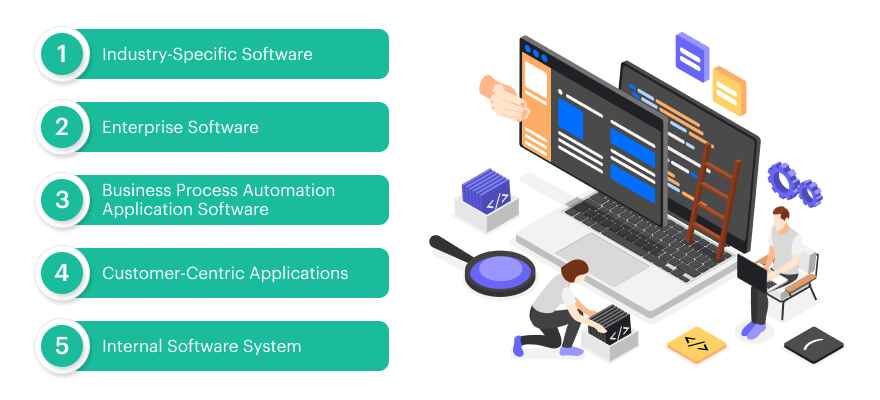
    1. Industry-Specific Software

    Typically designed according to the specifications of individual industries, such as health care, education, finance, manufacturing, or retail, these are specialized software applications that exhibit functionalities and a set of rules according to the industry’s standards and regulations. 

    2. Enterprise Software

    The modular software suite primarily supports the fundamental operations of large organizations and includes ERP (Enterprise Resource Planning), CRM (Customer Relationship Management), SCM (Supply Management Chain), and BI (Business Intelligence) tools, all of which help manage complex business processes.

    3. Business Process Automation Application Software

    Designed to automate routine repetitive tasks, resulting in increased efficiency and little or no manual work. Examples of this application software include workflow management, document management, and project management.

    4. Customer-Centric Applications

    These applications are intended to increase user engagement and experience. This involves online booking systems, self-service systems, web portals, and mobile applications that act as intermediaries between the customer and business.

    5. Internal Software System

    This kind of program is used by an organization to carry out daily operations in the organization. It will be able to do things such as create employee schedules, manage inventory, handle every HR need and promote collaboration across teams.

    Data Management and Analytics Tool

    They make it possible for companies to gather, arrange, and evaluate data in order to make better decisions. Custom reporting applications, data warehouses, and business intelligence tools are all included.

    1. E-commerce and Online Platforms

    Websites that offer goods and services online are referred to as e-commerce. This system will handle all e-commerce solutions, including online stores, payments, orders, inventories, and customer relationship management.

    2. Content Management Systems (CMS)

    A tool used by businesses in creating, managing, and sharing content online. CMS is a common term for anything used to edit and publish online content on website pages, blogs, or shops.

    3. Integration and Middleware Solutions

    Integrate existing systems and software with an organization. This software helps to share data from one system to another, automate workflows, and improve the integration of tools with each other.

    4. Compliance and Regulatory Solutions

    Custom tools that automate the process of following different industry rules and laws. These are the applications around compliance management, audit trails, or report generation for regulators.  

    Technological evolution has brought into existence many forms of software. AI-powered solutions, for instance, use artificial intelligence to automate functions, prediction, and decision making. It will be entirely through chatbots, virtual assistants, and recommendations systems.  

    5. Blockchain Based Solutions

    Secure and transparent mechanisms in the management of data and transactions are offered through this technology. It works efficiently in finance, but its use can be extended to other industries.

    Custom Software Development Life Cycle Stages
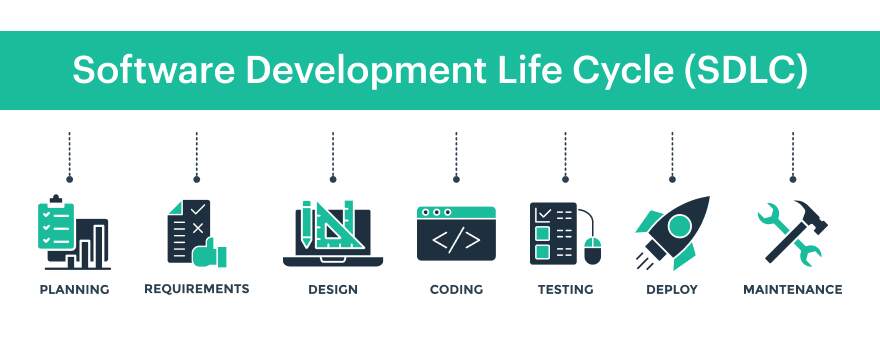
    1. Determining the idea & planning through it

    Every project requires solid planning and ideation. For that, brainstorming effectively will make you implement that project. 

    So, the first stage of each project is strategic planning. In this stage, you have to primarily focus on the methodologies to adapt, determine resource availability, and ascertain the possible challenges associated with the project. Moreover, you are required to determine the scope of the project, and the cost it will incur.

    Besides that, the planning phase helps us to determine the potential obstacles and the right measures to eliminate those barriers.

    It is necessary for the custom software development company UK to learn about the customer’s problems and expectations during this stage. In order to optimize workflow operations, developers must understand customer expectations and problems.

    2. Defining & Analyzing the Requirements

    In this stage, you can determine the feasibility of the project and the requirements associated with it. 

    Requirement defining basically involves what the application software will do and how to move forward with the requirements. Let’s take an example: a social media app should have the basic requirement of connecting with a friend. Whereas a project on stocks might need a search feature to enable easy searching of inventory.

    These requirements also include the resources specifically needed for developing this project efficiently. Take an example: to develop software for controlling a custom manufacturing machine, you will require a machine.

    3. Designing & Modeling

    This phase of the SDLC models the way an application software will work. Some facets of the design phase comprise:

    • Architecture – An architecture identifies how the application should be developed, what programming languages should be used, industry practices, and how any templates or boilerplates should be used.
    • User Interface – The user interface of the software describes how users interact with it, as well as how it responds to what they enter.
    • Platform – A platform defines what type of software runs on what type of computers.
    • Programming – The process of creating application software that solves problems and performs tasks is referred to as programming.
    • Security Measures – Defining the security measures for the application software, which include encrypting SSL traffic and securing passwords is one example of security measures.

    As part of the Design phase, prototyping can be conducted. An iterative software development model uses prototypes to create early versions of software. 

    It is possible to show stakeholders this “hands-on” design. Make improvements to the application based on feedback. It is cheaper to alter the prototype phase rather than make changes to the codes in the developmental phase.

    4. Software Development

    With this phase, your actual program code starts. A single person can handle a small project but you require a team of experts to accomplish a complex project. 

    This stage basically involves working with access control or SCM applications. Using these software systems, the developer would be able to track the code modifications easily. It will also help easily ensure congruity between the different team projects and to guarantee that the intended objective is achieved.

    Many more functions like polishing the skills and working as a team, error finding, waiting for the test results, compiling the code to let the application software run etc is involved in this developmental phase of the custom software development life cycle. With the help of SDLC, these delays are easily estimative, so the developers can be enrolled with other duties.

    5. Bug Finding

    It is crucial to try & test an application thoroughly before launching it in front of users. Testing like security testing is automated in nature. If the deployment involves complexities, consider testing it in a particular setting. 

    The main reason for testing an application is to guarantee that each & every functionality involved in it is true to its operations.

    Moreover, this phase of the SDLC should also ensure that each part of the application software is working flawlessly together. Consider doing the performance test in order to remove errors that users face. Doing this will significantly help with increased and better usage rates as well as user satisfaction.

    6. Deployment

    The deployment phase includes making the application available to the general public. A lot of companies are automating the deployment phase. It can be easier this way just like a payment portal. This can also be installing an app on a smartphone. 

    Don’t get bewildered by the complexity of this stage. One such example can be to update the database of a whole company’s newly-designed application. This can take a long time as integrating the new upgrade is time-consuming.

    7. Operations and Maintenance

    Here, we arrive at the last stage of our custom software development life cycle. You have completed the application and now the users are using it too. 

    Still, it is crucial to take care of the operation & maintenance part. Here, the users are in charge of finding the errors and glitches. As they find it, you can resolve it which invites a new software development cycle.

    Furthermore, you can have a software development process for the new release that you offer. It will go on in each of the future releases.

    Bottom Line

    Custom software development & software development life cycle gives you a clearer picture of what is happening with your software development process as well as where it can be improved. 

    Similarly to many business processes, SDLC analyzes and improves the software development process. Managing production dates and day-to-day coding are streamlined by it.

    A custom software development company UK can skyrocket your SDLC in no time. With this, they can also be your development partner. So what are you waiting for? Grab the service at affordable prices now.

    Build Your Vision Fast

    Hire Custom Software Developers Now!


    Hire Custom Software Developers

    Found this post insightful? Don’t forget to share it with your network!



    Related Articles

  • Web App Development: Advancing Programming languages 2025

    Web App Development: Advancing Programming languages 2025

    Best Programming Languages for Web App Development 2025

    Best Programming Languages for Web App Development 2025
    [ez-toc heading_levels=”2,3″]

    Do you ever get bewildered by tons of emerging programming languages and which one to choose? Whether to opt for Python Web App Development, Angular, or Ruby on Rails? And the lengthy list continues! 

    In both industry and research, programming languages are also evolving along with systems and applications. We have a great selection of programming languages for Web Application today, all with different syntaxes and features.

    Along with that, there comes a wide variety of reports that the software developers are carrying out. It lets them know whether their particular niche language is currently in demand. Moreover, the developers would find out if there is a requirement to improve their skills.

    Businesses, on the other hand, are not in the loop and are unfamiliar with the web application development languages, which are widely used to create web pages and web applications.

    Our custom web development company experts draw a clear thought on which programming language works the best today.

    Let’s get right in and unfold all of the programming languages for web application in this comprehensive guide!

    Top Programming Languages To Develop A Robust Web Application In 2025

    1. Java-script

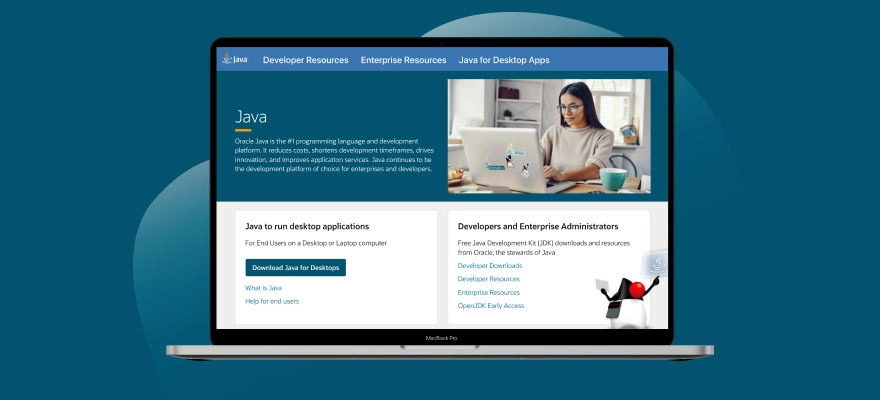
    Javascript serves as one of the greatest programming languages for web application with high demand and a substantial following base. Many IT companies like Google, Uber, and Microsoft utilise the JavaScript programming language. 

    If we head on to talk about the uses of this language, it serves the purpose of giving a responsive touch to the web pages along with many other uses.

    Moreover, it is useful for front-end development as well as backend development. It is prevalent among developers because of its compatibility with other widespread frameworks namely Vue, Node, and React.

    With so many sites relying heavily on JavaScript in 2025, it seems reasonable to imagine that JavaScript will continue to dominate the web.

    Java mscript

    2. Python

    Python has always been in the industry and serves a great purpose for web app development. 

    You can easily develop web applications using their simple and optimised environment. In addition, it offers easy database connections and basic scripts. As a result, Python web development is very good at creating neural networks, which are a very trendy concept currently.

    Many developers use python web development because of its extensive library and compatibility with widely used operating systems. Following Python’s discontinuation in 2020, web developers have started using Python 3.

    Python

    3. Java

    Java, because of its high scalability, undoubtedly fits into the list. On the other hand, full stack engineers may make all the tasks easier by eliminating the monotonous codes and optimising the website performance. 

    Because of its cross platform features, it helps in providing custom web development to enterprises. Further, if you are seeking Java-specialising web developers, you will discover that there are many of them since businesses like Java because of its comprehensive security features. This language is incorporated in several other frameworks like Spring and Hibernate.

    java

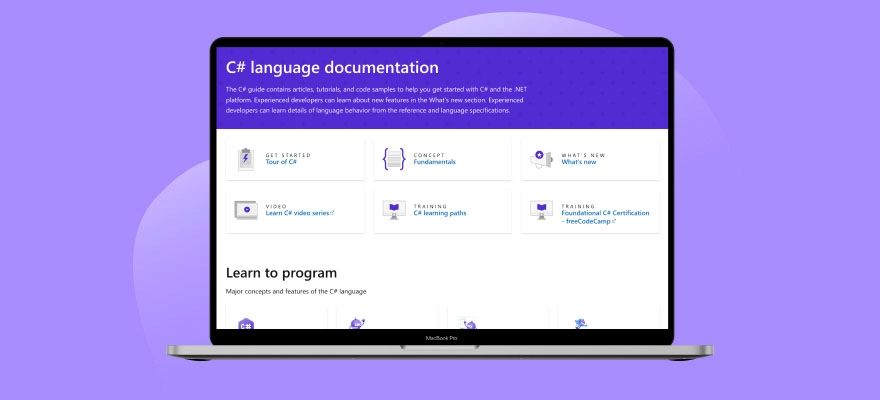
    4. C#

    C# is more secure than C and C++ and is more widely used for developing web apps. Do you know? C# is said to be the fourth most frequently searched language for educational purposes. 

    C# is one of the programming languages for web application development as well as it has extensive involvement in server application development.

    C

    5. .Net

    In today’s technological era, the rise of Microsoft made the .Net programming language extensively used to create feature-rich web applications. 

    It provides cross platform support, hassle-free web app development, multi-language and multi-device support, ease in deployment and provides the highest level of security.

    .Net

    6. Laravel

    Aside from providing an astonishing developer experience, Laravel web development provides an incredibly fast and secure platform, expressive and cultivated syntax, powerful features, and maximum safety. 

    Laravel web development serves as one of the best programming languages for web application development with features like progressive, scalable, and communitive in nature.

    Laravel

    7. Ruby

    Web applications can also be written in Ruby. Ruby on Rails development can be easily configured as it is somehow based on the Python and PHP languages. 

    Major enterprises like Shopify, Kickstarter, and Airbnb are utilizing the Ruby on Rails framework for their developmental needs. This makes Ruby on Rails development different from other top languages for web applications.

    Ruby

    8. VueJS

    A frontend web programming language that allows you to create structured and engaging web applications, VueJS is one of the most popular. Easily learnable and simple to use, VueJS is a great choice. 

    A range of web elements can be developed using this framework, and it is very flexible. Furthermore, it provides fast and dependable solutions for SMBs due to its affordability, reliability, and popularity among developers.

    VueJS

    9. Angular

    Angular web development is an established framework that is used to develop first-class web applications. It is because angular web development is a cross-functional language that also helps with creating dynamic web apps. 

    Moreover, the developers do not require to depend on third party software to develop a fully-functional web app. Angular web development, thus, will help save their time & resources.

    Angular

    10. Flask

    A small and lightweight python framework that is extensively useful to develop web apps with python. It is flexible to the developers as it helps to develop apps within a single file itself. 

    The Flask framework provides us with 2 major advantages including its built-in server and the fast debugger.

    Flask

    To Sum Up: Programming Languages for Web Application

    Your final decision regarding choosing the right one among the programming languages for web application will clearly have an impact on the business goals you are pursuing as well as the web app requirements. 

    Based on the many criteria you should consider when choosing a language, it’s perfectly fine to take your time analyzing each one. This article aims to help you learn more about the right web app programming language for your project after reading this article.

    Found this post insightful? Don’t forget to share it with your network!



    Related Articles

  • Metaverse Game Development: The Road To Riches

    Metaverse Game Development: The Road To Riches

    Metaverse Game Development: The Road To Riches

    Metaverse Game Development: The Road To Riches
    [ez-toc heading_levels=”2,3″]

    Do you still have doubts about starting to develop a VR game? In this article, I’ll demystify the metaverse game development technology, describe custom development tools, and explain why your game could make them millionaires.

    Metaverse is an upcoming 3D online universe that allows users to create, develop, and trade virtual goods and services. Metaverse has already raised over $52 million in an initial coin offering (ICO). This puts Metaverse well on its way to become an international gaming and entertainment platform. This blog post will introduce you to the Metaverse game development ecosystem and provide a roadmap for the same.

    What is Metaverse?

    What actually this metaverse is, is a big digital world where people can meet and socialise and then further it with work and shopping – just everything that is done in real life is done through the internet here, like mobile technology, virtual realities (VR), augmented reality (AR), and smart devices connecting everything.

    This concept was conceived way back in the early nineties and was first referred to in the literature by Neal Stephenson in his science fiction book titled Snow Crash. The fame soared when Facebook changed its name to Meta in early 2021 and heavily invested in making this type of world.

    In the metaverse, users rely on avatars, i.e., digital versions of themselves, to move and interact with objects. These avatars can visit virtual stores, attend concerts, visit workplaces, or even own a home or a farm in a completely virtual setting.

    This is a complete blend of virtual and reality; all your socialising, business, and explorations take a very digital form, leaving your device-to-device connection. It’s just getting bigger in terms of space for shopping, entertainment, education, and so much more, with many big companies already carving out their own parts of this digital universe.

    What is Metaverse?

    How Is Metaverse Gaming Redefining the Future of the Game Industry?

    Metaverse gaming is emerging rapidly as a disruptor in the digital entertainment arena. Unlike traditional games that allow for standalone experiences, metaverse games are hosted in always-on, evolving virtual worlds. Such metaverse worlds provide players the scope to immerse themselves in real-life environments to an unmatched degree of realism and personalization while interacting with one another.

    While using these technologies such as virtual reality (VR) and augmented reality (AR), players become part of the digitized 3D worlds that blur physical and digital realms. Users owe it upon themselves to customize their very own avatars, modify their surroundings, and own unique in-game items—often tokenized as NFTs (non-fungible tokens)—that can have real-world tradable or sellable value.

    Most of these games utilize some form of a play-to-earn system, where players can earn rewards by completing missions, fighting battles, and leveling up. This creates a whole new condition for the economy that allows the users to earn monetary value for their hard work and skill.

    Furthermore, the social component is another major highlight. Real-time global interactivity is fostered in metaverse games so players can form teams, communities, or just hang out, thereby making the whole experience feel more like a digital society than a run-of-the-mill game.

    So metaverse gaming is not just another genre; it is, if you will, a whole new way to play, socialize, and even earn. It is changing the attitudes of people toward games and their ability to provide anything beyond entertainment.

    Ready to Launch Your Metaverse Game?

    Step into the future with expert developers by your side.


    Book a Appointment

    History of Metaverse Game Development

    Metaverse, as it is more commonly known, is a decentralized virtual world created in 2009. The Metaverse is based on blockchain technology, and it features a user-generated economy and user-created games. Metaverse has been downloaded over 225 million times since its inception, and it has also received investments from some of the biggest names in the tech industry.

    The history of Metaverse game development begins with creating the OpenST Metashare in October of 2009. This project was spearheaded by Jack Lu and aimed to create a digital asset platform that could be used to build games online. The OpenST Metashare launched on February 16th, 2010, and it featured the first-ever virtual world named Datacenter 1. Datacenter 1 featured a user-generated economy where users could buy and sell goods and services using digital currency.

    Since its inception, Metaverse and NFT game development has seen several prominent updates. On October 17th, 2017, Metaverse unveiled its new blockchain upgrade dubbed Arkittai Version 2. Arditti Version 2 offers enhanced security and scalability for the metaverse network. In addition to these upgrades, Metaverse also released an updated version of Arkitekt’s Mux.

    The new mux dubbed Mux v3.0 offers the network a much-needed upgrade to enhance its security and scalability. In October 2017, Metaverse became the first blockchain-based virtual world to overthrow its association with UNESCO when it enlisted the support of UN expert Shannon Williams on its behalf in advocacy for digital currency to lift children out of poverty around the world.

    3 Ways Metaverse Gaming is Expected to Grow in 2025

    As the world becomes more and more connected, the demand for gaming experiences that take advantage of this connectivity will only increase. Metaverse Gaming is a perfect example of this demand-driven market growth. And due to that, the metaverse game development company has seen immense growth too.

    Metaverse gaming already saw significant growth in 2018, with global sales surpassing $1 billion. This trend looks set to continue in 2019, with some analysts predicting that the Metaverse gaming market will grow by over 50%.

    Why are so many people interested in Metaverse gaming? There are several reasons.

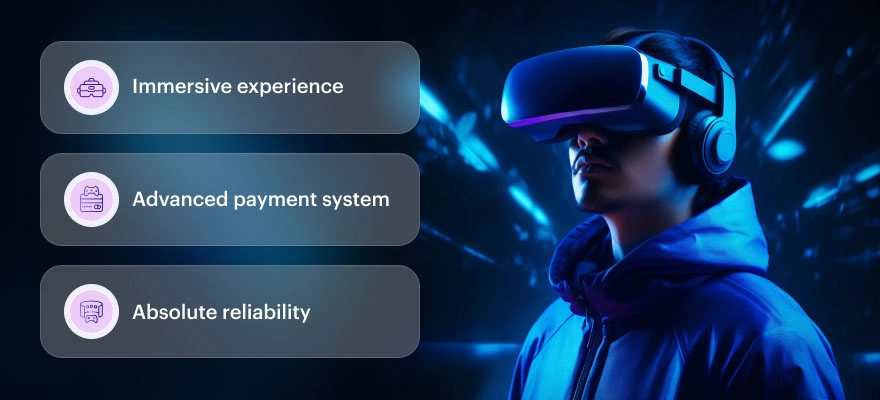
    1. Immersive experience

    First and foremost, Metaverse offers an engaging and immersive experience that is not found in any other game on the market. This makes it a popular choice for gamers who want to spend hours immersed in a game world.

    2. Advanced payment system

    Second, Metaverse offers an innovative payment system that allows gamers to purchase in-game items using real-world currency. This removes the need for gamers to spend hours grinding for gold or diamonds, which can be time-consuming and frustrating.

    3. Absolute reliability

    Last but not least, Metaverse provides users with complete transparency when it comes to their gaming transactions. This allows gamers to have total trust in the system and makes them more likely to return to the game repeatedly.

    Striking Possibilities Awaiting in the Metaverse Game Development

    Let us now conceive the features and traits that Metaverse has in store for the metaverse game development company:

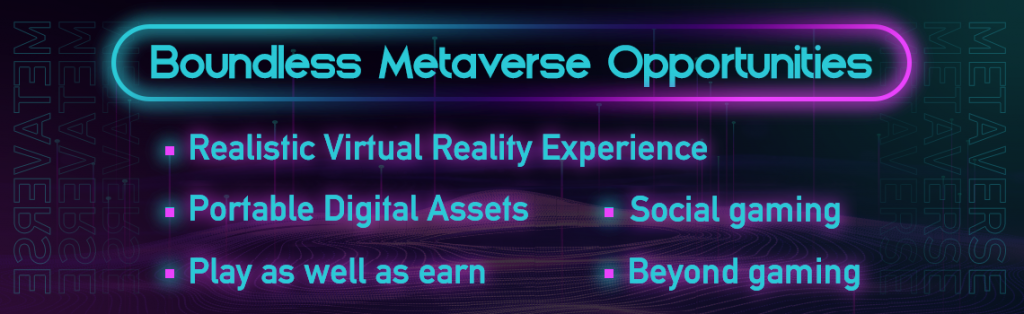
    1. Beyond just gaming

    For a developer or Games development companies UK, this is a crucial feature for creating and integrating content. Through the Metaverse, gamers will be able to create their material and use the gaming platform to do other activities.

    2. Social gaming

    Essentially, playing a game in a metaverse is a social experience. Thanks to the advent of multiplayer games, the Metaverse has offered players the opportunity to invite their connections and expand their social circles.

    3. Earn while you play

    Playing and earning along is part and parcel of metaverse game development. Assets and experiences are just the beginning. In addition, you can trade them to others with a cryptocurrency that is accepted on the platform.

    4. Realistic Virtual Reality Experience

    Interoperability is built into the Metaverse. Through this, digital assets can be accessed on different platforms. One can transfer assets collected in one game to another game, such as powers, accessories, and weapons.

    Transform Your Idea into a Metaverse Reality

    Partner with industry-leading developers who understand the future of gaming.


    Contact Us

    Metaverse Game Development Opportunities that Chimpare has to Offer!

    We offer a broad range of Metaverse game development & NFT game development services for a range of industry niches at Chimpare. In order to build futuristic projects, our developers understand the Metaverse and the supporting technologies such as blockchain, network functions, tokens, cryptos, virtual and augmented reality tools, 3-D technology, and more.

    So, were you finding the Games development companies UK? Or a way to hire game developer UK? Do not worry. Hit the below button.

    To Sum Up!

    In this concluding article in our series on metaverse game development, we discussed some tips and tricks that have helped us achieve success. We hope this information was helpful to you as you pursue your metaverse game development aspirations.

    Please feel free to share any comments or questions you may have, and stay tuned for more future articles!

    Fill out our contact form if you’d like to discuss a web-spanning metaverse game development or any metaverse development in more detail! Get Started

    Found this post insightful? Don’t forget to share it with your network!


    Related Articles

  • Top E-commerce Mistakes to Avoid in 2025

    Top E-commerce Mistakes to Avoid in 2025

    Common E-commerce Mistakes to Avoid in 2025

    Top E-commerce Mistakes to Avoid in 2025
    [ez-toc heading_levels=”2,3″]

    E-commerce has taken the world by storm, becoming a cornerstone of modern business across industries. Whether it’s B2C (Business to Consumer), B2B (Business to Business), or C2B (Consumer to Business), online commerce continues to grow at an unprecedented pace. However, as more people shop online and more businesses rush to claim their piece of the digital marketplace, common e-commerce mistakes are becoming increasingly apparent—mistakes that can hinder growth, reduce customer satisfaction, and impact long-term success.

    However, despite this booming opportunity, many business owners fall into the same traps when launching or managing their eCommerce platforms. From poor user experience to weak backend functionality, these E-commerce mistakes can cost businesses conversions, customers, and credibility.

    Whether you’re running a small boutique or a global supply chain operation, avoiding these mistakes is critical — and that’s where expert eCommerce development services come in.

    What is E-commerce?

    E-commerce is all about the buying and selling of products, services, or money and data transfer over the digital medium, mainly the internet. Usually, the transactions are divided into four categories for simplification, which are: business-to-business (B2B), some firms that sell to consumers (B2C), individuals selling to each other (C2C), and individuals selling to businesses (C2B).

    However, while there is an overlap of meaning with e-business, sometimes the term e-tail is used to talk about retail transactions conducted via the internet.

    The last two decades have been largely dominated by the role of Amazon and eBay as major players in the expansion of online retail. The U.S. Census Bureau said that e-commerce accounted for only 5% of total retail sales in 2011. However, as of the second quarter of 2020, spurred partly by the COVID-19 pandemic, this figure grew to 16.5%. As brick-and-mortar shops reopened, that share of e-commerce has slightly ebbed but remains at around 15%.

    What is E-commerce?​

    Types of E-commerce

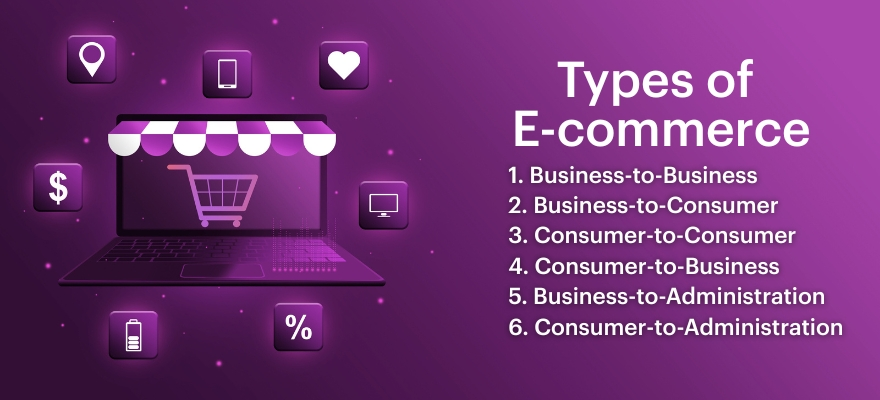
    The six major types of e-commerce; this model evolved into types depending upon the parties involved in the transaction: Basically, the six types look like this:

    1. Business-to-Business

    B2B (business-to-business) E-commerce is a subset of e-commerce in which, with both parties’ consent, transactions are carried out electronically. This involves anything from manufacturers and wholesalers to suppliers selling- mainly goods and services-to another business or entity rather than to the ultimate consumer. This type of marketing makes the backbone of many industries’ supply and distribution chains.

    2. Business-to-Consumer

    This is the most common type of e-commerce. The B-C model describes the situation when businesses sell goods or services directly to individual consumers by means of an online transaction. Think online retail, digital services, or subscription models. The Internet has brought great impetus to this sector whereby the consumer is given a lot of choices-right from electronics, clothing, books, and food-at prices and the convenience of shopping that is lower than brick-and-mortar retail.

    3. Consumer-to-Consumer

    C2C e-commerce is a type of commerce whereby individuals sell goods or services to one another, typically through the intermediary of a third-party platform such as eBay or Facebook Marketplace. These platforms provide the basic infrastructure and the operative means for their users to list their items, complete transactions, and communicate with potential buyers or sellers.

    Types of E-commerce​

    4. Consumer-to-Business

    The B2C model is the completely opposite direction of the classical model. In this case, products or services are offered to companies by individuals. This occurs in freelance marketplaces, crowdsourced design contests, and stock photo sites, where a company procures creative work from individual contributors.

    5. Business-to-Administration

    Future B2A e-commerce will encompass all digital transactions in which firms interact with governmental administrations. This would include filing tax documents, compliance paperwork, and personnel record management, etc. The government will further its agenda of e-governance by providing an online avenue to effect these transactions.

    6. Consumer-to-Administration

    The C2A system involves online interaction between individuals and public authorities. Examples of encounters within the C2A framework include tax filing, medical appointment booking, government benefit application, and educational resources access. This model seeks to empower citizens in their reach to government services through digital services.

    Common 4 Mistakes to Avoid while Creating an E-commerce App

    Creating an e-commerce app can be an exciting venture, but it’s easy to overlook critical details in the process. To ensure a smooth launch and long-term success, here are some common mistakes you’ll want to avoid.

    Common 4 Mistakes to Avoid while Creating an E-commerce App​

    1. Mistake – Take a good look at what you need

    Before you even go online you need to take a good look at what exactly you’re selling. Different products will require certain packaging, shipping regulations, and age-restricted product verifications. Start by breaking your products down into “stores”. For example, if you sell clothing break it down into going outwear (men/women/unisex), casual wear (men/women/unisex), etc. What you’ll start to see is how many main pages you’ll need for your e-commerce site and how flexible the showcasing of your products needs to be.

    When choosing a platform to showcase your products really think about your needs:

    • Do you need to personalise your page?
    • How many products will the site hold?
    • Who’s your target audience?
    • What is your brand?

    I know this seems like very simple information, but these really are the foundation of your e-commerce.

    2. Mistake – Speak with your clients

    I’m guessing, and forgive me if I’m wrong: if you’re looking to set up an e-commerce for the first time, then you already have a client base backing you and the products you sell. Correct? Yes, ahh good. What works for your brain doesn’t work for others, and that’s a fact. A big e-commerce mistake that new business owners make is forgetting who got them where they are today, hold on to those customers tightly.

    Speak with your current clients about what platforms they use, what sort of layouts attracts them, and most of all – What makes them buy more. Ignoring the ideas of tried and trusted return clients will lead you into even more common e-commerce mistakes, these are the people who if you do this right – will continue to buy from you.

    Look up other stores that sell similar products as you, obviously you don’t want to look exactly the same as them, but it will give you inspiration (don’t worry, there’s literally no such thing as original anymore).

    3. Mistake: Pricing and delivery

    Never compromise on your prices, if someone else is doing the same product cheaper – let them. You don’t know how much delivery they pay, or how much it costs them to host their site, or even how much time they put into their store and products. Just leave them to do their store, and you do yours. On the flip side, don’t price yourself out of the market. Every buyer understands that occasionally there will be a price increase due to supply costs, shipping charges, … but again, reasonable price increases are okay, don’t just throw your prices up because you fancy a new pair of shoes or eating at Salt Bae’s restaurant.

    Delivery charges and delivery times need to be specified and correct, none of this we’ll calculate your delivery charge at the end, it puts people off. There needs to be a balance between your pricing and your delivery charges, if you were to put every item up by £1 and then put a standard delivery charge of £6 then people will not buy from you. Would you pay delivery on a £1 item, no? I didn’t think so.

    Chose a courier wisely, these people are your final frontier before reaching the customer, and if their parcel is lost, battered, or miss-delivered – you’ll be the one replacing it. Not all courier services have a good reputation, which can have a knock-on effect on your business if you don’t put the time into choosing. People will be put off from buying from you if you use a poorly rated delivery service.

    Need Help Avoiding Common E-commerce Mistakes?

    Talk to our team and launch your platform the right way.


    Book a Appointment

    4. Mistake: Checking your website for updates and errors

    Regularly run checks on your website for bugs, pricing errors, and everything else that can pop up from time to time. If a client reports an error to you, make sure that you have it checked and corrected straight away. Errors on your page cause your site to play up, which creates a poor user experience resulting in client loss, customers not returning, and sometimes not even completing their transaction. The user experience should always be one of your main focuses, as I’ve said before – your clients pay your bills. The better you treat them, the more loyal they will be to you.

    If you wish to, run your website through the seasons. Create packages for the different festivities as they come up, if you decide to do extra for new clients, do something for your loyal clients as well.

    By hiring the right web and e-commerce developer, you’ll be able to avoid common e-commerce mistakes.

    Found this post insightful? Don’t forget to share it with your network!


    Related Articles

  • Top 5 Smart Tech Trends to Watch in 2025

    Top 5 Smart Tech Trends to Watch in 2025

    5 Emerging Smart Tech Trends Shaping Our Future

    5 Emerging Smart Tech Trends Shaping Our Future
    [ez-toc heading_levels=”2,3″]

    When considering the intersection of commerce and technology, it’s easy to focus on the importance of the latter. After all, digital technologies—especially Smart Applications for Android – have changed the way we shop forever. Think of it this way: Smart Tech Trends have brought a level of convenience, accessibility, and affordability to online shopping that was previously unimaginable. That, along with the rise of mobile devices and social media, has made online shopping a preferred method for millions of consumers.

    But what about the other side of that coin? What about ecommerce startups? How are they integrating digital technologies into business models designed to grow, scale and ultimately succeed?In keeping with Shopify’s commitment to helping entrepreneurs better understand the world of commerce and business, here are five emerging tech trends that will radically change the way we live.There must be industrial changes from the grassroots level to a massive changes of these technologies in our lives. The products and softwares that will be adopted in the next decade will cater more to trust, reliability, transparency, and flexibility.

    Let’s get right into the technological trends!

    Top 5 Tech Trends That Will Turn Around The Future Tables

    Take a sneak peek to the 5 major tech trends that drives back to the fourth industrial revolution. These are the trends that will change the way of doing business and will drastically change our lives.

    Top 5 Tech Trends That Will Turn Around The Future Tables​

    1. Decentralized Blockchain Networks

    Blockchain is developing a brilliant outlook in the enterprise. This one simple threat is leading all the businesse to shift to the Blockchain technologies.

    Decentralization of networks has always been there. Blockchain development company UK has always been using the decentralized networks in order to make applications. Decentralization is there i all the blockchain aspects and are majorly used by the blockchain development company UK.

    2. Gene-editing and Synthetic Biology

    Gene editing comes with a considerable benefits especially when there is a detection of poor genes in an organism which can endanger a life. All of these endangered genes can be altered using the Gene-editing technique. Due to this, the Gene-editing and synthetic biology helps to deliver some radical jumps in order to fight these diseases.

    Gene-editing is mainly utilized to make tiny amendments to the DNA. on the other hand, the synthetic biology stitches together the lkengthy DNA strands and fits it into the organism. By doing this, the organism completely changes its abilities to newer ones.

    You might be wondering how is it beneficial or relevant to businesses? We have got your back. Our thought is that Gene-editing and synthetic biology has the ability to completely change a product or platform. Truly these technologies can be spinning in the coming times.

    3. Artificial intelligence (AI)

    The vast amount of data generated by smart speakers is an important source of artificial intelligence. The technology has improved significantly over the past few years, particularly when it comes to “conversational AI”. In 2020 alone, smart speakers answered 100 billion voice commands, a 75 percent increase over last year.It’s clear that consumers will begin to expect AI capabilities in a wide array of products and services as our interactions with machines become increasingly intelligent.

    Were you finding artificial intelligence solutions UK? AI servcies from chimpare helps you drive smart solutions of your business. You will gain huge with data-first strategy, execute third party augmentation, and scale and operationalize the artificial intelligence solutions UK.

    Ready to Future-Proof Your Business?

    Embrace next-gen tech—from blockchain to IoT and AI.


    Book a Appointment

    4. Connected and Smart Everything

    You must be familiar wih the internet of things from the smart devices and TVs you can see around. The IoT Development UK devices are the ones which has the escalating number of intelligent and connected devices that enables gathering and transmitting information.

    In the coming times, anything you connect will be smart. It could be anything from a smart device to building a smart product. That is obviously a paramount factor of any business. At the same time, the workspace in which we work also holds a special place.

    As more and more environments around us become smart, connected, and capable of monitoring what’s happening, we will have the ability to act accordingly.

    5. Renewable Energy Solutions

    A fusion reaction produces less energy than it consumes, and this poses a dilemma for nuclear fusion as a clean and potentially unlimited source of future energy. By 2035, we may once again be able to produce net energy from a nuclear fusion reactor, thanks to advances in magnet technology.

    It’s also worth noting that green hydrogen is another zero-carbon energy solution (which differs from traditionally produced “grey hydrogen”). A process of electrolysis is used to create green hydrogen, in which water is split into hydrogen and water without any byproducts.

    This process was historically so energy-intensive that it was almost impossible to make green hydrogen. This may all change with the use of renewable energy solutions.

    Let’s take an instance – the excess of renewable energy solutions electricity that is available in the grid can be utilized to drive the elctrolysis of water too.

    Importance of IoT Development UK in Today’s Era

    The IoT Development UK is changing almost everything around us. From controlling home appliances to using our mobile phones and tracking the fitness rates accurately, truly, the IoT Development UK industry has shown an immense growth during the past decade. It continues to evolve over the decades. Thanks to the continuous growth of the IoT development UK that it has been considered as the fourth industrial revolution.

    There are still organizations that lacks in development, management and deployment of the IoT Development UK solutions in cyber security and data analytics. It also involves problem solving and communication techniques.

    IoT has created a lot of hopes in IT companies. After all it has lots of capabilities than just collecting the information with different types of sensors. Its importance extends and ranges from small improvements to major technological changes including new business models. Several cloud based applications are also in use to maintain and store the cloud computing capacity and implement the cloud applications quickly.

    Importance of IoT Development UK in Today’s Era

    Wrapping It Up!

    Central point of the above-mentioned trends is that we are about to enter into a completely new era of rapid evolution in which several technologies combine to give out a huge major shift to the technology. For the businesses it will completely be an era of evolution and increments.

    Chimpare has a range of current technological trends services which can be considered the most qualitative amongst all the other organizations in the UK.

    Found this post insightful? Don’t forget to share it with your network!


    Related Articles

  • 5 Vital Pointers for Best Mobile Responsive Website Design UK​

    5 Vital Pointers for Best Mobile Responsive Website Design UK​

    5 Vital Pointers for Best Mobile Responsive Website Design UK

    5 Vital Pointers for Best Mobile Responsive Website Design UK​
    [ez-toc heading_levels=”2,3″]

    Do your website visitors instantly understand what your app website design company offers? Is your site navigation intuitive? Is your layout easy to grasp at a glance? And importantly, does it feature a Mobile Responsive Website Design that ensures a seamless experience across all devices, while also being SEO-friendly?

    Are you answering a big NO to these questions? It’s now time to take a tough view of your website design and optimization. For that, it is recommended to contact the best mobile responsive website design company in the UK. To stand out on your website, it should have a solid design that harmonizes with the user experience, and functionality, along with complementing your content.

    Even the best website builder can overlook these things and think they are at the bottom of their totem pole when it comes to website priorities. You should ensure your website design goes above and beyond by providing both high-quality content and an exceptional user experience.

    Spending time writing amazing content and having it unnoticed because of a design flaw, navigation issue, confusing layout, or missed conversion opportunity is the last thing you want. User experience encompasses many different factors, and figuring out which is the most important can be challenging.

    Getting started with App website design in UK is so easy if you know what you need to know. For that reason, let us walk you through the 5 essential tips to make sure that you are heading right into the website design game. Along with that, it will help you retain more and more customers.

    Let’s dive right into the tips for App website design in UK!

    Best Mobile Responsive Website Design Tips For Setting Up A Powerful Website

    Best Mobile Responsive Website Design

    1. Clutter-Free Homepage

    The homepage should clearly reflect your products or services in the first look itself. This should be considered one of the most important eCommerce website design tips. Users are more prone to just scanning the whole page instead of reading it word to word, right? So it’s better that we stick to these emotions rather than word count.

    Moreover, opting for a modern app website design in UK will enchant more users towards your site which will result in dragging more users towards buying your product or service.These are some of the simplest eCommerce website design tips that will help you make up a wonderful and alluring homepage design.

    • Without scrolling or clicking, visitors should be able to understand the purpose of your website immediately.
    • Keep elements separated by whitespace. Your design will appear more spacious and well-balanced if you leave some areas blank. Try writing short, legible paragraphs for your text.
    • You can communicate your point more effectively by using attractive photos, vector art, and icons.
    • On your site’s homepage, place a call-to-action (CTA) button to encourage visitors to take the action you intend.

    2. Design With Visual Hierarchy In Mind

    A clear and effective display of your content depends on hierarchy. Your site visitors can be directed to the most important page elements through hierarchy.The essential elements in the visual hierarchy are:

    • Size & weight: You can increase the visibility of your business’s top assets by making them larger and more prominent. Large and bold titles tend to catch the eye of readers first, and then smaller paragraphs follow.
    • Element positioning: Your website layout should provide visitors with a clear view of your website. Place your logo at the header and a call-to-action button at the centre of your page.

    3. Create Easy-To-Read Website Content

    An easy readability score is a must for making it recognizable in terms of words, phrases, and sentences. A high readability score makes it easy for people to readily skim read the content.Increasing site readability is fairly simple. Back that up with the below easy principles.

    • Make use of contrasting colours between the background and the text rightly.
    • Make lettering a bit larger for clear vision.
    • Utilize proper fonts for easy readability.
    • Types of fonts should be limited to a maximum of three.
    • Differentiate your text as headings, paras, body text etc to display it in a hierarchical fashion.

    4. A Reader-Friendly Site Is The Key

    You want to build a website that makes it easy to find your services or products for users right? Moreover, a website with solid navigation is speedily recognizable by the search engines in indexing your content on top of delivering a powerful user experience. This is one important tip for an SEO friendly website design.

    Best Mobile Responsive Website Design tips for an easy-to-navigate site:

    • Attach your logo to the homepage. This will make it easy for people to not run here and there to truly know who you are and is also recommended from a branding perspective.
    • Choose from either the horizontal bar or the hamburger menu bar but the sections included should be notable and easy to find. Structurize each section as per its significance.
    • Make optimum utilization of the footer. The last thing, the footer is as important as it can be. make sure to attach all of your site’s prominent links to this section so that you don’t miss out on providing even an inch to the visitors when they scroll down the site.

    5. Create App Website Design in UK

    A professional web designer in UK develops a website in such a way that it smoothly runs irrespective of the user’s device.Chimpare is the best mobile responsive website design company in UK that spontaneously creates designs for a smooth pace. After you make it responsive, test and verify whether each page and section is perfectly optimised for mobile devices. Check that your mobile website is clutter free and clean. For that, you can utilize some special features that are already available for boosting your mobile website design.

    Tips for best App Website Design in UK

    Once you implement these SEO friendly website design tips, you may think that the greater project at hand is to redesign and refresh your website. However, once you put these eCommerce website design tips into place, you may decide that a redesign is the better option for your website.

    We at Chimpare are proud to be the best mobile responsive website design company delivering the best of its kind of websites that will cover more than what you wish for!

    Found this post insightful? Don’t forget to share it with your network!


    Related Articles

    Related Articles