Category: Cross Platform App Development

  • How to Develop a High-Performing Social Commerce Application for the UK Market

    How to Develop a High-Performing Social Commerce Application for the UK Market

    The retail landscape in the United Kingdom is undergoing a seismic shift. As we navigate through 2026, the traditional boundaries between “socializing” and “shopping” have effectively dissolved. Social commerce, the integration of e-commerce directly within social media platforms or the creation of dedicated social shopping apps, is no longer a secondary channel; it is the primary engine of growth for modern brands.

    With the UK social commerce market projected to reach a staggering £11.75 billion by the end of this year, businesses are racing to capture the attention of Gen Z and Millennial consumers who view shopping as a community-driven, interactive experience. For business owners, CTOs, and marketing heads, the question is no longer “should we build a social commerce app?” but “how do we build one that outperforms the competition in a crowded UK market?”

    In this comprehensive guide, we will dissect the technical, strategic, and design requirements for building a high-performing social commerce application tailored specifically for the British consumer.


    Table of Contents

    1. The UK Social Commerce Landscape in 2026
    2. Strategic Tech Selection: The Power of React Native
    3. Core Features for the British Consumer
    4. Architecture for Scalability and Speed
    5. Integrating with Major Marketplaces
    6. UI/UX Design: Converting Browsers into Buyers
    7. Compliance and Security: Navigating UK Regulations
    8. Common Mistakes in Social Commerce Development
    9. The Development Roadmap
    10. FAQ

    The UK Social Commerce Landscape in 2026

    The UK market presents a unique set of challenges and opportunities. Unlike the US market, which is dominated by massive generalist platforms, UK consumers show a high degree of affinity for curated, niche marketplaces and “Best of British” initiatives.

    Key Statistics Driving the Industry

    • Market Value: The UK social commerce sector is growing at a compound annual growth rate (CAGR) of 34.5%.
    • Consumer Habit: Over 56% of UK consumers have completed a purchase without leaving a social app.
    • Platform Dominance: TikTok Shop UK has seen an 85% year-over-year sales jump, driven largely by algorithmic live-streaming content.
    • Impulse Purchasing: 71% of social media buyers in the UK admit to making impulse purchases based on influencer recommendations or trending “hacks.”

    The Problem: Many businesses attempt to port their standard e-commerce site into a mobile wrapper, leading to slow load times, high bounce rates, and a disconnected user experience.
    The Solution: Building a native-feeling, high-performance application that leverages social triggers and localized payment systems to reduce friction and build trust.


    Strategic Tech Selection: The Power of React Native

    When developing for the UK, where iOS and Android share a relatively balanced market split (with a slight lean toward iOS for high-spending demographics), a hybrid approach is often the most cost-effective and scalable strategy.

    Why React Native is the Gold Standard for 2026

    React Native allows developers to build high-performance mobile applications using JavaScript, rendering with native UI components. For a social commerce app, speed is everything.

    • Code Reusability: Share up to 90% of code between iOS and Android, drastically reducing the cost of app development in the UK.
    • Native Performance: Unlike older hybrid frameworks, React Native interacts directly with native APIs, ensuring that high-definition product videos and social feeds scroll smoothly.
    • Live Updates: Push critical updates and seasonal marketing features directly to users without waiting for App Store approval cycles, essential for fast-moving UK retail events like Black Friday or Boxing Day sales.

    Technical Specification: The React Native Stack

    • Speciality: Cross-platform mobile development with near-native performance.
    • Key Features: Hot reloading, vast ecosystem of libraries (like Reanimated for smooth UI transitions), and robust community support.
    • Best For: Startups and enterprises looking to scale quickly across both major platforms.

    For a deeper dive into why this matters, check our guide on cross-platform app development.


    Core Features for the British Consumer

    To succeed in the UK, your application must go beyond a simple “Buy” button. It needs to integrate seamlessly into the lifestyle of the British consumer.

    1. Frictionless UK Payment Integration

    UK consumers are highly sensitive to payment security and speed. Your app should support:

    • Apple Pay & Google Pay: Non-negotiable for reducing checkout friction.
    • Open Banking (Pay by Bank): Increasingly popular in the UK for its security and lower merchant fees.
    • Buy Now, Pay Later (BNPL): Integration with services like Klarna or Clearpay is essential for the 18–34 demographic.

    2. AI-Powered Personal Shopping Assistants

    Nearly 20% of UK shoppers now expect AI-driven help.

    • Feature: Integrated chatbots that suggest products based on social interaction history.
    • Implementation: Using GPT-4o or similar LLMs to parse user intent and provide real-time style advice.
    • Benefit: Increases average order value (AOV) by up to 25%.

    3. Visual Search and Image Recognition

    With the rise of “see it, want it” culture, image search tools allow users to upload a photo of an item they saw on the street and find a match in your marketplace. This is a top priority for over 25% of UK social buyers.

    4. Live Stream Shopping & Social Proof

    Integration of live-streaming capabilities allows influencers to showcase products in real-time. Coupled with real-time “Social Proof” notifications (e.g., “5 people in Manchester just bought this”), this drives the impulse purchase behavior prevalent in the UK market.


    Architecture for Scalability and Speed

    A high-performing app is only as good as its backend. For social commerce, where traffic can spike 10x in minutes due to a viral post, a robust architecture is vital.

    Event-Driven Microservices

    We recommend an event-driven architecture to handle the complex interactions between social feeds, inventory management, and payment processing.

    Component Technology Recommendation Why?
    Frontend React Native Cross-platform efficiency and speed.
    Backend Node.js / NestJS Excellent for handling asynchronous I/O and concurrent social interactions.
    Database PostgreSQL + Redis PostgreSQL for transactional integrity; Redis for lightning-fast caching of social feeds.
    Cloud AWS (London Region) Minimizes latency for UK users and ensures data residency compliance.
    Media Handling Cloudinary / Mux Automated optimization of product videos and images for various UK mobile networks (5G/4G).

    The Problem: Monolithic architectures crash under the weight of viral marketing campaigns.
    The Solution: Decoupling services so that a spike in “likes” doesn’t bring down your checkout system.

    Chimpare Experience Spotlight: Best of British (UK Social Commerce Platform)

    Take a look at how we developed Best of British, a UK-based high-performing social commerce platform—built to support fast-moving product discovery, community-driven shopping, and reliable checkout under real-world UK traffic patterns.

    What We Built (and Why It Worked in the UK)

    Best of British wasn’t “just another marketplace app.” It was designed to feel like social-first browsing while still operating like a modern, conversion-focused commerce engine.

    • React Native, built for speed: A single cross-platform codebase for iOS + Android that still feels native and smooth in high-scroll, video-first feeds.
    • Scalability under spikes: Architecture choices optimized for sudden traffic surges driven by drops, influencer pushes, and time-boxed campaigns.
    • Marketplace integration-ready: Structured to plug into existing commerce stacks and marketplace workflows without breaking the in-app social experience.

    The Problem: Many teams ship a nice-looking MVP, then struggle when growth introduces feed lag, checkout bottlenecks, and inventory mismatch.
    The Solution: Build social + commerce as one scalable system—React Native on the front, resilient services behind it, and integration patterns that keep data consistent end-to-end.

    How Our React Native Approach Delivered a Seamless UX

    To keep the experience lightning-fast (especially on long sessions and content-heavy browsing), we focused on performance-first mobile delivery.

    • Speciality: Cross-platform React Native engineering for commerce + social UX
    • Key Features: Smooth feed rendering, scalable navigation patterns, native-grade checkout flow, and modular feature delivery for rapid iteration
    • Best For: UK brands that need one app to serve both community engagement and direct sales without performance trade-offs

    Scalability Decisions We Prioritized from Day One

    We treated virality as a baseline requirement—not a future enhancement.

    • Speciality: Scalable app foundations that handle unpredictable demand
    • Key Features: Caching strategy for high-read feeds, resilient service boundaries to isolate failures, and infrastructure choices aligned to UK latency expectations
    • Best For: Product teams planning launches, drops, or creator-led campaigns where traffic can spike 5–10x fast

    Marketplace Integration (Without Breaking the Social Flow)

    A UK social commerce platform lives or dies by trust—if listings, stock, and order status drift out of sync, customers churn immediately.

    • Speciality: Marketplace + commerce integration patterns
    • Key Features: Real-time inventory sync, unified product catalog mapping, consistent pricing/promotions across channels, and order lifecycle alignment with fulfilment
    • Best For: Businesses extending Shopify/Magento/custom stacks into a dedicated social commerce app while keeping operational data accurate

    Want a Similar Build for Your Brand?

    If you’re building (or rebuilding) a UK-focused social commerce experience and need a team that can deliver React Native performance, scalable architecture, and marketplace integration without chaos, we can help.

    Book a free consultation with Chimpare and we’ll map the fastest path from concept to a production-ready, high-performing app.

    Integrating with Major Marketplaces

    For many UK businesses, the social commerce app is an extension of an existing e-commerce ecosystem.

    Shopify and Magento Integration

    Whether you are using Shopify with ChatGPT integration or a custom Magento build, your social app must act as a seamless window into your existing inventory.

    • Inventory Sync: Real-time synchronization is critical. There is nothing more damaging to a UK brand’s reputation than a user purchasing an “out of stock” item discovered on social media.
    • Omnichannel Reach: Ensure that loyalty points and user profiles are consistent whether the customer shops on your website, your social app, or in a physical store in London or Birmingham.

    UI/UX Design: Converting Browsers into Buyers

    The “Social” in Social Commerce means the UI should feel more like Instagram and less like Amazon. It’s about discovery, not just search.

    Design Principles for High Conversion

    • The 3-Tap Rule: A user should be able to go from discovering a product in a video to completing a checkout in no more than three taps.
    • Micro-Animations: Use subtle animations to reward social interactions (likes, shares, saves), making the app feel “alive.”
    • Localized Content: Ensure imagery and language reflect UK culture (e.g., using “Autumn/Winter collection” instead of “Fall,” and displaying prices clearly in GBP).

    The Problem: Overly complex navigation leads to “cart abandonment” on mobile devices.
    The Solution: Implementing a UI/UX design guide that prioritizes thumb-friendly navigation and “one-click” checkout pathways.


    Compliance and Security: Navigating UK Regulations

    Post-Brexit, the UK has its own set of stringent data protection and financial regulations.

    UK-GDPR and Data Privacy

    Social commerce apps collect vast amounts of personal and behavioral data.

    • Data Residency: Store UK user data within UK-based servers (e.g., AWS London) to simplify compliance.
    • Consent Management: Implement transparent, easy-to-use cookie and data tracking consents that don’t disrupt the shopping flow.

    Strong Customer Authentication (SCA)

    Under UK law, most electronic payments require SCA. Your app must support biometric authentication (FaceID/TouchID) to meet these requirements without adding significant friction to the user experience.


    Common Mistakes in Social Commerce Development

    Even the most well-funded projects can fail if they ignore the nuances of the mobile-first social experience.

    1. Ignoring Latency: UK mobile users are impatient. A delay of just 100ms in load time can drop conversions by 7%.
    2. Poor Search Functionality: If a user can’t find a product they saw in a social post via a quick search, they will leave. Use ElasticSearch or Algolia for lightning-fast results.
    3. Neglecting Post-Purchase Socializing: The journey doesn’t end at checkout. Encourage users to share their “unboxing” experience directly back into the app’s community feed.
    4. Underestimating UK Shipping Logic: UK consumers expect precise delivery windows (e.g., DPD or Royal Mail tracking). Integration with UK-specific shipping APIs is a must.

    Mobile-first UI layers showing a social commerce app interface with product feeds and checkout buttons.


    Comparison: Development Approaches for the UK Market

    Feature Custom React Native App Standard Web Wrapper Third-Party Platform (e.g., TikTok Shop Only)
    Performance High Low Medium
    Brand Control Total Limited Very Limited
    Data Ownership You own all data Limited data Platform owns the data
    User Experience Seamless/Interactive Clunky Native to platform
    Development Cost Moderate/High Low Low (Commission based)
    Scalability Unlimited Poor Moderate

    Data Insights: UK Social Commerce Growth Trends

    Below is a representation of the projected growth in social commerce spending per user in the UK from 2023 to 2027.

    • 2023: £450 per annum
    • 2024: £610 per annum
    • 2025: £820 per annum
    • 2026 (Current): £1,050 per annum
    • 2027 (Projected): £1,380 per annum

    Graph showing the upward trajectory of social commerce spending trends among UK consumers.


    The Development Roadmap: From Concept to Launch

    Building a high-performing app requires a structured approach. At Chimpare, we follow a rigorous lifecycle:

    1. Discovery & Strategy: Identifying the specific social triggers for your UK audience.
    2. UI/UX Prototyping: Designing a mobile-first experience that prioritizes discovery.
    3. MVP Development: Focusing on React Native for core features like feed integration and checkout.
    4. Testing (QA): Rigorous testing on various devices and UK network conditions.
    5. Deployment & Optimization: Launching on the App Store and Google Play with a focus on ASO (App Store Optimization).

    Addressing the Stakeholders

    • For Business Owners: A dedicated app increases customer lifetime value (CLV) by fostering a direct community.
    • For Developers: React Native offers the best balance of productivity and performance for rapid iterations.
    • For Marketing Heads: The data gathered from a custom app allows for hyper-personalized retargeting that isn’t possible through standard social ads.

    FAQ

    Q: How much does it cost to build a social commerce app in the UK?
    A: Costs vary based on complexity, but a high-performing MVP typically starts between £30,000 and £60,000. For a more detailed breakdown, see our article on app development costs.

    Q: Is React Native better than Native development for this?
    A: For most social commerce applications, yes. It allows for faster deployment on both platforms without sacrificing the performance needed for social feeds and video.

    Q: How do I handle UK-GDPR in my app?
    A: By implementing privacy-by-design, using UK-based data centers, and ensuring transparent data processing agreements are in place with any third-party AI or payment providers.

    Q: Can I integrate my existing Shopify store?
    A: Absolutely. We specialize in Shopify integrations that allow your app to pull real-time inventory and push orders directly into your existing fulfillment workflow.


    Conclusion: Adapt or Be Left Behind

    The UK retail market is no longer a “bricks and mortar vs. clicks and mortar” debate. It is a race for attention within the social ecosystem. Developing a high-performing social commerce application is a strategic investment in the future of your brand. By choosing the right tech stack (React Native), focusing on UK-specific features (Open Banking, localized UX), and ensuring robust scalability, you can transform your social presence into a high-converting sales engine.

    The future of shopping is social, interactive, and mobile. Is your business ready?

    Ready to Build the Next Big Social Commerce App?

    At Chimpare, we specialize in building cutting-edge mobile solutions that drive growth in the UK market. Whether you’re a startup looking to disrupt the industry or an established retailer modernizing your stack, our team of expert developers and designers is here to help.

    Contact Chimpare today for a free consultation and let’s turn your vision into a high-performing reality.
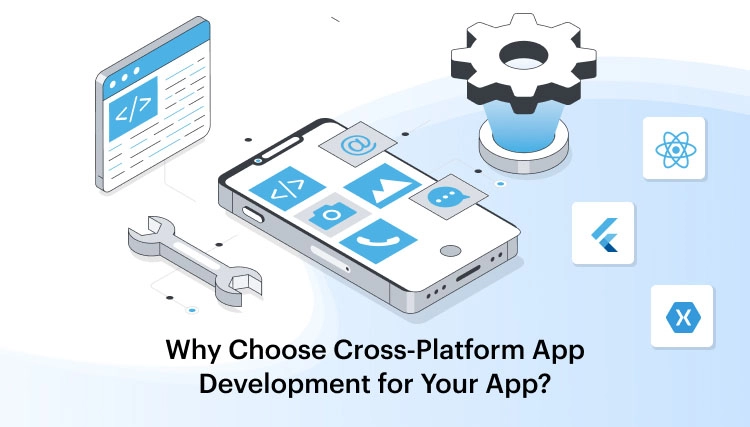
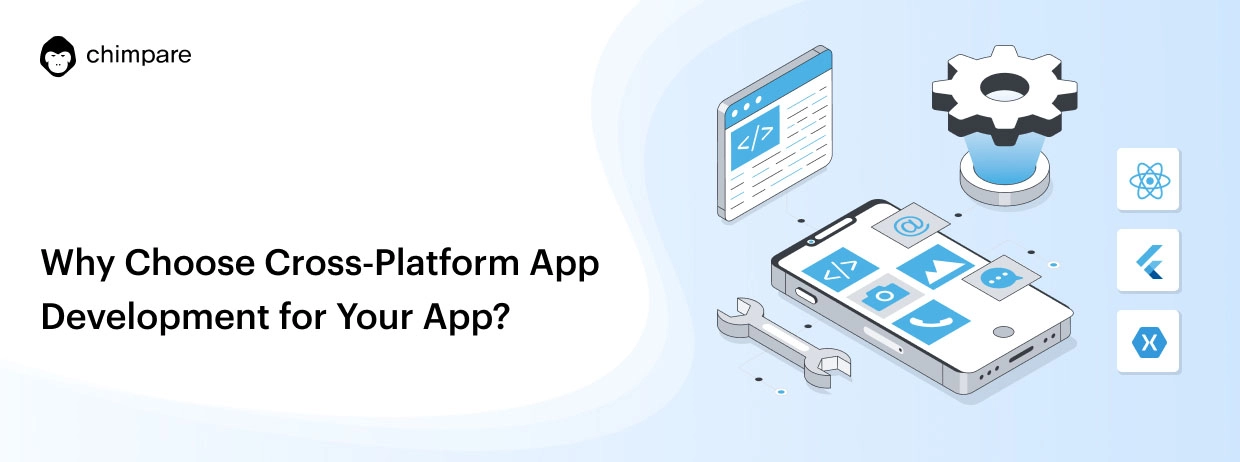
  • Why Choose Cross‑Platform App Development for Your App? 

    Why Choose Cross‑Platform App Development for Your App? 

    Why Choose CrossΓÇæPlatform App Development for Your App_-1
    [ez-toc]

    Consider a wonderful app idea you have. You have envisioned every other element that will have clients love it: the elegant design, the straightforward user experience, and every other feature. The following, meanwhile, presents a dilemma: Shall it be designed for both Android and iOS? Moreover, how much money and time are you prepared to spend on several versions? This is where cross-platform program development comes to help. 

    The cross-platform app development is a sensible approach whereby developers produce a single codebase running flawlessly across several platforms. Instead of developing separate iOS and Android apps, you create an app that functions everywhere. Cooking one dinner that every visitor at the party would adore is comparable to that; rather than cooking many meals to fit every guest’s tastes. 

    Why does this issue matter now?  

    In 2026, the app market is more cutthroat than ever. Since customers want apps to work effectively across all devices, businesses want to reach their audience without going over budget. More companies are therefore looking for cross-platform mobile app development. It guarantees a consistent experience for all consumers in addition to saving money and time. 

    Who can profit from this strategy?  

    Startups searching for a quick MVP, established companies trying to reach a larger audience, or even firms needing a strong solution for devices are all examples of people with an app concept. Turning your vision into reality quickly, a cross-platform mobile app development firm guarantees your app feels and seems native on all platforms. 

    Furthermore, inclined toward this approach is the future of mobile technology. With frameworks like React Native and Flutter setting the standard, cross-platform application development is quickly becoming the preferred solution for businesses looking to scale well in the UK and throughout the world.  

    To be clear, the answer to the question “Why is cross-platform app development the future?” lies in its speed, affordability, and ability to reach millions of users without requiring the creation of numerous apps from the start. 

    In this blog, we’ll dive deep into why cross-platform app development services are the ultimate gamechanger for modern businesses, explore the pros and cons, compare them with native development, and give you real-life examples of successful apps built using this approach. By the end, you’ll know whether a cross-platform app development company is the right choice for your next project. 

    Tired of platform-specific development costs and delays?

    Streamline with cross-platform efficiency.


    Book Your Free App Consultation

    What is Cross-Platform App Development?

    Cross-platform application design is perhaps something you know about, but how effectively do you understand it?  

    A single codebase essentially enables the creation of apps meant to run on a number of platforms, including iOS, Android app, and even the web. Actually, it resembles developing one potent program that would automatically change to fit any device rather than producing several editions for every platform. 

    Besides saving you a lot of money and time, the technique also allows your app to maintain the same look and feel on any device. Many companies are now seeking cross-platform mobile app development services so that they may grow swiftly without sacrificing quality. 

    Here’s the gist in a nutshell: 


    • Once you create your app, disseminate it everywhere; there is no need to keep many versions. Single Codebase Across Platforms


    • Cost-effective development reduces development expenses and speeds time to market by means of fewer coding lines.


    • User Experience: Across Android, iOS, and the internet, users find the same basic features and user experience.


    • For cross-platform app developers, React Native, Flutter, and Xamarin enable the rapid creation of apps.


    • Changes to the codebase quickly show across all platforms, therefore speeding maintenance and updates.


    • Flexibility for Businesses: Whether you’re a startup or an enterprise, cross-platform mobile app development company services give you the freedom to innovate and scale.


    • Future-Proof Approach: With growing demand for apps across devices, cross-platform app development UK and worldwide is quickly becoming the standard, proving why cross-platform app development is the future.


    Cross-platform development combines the finest of both worlds: native-like performance with a single, manageable codebase, unlike native apps, which are built individually for each operating system, or hybrid apps, depending on web views. This makes it the best answer for companies trying to launch quickly, remain consistent, and satisfy consumers. 

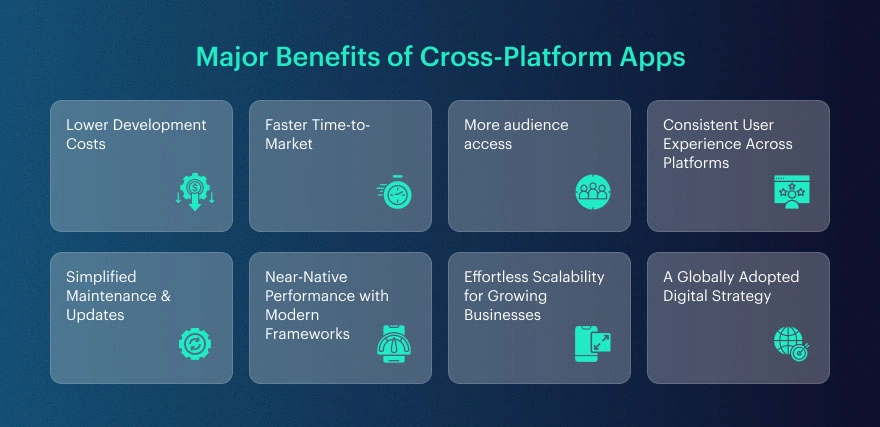
    What are the Major Benefits of Cross-Platform Apps?

    Major Benefits of Cross-Platform Apps

    No one has the time (or money) to duplicate a computer program in the rapidly growing digital world of today. That is the main reason why cross-platform app development has become very popular in 2026. Companies want to be the first in the market, make their products available to more people, and at the same time, give a seamless, top-notch experience, and cross-platform is what makes all these things possible.  

    Cross-platform application development is the way of the future as it lets businesses expand fast, remain competitive, and satisfy consumers with one shared codebase running on many platforms. 

    • Lower Development Costs: A single app for multiple platforms requires less coding, fewer developers, and thus, brings about huge savings, a great advantage for startups and expanding businesses.
    • Cross-platform mobile app development solutions let you release your iOS and Android applications virtually simultaneously, instead of you waiting for separate builds for months, therefore speeding your Time to Market.
    • More audience access: From the very first day, your app can be accessed by consumers on several devices. In this manner, companies may expand more quickly and powerfully.
    • Cross-platform frameworks guarantee that your application operates the same across platforms and not only seems the same, hence building confidence and familiarity among the users.
    • Once the app is updated, the changes will automatically show on all devices; maintenance and updates are made simpler. Releases of corrections and functions are once only.
    • High Performance Using Modern Frameworks: Today, frameworks like Flutter and React Native provide performance, speed, and smoothness nearly at a native level.
    • The ideal method of scaling companies is: Collaborating with a cross-platform mobile app development firm will enable companies to expand without having to recreate everything from the ground up from MVPs to massive enterprise applications.
    • Worldwide Trend: It is now the go-to strategy for digital expansion when it comes to cross-platform app development, not only in the UK but also worldwide, whether it is a startup or a large enterprise that is considering it. 

    Are Cross-Platform Apps Only Good for Simple Projects?

    Cross-platform app development is sometimes misunderstood as being only for simple apps with few features; Actually, modern cross-platform systems are strong enough to manage complicated company logic, real-time data processing, high-performance animations, and even enterprise-level security. Businesses of all sizes depend on cross-platform mobile app development services to create feature-rich, scalable solutions from fintech applications and e-commerce sites to social media networks and on-demand services. You’re just constructing smarter and more quickly with the appropriate cross-platform app development firm; cross-platform app development is the future. You are not sacrificing quality or performance. 

    Here’s why cross-platform apps go far beyond “simple projects”: 

    • High performance is now typical: Modern frameworks like Flutter and React Native translate to near-native code, therefore providing excellent performance even for sophisticated apps.


    • Cameras, GPS, biometric authentication, push notifications, sensors, and cross-platform programs may use native APIs just like standard ones.


    • Designed for scalability: Whether you are debuting an MVP or going global, a good cross-platform mobile app development company may quickly grow your app.


    • Effective implementation of encryption, safe authentication, and compliance requirements is achievable.


    • Thanks to sophisticated UI/UX features, custom animations, interactive dashboards, and reactive designs are all quite conceivable.


    • Cross-platform applications handle everything from real-time chat systems to payment gateways and cloud integrations for advanced corporate demands.


    • Relied on by major companies all over, several of the most popular apps in many industries already use cross-platform app development solutions to reach millions of consumers daily. 

    What are the Challenges and Limitations to Consider?

    What are the Challenges and Limitations to Consider_

    For most companies, cross-platform app development is a good option, but it is not a magical wand that will magically solve everything right away. Like with any technology, you should know of a few obstacles before you adopt it.  

    Working with a seasoned cross-platform mobile app development company able to maximise performance, create intelligent user experiences, and select the right technologies will enable you to manage or even eliminate most of these restrictions. The direction of the future is cross-platform app development since it enables you to create better apps by anticipating these problems when performed properly. 

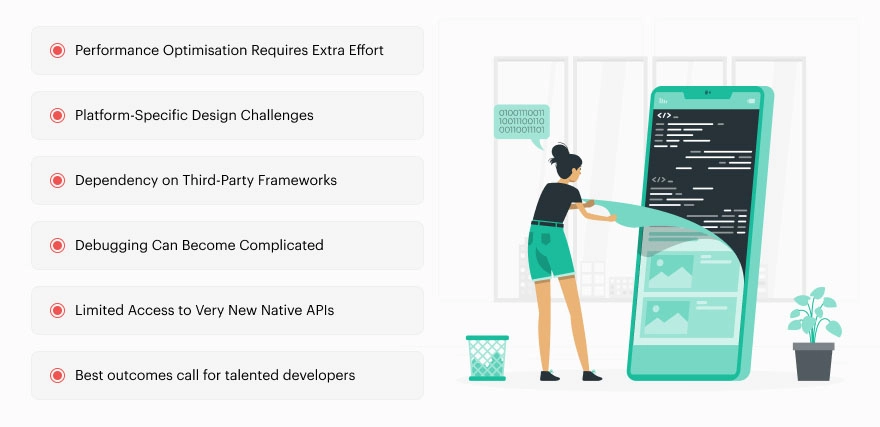
    Here are some common challenges to keep in mind: 

    • Performance Optimisation Requires Extra Effort: Although some advanced animations or intensive data processing could still need fine-tuning to fit natural performance, contemporary frameworks are really quick.
    • Every platform has its own design guidelines (Material Design for Android and Human Interface Guidelines for iOS, among them); therefore, developing a real “native feel” across devices occasionally demands additional design work.
    • Cross-platform applications depend on external frameworks like Flutter app or React Native. Delaying a framework update could momentarily reduce access to new operating system functions.
    • Debugging Can Become Complicated: Because you’re working with several platforms through one codebase, finding bugs can occasionally take slightly longer than in native development. 


    • Limited Access to Very New Native APIs: Brand-new device features may not be immediately supported until the framework releases updates.
    • Best outcomes call for talented developers: Selecting the proper cross-platform app development services is crucial; bad architecture can cause performance or scalability problems. 

    What is the Difference Between Cross-Platform Vs. Native Development?

    While cross-platform app development is changing how apps are built (and honestly, for the better), it’s still important to know that no technology is completely perfect. Cross-platform solutions focus on speed, cost-efficiency, and scalability, which is exactly why cross-platform app development is the future, but a few technical challenges can pop up if the project isn’t planned properly.  

    Most of these issues are manageable when you work with a skilled cross-platform mobile app development company that knows how to optimise performance, design platform-friendly interfaces, and choose the right frameworks for your app.

    Challenge  What It Means (In Simple Words)  Why It Matters for Your App 
    Performance Optimization  Some complex features, heavy animations, or real-time data processing may need extra tuning to run as smoothly as native apps  Without proper optimization, your app could feel slower on certain devices 
    UI/UX Customization Issues  iOS and Android follow different design rules, and one design doesn’t always fit both perfectly  Extra effort is sometimes required to keep the app looking “native” on each platform 
    Framework Dependency  Cross-platform apps rely on tools like Flutter or React Native, which need regular updates  Delayed framework updates can slow access to new OS features 
    Complex Debugging  One bug may behave differently across platforms  Testing needs to be more thorough to avoid platform-specific issues 
    Limited Immediate Access to New APIs  Brand-new mobile features may not be supported instantly  Developers might need workarounds until official updates roll out 
    Skill-Based Development  Poor coding structure can reduce performance  Choosing the right cross platform app development services makes a huge difference 

    Facing fragmented user experiences across devices?

    Unify with seamless cross-platform apps.


    Talk to Our Experts Now

    What are Successful Cross-Platform App Examples?

    These true success stories might persuade you otherwise if cross-platform app development is still thought of as a tool just for little or experimental apps. Cross-platform frameworks power some of the most popular apps in the world, the ones you most likely scan every day, to deliver fast, fluid, and consistent experiences across devices.  

    Cross-platform mobile app development services are chosen by businesses ranging from startups introducing MVPs to worldwide corporations scaling millions of consumers for the speed it provides without sacrificing performance. One of the main reasons cross-platform app development is seen as the future is this actual application. 

    Here are some popular and powerful examples: 

    • Instagram employs React Native for quicker feature development while still providing consistent performance across both iOS and Android.
    • One of the creators of React Native, Facebook (Meta), still relies heavily on cross-platform technology for a number of app components.
    • Google Ads App – Built using Flutter, allowing Google to manage updates efficiently across platforms
    • Alibaba – Uses Flutter to handle millions of users with high performance and fast UI rendering
    • BMW App – Built with Flutter to create a premium, consistent digital experience for customers worldwide
    • Skype – Shifted to React Native to speed up development and improve performance
    • eBay Motors – Uses Flutter for smooth UI and rapid feature releases

    These apps prove that what is cross-platform app development today is no longer about compromise; it’s about smart engineering. With the right cross-platform app development company, businesses can build apps that are fast, scalable, secure, and visually impressive. From fintech to social media to e-commerce solutions, cross-platform app development services are powering some of the most successful digital products globally, including across the UK cross-platform app development UK markets. 

    Struggling with slow time-to-market pressures?

    Accelerate using efficient cross-platform development.


    Start Your Project Today

    Conclusion

    Selecting the right development method might make or break your app’s success; hence, cross-platform app development has become the go-to solution for contemporary companies. Brands can introduce quicker, engage more people, and manage expenses all without compromising performance or user experience, thanks to a shared codebase running across iOS, Android, and other systems.  

    It is easy to see why startups and companies are increasingly adopting this smart, scalable strategy now that you grasp cross-platform app development and how strong current frameworks have become. It is simple to see why both startups and companies alike are turning to this intelligent, scalable strategy now that you know what cross-platform app development is and how strong modern frameworks have become. 

    Working with a cross-platform mobile app development firm even better offers you access to knowledge that helps you prevent typical problems and maximise efficiency. Cross-platform app development solutions are meant for growth in a mobile-first world, from faster updates to simpler long-term maintenance.  

    Across global markets, including cross-platform app development, UK businesses are proving every day why cross-platform app development is the future. If your goal is to build an app that’s flexible, future-ready, and built to scale, cross-platform development isn’t just an option anymore; it’s the smart move forward. 

    FAQs


    What is cross-platform app development?


    Cross-platform app development is a method of building mobile applications using a single codebase that works across multiple platforms like iOS and Android. Instead of creating separate apps for each operating system, developers use frameworks such as Flutter or React Native to deliver one app that performs smoothly everywhere. 


    Yes, in most cases, it is more cost-effective. Since only one app is built and maintained instead of two, businesses save on development time, resources, and long-term maintenance costs. That’s why many startups and enterprises choose cross-platform mobile app development services to maximise their budgets. 


    The mosModern cross-platform frameworks now offer near-native performance for most use cases. With proper optimisation and skilled developers, cross-platform apps can run smoothly, handle complex features, and deliver great user experiences comparable to native apps. t popular SPA frameworks in 2025 include React.js, Angular, Vue.js, Svelte, Next.js, and Nuxt.js, known for their speed, scalability, and developer-friendly ecosystem. 


    You should consider working with a cross-platform app development company if you want to launch faster, reach users on multiple platforms, control development costs, and scale your app efficiently. It’s ideal for startups, growing businesses, and even large enterprises. 


    Because it aligns perfectly with today’s digital needs, speed, flexibility, cost-efficiency, and scalability. As frameworks continue to improve and businesses aim to reach wider audiences quickly, cross-platform app development is becoming the standard approach for modern mobile apps. 

    Found this post insightful? Don’t forget to share it with your network!


    Related Articles

  • The Six Most Popular Cross Platform App Development Frameworks

    The Six Most Popular Cross Platform App Development Frameworks

    Cross-Platform-App-Development-Frameworks
    [ez-toc]

    We all live on our phones these days. From ordering your favourite cuisine to catching up on the latest episodes, apps have become part of our daily routine. And even as it would appear to be magic whilst an app works seamlessly on both your iPhone and your mate’s Android, there’s a smart bit of tech behind it, making that manifest: cross platform app development frameworks.

    Gone are the days whilst groups had to build completely separate apps for iOS and Android. Now, with smarter mobile app development frameworks around, builders can write one codebase and roll it out anywhere. It’s faster, extra value-effective, and best for manufacturers seeking to reach a broader target audience without overspending.

    In this blog, we’re diving into the 6 most popular cross-platform app development frameworks that everyone’s talking about in 2025. Whether you’re a startup founder, a techie with big ideas, or a business owner curious about the next app for your brand, we’ve got you covered.

    Curious Which Framework Fits Your Business Best?

    Let our experts assess your goals and recommend the right tech stack tailored to your vision.


    Book Your Free App Consultation

    What is the Need for Cross-Platform App Development?

    Maybe it’s a wellness tracker, a foodie community, or even the next big dating app for dog lovers. If your app simply works on iPhones, you’re instantly slicing off half of your potential audience. And let’s be actual, nobody was given time to build two separate apps from scratch.

    Also, Cross-platform mobile app development is quite helpful in this case. It saves developers a good amount of time, money, and effort by allowing them to create apps that characteristic flawlessly on iOS, Android, or even the internet. Instead of juggling codebases and hoping they live in sync, you just placed the whole lot up and assemble as speedy as you can.

    For UK businesses, startups, and creators, a cross-platform app development company means faster launches, broader reach, and more consistent user experiences. Whether your customers on the latest iPhone or a budget Android, they get the same vibe, no one’s left behind.

    What are the Key Benefits of Cross-Platform App Development?

    We somehow got the idea of what cross-platform app development is. But why is everyone in the tech world so obsessed with it? Here are some real reasons why businesses across the UK and beyond are depending on cross-platform app development services and its benefits:

    1. Save Big on Development Costs

    Hiring two separate teams to build for iOS and Android? That’s like paying double for the equal outfit. Cross-platform mobile app development frameworks will let you build once and run anywhere, which means that extra cash in your pocket that you may invest in the budget for commercials, advertising and marketing, and coffee.

    2. Faster Time to Market

    Technology is advancing right away; even if you blink, you could miss a trend. With cross-platform tools, you can get your software to more devices faster than if you designed it twice. Less waiting and more launching.

    3. Wider Audience Reach

    Your app can reach everybody irrespective of whether they use a Samsung or an iPhone. Cross-platform programming guarantees that your concept isn’t restricted to a single tool or OS.

    4. Consistent User Experience

    Nobody likes an app that works like a dream on iOS but crashes every second on Android. One codebase approach fewer inconsistencies, smoother updates, and higher entertainment all around.

    5. Easier Maintenance & Updates

    Updating features, fixing bugs, or rolling out something new? Do it once, and it displays throughout all systems. Less hassle, less confusion, and a happier dev team.

    6. Great for Startups & Growing Brands

    If you’re a business in the UK looking to scale fast without draining resources, cross-platform is a no-brainer. It helps you test the waters, get real feedback, and adapt without burning cash.

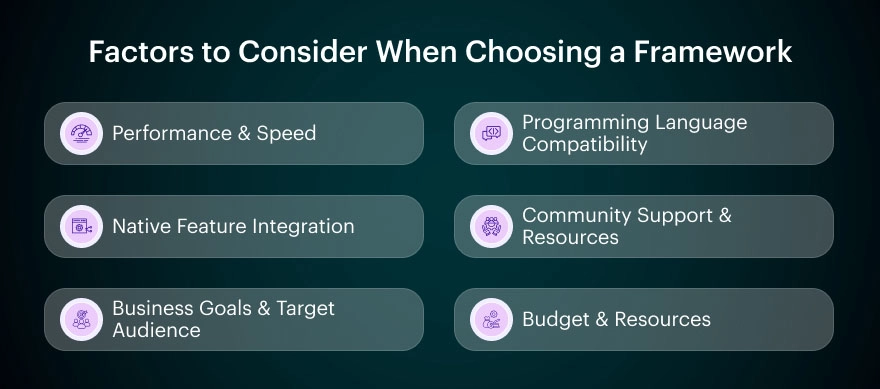
    Which Factors to Consider When Choosing a Framework?

    Hold your horses before you jump in and install the first sparkling cross-platform framework that appears on Google! Choosing the correct cross-platform app development framework is difficult: it must match your style, comprehend your requirements, and grow with you in the long run.

    Here’s what you seriously need to think about before swiping right on a framework:

    Factors-to-Consider-When-Choosing-a-Framework

    1. Performance & Speed

    If your program takes time to load or lags like it is stuck in 2012, human beings will abandon it. Some frameworks (inclusive of Flutter or React Native) offer close-to-local performance, while others might also feel slightly heavier. If your app could have image-heavy factors, inclusive of games, animations, or real-time functions, performance has to be your number one consideration.

    2. Programming Language Compatibility

    Are you or your developer team already professional in JavaScript, Dart, C#, or Kotlin? Picking a framework that works along with your crew’s existing skillset can save masses of time on training or hiring.

    3. Native Feature Integration

    Need to access the digicam, GPS, Bluetooth, or other phone hardware? Not all frameworks are created equal about deep native integrations. Some offer plugins and bridges that make life easier, while others might need a bit more custom coding. It’s crucial to check how smoothly your chosen framework talks to native device features.

    4. Community Support & Resources

    This one’s a bit underrated but super important. A strong developer community means more libraries, quicker computer virus fixes, and useful boards when you hit a wall. Flutter and React Native have massive, energetic groups, which is brilliant for finding answers and staying updated. Think of it as becoming a member of a club where every person’s work was given your returned.

    5. Business Goals & Target Audience

    Are you building an MVP to test an idea? A full-scale retail app for UK shoppers? Or maybe something niche like an AR fashion tool? Your commercial enterprise dreams and your target audience’s expectations should assist in steering your choice. For instance, a high-give-up style brand might demand glossy animations and a sophisticated UI, whilst a B2B tool simply wishes to run speedily and stay solid.

    6. Budget & Resources

    Last but not least, always consider your budget. Some frameworks require extra dev time, others want paid licences or third-party tools. Choose a setup that suits your finances these days, but can grow with you day by day.

    Want a Single App for iOS, Android & Web?

    Build once, deploy everywhere. Our cross-platform app development services deliver speed, quality, and reach.


    Talk to Our Experts Now

    Six Most Popular Cross-Platform App Development Frameworks

    Alright, we’ve talked about the why and the how, now it’s time to spill the tea on the who’s who of the cross-platform app development world. These six frameworks are dominating the scene in 2025, and for good reason. Whether you’re building a slick startup app or scaling a business, these tech tools are leading the charge.

    1. Flutter

    Flutter

    Language: Dart

    Best For: Well-designed UIs, fast performance, native-like experience

    If Flutter were a person, it’d be that stylish friend who’s usually on-trend and in some way precise at the whole lot. Backed by Google, Flutter has quickly become a move-to framework thanks to its smooth performance, warm reload characteristic, and beautiful UI designs.

    It’s specifically popular in the UK startup scene, in which time and polish count. There are no bizarre design flaws or pixel drama in apps created with Flutter; they appear and behave identically on iOS and Android.

    Popular Apps Built with Flutter: Google Ads, BMW, Alibaba.

    2. React Native

    React-Native

    Language: JavaScript

    Best For: Reusable components, large communities, quick launches

    Created by Meta, React Native is loved for how fast and developer-friendly it is. If your team already knows JavaScript, this one’s a no-brainer. You can write once and reuse code like a pro, while still getting access to native modules when needed.

    It’s where given a big network support, lots of pre-built components, and performs nicely with third-party plugins, fantastic for brief MVPs or apps on a budget.

    Popular Apps Built with React Native: Instagram, Uber Eats, Pinterest

    3. Kotlin Multiplatform

    Kotlin-Multiplatform

    Language: Kotlin

    Best For: Code sharing across Android, iOS, backend & web

    Kotlin Multiplatform isn’t about building UIs across platforms; it’s about sharing core logic like networking, data management, and authentication across iOS, Android, and even the web. It’s gaining popularity among UK enterprise teams who want better consistency in their app logic without fully ditching native UI frameworks.

    Think of it as a clever middle ground, modern, efficient, and backed by JetBrains (the people who built IntelliJ and the Kotlin language itself).

    Popular Apps Built with Kotlin Multiplatform: Backend logic sharing, Fintech and enterprise apps.

    4. Xamarin

    Xamarin

    Language: C#

    Best For: Enterprise-level apps, .NET developers, native API access

    Microsoft develops and maintains Xamarin, which is a feasible opportunity for organisations that have already made investments within the .NET environment. It allows you to write apps in C# and get get admission to to neighbourhood APIs, which means fewer boundaries whilst integrating advanced competencies.

    Xamarin isn’t as popular as Flutter or React Native nowadays; however, it’s still a dependable choice for large-scale, solid projects, especially in corporate sectors.

    Popular Apps Built with Xamarin: Alaska Airlines, The World Bank.

    5. Ionic

    Ionic

    Language: HTML, CSS, JavaScript

    Best For: Progressive Web Apps (PWAs), hybrid apps, fast prototyping

    If your development team has strong internet records, Ionic is probably the best springboard into cross-platform mobile app development framework. It uses familiar web tech and wraps it in a local-like shell using Capacitor, so it feels right at home on mobiles.

    It’s now not satisfactory for heavy-duty performance apps, however, ideal for immediate MVPs, internal tools, or any app that prioritises pace to market and extensive accessibility.

    Popular Apps Built with Ionic: JustWatch, MarketWatch, Sworkit

    6. Unity

    Unity

    Language: C#

    Best For: Game development, AR/VR apps, 2D/3D experiences

    Yes, Unity isn’t only for gaming anymore; it’s speedy becoming the darling of AR/VR builders and brands constructing immersive tales. If your app needs animations, 3D images, or an interactive vibe (like fitness video games or digital tours), Unity is the satisfactory choice.

    Plus, it runs across 20+ platforms, such as mobile, desktop, console, and web, and has an approximate reach.

    Popular Apps Built with Unity: Pokémon Go (AR), Monument Valley 2.

    Emerging Trends in Cross-Platform App Development

    Cross-platform app development isn’t only a tech shortcut anymore; it’s shaping the future of how apps are constructed and experienced. As we pass deeper into 2025, the any cross-platform app development company is increasing rapidly.

    Here are the top trends turning heads in the app world right now:

    • Rise of Progressive Web Apps (PWAs)
      Not every user wants to download another app just to check out a service. That’s where PWAs come in; they behave like apps but run directly in your browser. Frameworks like Ionic are leading the charge here, especially for e-commerce, media, and SaaS brands looking to deliver smooth app experiences without app store drama.
    • Increased Code Sharing Across Platforms
      Frameworks like Kotlin Multiplatform are redefining the concept of “write once, run everywhere.” Instead of just sharing UI, builders can now percentage core good judgment, APIs, or even backend techniques across iOS, Android, web, and desktop, all whilst preserving local UIs intact. This modular approach is gaining significant traction, specifically in organisational setups.
    • AI-Powered Development Tools
      AI isn’t just writing poems and generating memes; it’s now embedded in mobile development, too. Tools like GitHub Copilot let developers write smarter, cleaner code across all frameworks. AI is also boosting testing, debugging, and performance optimisation, resulting in more efficient cross-platform processes than before.
    • Gamification & AR Integration
      With apps moving beyond basic features, developers are leaning into interactive experiences from loyalty apps that feel like games to virtual try-on tools in fashion. Frameworks like Unity are booming in industries far beyond gaming, especially for UK brands in retail, education, and fitness, looking to stand out.
    • Micro-frontend Architectures
      Design is turning into an increasing number of modular and thing-driven. Rather than developing a single monolithic venture, developers are dividing it down into smaller, more plausible frontends ideal for groups working throughout many frameworks or converting factors of an app without downtime. It is scalable, sleek, and modern.
    • Growing Adoption in Fintech & Healthcare
      Industries that rely on local-handiest development, like finance and healthcare, are embracing move-platform equipment because of more advantageous safety capabilities, stricter testing protocols, and quicker deployment cycles. Kotlin Multiplatform and Xamarin are mainly popular right here for code reliability and platform compliance.
    • Privacy & Compliance-Ready Frameworks
      With GDPR and user data being a big deal in the UK and EU, frameworks are now offering built-in tools for data encryption, user consent management, and compliance-ready structures. React Native and Flutter both have growing plugin ecosystems addressing these needs.
    • Cloud-Native Mobile Development
      Apps are no longer simply neighbourhood gear; they’re cloud-primarily based ecosystems. Cross-platform frameworks now permit real-time syncing, dynamic updates, and stepped forward offline skills thanks to extra integration with AWS, Azure, and Google Cloud. It’s all about making programs quicker, smarter, and greater dependable.

    Save Time & Money with Cross-Platform Development

    Why build twice? Launch your app faster with one codebase that works across all platforms.


    Start Your Project Today

    Conclusion

    The best move-platform app development framework is predicated on your objectives, finances, and audience. What matters the most is that you select a mobile app development framework that complements, as opposed to contradicts, your vision. One that simplifies improvement, improves consumer enjoyment, and makes updates some distance much less hard.

    In 2025, it’s no longer pretty much just mobile app development services; it’s about constructing it smart, rapid, and in a manner that scales along with your business. Cross-platform app development helps you to do all that without draining your wallet or your endurance.

    So whether you’re a tech-savvy startup founder in London or a developing logo up north seeking to move virtual, the gear is right here, the tendencies are in your favour, and now you already know precisely where to begin.

    FAQs


    1. What is cross-platform in app development?


    Cross-platform app development is the process of building mobile apps that run on multiple platforms (like iOS and Android) using a single codebase. It saves time, reduces value, and guarantees a regular consumer revel in.


    As of 2025, Flutter is considered the most popular cross-platform framework due to its high performance, stunning UI capabilities, and strong community backed by Google.


    Commonly used frameworks include Flutter, React Native, and Ionic, all of which let developers build apps for both iOS and Android using shared code, while offering varying levels of performance and native integration.

    Found this post insightful? Don’t forget to share it with your network!


    Related Articles