
In the modern digital landscape, the traditional “castle-and-moat” security strategy: where everything inside the network is trusted and everything outside is blocked: is officially obsolete. As organizations migrate from monolithic architectures to distributed microservices, the attack surface expands exponentially. Every service-to-service communication becomes a potential entry point for malicious actors.
At Chimpare, we have witnessed how high-growth companies struggle to balance the speed of delivery with the rigour of security. The solution is not more firewalls; it is a Zero-Trust Architecture (ZTA). This blueprint explores how to secure your microservices grid by moving away from network-based trust toward identity-based security.
Table of Contents
- The Core Principles of Zero-Trust
- Why Perimeter Security Fails in Microservices
- The Three Pillars of Implementation
- Real-World Scenarios: Fintech, Healthcare, and E-commerce
- Common Mistakes in Zero-Trust Adoption
- The Technology Stack for 2026
- Forward-Looking Summary & FAQ
1. The Core Principles of Zero-Trust
Zero-Trust is not a single product but a strategic framework built on the mantra: “Never Trust, Always Verify.” According to recent security research, over 80% of data breaches involve compromised credentials or lateral movement within a network, highlighting the need for internal verification.
- Verify Explicitly: Always authenticate and authorize based on all available data points: including workload identity, location, and device health.
- Use Least Privilege: Limit user and service access with Just-In-Time (JIT) and Just-Enough-Access (JEA) policies.
- Assume Breach: Minimize blast radius and segment access. Operating under the assumption that an attacker is already present forces the implementation of end-to-end encryption.
The Perimeter Trap
Problem: Traditional firewalls assume that internal traffic is inherently safe, allowing “east-west” lateral movement for attackers.
Solution: Treat every service request as if it originated from an untrusted public network, requiring cryptographic proof of identity.
2. Why Perimeter Security Fails in Microservices
In a microservices environment, applications are broken into hundreds of small, ephemeral components. These services frequently scale up and down, changing their IP addresses constantly. Relying on IP-based firewalls is a recipe for manual overhead and security gaps.
When a single service is compromised in a legacy setup, the attacker can “hop” to the database or other sensitive services because the internal network is open. Zero-Trust prevents this by requiring every single request: even those between two services in the same cluster: to be individually verified.
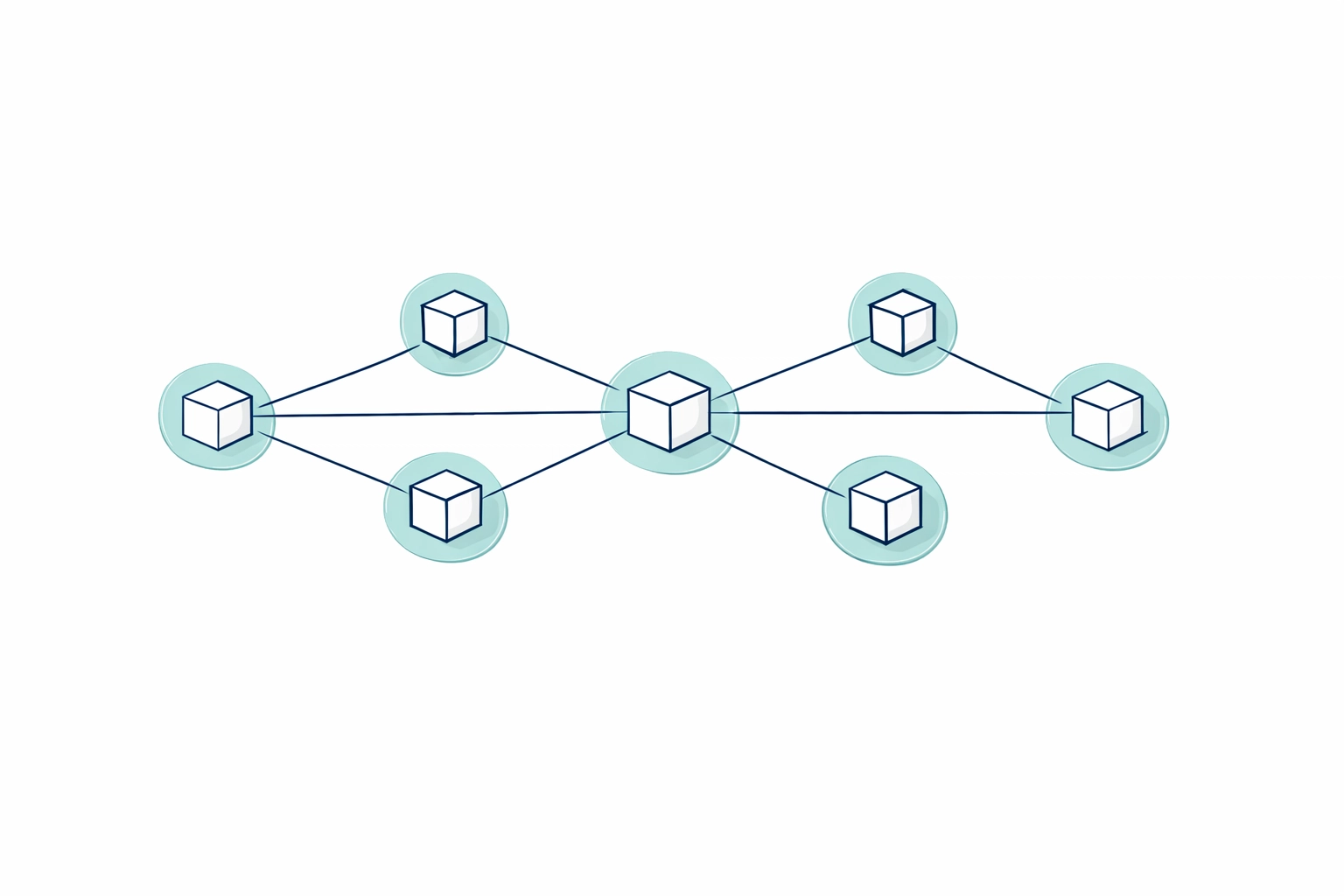
(Visual: A modern sketch of a microservices grid where each service is enclosed in its own security bubble. The style is hand-drawn and minimalist with thin lines. The image is compact with a reduced vertical height.)
3. The Three Pillars of Implementation
For developers and CTOs looking to modernize, three technical components form the foundation of a secure grid:
A. Workload Identity (SPIFFE/SPIRE)
Every service needs a unique, verifiable identity that is not tied to a physical IP address.
- Specialty: Providing platform-agnostic identity for distributed systems.
- Key Features:
- Automated issuance of short-lived SVIDs (SPIFFE Verifiable Identity Documents).
- Elimination of hardcoded API keys and secrets.
- Dynamic rotation of credentials to reduce the window of opportunity for attackers.
B. Mutual TLS (mTLS)
While standard TLS encrypts communication, mTLS ensures that both the client and the server verify each other’s certificates.
- Specialty: Ensuring data confidentiality and integrity in transit.
- Key Features:
- Cryptographic binding of identity to the connection.
- Prevention of man-in-the-middle (MITM) attacks.
- Seamless integration via service meshes like Istio or Linkerd.
C. On-Behalf-Of Authorization
It is not enough to know which service is calling; you must know who the user is.
- Specialty: Bridging the gap between user identity and service identity.
- Key Features:
- JWT (JSON Web Token) validation at every hop.
- Policy-as-Code (using OPA – Open Policy Agent) to enforce fine-grained permissions.
- Centralized audit logs for every access decision.
4. Real-World Scenarios and Use Cases
Understanding the theory is one thing; seeing it in action across different industries reveals the true value of Zero-Trust.
Scenario 1: Fintech (Compliance & Integrity)
In the financial sector, maintaining PCI DSS compliance while scaling microservices is a major hurdle.
A leading Fintech platform utilized Zero-Trust to isolate its “Payment Processing” service from its “Currency Exchange” service. Even though they shared the same cloud environment, the Payment service only accepted requests signed by a specific “Transaction-Gateway” identity.
- Outcome: A 40% reduction in audit preparation time and a complete elimination of unauthorized internal data access attempts.
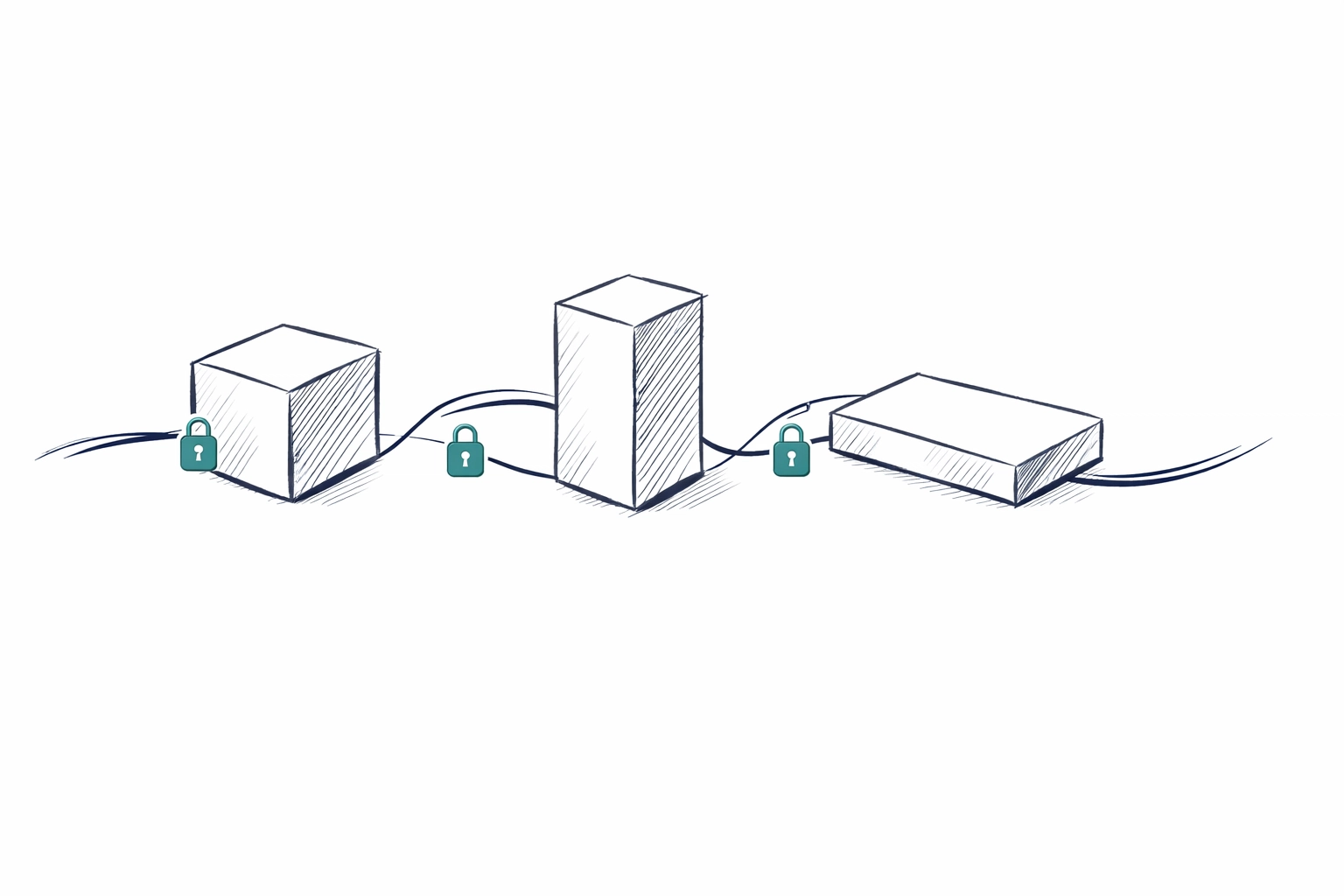
(Visual: A minimalist, hand-drawn sketch showing a secure transaction flow between three distinct blocks. Modern thin-line style, compact height, no text.)
Scenario 2: Healthcare (Data Privacy & HIPAA)
Healthcare providers handle sensitive PII (Personally Identifiable Information). In a microservices architecture, a “Patient Portal” might call a “Lab Results” service.
By implementing Zero-Trust, the “Lab Results” service verifies not just the portal’s identity, but also ensures the requesting doctor has a valid, active session.
- Outcome: Enhanced HIPAA compliance through granular access logs and the prevention of unauthorized record scraping by compromised front-end components.
Scenario 3: E-commerce (High-Traffic Security)
During peak sales events like Black Friday, e-commerce stores face massive traffic spikes.
One global retailer used Zero-Trust to ensure that as they scaled their “Inventory” and “Checkout” services, the new instances were automatically issued identities and mTLS certificates.
- Outcome: Seamless scaling without manual security configuration, protecting customer credit card data even under heavy load.
5. Common Mistakes in Zero-Trust Adoption
Even the most advanced teams can stumble during the transition. Here are the pitfalls to avoid:
- Over-complicating Policy on Day One: Trying to implement “least privilege” for 500 services simultaneously leads to broken applications. Start with “Observe Only” mode to map traffic patterns before enforcing blocks.
- Ignoring the “Human” Element: Zero-Trust applies to developers too. If your engineers are sharing root passwords for database access, your microservices security is irrelevant.
- Manual Certificate Management: Attempting to manually rotate TLS certificates in a microservices environment is impossible. Automation is a prerequisite, not an option.
The Automation Gap
Problem: Manual security updates cannot keep pace with CI/CD pipelines, leading to expired certificates and downtime.
Solution: Integrate identity issuance directly into the deployment pipeline using tools like HashiCorp Vault or SPIRE.
6. The Technology Stack for 2026
If you are building or modernizing your grid today, these are the tools and technologies that define the cutting edge:
- Service Mesh: Istio or Linkerd. These provide the “plumbing” for mTLS and traffic management without requiring code changes in your services.
- Identity Provider: Okta or Ping Identity for users; SPIRE for workloads.
- Policy Engine: Open Policy Agent (OPA). This allows you to write security policies as code, which can be versioned and tested just like your application logic.
- Observability: Honeycomb or Datadog. You cannot secure what you cannot see. High-cardinality tracing is essential for identifying anomalous service behavior.
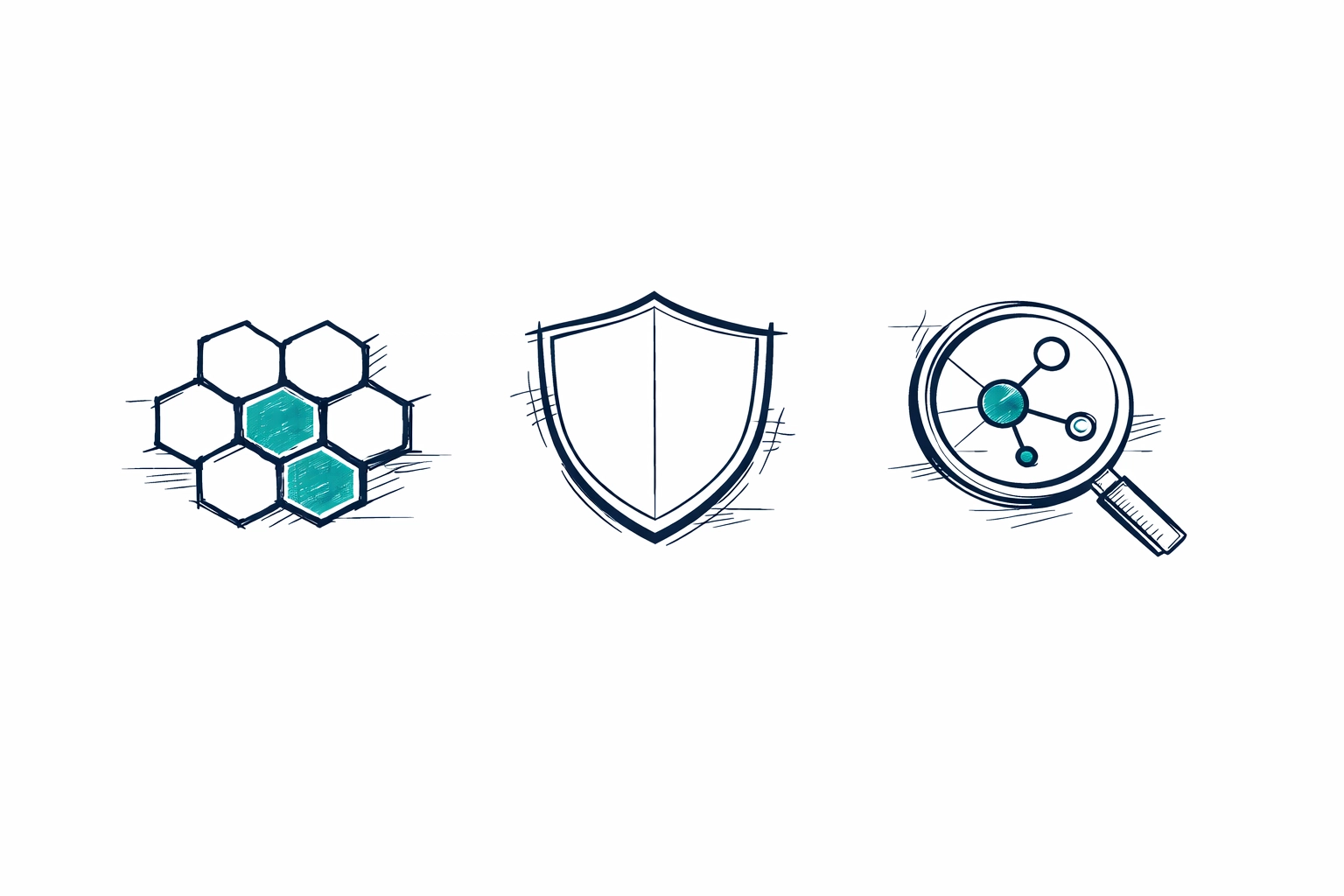
(Visual: A modern sketch of a simplified tech stack icon set. Minimalist, hand-drawn lines, compact height.)
Forward-Looking Summary
The shift to Zero-Trust is no longer a luxury for elite tech companies: it is a business necessity. As cyber threats become more sophisticated, the “Assume Breach” mentality provides the only sustainable path to resilience. By focusing on workload identity, mTLS, and granular authorization, organizations can build systems that are not only secure but also more agile and easier to audit.
At Chimpare, we specialize in building scalable, secure software that grows with your business. Whether you are in Fintech or E-commerce, the blueprint remains the same: verify everything, trust no one, and automate everywhere.
FAQ
Q: Does Zero-Trust impact application performance?
A: Minimally. While mTLS and identity checks add a slight overhead (usually in milliseconds), modern service meshes are highly optimized. For most businesses, the security gains far outweigh the negligible latency.
Q: Can we implement Zero-Trust on legacy systems?
A: Yes. By using sidecar proxies, you can wrap legacy services in a secure “envelope” that handles identity and encryption, effectively bringing them into the Zero-Trust grid without rewriting the original code.
Q: How does Zero-Trust help with regulatory compliance?
A: It provides a “Paper Trail.” Because every single request is authenticated and authorized, you have a detailed log of exactly who (or what) accessed what data and when: making GDPR and HIPAA audits much simpler.
Q: Is Zero-Trust only for large enterprises?
A: No. Small and medium-sized businesses are often preferred targets for hackers. Implementing Zero-Trust early in your development lifecycle is significantly cheaper than trying to retroactively secure a sprawling, insecure architecture later.
Looking to secure your digital transformation? Contact the experts at Chimpare to discuss your next project.