Category: Custom Software Development

  • POC vs Prototype vs MVP: What Each One Means and When to Use It

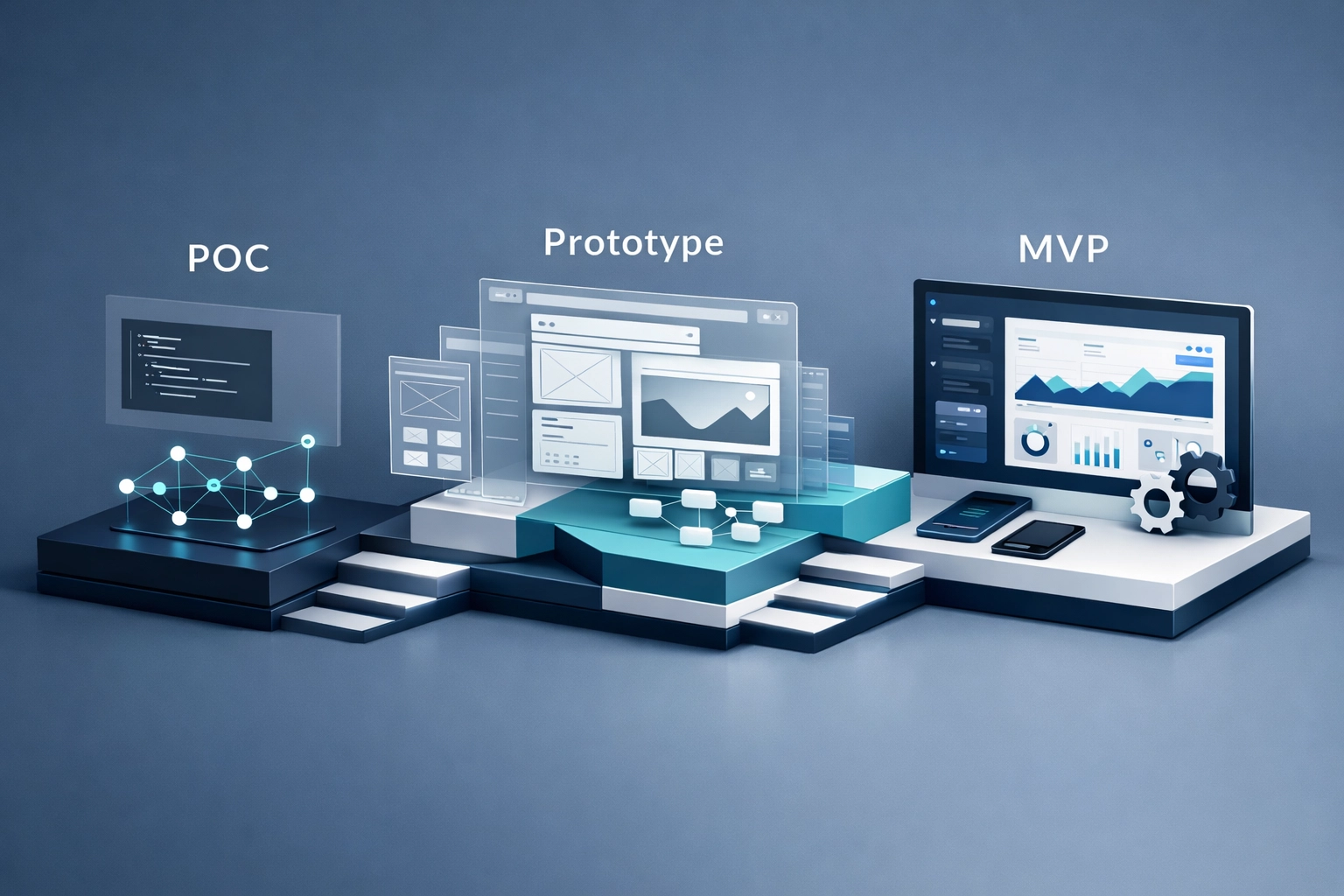
    POC Prototype MVP

    Introduction

    The tech world loves alphabet soup. Before you start building your dream app, you will likely hit a wall of acronyms: POC, Prototype, and MVP.

    First things first, let’s clear the air—the poc full form is Proof of Concept.

    These terms get mixed up all the time, but they are not the same. Choosing the wrong one can waste time, money, and momentum. This guide is here to help you pick the right starting line.

    Problem: Teams jump into development without knowing what they need to validate first.
    Solution: Use the right starting stage to reduce risk, save budget, and build smarter.

    Table of Contents

    POC: Proof of Concept

    The poc full form is Proof of Concept.

    A POC is a small-scale exercise used to test technical feasibility. In simple terms, it answers one question: can we actually build this?

    This stage is not about polished design, launch readiness, or complete features. It is about validating whether a technical idea is possible before investing heavily in development.

    What a POC is meant to do

    • Validate feasibility: Check whether the core idea can work technically.
      • Test a new API, AI model, system architecture, or integration.
      • Confirm whether performance, reliability, or compatibility targets are realistic.
    • Reduce technical risk: Identify blockers early.
      • Surface hidden dependencies.
      • Expose security, compliance, or infrastructure challenges.
    • Support better planning: Give decision-makers confidence before committing larger budgets.
      • Help founders estimate effort.
      • Help developers assess implementation complexity.
      • Help business owners understand delivery risk.

    When to use a POC

    Use a POC when:

    • You are trying a brand-new or unproven technology.
    • You need to test whether a complex feature is technically possible.
    • You want evidence before investing in full product design and development.
    • You are exploring AI, IoT, AR/VR, or other cutting-edge software initiatives.

    What a POC usually includes

    • A narrow technical experiment
    • Limited functionality
    • Internal testing only
    • Minimal or no polished interface
    • Fast iteration focused on learning

    Key Components of a Proof of Concept

    • Clear Objectives & Hypothesis: Define the exact technical challenge you are trying to solve.
      • Ask what specific system, integration, workflow, or capability needs validation.
      • Write a simple hypothesis such as, “This AI model can classify support tickets with acceptable accuracy.”
      • Keep the goal tightly focused on feasibility rather than broad product success.
    • Success Criteria: Set measurable KPIs that tell you whether the POC is a win.
      • Define thresholds for performance, speed, accuracy, latency, reliability, or compatibility.
      • Agree on what “good enough” looks like before testing begins.
      • Make the criteria clear for developers, business owners, and decision-makers alike.
    • Minimal Scope: Focus only on the core “will it work?” question.
      • Remove extra features, polished UI, and non-essential workflows.
      • Limit the build to the smallest experiment that can produce a useful answer.
      • Avoid turning the POC into a hidden MVP.
    • Resource Evaluation: Identify what is needed to test the concept properly.
      • Review the tools, frameworks, infrastructure, APIs, and environments required.
      • Assess whether you have the right engineering talent, domain expertise, and delivery capacity.
      • Estimate the likely effort and constraints before moving to the next stage.
    • Feedback & Documentation: Capture what you learned and what should happen next.
    • Record technical results, blockers, assumptions, and open questions.
    • Document whether the idea should move forward, be revised, or be dropped.
    • Use the findings to guide the transition into a Prototype, MVP, or a different technical approach.

    How to Create a Proof of Concept in 7 Steps

    1. Identify the Core Challenge: Pinpoint the specific technical unknown you need to solve.
    • Focus on the single biggest feasibility question.
    • Define the risk clearly before writing code.
    1. Define Success Metrics: Decide how you will know the POC works.
    • Set measurable benchmarks such as response time, accuracy, throughput, or reliability.
    • Example: “The API responds in under 200ms.”
    1. Assemble Your Dream Team: Bring together the right engineers and stakeholders.
    • Include the technical experts who can build and test the concept.
    • Involve decision-makers early so everyone aligns on goals and outcomes.
    1. Build the Bare Minimum: Create only the code needed to test your hypothesis.
    • Skip polished interfaces and non-essential functionality.
    • Keep the experiment lean, fast, and focused.
    1. Test in a Controlled Environment: Run the POC against the criteria you defined in step 2.
    • Validate performance under expected conditions.
    • Capture objective results rather than relying on assumptions.
    1. Review and Document: Gather the data, feedback, and technical findings.
    • Record what worked, what failed, and what needs refinement.
    • Use the learnings to shape the next development decision.
    1. The Go/No-Go Decision: Decide what happens next based on the evidence.
    • Move to a Prototype if the concept is viable and the UX needs validation.
    • Go back to the drawing board if the technical assumptions do not hold up.

    Problem: You assume the technology will work because the idea sounds strong.
    Solution: Build a POC first and confirm feasibility before scaling effort.

    Prototype

    A Prototype is about the look and feel of the product and the user journey.

    Unlike a POC, a Prototype is usually not built to prove technical feasibility. Instead, it helps teams explore how the product should work from a user experience perspective. In many cases, it is created without heavy back-end code.

    What a Prototype is meant to do

    • Visualize the experience: Show how screens, flows, and interactions will work.
      • Map navigation.
      • Clarify layout and content structure.
      • Make the product easier to understand for non-technical stakeholders.
    • Test usability: Check whether users can move through the journey smoothly.
      • Identify confusing steps.
      • Improve onboarding and task completion.
      • Refine the interface before development begins.
    • Gain buy-in: Help secure support from investors, leadership teams, clients, or internal stakeholders.
      • Present a realistic product direction.
      • Align product, design, and development teams.

    When to use a Prototype

    Use a Prototype when:

    • You need to secure stakeholder buy-in.
    • You want to test usability before writing production-grade code.
    • You need to clarify product requirements visually.
    • You want feedback on layout, navigation, and user flow.

    What a Prototype usually includes

    • Clickable screens or design mockups
    • Simulated interactions
    • Core user journeys
    • Limited or no real back-end logic
    • A stronger focus on UX than engineering depth

    Problem: Stakeholders struggle to support an idea they cannot see or experience.
    Solution: Use a Prototype to make the product tangible and test the user journey early.

    MVP: Minimum Viable Product

    MVP stands for Minimum Viable Product.

    An MVP is the first functional version of the product with just enough features to satisfy early customers and provide feedback for future development.

    This is the stage where the product moves beyond concept and design into real-world use. Unlike a POC or Prototype, an MVP is built for actual users. It is not the final version of the product, but it is a working one.

    What an MVP is meant to do

    • Launch fast: Get a real product into the market without waiting for a full feature set.
      • Focus on core value.
      • Avoid overbuilding.
      • Shorten time to market.
    • Collect real feedback: Learn from actual user behavior instead of assumptions.
      • Measure adoption.
      • Track engagement.
      • Prioritize future improvements based on evidence.
    • Create a foundation for scaling: Start small, then improve based on what matters most.
      • Build feature roadmaps from real demand.
      • Reduce waste.
      • Improve product-market fit.

    When to use an MVP

    Use an MVP when:

    • You are ready to launch to real users.
    • You want to validate market demand.
    • You need early customer feedback.
    • You are preparing to scale gradually and strategically.

    What an MVP usually includes

    • A working product
    • Core features only
    • Real user access
    • Basic but reliable architecture
    • Analytics and feedback loops for future iteration

    Problem: Teams spend months building every possible feature before launch.
    Solution: Start with an MVP, release faster, and let users guide the next phase.

    POC vs Prototype vs MVP: Quick Comparison

    Aspect POC Prototype MVP
    Full form Proof of Concept Prototype Minimum Viable Product
    Main goal Test technical feasibility Test look, feel, and user journey Launch a functional product to real users
    Focus Can we build this? How should it work and feel? Will users use and value it?
    Audience Internal technical teams, decision-makers Stakeholders, testers, users, designers Early customers, market, investors
    Back-end development Minimal or limited Usually minimal or none Yes, functional back-end is typically required
    User-facing quality Low Medium to high visually Functional and usable
    Market launch ready No No Yes
    Best use case Unproven technology Buy-in and usability testing Real-world validation and growth

    Which One Do You Need?

    Here is the simplest way to decide:

    • Use a POC if you are trying a brand-new, unproven technology.
    • Use a Prototype if you need to secure stakeholder buy-in or test usability.
    • Use an MVP if you are ready to launch to real users and start scaling.

    If your product is complex, you may need all three stages. That is often the smartest path for high-risk or high-value software initiatives.

    A practical way to choose

    • Start with the risk: Define the biggest unknown first.
      • If the technical side is unclear, begin with a POC.
      • If the product flow is unclear, build a Prototype.
      • If the value proposition is clear and you need market proof, launch an MVP.
    • Match the stage to the stakeholder:
      • Developers usually need feasibility clarity.
      • Business owners usually need budget and growth clarity.
      • Hiring managers and delivery leaders usually need execution clarity.
    • Avoid overcommitting too early:
      • Do not build an MVP when a POC would answer the real question.
      • Do not spend on full development when a Prototype can validate UX first.

    Problem: You pick a development path based on habit, not product risk.
    Solution: Choose the stage that answers your biggest question first.

    Common Mistakes

    Many teams misuse these terms and that leads to poor planning. Watch out for these common mistakes:

    • Calling every early build an MVP: A slide deck or clickable design is not an MVP.
    • Skipping the POC for complex technology: This increases the chance of expensive technical surprises later.
    • Treating the Prototype like production software: Prototypes are for testing experience, not supporting scale.
    • Overloading the MVP with features: This slows launch and weakens learning.
    • Ignoring feedback loops: The goal is not just to build something quickly, but to learn quickly too.

    Conclusion

    POC, Prototype, and MVP each serve a different purpose. A POC tests whether something is technically possible. A Prototype explores the look, feel, and user journey. An MVP is the first functional version released to real users for feedback and growth.

    The right choice depends on what you need to validate next.

    At Chimpare, we help businesses move through every stage with confidence — from the first POC to user-focused prototypes, scalable MVPs, and full-scale digital transformation. Whether you are validating a new idea or building a modern product for growth, our team helps you reduce risk, move faster, and build with clarity.

    FAQ

    What is the difference between POC and Prototype?

    A POC tests technical feasibility. A Prototype tests design, interaction, and user journey.

    What is the difference between Prototype and MVP?

    A Prototype shows how a product may look and behave, often without full back-end development. An MVP is a working product released to real users.

    Is a POC the same as an MVP?

    No. A POC checks whether an idea can be built. An MVP checks whether users want and use the product.

    Do all software projects need a POC, Prototype, and MVP?

    Not always. Some projects only need one or two of these stages. It depends on the level of technical uncertainty, UX complexity, and market readiness.

    Validation Path Snapshot

    Project Success Probability by Validation Path
    (Based on internal Chimpare data and industry benchmarks)

    Path A: Straight to Full Development (No POC/MVP)
    [██░░░░░░░░░░░░░░░░░░] 15%

    Path B: MVP Only (No POC/Prototype)
    [████████░░░░░░░░░░░░] 40%

    Path C: Prototype + MVP
    [██████████████░░░░░░] 70%

    Path D: POC + Prototype + MVP (The Gold Standard)
    [██████████████████░░] 92%
  • How to Develop a High-Performing Social Commerce Application for the UK Market

    How to Develop a High-Performing Social Commerce Application for the UK Market

    The retail landscape in the United Kingdom is undergoing a seismic shift. As we navigate through 2026, the traditional boundaries between “socializing” and “shopping” have effectively dissolved. Social commerce, the integration of e-commerce directly within social media platforms or the creation of dedicated social shopping apps, is no longer a secondary channel; it is the primary engine of growth for modern brands.

    With the UK social commerce market projected to reach a staggering £11.75 billion by the end of this year, businesses are racing to capture the attention of Gen Z and Millennial consumers who view shopping as a community-driven, interactive experience. For business owners, CTOs, and marketing heads, the question is no longer “should we build a social commerce app?” but “how do we build one that outperforms the competition in a crowded UK market?”

    In this comprehensive guide, we will dissect the technical, strategic, and design requirements for building a high-performing social commerce application tailored specifically for the British consumer.


    Table of Contents

    1. The UK Social Commerce Landscape in 2026
    2. Strategic Tech Selection: The Power of React Native
    3. Core Features for the British Consumer
    4. Architecture for Scalability and Speed
    5. Integrating with Major Marketplaces
    6. UI/UX Design: Converting Browsers into Buyers
    7. Compliance and Security: Navigating UK Regulations
    8. Common Mistakes in Social Commerce Development
    9. The Development Roadmap
    10. FAQ

    The UK Social Commerce Landscape in 2026

    The UK market presents a unique set of challenges and opportunities. Unlike the US market, which is dominated by massive generalist platforms, UK consumers show a high degree of affinity for curated, niche marketplaces and “Best of British” initiatives.

    Key Statistics Driving the Industry

    • Market Value: The UK social commerce sector is growing at a compound annual growth rate (CAGR) of 34.5%.
    • Consumer Habit: Over 56% of UK consumers have completed a purchase without leaving a social app.
    • Platform Dominance: TikTok Shop UK has seen an 85% year-over-year sales jump, driven largely by algorithmic live-streaming content.
    • Impulse Purchasing: 71% of social media buyers in the UK admit to making impulse purchases based on influencer recommendations or trending “hacks.”

    The Problem: Many businesses attempt to port their standard e-commerce site into a mobile wrapper, leading to slow load times, high bounce rates, and a disconnected user experience.
    The Solution: Building a native-feeling, high-performance application that leverages social triggers and localized payment systems to reduce friction and build trust.


    Strategic Tech Selection: The Power of React Native

    When developing for the UK, where iOS and Android share a relatively balanced market split (with a slight lean toward iOS for high-spending demographics), a hybrid approach is often the most cost-effective and scalable strategy.

    Why React Native is the Gold Standard for 2026

    React Native allows developers to build high-performance mobile applications using JavaScript, rendering with native UI components. For a social commerce app, speed is everything.

    • Code Reusability: Share up to 90% of code between iOS and Android, drastically reducing the cost of app development in the UK.
    • Native Performance: Unlike older hybrid frameworks, React Native interacts directly with native APIs, ensuring that high-definition product videos and social feeds scroll smoothly.
    • Live Updates: Push critical updates and seasonal marketing features directly to users without waiting for App Store approval cycles, essential for fast-moving UK retail events like Black Friday or Boxing Day sales.

    Technical Specification: The React Native Stack

    • Speciality: Cross-platform mobile development with near-native performance.
    • Key Features: Hot reloading, vast ecosystem of libraries (like Reanimated for smooth UI transitions), and robust community support.
    • Best For: Startups and enterprises looking to scale quickly across both major platforms.

    For a deeper dive into why this matters, check our guide on cross-platform app development.


    Core Features for the British Consumer

    To succeed in the UK, your application must go beyond a simple “Buy” button. It needs to integrate seamlessly into the lifestyle of the British consumer.

    1. Frictionless UK Payment Integration

    UK consumers are highly sensitive to payment security and speed. Your app should support:

    • Apple Pay & Google Pay: Non-negotiable for reducing checkout friction.
    • Open Banking (Pay by Bank): Increasingly popular in the UK for its security and lower merchant fees.
    • Buy Now, Pay Later (BNPL): Integration with services like Klarna or Clearpay is essential for the 18–34 demographic.

    2. AI-Powered Personal Shopping Assistants

    Nearly 20% of UK shoppers now expect AI-driven help.

    • Feature: Integrated chatbots that suggest products based on social interaction history.
    • Implementation: Using GPT-4o or similar LLMs to parse user intent and provide real-time style advice.
    • Benefit: Increases average order value (AOV) by up to 25%.

    3. Visual Search and Image Recognition

    With the rise of “see it, want it” culture, image search tools allow users to upload a photo of an item they saw on the street and find a match in your marketplace. This is a top priority for over 25% of UK social buyers.

    4. Live Stream Shopping & Social Proof

    Integration of live-streaming capabilities allows influencers to showcase products in real-time. Coupled with real-time “Social Proof” notifications (e.g., “5 people in Manchester just bought this”), this drives the impulse purchase behavior prevalent in the UK market.


    Architecture for Scalability and Speed

    A high-performing app is only as good as its backend. For social commerce, where traffic can spike 10x in minutes due to a viral post, a robust architecture is vital.

    Event-Driven Microservices

    We recommend an event-driven architecture to handle the complex interactions between social feeds, inventory management, and payment processing.

    Component Technology Recommendation Why?
    Frontend React Native Cross-platform efficiency and speed.
    Backend Node.js / NestJS Excellent for handling asynchronous I/O and concurrent social interactions.
    Database PostgreSQL + Redis PostgreSQL for transactional integrity; Redis for lightning-fast caching of social feeds.
    Cloud AWS (London Region) Minimizes latency for UK users and ensures data residency compliance.
    Media Handling Cloudinary / Mux Automated optimization of product videos and images for various UK mobile networks (5G/4G).

    The Problem: Monolithic architectures crash under the weight of viral marketing campaigns.
    The Solution: Decoupling services so that a spike in “likes” doesn’t bring down your checkout system.

    Chimpare Experience Spotlight: Best of British (UK Social Commerce Platform)

    Take a look at how we developed Best of British, a UK-based high-performing social commerce platform—built to support fast-moving product discovery, community-driven shopping, and reliable checkout under real-world UK traffic patterns.

    What We Built (and Why It Worked in the UK)

    Best of British wasn’t “just another marketplace app.” It was designed to feel like social-first browsing while still operating like a modern, conversion-focused commerce engine.

    • React Native, built for speed: A single cross-platform codebase for iOS + Android that still feels native and smooth in high-scroll, video-first feeds.
    • Scalability under spikes: Architecture choices optimized for sudden traffic surges driven by drops, influencer pushes, and time-boxed campaigns.
    • Marketplace integration-ready: Structured to plug into existing commerce stacks and marketplace workflows without breaking the in-app social experience.

    The Problem: Many teams ship a nice-looking MVP, then struggle when growth introduces feed lag, checkout bottlenecks, and inventory mismatch.
    The Solution: Build social + commerce as one scalable system—React Native on the front, resilient services behind it, and integration patterns that keep data consistent end-to-end.

    How Our React Native Approach Delivered a Seamless UX

    To keep the experience lightning-fast (especially on long sessions and content-heavy browsing), we focused on performance-first mobile delivery.

    • Speciality: Cross-platform React Native engineering for commerce + social UX
    • Key Features: Smooth feed rendering, scalable navigation patterns, native-grade checkout flow, and modular feature delivery for rapid iteration
    • Best For: UK brands that need one app to serve both community engagement and direct sales without performance trade-offs

    Scalability Decisions We Prioritized from Day One

    We treated virality as a baseline requirement—not a future enhancement.

    • Speciality: Scalable app foundations that handle unpredictable demand
    • Key Features: Caching strategy for high-read feeds, resilient service boundaries to isolate failures, and infrastructure choices aligned to UK latency expectations
    • Best For: Product teams planning launches, drops, or creator-led campaigns where traffic can spike 5–10x fast

    Marketplace Integration (Without Breaking the Social Flow)

    A UK social commerce platform lives or dies by trust—if listings, stock, and order status drift out of sync, customers churn immediately.

    • Speciality: Marketplace + commerce integration patterns
    • Key Features: Real-time inventory sync, unified product catalog mapping, consistent pricing/promotions across channels, and order lifecycle alignment with fulfilment
    • Best For: Businesses extending Shopify/Magento/custom stacks into a dedicated social commerce app while keeping operational data accurate

    Want a Similar Build for Your Brand?

    If you’re building (or rebuilding) a UK-focused social commerce experience and need a team that can deliver React Native performance, scalable architecture, and marketplace integration without chaos, we can help.

    Book a free consultation with Chimpare and we’ll map the fastest path from concept to a production-ready, high-performing app.

    Integrating with Major Marketplaces

    For many UK businesses, the social commerce app is an extension of an existing e-commerce ecosystem.

    Shopify and Magento Integration

    Whether you are using Shopify with ChatGPT integration or a custom Magento build, your social app must act as a seamless window into your existing inventory.

    • Inventory Sync: Real-time synchronization is critical. There is nothing more damaging to a UK brand’s reputation than a user purchasing an “out of stock” item discovered on social media.
    • Omnichannel Reach: Ensure that loyalty points and user profiles are consistent whether the customer shops on your website, your social app, or in a physical store in London or Birmingham.

    UI/UX Design: Converting Browsers into Buyers

    The “Social” in Social Commerce means the UI should feel more like Instagram and less like Amazon. It’s about discovery, not just search.

    Design Principles for High Conversion

    • The 3-Tap Rule: A user should be able to go from discovering a product in a video to completing a checkout in no more than three taps.
    • Micro-Animations: Use subtle animations to reward social interactions (likes, shares, saves), making the app feel “alive.”
    • Localized Content: Ensure imagery and language reflect UK culture (e.g., using “Autumn/Winter collection” instead of “Fall,” and displaying prices clearly in GBP).

    The Problem: Overly complex navigation leads to “cart abandonment” on mobile devices.
    The Solution: Implementing a UI/UX design guide that prioritizes thumb-friendly navigation and “one-click” checkout pathways.


    Compliance and Security: Navigating UK Regulations

    Post-Brexit, the UK has its own set of stringent data protection and financial regulations.

    UK-GDPR and Data Privacy

    Social commerce apps collect vast amounts of personal and behavioral data.

    • Data Residency: Store UK user data within UK-based servers (e.g., AWS London) to simplify compliance.
    • Consent Management: Implement transparent, easy-to-use cookie and data tracking consents that don’t disrupt the shopping flow.

    Strong Customer Authentication (SCA)

    Under UK law, most electronic payments require SCA. Your app must support biometric authentication (FaceID/TouchID) to meet these requirements without adding significant friction to the user experience.


    Common Mistakes in Social Commerce Development

    Even the most well-funded projects can fail if they ignore the nuances of the mobile-first social experience.

    1. Ignoring Latency: UK mobile users are impatient. A delay of just 100ms in load time can drop conversions by 7%.
    2. Poor Search Functionality: If a user can’t find a product they saw in a social post via a quick search, they will leave. Use ElasticSearch or Algolia for lightning-fast results.
    3. Neglecting Post-Purchase Socializing: The journey doesn’t end at checkout. Encourage users to share their “unboxing” experience directly back into the app’s community feed.
    4. Underestimating UK Shipping Logic: UK consumers expect precise delivery windows (e.g., DPD or Royal Mail tracking). Integration with UK-specific shipping APIs is a must.

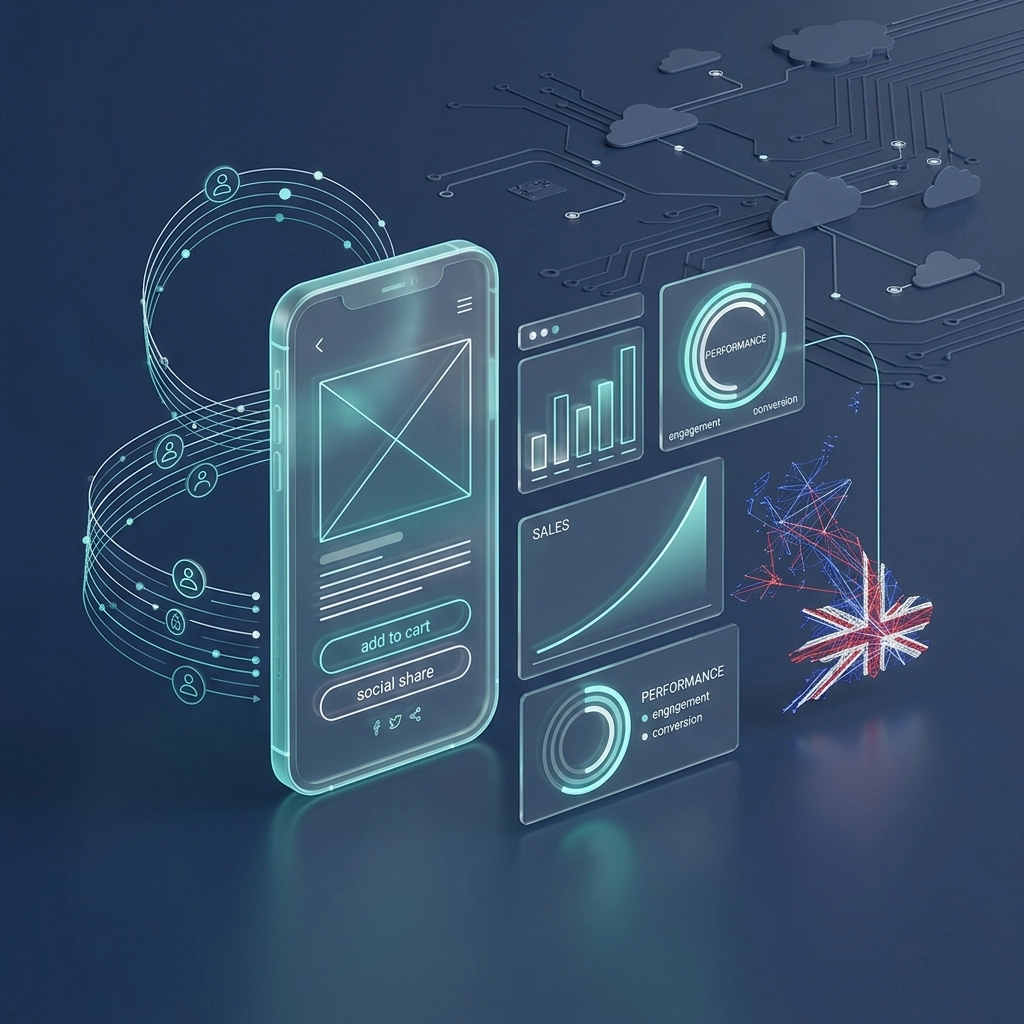
    Mobile-first UI layers showing a social commerce app interface with product feeds and checkout buttons.


    Comparison: Development Approaches for the UK Market

    Feature Custom React Native App Standard Web Wrapper Third-Party Platform (e.g., TikTok Shop Only)
    Performance High Low Medium
    Brand Control Total Limited Very Limited
    Data Ownership You own all data Limited data Platform owns the data
    User Experience Seamless/Interactive Clunky Native to platform
    Development Cost Moderate/High Low Low (Commission based)
    Scalability Unlimited Poor Moderate

    Data Insights: UK Social Commerce Growth Trends

    Below is a representation of the projected growth in social commerce spending per user in the UK from 2023 to 2027.

    • 2023: £450 per annum
    • 2024: £610 per annum
    • 2025: £820 per annum
    • 2026 (Current): £1,050 per annum
    • 2027 (Projected): £1,380 per annum

    Graph showing the upward trajectory of social commerce spending trends among UK consumers.


    The Development Roadmap: From Concept to Launch

    Building a high-performing app requires a structured approach. At Chimpare, we follow a rigorous lifecycle:

    1. Discovery & Strategy: Identifying the specific social triggers for your UK audience.
    2. UI/UX Prototyping: Designing a mobile-first experience that prioritizes discovery.
    3. MVP Development: Focusing on React Native for core features like feed integration and checkout.
    4. Testing (QA): Rigorous testing on various devices and UK network conditions.
    5. Deployment & Optimization: Launching on the App Store and Google Play with a focus on ASO (App Store Optimization).

    Addressing the Stakeholders

    • For Business Owners: A dedicated app increases customer lifetime value (CLV) by fostering a direct community.
    • For Developers: React Native offers the best balance of productivity and performance for rapid iterations.
    • For Marketing Heads: The data gathered from a custom app allows for hyper-personalized retargeting that isn’t possible through standard social ads.

    FAQ

    Q: How much does it cost to build a social commerce app in the UK?
    A: Costs vary based on complexity, but a high-performing MVP typically starts between £30,000 and £60,000. For a more detailed breakdown, see our article on app development costs.

    Q: Is React Native better than Native development for this?
    A: For most social commerce applications, yes. It allows for faster deployment on both platforms without sacrificing the performance needed for social feeds and video.

    Q: How do I handle UK-GDPR in my app?
    A: By implementing privacy-by-design, using UK-based data centers, and ensuring transparent data processing agreements are in place with any third-party AI or payment providers.

    Q: Can I integrate my existing Shopify store?
    A: Absolutely. We specialize in Shopify integrations that allow your app to pull real-time inventory and push orders directly into your existing fulfillment workflow.


    Conclusion: Adapt or Be Left Behind

    The UK retail market is no longer a “bricks and mortar vs. clicks and mortar” debate. It is a race for attention within the social ecosystem. Developing a high-performing social commerce application is a strategic investment in the future of your brand. By choosing the right tech stack (React Native), focusing on UK-specific features (Open Banking, localized UX), and ensuring robust scalability, you can transform your social presence into a high-converting sales engine.

    The future of shopping is social, interactive, and mobile. Is your business ready?

    Ready to Build the Next Big Social Commerce App?

    At Chimpare, we specialize in building cutting-edge mobile solutions that drive growth in the UK market. Whether you’re a startup looking to disrupt the industry or an established retailer modernizing your stack, our team of expert developers and designers is here to help.

    Contact Chimpare today for a free consultation and let’s turn your vision into a high-performing reality.

  • How is Custom Software Development Helping UK Companies? 

    How is Custom Software Development Helping UK Companies? 

    How is Custom Software Development Helping UK Companies
    [ez-toc]

    Companies​‍​‌‍​‍‌​‍​‌‍​‍‌ in the UK are conducting their business in a highly digital and cutthroat environment. Custom software development is helping to solve this problem quite visibly. Businesses are picking personalised digital solutions that facilitate their future objectives and respond to actual business requirements instead of using standard ​‍​‌‍​‍‌​‍​‌‍​‍‌instruments. 

    Custom Software Development refers to the creation of software that is hardware is specifically designed for a company’s business, users, and future development. By means of software development, UK companies are able to make their workflows more efficient, cut down on the time and work that is done manually, and increase their overall business performance. 

    In case a company needs custom software application development to be able to serve its customers through platforms, or custom enterprise software development for internal systems, the business will still be able to use its tailored solutions as it continuously grows further in the ​‍​‌‍​‍‌​‍​‌‍​‍‌market. 

    Custom​‍​‌‍​‍‌​‍​‌‍​‍‌ software development is also very significant to UK businesses in terms of being flexible and controlling costs. A lot of times, the executives are primarily concerned about the cost of the custom software development; however, the benefits in the long run are usually greater than the initial costs. 

    A company that customises software for a business in a trustworthy manner is able to make the business less dependent on different tools, further the integration of the systems, and get a clearer view of the activities through good management of the software development ​‍​‌‍​‍‌​‍​‌‍​‍‌services. 

    Above​‍​‌‍​‍‌​‍​‌‍​‍‌ all, tailor-made software is the tool that UK firms need to be able to maintain their competitive edge in markets that are full of players and have minimal differentiation. The whole range of custom software development solutions is what startups can use to build scalable products, and what enterprises can use to modernise their legacy systems, to still get the same benefit. 

    With the ongoing digital transformation, customised software is not an optional item anymore; it is a wise and necessary investment for those companies that want to expand and be ​‍​‌‍​‍‌​‍​‌‍​‍‌creative. 

    Tired of off-the-shelf software limitations?

    Custom software, perfectly tailored solutions.


    Book Your Free App Consultation

    What is Custom Software Development?

    What is Custom Software Development

    Custom​‍​‌‍​‍‌​‍​‌‍​‍‌ software development means the creation of a new software product specifically designed to fulfil the requirements of a business. The decision is made by companies not to buy a software product with a pre-defined functionality and features, but to develop a custom software to address the unique problems, facilitate the business processes, and be in line with the business goals for the distant future. It is software that works with your business perfectly like a glove and not the other way around. 

    Compared to off-the-shelf products, custom software development solutions have no limitations in terms of flexibility and scalability. They can be created as internal tools, customer-facing interfaces, or even a fully customised enterprise software development ecosystem that integrates different departments of a ​‍​‌‍​‍‌​‍​‌‍​‍‌company. Custom software, like web and mobile applications, as well as intricate back-office systems, is designed to evolve with the business and adjust to changing ​‍​‌‍​‍‌​‍​‌‍​‍‌requirements. 

    UK​‍​‌‍​‍‌​‍​‌‍​‍‌ businesses frequently collaborate with a reliable custom software development company to map out, architect, and hand over these solutions. In other words, the service provider is engaged for the entire journey, namely from requirement gathering and system design to testing, release, and support. 

    Even though the question of custom software development pricing is the most frequent one in business conversations, the emphasis is mainly shifted towards the worth of the investment over time, fewer restrictions, improved efficiency, and lowered dependency on different tools or ​‍​‌‍​‍‌​‍​‌‍​‍‌subscriptions. 

    Therefore, bespoke software creation is essential to UK enterprises committed to technology-driven growth, whether that be expanding their business, venturing into new markets, or simply by acquiring the necessary knowledge on how to best market custom software development services in their local area while concurrently gaining reliable software development ​‍​‌‍​‍‌​‍​‌‍​‍‌services.

    Why UK Companies Are Moving Away from Off-the-Shelf Software?

    Companies​‍​‌‍​‍‌​‍​‌‍​‍‌ in the UK are gradually realising that one-size-fits-all software is no longer able to meet the requirements of fast-changing markets, stricter regulations, and increased customer expectations. 

    In spite of the fact that ready-made tools may appear to be convenient at first, a lot of companies end up changing their processes to fit the software instead of the software that facilitates their operations. 

    Here are the key reasons driving this change:

    • Limited flexibility and customisation

    Mass-market​‍​‌‍​‍‌​‍​‌‍​‍‌ products are designed for a wide range of users and not for particular business requirements. Companies in the UK usually need features that are custom-made for their workflows; therefore, bespoke software development is the way to go if one wants to have more control and be more relevant. 

    • Scalability challenges as businesses grow

    When companies become bigger, standard tools often find it difficult to be compatible with the changes. The choice of custom software development is a solution that can easily be scaled, which makes it a perfect tool for both startups that are growing and big enterprises. 

    • Rising subscription and integration costs

    Quite a few businesses are raising a question of how much custom software development would cost, and later on, finding out that multiple licences, add-ons, and third-party integrations are adding up very fast. Custom software can be a better cost-saving option over ​‍​‌‍​‍‌​‍​‌‍​‍‌time. 

    • Security and compliance concerns

    With​‍​‌‍​‍‌​‍​‌‍​‍‌ GDPR and various industry-specific regulations being enforced in the UK, companies require more stringent control over their data. Through custom enterprise software development, organisations can embed security and compliance into their systems by design. 

    • Poor system integration

    Standard software is frequently unable to connect smoothly with the tools that are already being used. By custom software application development, companies can have the integration that is seamless across different platforms, thus saving time and increasing the accuracy of data. 

    • Need for competitive advantage

    Standard tools hardly ever provide differentiation. Collaborating​‍​‌‍​‍‌​‍​‌‍​‍‌ with a credible custom software development company enables businesses to create unique digital solutions that not only appeal to their customers but also promote innovation and business growth. 

    What are the Key Benefits of Custom Software Development for UK Companies?

    What are the Key Benefits of Custom Software Development for UK Companies

    UK​‍​‌‍​‍‌​‍​‌‍​‍‌ businesses are putting more and more money into the development of custom software since it is a source of real, lasting advantages that standard instruments cannot often supply. As the challenge gets tougher for businesses, regulations become stricter, and customers demand more, tailored software development empowers companies to use their resources more efficiently, grow at a quicker pace and keep their technology under their control. These are the main benefits that have led to this ​‍​‌‍​‍‌​‍​‌‍​‍‌change. 

    Improved efficiency and productivity

    Probably​‍​‌‍​‍‌​‍​‌‍​‍‌ the most significant advantages of software are the degree to which it integrates smoothly with regular business activities. Rather than a situation in which teams have to work around redundant features, custom software development products are designed to correspond to actual workflows. 

    The number of manual tasks is decreased, the sources of errors are made smaller, and employees are allowed to concentrate on more valuable areas of work. If it is finally fitted means always working better and delivering more outputs from fewer ​‍​‌‍​‍‌​‍​‌‍​‍‌inputs. 

    Better scalability for growing businesses

    The limitations of off-the-shelf tools are frequently revealed by growth. Custom enterprise software development enables UK businesses to add users, features, or integrations to their systems without interruption as their organisation grows. Startups and rapidly expanding businesses that require technology to grow with them rather than impede them will find this flexibility very helpful.

    Cost efficiency over the long term

    Many businesses initially ask how much custom software development costs, but the real value lies in long-term savings. Custom-built software that meets the exact needs of a business is more economical in the long run by lessening the reliance on various licences, plugins, and third-party tools. This is the reason why custom software development is significant for enterprises that are geared towards long-term growth and are considering the option of selling services as part of their digital strategy.

    What are Industry-Wise Use Cases of Custom Software in the UK?

    In​‍​‌‍​‍‌​‍​‌‍​‍‌ the different sectors of the UK market, businesses are turning to custom software development as a means of not only tackling complex challenges specific to their industries but also making the part of their work that is routine more efficient. The following are some of the most frequent industry-wise scenarios that demonstrate the significance of custom software development in the UK market ​‍​‌‍​‍‌​‍​‌‍​‍‌today. 

    • Finance and FinTech

    Financial​‍​‌‍​‍‌​‍​‌‍​‍‌ institutions in the UK, for example, banks, FinTech startups, and service providers, are highly dependent on software which is specially designed for them to be able to perform safe transactions, customer onboarding, and reporting in real-time. They develop technologies that can be utilised for fraud detection, compliance monitoring, and data analytics while, at the same time, they maintain security ​‍​‌‍​‍‌​‍​‌‍​‍‌standards. Partnering with a customised software development company keeps banking platforms in line with financial ​‍​‌‍​‍‌​‍​‌‍​‍‌regulations. 

    • Healthcare and Life Sciences

    Customized​‍​‌‍​‍‌​‍​‌‍​‍‌ software development solutions in healthcare are instrumental in various aspects such as patient records management, appointment scheduling, telemedicine platforms usage, and secure data sharing. In light of strict data protection regulations, custom-made systems enable healthcare providers to control access, authenticate data, and stay compliant with ​‍​‌‍​‍‌​‍​‌‍​‍‌GDPR. 

    • Retail and eCommerce

    UK shops employ tailor-made programs to handle stock, give personalised services to customers, and make the process of order delivery more efficient. Individually tailored platforms combine the data of the Internet and the physical store; thus, they can track sales, forecast demand, and send customised offers to customers. Such a degree of command cannot be exercised by merely using ready-made ​‍​‌‍​‍‌​‍​‌‍​‍‌solutions.

    • Manufacturing and Logistics

    Custom​‍​‌‍​‍‌​‍​‌‍​‍‌ software is a great advantage for manufacturing and logistics enterprises to support supply chain management, warehouse automation, and real-time tracking. By using bespoke software development services, companies can effectively decrease the occurrence of delays, raise the level of accuracy, and keep track of the performance of their complex operations, thus their processes become not only quicker but also more ​‍​‌‍​‍‌​‍​‌‍​‍‌trustworthy. 

    • Education and EdTech

    Custom​‍​‌‍​‍‌​‍​‌‍​‍‌ software development is the key for educational institutions such as schools and universities, as well as EdTech providers in the UK, to build learning management systems, student portals, and virtual classrooms. These platforms revolve around particular pedagogical methods and the requirements of the administration, thus they provide the adaptability which is usually lacking in the standard ​‍​‌‍​‍‌​‍​‌‍​‍‌tools. 

    What Technologies Are Used in Custom Software Development?

    Modern​‍​‌‍​‍‌​‍​‌‍​‍‌ bespoke software development necessitates a judicious blend of technologies that are evaluated against business targets, system intricacy, and scalability prospects. UK companies collaborate intensively with a custom software development agency to determine which instruments will be most beneficial for them if they are constructing client-facing platforms.

    The following are a few of the frequently adopted technologies that have been briefly ​‍​‌‍​‍‌​‍​‌‍​‍‌explained. 

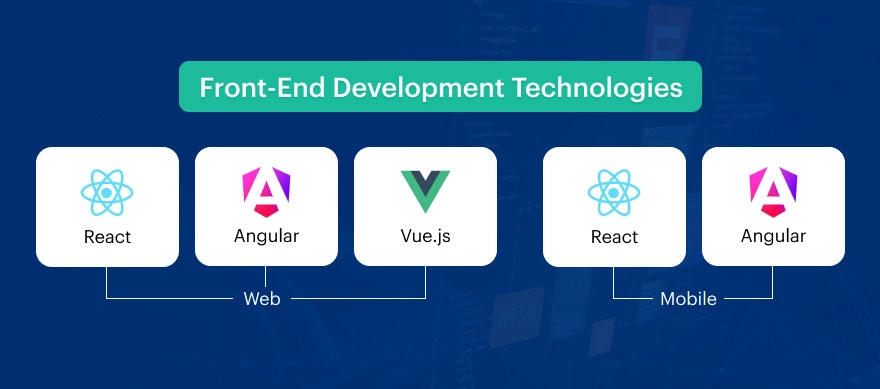
    Front-end technologies

    Front-End Development Technologies 
    These​‍​‌‍​‍‌​‍​‌‍​‍‌ technologies determine the visual aspects and the interactive parts of the applications. Among​‍​‌‍​‍‌​‍​‌‍​‍‌ the most popular are React, Angular, and Vue.js for web applications, whereas for mobile, there are frameworks for iOS and Android. The prime focus of front-end tools in custom software application development is to ensure the application is easy to use, quick, and to carry out a responsive design so that the users get the same experience no matter what device they ​‍​‌‍​‍‌​‍​‌‍​‍‌​‍​‌‍​‍‌​‍​‌‍​‍‌use. 

    Back-end technologies 

    Back-End Development Technologies

    The​‍​‌‍​‍‌​‍​‌‍​‍‌ back end is responsible for data management, business logic, and system efficiency. Usually, the technologies are .NET, Java, Node.js, and Python. These are the main instruments for building reliable custom software development solutions that are capable of complex operations, integrations, and a large number of users.  

    Databases and data management

    Databases and data management

    Custom software needs structured and secure data storage. SQL​‍​‌‍​‍‌​‍​‌‍​‍‌ databases (for instance, PostgreSQL or MySQL) and NoSQL databases (such as MongoDB) are the two major types of databases that are chosen based on the needs of the project. The layer is of particular significance to the enterprises that deal with confidential data, thus giving a reason to custom software development for control and ​‍​‌‍​‍‌​‍​‌‍​‍‌security. 

    Cloud platforms and hosting

    Cloud platforms and hosting

    Cloud​‍​‌‍​‍‌​‍​‌‍​‍‌ services like AWS, Microsoft Azure, and Google Cloud have become essential parts of bespoke software development. With their help, companies in the UK are able to scale their applications in a simple manner, cut down on the cost of infrastructure, and increase availability without the need to handle physical servers. 

    APIs and system integrations

    APIs are the means through which different systems can talk to each other. In the case of custom software, APIs are employed to link up payment gateways, CRM tools, accounting systems, and third-party services that facilitate the business to function smoothly across various ​‍​‌‍​‍‌​‍​‌‍​‍‌platforms. 

    What Challenges UK Companies Face in Custom Software Projects?

    While​‍​‌‍​‍‌​‍​‌‍​‍‌ developing software that is tailored to a company’s needs is definitely good for the company in the UK, there is a possibility that such companies will encounter some problems during the process, particularly when they do not plan their projects carefully. 

    There are some major challenges, with a short explanation for each, which are listed ​‍​‌‍​‍‌​‍​‌‍​‍‌here. 

    Changing requirements

    Not​‍​‌‍​‍‌​‍​‌‍​‍‌ having a well-defined requirement document from the very beginning is one of the most frequent problems that arise during the development of custom software. When objectives keep changing, the time and money that were planned for the project will be impacted. Keeping a clear record of what has been agreed upon and having regular conversations with a company that provides custom software development services will diminish the chances of having the same work done again due to misunderstandings. 

    Budget and cost concerns

    It is quite common for a company to be interested first in how much custom software development would cost and only later to find out that the expenses can be high if the scope of a project keeps changing. In the absence of a proper plan, it is quite likely that in order to have more features and integrations, the time needed for development will become longer, and in turn, the costs will ​‍​‌‍​‍‌​‍​‌‍​‍‌increase. 

    Choosing the wrong development partner

    Not every provider has the same degree of experience. Developing​‍​‌‍​‍‌​‍​‌‍​‍‌ software that is tailored to your specific needs, taking the wrong partner along the way might result in low-quality code, late delivery, and weak support after the launch. UK companies benefit from choosing experienced providers offering reliable software development services.

    Integration with existing systems

    Custom software often needs to work alongside legacy systems. Integrating new custom software with older platforms can be complex and time-consuming if not handled properly, especially in large organisations using custom enterprise software development solutions.

    User adoption and change management

    In fact, software that is poorly designed can become a complete failure due to a lack of proper user-friendliness. It is frequently the case that employees are resistant to new ways if their training and onboarding have been neglected. The most effective method of gaining their acceptance is to inform them what custom software development is and why it is important, and then the success will be ​‍​‌‍​‍‌​‍​‌‍​‍‌sustainable

    Generic apps failing your unique needs?

    Bespoke software unlocks true potential.


    Talk to Our Experts Now

    How To Choose The Right Custom Software Development Company in UK?

    Choosing​‍​‌‍​‍‌​‍​‌‍​‍‌ the right custom software development company is arguably the most important decision your UK business has to make when planning to build reliable and scalable digital solutions. Numerous companies offer software development services, and therefore, you must focus on the long-term value instead of the price only. A good partner will not only comprehend the concept of custom software development but also help your business achieve its goals through ​‍​‌‍​‍‌​‍​‌‍​‍‌technology. 

    Here are some key factors UK companies should consider:

    Proven experience and industry knowledge

    Look for a company with hands-on experience in bespoke software development across different industries. A strong portfolio shows their ability to deliver both custom software application development and large-scale custom enterprise software development projects.

    Clear understanding of business requirements

    If​‍​‌‍​‍‌​‍​‌‍​‍‌ a company is a good development partner, then apart from merely going through your operations, challenges, and objectives, they also would not disclose one line of code without that. In such a manner, it is possible to be quite sure that tailor-made software development products continue to be a viable option, meet the genuine needs, and have the capability of being modified for future ​‍​‌‍​‍‌​‍​‌‍​‍‌changes. 

    Transparent pricing and communication

    Many​‍​‌‍​‍‌​‍​‌‍​‍‌ businesses are worried about the expenditure of creating tailor-made software. A reliable company will definitely save you from the unpleasant surprises of the project stages by giving you open cost plans, feasible schedules, and letting you know the progress of the work from time to ​‍​‌‍​‍‌​‍​‌‍​‍‌time. 

    Strong technical expertise and modern technologies

    The​‍​‌‍​‍‌​‍​‌‍​‍‌ correct partner will use modern, safe, and scalable technologies to build custom software that will perform well today and will have the capacity to grow in the future. 

    Post-launch support and maintenance

    Software is not like a one-time purchase; it has to be kept updated and improved ​‍​‌‍​‍‌​‍​‌‍​‍‌regularly. Be with a company that provides you with support after the development and handing over of the project, rather than just a short-term ​‍​‌‍​‍‌​‍​‌‍​‍‌relationship. 

    Why Choose Chimpare for Custom Software Development?

    Chimpare​‍​‌‍​‍‌​‍​‌‍​‍‌ stands out as a reliable figure in the realm of custom software development, supporting UK companies in the creation of personalised digital solutions that effectively address real-world issues. Emphasising quality, transparency, and business results to the core, Chimpare operates as a technology partner, not merely a service provider. 

    Hence, the team boots software solutions startups to enterprises in expansion with software tailored to be safe, scalable, and in harmony with the business objectives of the client at the end of the enterprise, thereby giving a clear indication of why custom software development is significant in the present competitive ​‍​‌‍​‍‌​‍​‌‍​‍‌market. 

    • Experienced team delivering end-to-end custom software development solutions
    • They​‍​‌‍​‍‌​‍​‌‍​‍‌ possess the knowledge and experience in both custom software application development and enterprise systems.
    • They always communicate clearly, timeframes are achievable, and prices are quite transparent. 
    • Apart from security, scalability, and performance being the major concerns, the organisation also concentrates strongly on them.
    • Post-launch support is dependable, and there is continuous ​‍​‌‍​‍‌​‍​‌‍​‍‌improvement happening. 

    By partnering with the right development team, companies in the UK can use software as their competitive advantage. This can be achieved by internally building systems, developing customer platforms, or even by venturing into new digital opportunities, such as figuring out how to sell custom software development services in their own ​‍​‌‍​‍‌​‍​‌‍​‍‌markets.

    Scalability issues capping your expansion?

    Custom builds scale without limits.


    Start Your Project Today

    Conclusion

    Custom​‍​‌‍​‍‌​‍​‌‍​‍‌ software development has been a major factor in the growth of UK companies, no matter what sector they are in. As businesses become more competitive, they have to meet the ever-changing demands of customers and obey stricter rules; the use of off-the-shelf tools is not enough any more. 

    By bespoke software development, organisations can build up the systems which are in line with their procedures, can grow with a positive outlook, and are able to retain control of their data and security. It is the move of all companies, whether they are startups or big enterprises, towards custom software development solutions that shows most clearly their understanding of the nature of custom software development and its role in their long-term success. 

    While questions such as how much does custom software development cost often arise, UK companies are increasingly focusing on value rather than upfront expense. Tailored platforms improve efficiency, reduce operational friction, and eliminate the limitations of generic tools. Whether through custom software application development or large-scale custom enterprise software development, businesses gain flexibility that directly impacts productivity and customer experience.

    Ultimately, this growing adoption highlights why custom software development is important in today’s digital economy. Partnering with the right custom software development company and investing in reliable software development services allows UK organisations to innovate, adapt, and compete with confidence, turning technology into a strategic advantage rather than just a support function.

    FAQs


    What is custom software development?


    Custom software development is the process of building software specifically designed for a business’s unique needs, workflows, and goals, rather than using ready-made solutions


    It helps UK businesses improve efficiency, stay GDPR-compliant, scale easily, and gain a competitive edge with software tailored to their operations.


    The cost depends on project size, features, and complexity, but most UK projects range from £15,000 to £150,000+, with long-term value outweighing initial costs


    Timelines vary based on scope; small applications may take 2–4 months, while larger enterprise systems can take 6–12 months or more.


    Look for proven experience, clear communication, transparent pricing, strong technical skills, and reliable post-launch support.

    Found this post insightful? Don’t forget to share it with your network!


    Related Articles

  • What Makes Enterprise Software Development Essential?

    What Makes Enterprise Software Development Essential?

    Enterprise-Software-Development
    [ez-toc]

    In today’s digital first world, companies are equally driven to innovation, scope and great pressure to give customers and employees. This is where Enterprise Software Development plays a transformative role.

    Unlike traditional software, business software is designed to manage complex workflows, streamline operations and enable them to make smart decisions throughout. With trends such as Cloud Computing, AI-Operated Automation and Low Code Enterprise App Development Industries, strong business solutions have never been higher.

    Companies are now heading for business software development to create applications that fit their specific requirements, whether it is Enterprise Resource Planning (ERP), Customer Management or Supply Chain adaptation.

    Partnering with the right business software development company ensures access to skilled business software developers who can design scalable, secure and future systems. From corporate application software to innovative corporate application platforms, these solutions make companies strong in today’s changing markets to be competitive, agile and development oriented.

    Unlock Web Development Potential for Your Business Today

    From roadmap to execution, we’ll help you implement AI that drives measurable growth.


    Book Your Free App Consultation

    What is Enterprise Software Development?

    Enterprise software development refers to the process of designing, building and maintaining applications that meet the complex requirements of large organisations. Unlike the tool off the shelf, the enterprise software is designed to organise the workflow, manage the workflow, and ensure that different departments, from finance to human resources, work together.

    With a quick digital transformation, businesses move quickly towards adapted software development for companies to meet their unique operating challenges.

    Today’s market requires business solutions that are beyond basic functionality. From Enterprise Resource Planning (ERP) and Customer Relationship Management (CRM) to Advanced Enterprise Application Software, organisations depend on these devices to improve their efficiency and decision-making.

    Top company software development companies are now integrating AI, Cloud Computing and IoT in their offers, making modern business applications smarter and more scalable. Skilled business software developers play an important role in distributing enterprise app development and enterprise software development services that allow companies to remain competitive.

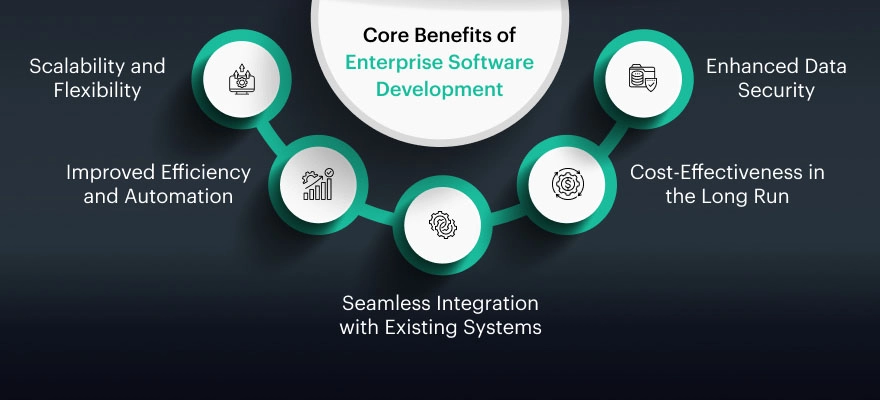
    What are the Core Benefits of Enterprise Software Development?

    In today’s digital economy, companies cannot rely on general equipment to manage operations. They require business software development to create strong, scalable and safe systems that match their developed needs.

    Unlike the software outside the shelf, adapted business software development ensures that the solutions are specially designed for business goals, whether it is streamlining processes, enabling collaboration or managing data more efficiently.

    The partnership with Enterprise Software Development Company allows organisations to develop business solutions and get a competitive advantage.

    Core-Benefits-of-Enterprise-Software-Development

    1. Scalability and Flexibility

    Modern businesses develop hastily, and their software must grow with them. Through app development, businesses can easily score their structures, without resolution, new customers, markets or technology.

    2. Improved Efficiency and Automation

    Companies such as organisational resource plan (ERP), with software, automate repetitive responsibilities, reduce guide errors and increase decision-making. This results in smoother operations and better productivity.

    3. Enhanced Data Security

    Security is a top priority. Enterprise software developers design applications with advanced compliance and encryption measures, ensuring sensitive data remains protected.

    4. Cost-Effectiveness in the Long Run

    Though the initial investment in employer software program improvement offerings can be high, tailor-made systems reduce long-term operational costs by eliminating inefficiencies.

    5. Seamless Integration with Existing Systems

    A properly constructed corporation application integrates smoothly with existing equipment, making sure departments from HR to finance play in sync without information silos.

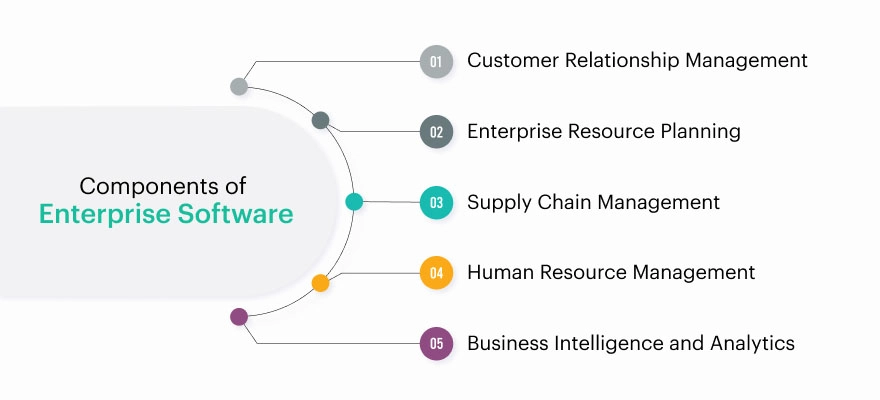
    Components-of-Enterprise-Software

    What are the Components of Enterprise Software?

    Successful business software development is not just about making applications; It is about creating a connected ecosystem that addresses each important business function. Modern organisations rely on different types of business applications to streamline workflows, improve cooperation and make data-driven decisions.

    This is why most of the most important companies’ software development companies design solutions around specific business requirements, ensuring scalability and integration. Let’s look at the main components that form the basis for effective business solutions.

    1. Customer Relationship Management

    A CRM system helps companies adapt customer interactions, track sales pipelines and services. Through adapted business software development, CRM can be tailored to meet the requirements of a unique industry and strengthen customer loyalty.

    2. Enterprise Resource Planning

    ERP is one of the most important kinds of Enterprise Application Software. It centralises functions like finance, supply chain, and operations right into a unmarried platform. With the proper organisation software builders, corporations gain higher visibility, reduced fees, and increased efficiency.

    3. Supply Chain Management

    SCM applications optimise inventory, logistics, and vendor management. These enterprise software development services ensure seamless product movement and minimise bottlenecks.

    4. Human Resource Management

    HRM systems streamline recruitment, payroll, overall performance tracking, and employee engagement. With superior organisation app improvement, HR teams could make smarter decisions.

    5. Business Intelligence and Analytics

    Modern corporate software programs contain BI tools to convert uncooked information into actionable insights. This empowers leaders to make real-time selections, making sure groups live aggressively.

    By integrating these essential additives, groups can create effective employer software program answers that not only meet current needs but also put them together for future growth.

    Smarter Decisions. Faster Outcomes.

    Leverage expert web development consulting to cut costs, boost efficiency, and stay ahead of competitors.


    Talk to Our Experts Now

    Why Enterprise Software Development Is Essential?

    Any unexpected changes in monetary environment, a company’s software development is not an alternative; it is a necessity. Companies attempt to maintain pace with technological advancements, customer expectations, and global competition.

    Organisations can use adapted business software development to construct an equitable business application that addresses their specific operational concerns while also promoting growth and innovation.

    1. Supporting Digital Transformation

    Modern establishments are undergoing a large digital transformation, adopting cloud computing, AI, and automation to remain aggressive. Robust agency software program improvement services help agencies integrate these technologies seamlessly into existing organisational solutions, ensuring operational performance and innovation.

    2. Meeting Evolving Business Needs

    Businesses constantly face new challenges, from scaling operations to coming into new markets. Partnering with a dependable corporation software development business allows organisations to implement flexible, scalable company utility software which can adapt to changing requirements. Skilled organisation software program developers ensure the machine is designed for long-term success.

    3. Enabling Real-Time Decision Making

    With proper business app development, organisations can use real-time analysis and insight and strengthen their leaders to make data-driven decisions. Solutions such as Enterprise Resource Planning (ERP) and Business Intelligence Modules use information in the Actional Intelligence Information Departments.

    4. Ensuring Competitive Advantage

    Adapted business software provides companies a strategic advantage of improving efficiency, improving the customer experience and enabling rapid innovation. By investing in Advanced Enterprise Software Development Services, companies may be ahead of participants while maintaining agility in a dynamic market.

    In short, equipped organisations for business software development with equipment that requires them to run smart, fast innovation and increase continuously.

    What are the Challenges in Enterprise Software Development?

    Although the development of enterprise software programs is important for modern agencies, it comes with demanding situations. From higher advanced costs to complex integration requirements, organisations should carefully plan and perform their digital initiatives.

    A reliable business software development company can help navigate these obstacles by providing the right expertise, equipment and business software development services to companies. Below are some of the biggest challenges companies often face.

    1. High Initial Investment

    Developing custom enterprise software development projects requires significant investment. Unlike the tools off the shelf, the tailored Enterprise application includes extensive planning, advanced business app development and continuous updates. Although starting costs can be high, these solutions often appear to be more cost-effective in the long term due to efficiency gains and automation.

    2. Complex Implementation

    It can be challenging to integrate a commercial software package with existing systems such as ERP, CRM, or HR. Effective business software developers should ensure even integration by reducing shutdowns. This complexity increases when organisations use chronic systems or large operations are spread across many places.

    3. Change Management and User Adoption

    One of the most underestimated challenges is resistance to change. Employees may find it difficult to adapt to the new workflow for business software or workflows again. Effective training from the business software development company is important for using clear communication, continuous support and maximising the return from Enterprise Solutions.

    Your AI Transformation Starts Here

    Get a custom plan built around your business goals—without the tech overwhelm.


    Start Your Project Today

    What are the Best Practices for a Successful Enterprise Software Development?

    Production of successful business software development projects requires more than technical expertise; It requires a strong focus on strategy, plan and user needs. Together with transformed digital transformation industries, companies must use best practices to prove their business solutions scalable, safe and for the future. Whether it is a customised business software development or large-scale business app development, these practices help to reduce the risk and maximise ROI.

    1. Understanding Business Goals

    Each successful project begins with a clear understanding of business goals. A reliable business software development company works closely with stakeholders to identify pain points, define workflows and adjust the company’s application with long-term organisational goals.

    2. Choosing the Right Technology Stack

    It is important to choose the right tools, frames and platforms. Modern business software developers use cloud technologies, AI and automation to distribute advanced business applications. Continuous testing, general performance monitoring, and regular updates guarantee that business software is secure, efficient, and adaptable.

    3. Prioritising User Experience (UX)

    Adoption will suffer if employees find the technology difficult to use, regardless of how effective it is. Improves intuitive design, mobile-friendly business software and role-based dashboards and dedication.

    4. Continuous Testing and Maintenance

    Software is not a review investment; It develops with business needs. Continuous checking out, overall performance tracking and normal updates ensure that the enterprise software stays secure, green and adaptable. Reliable Enterprise Software Development Services include scaling, bug fixing and support for handling features.

    By following this best practice, organisations can ensure their business software development journey, not only functionality, but also long-term commercial values.

    What are the Future Trends in Enterprise Software Development?

    Enterprise software landscapes are developing rapidly, with innovation, business requirements and pushing against digital-first ecosystems. Here are some of the most effective trends:

    1. Cloud-Based Solutions

    Cloud-Based-Solutions

    Cloud Adoption has become a priority for almost all business software development companies. Cloud-based business apps replace the on-premises system, with benefits such as scalability, cost efficiency and access. From ERP to EAS, corporations are depending on clouds to ensure agility, better cooperation and information safety.

    2. Artificial Intelligence and Automation

    Artificial-Intelligence-and-Automation

    AI and automation are no longer future concepts; They are mainstream. In customised business software development, AI allows for future sayings, a Chatbot for Customer Aid and Smart Process automation. It reduces human mistakes, accelerates workflows and strengthens companies with data-driven insights. Enterprise software developers are quickly building to distribute smart applications in machine learning algorithms and natural language processing in business solutions.

    3. IoT Integration

    IoT-Integration

    IoT changes the activation of the Entrepreneurship Activation by activating real-time data collection and monitoring. From connected factories to smart logistics, IoT-operated business applications allow companies to make better operating decisions. When combined with AI, IoT provides powerful commercial enterprise solutions that grow productivity and enhance customer reviews.

    4. Low-Code and No-Code Platforms

    Low-Code-and-No-Code-Platforms

    This is why low-code structures and no-code are gaining popularity in enterprise software development offerings. These platforms allow non-technical teams to quickly produce and customise applications, reducing the dependence on coding-thorough growth cycles. For companies, this means rapid innovation, quick response to the market demands and better efficiency.

    Conclusion

    Investing in enterprise software development is not elective; it’s far critical for organisations aiming to thrive in today’s digital-first landscape. From ERP to adapted improvement of the employer program, they streamline solution operations, automate strategy and provide real-time insights that help organisations to scale effectively.

    By working with a reliable business organisation for companies, the group can use advanced technologies such as Cloud Computing, AI and IoT, which ensures long-term adaptability and flexibility to create tailor-made employer packages. The result is stepped forward efficiency, reduced charges, and a more potent basis for innovation.

    Ultimately, organisation app development is set more than simply technology; it’s about riding the boom and virtual success. Modern corporate utility software program empowers companies to make data-driven decisions, beautify patron reports, and hold a competitive edge in rapidly evolving markets.

    With professional organisation software program developers constructing scalable and secure solutions, companies can liberate the entire potential of digital transformation. In short, making an investment in business agency software improvement services is a strategic move that allows groups to future-proof their operations and attain sustainable fulfilment.

    FAQs


    1. Why do enterprises need custom software development?


    Enterprises need custom software development to address unique business needs, improve efficiency, and gain a competitive edge with solutions tailored specifically to their processes and goals.


    Examples include Enterprise Resource Planning (ERP), Customer Relationship Management (CRM), Supply Chain Management (SCM), Human Resource Management (HRM), and Business Intelligence (BI) tools.


    It offers scalability, automation, enhanced data security, seamless integration with existing systems, and long-term cost savings while supporting digital transformation.


    The timeline varies based on complexity, features, and customisation, but generally, enterprise software development takes between 4 to 12 months for a full-scale application.

    Found this post insightful? Don’t forget to share it with your network!


    Related Articles

  • What is Custom Software Development? A Complete Life Cycle Guide

    What is Custom Software Development? A Complete Life Cycle Guide

    What is Custom Software Development_ A Complete Life Cycle Guide-1
    [ez-toc]

    Our day-to-day life is rationally contingent on technology. We can observe that most businesses including the established and the startups rely on custom software development to strengthen their market existence & start operating online.

    With the custom software development, you can enable your business to adopt a better-organized roadmap which helps to make business operations advantageous and resource-efficient.

    In order to develop software with particular features, you need to plan ahead and follow a procedure. Planned and protocolled steps create an SLDC (Software Development Life Cycle).

    Companies in any industry can reap numerous benefits from choosing the right custom software development process. The healthcare industry, online banking, and other business sectors are among them.

    Software bugs may be introduced unintentionally if a software development company UK fails to follow all protocols involved in this process. It is, therefore, necessary to understand the entire process when searching for a reliable software development company UK.

    Let’s first understand what custom software development is, and then we will move forward to the SDLC.

    Custom Software Development – A Brief Overview

    In custom software development, users, functions, or organizations are designed, created, deployed, and maintained. The development of custom software differs from commercial off-the-shelf software (COTS). A COTS satisfies a wide range of requirements, making it easy to package, market, and distribute.

    However, custom software is developed by the software developers for a particular set of requirements, such as:

    • A manufacturer requires field service equipment for maintenance
    • Banks or customers require a unique functionality in an online booking app

    A study says, there are 26.9 million custom software developers globally who can skyrocket your development part.

    Custom software development is usually conducted by in-house software developers or outsourced to a third party. It is the same process and methodology for developing custom software as it is for developing any other type of software. 

    As with any other software project, a custom project would go through similar steps such as requirements gathering, code development, testing, and deployment, as well as follow similar methodologies.

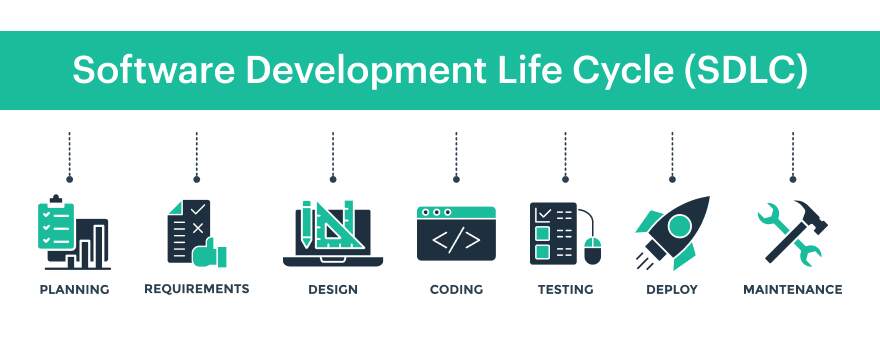
    What is the Software Development Life Cycle (SDLC)?

    In software development and maintenance, the Software development process refers to a structure that includes all activities, tasks, and processes. The structure covers the whole process from the definition of the requirements to the end of the system’s life cycle. 

    By accomplishing the 7 easy stages, you can swiftly create and deliver a product that serves the needs of the business. Moreover, these stages are properly aligned with your project budget, demands that it has, QA testing, and finally the deployment time. However, these stages might fluctuate subject to the development model preferred by the software development company UK for conducting its operations.

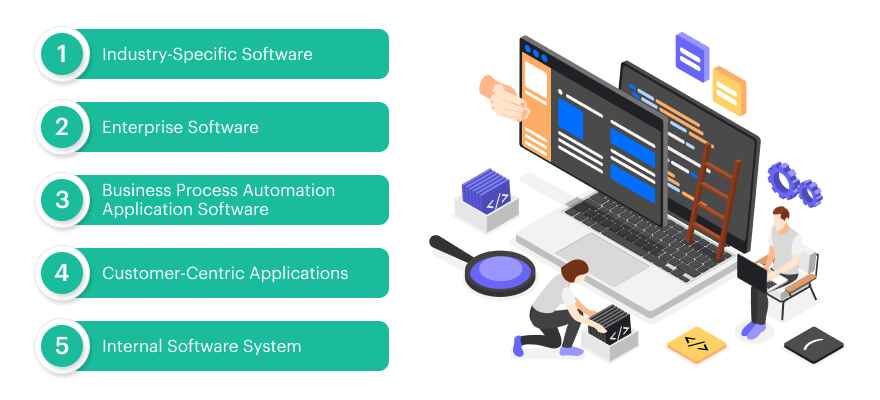
    Types of Custom Software Solutions

    Custom software solutions are included in the solution to help firms overcome certain obstacles, enhance processes, and maintain their competitiveness. These kinds of solutions are frequently categorized as industry-specific software, mobile application software, or enterprise software. Each has special uses and benefits of its own.

    1. Industry-Specific Software

    Typically designed according to the specifications of individual industries, such as health care, education, finance, manufacturing, or retail, these are specialized software applications that exhibit functionalities and a set of rules according to the industry’s standards and regulations. 

    2. Enterprise Software

    The modular software suite primarily supports the fundamental operations of large organizations and includes ERP (Enterprise Resource Planning), CRM (Customer Relationship Management), SCM (Supply Management Chain), and BI (Business Intelligence) tools, all of which help manage complex business processes.

    3. Business Process Automation Application Software

    Designed to automate routine repetitive tasks, resulting in increased efficiency and little or no manual work. Examples of this application software include workflow management, document management, and project management.

    4. Customer-Centric Applications

    These applications are intended to increase user engagement and experience. This involves online booking systems, self-service systems, web portals, and mobile applications that act as intermediaries between the customer and business.

    5. Internal Software System

    This kind of program is used by an organization to carry out daily operations in the organization. It will be able to do things such as create employee schedules, manage inventory, handle every HR need and promote collaboration across teams.

    Data Management and Analytics Tool

    They make it possible for companies to gather, arrange, and evaluate data in order to make better decisions. Custom reporting applications, data warehouses, and business intelligence tools are all included.

    1. E-commerce and Online Platforms

    Websites that offer goods and services online are referred to as e-commerce. This system will handle all e-commerce solutions, including online stores, payments, orders, inventories, and customer relationship management.

    2. Content Management Systems (CMS)

    A tool used by businesses in creating, managing, and sharing content online. CMS is a common term for anything used to edit and publish online content on website pages, blogs, or shops.

    3. Integration and Middleware Solutions

    Integrate existing systems and software with an organization. This software helps to share data from one system to another, automate workflows, and improve the integration of tools with each other.

    4. Compliance and Regulatory Solutions

    Custom tools that automate the process of following different industry rules and laws. These are the applications around compliance management, audit trails, or report generation for regulators.  

    Technological evolution has brought into existence many forms of software. AI-powered solutions, for instance, use artificial intelligence to automate functions, prediction, and decision making. It will be entirely through chatbots, virtual assistants, and recommendations systems.  

    5. Blockchain Based Solutions

    Secure and transparent mechanisms in the management of data and transactions are offered through this technology. It works efficiently in finance, but its use can be extended to other industries.

    Custom Software Development Life Cycle Stages

    1. Determining the idea & planning through it

    Every project requires solid planning and ideation. For that, brainstorming effectively will make you implement that project. 

    So, the first stage of each project is strategic planning. In this stage, you have to primarily focus on the methodologies to adapt, determine resource availability, and ascertain the possible challenges associated with the project. Moreover, you are required to determine the scope of the project, and the cost it will incur.

    Besides that, the planning phase helps us to determine the potential obstacles and the right measures to eliminate those barriers.

    It is necessary for the custom software development company UK to learn about the customer’s problems and expectations during this stage. In order to optimize workflow operations, developers must understand customer expectations and problems.

    2. Defining & Analyzing the Requirements

    In this stage, you can determine the feasibility of the project and the requirements associated with it. 

    Requirement defining basically involves what the application software will do and how to move forward with the requirements. Let’s take an example: a social media app should have the basic requirement of connecting with a friend. Whereas a project on stocks might need a search feature to enable easy searching of inventory.

    These requirements also include the resources specifically needed for developing this project efficiently. Take an example: to develop software for controlling a custom manufacturing machine, you will require a machine.

    3. Designing & Modeling

    This phase of the SDLC models the way an application software will work. Some facets of the design phase comprise:

    • Architecture – An architecture identifies how the application should be developed, what programming languages should be used, industry practices, and how any templates or boilerplates should be used.
    • User Interface – The user interface of the software describes how users interact with it, as well as how it responds to what they enter.
    • Platform – A platform defines what type of software runs on what type of computers.
    • Programming – The process of creating application software that solves problems and performs tasks is referred to as programming.
    • Security Measures – Defining the security measures for the application software, which include encrypting SSL traffic and securing passwords is one example of security measures.

    As part of the Design phase, prototyping can be conducted. An iterative software development model uses prototypes to create early versions of software. 

    It is possible to show stakeholders this “hands-on” design. Make improvements to the application based on feedback. It is cheaper to alter the prototype phase rather than make changes to the codes in the developmental phase.

    4. Software Development

    With this phase, your actual program code starts. A single person can handle a small project but you require a team of experts to accomplish a complex project. 

    This stage basically involves working with access control or SCM applications. Using these software systems, the developer would be able to track the code modifications easily. It will also help easily ensure congruity between the different team projects and to guarantee that the intended objective is achieved.

    Many more functions like polishing the skills and working as a team, error finding, waiting for the test results, compiling the code to let the application software run etc is involved in this developmental phase of the custom software development life cycle. With the help of SDLC, these delays are easily estimative, so the developers can be enrolled with other duties.

    5. Bug Finding

    It is crucial to try & test an application thoroughly before launching it in front of users. Testing like security testing is automated in nature. If the deployment involves complexities, consider testing it in a particular setting. 

    The main reason for testing an application is to guarantee that each & every functionality involved in it is true to its operations.

    Moreover, this phase of the SDLC should also ensure that each part of the application software is working flawlessly together. Consider doing the performance test in order to remove errors that users face. Doing this will significantly help with increased and better usage rates as well as user satisfaction.

    6. Deployment

    The deployment phase includes making the application available to the general public. A lot of companies are automating the deployment phase. It can be easier this way just like a payment portal. This can also be installing an app on a smartphone. 

    Don’t get bewildered by the complexity of this stage. One such example can be to update the database of a whole company’s newly-designed application. This can take a long time as integrating the new upgrade is time-consuming.

    7. Operations and Maintenance

    Here, we arrive at the last stage of our custom software development life cycle. You have completed the application and now the users are using it too. 

    Still, it is crucial to take care of the operation & maintenance part. Here, the users are in charge of finding the errors and glitches. As they find it, you can resolve it which invites a new software development cycle.

    Furthermore, you can have a software development process for the new release that you offer. It will go on in each of the future releases.

    Bottom Line

    Custom software development & software development life cycle gives you a clearer picture of what is happening with your software development process as well as where it can be improved. 

    Similarly to many business processes, SDLC analyzes and improves the software development process. Managing production dates and day-to-day coding are streamlined by it.

    A custom software development company UK can skyrocket your SDLC in no time. With this, they can also be your development partner. So what are you waiting for? Grab the service at affordable prices now.

    Build Your Vision Fast

    Hire Custom Software Developers Now!


    Hire Custom Software Developers

    Found this post insightful? Don’t forget to share it with your network!


    Related Articles