
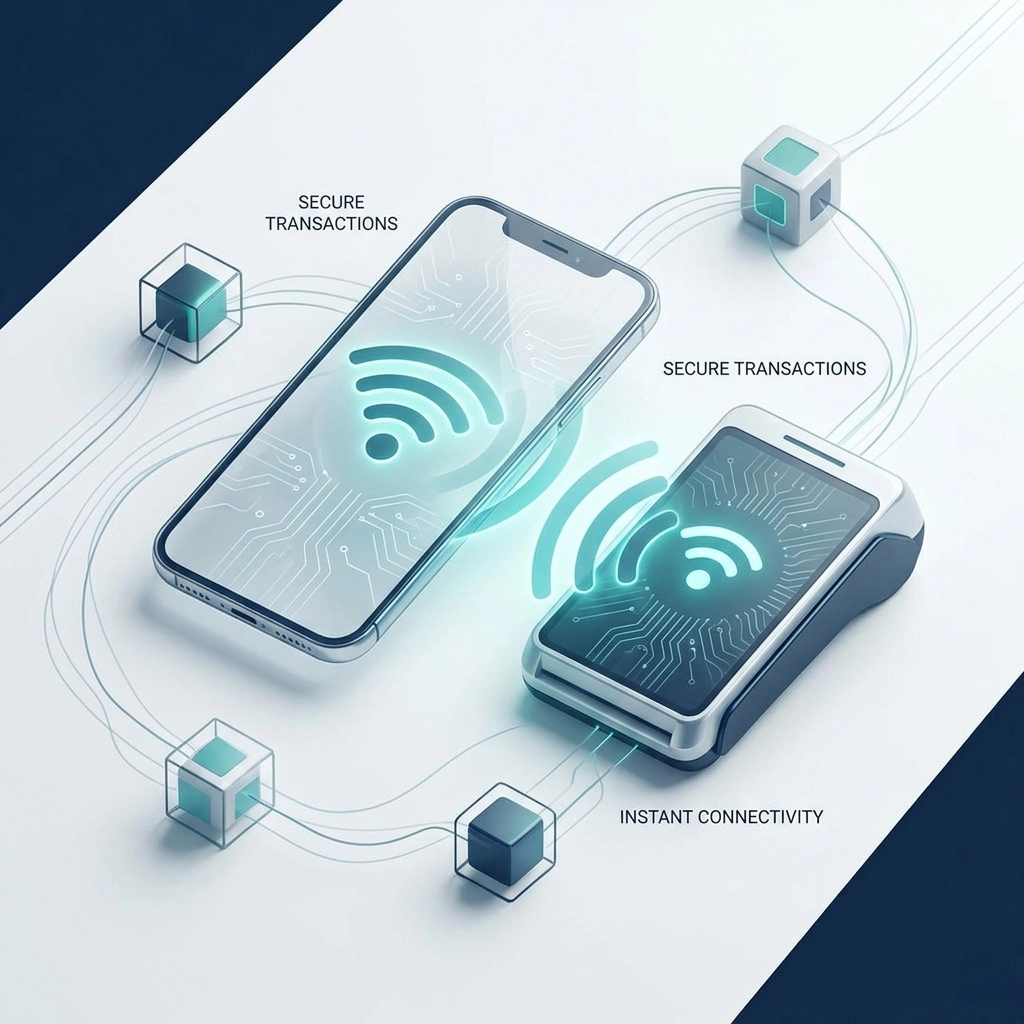
Welcome to 2026, where the "tap" has become the primary language of global commerce and interaction. If you have touched your phone to a payment terminal, tapped a smart poster to download an app, or used a key fob to enter your office today, you have engaged with Near-Field Communication (NFC).
But for businesses looking to stay ahead of the curve, NFC is no longer just about "contactless payments." It has evolved into a cornerstone of digital transformation services, enabling smart app solutions that bridge the gap between the physical and digital worlds. At Chimpare, we’ve seen a massive surge in bespoke software development requests that integrate NFC to streamline everything from healthcare logistics to high-end retail experiences.
In this comprehensive guide, we will break down exactly what NFC is, how it functions under the hood, and why your business needs a robust NFC strategy to remain competitive in today’s hyper-connected landscape.
Quick Glossary: NFC Full Form and Meaning
NFC Full Form: Near-Field Communication
NFC Meaning: NFC is a short-range wireless technology that lets two compatible devices communicate when they are placed very close together, usually within a few centimeters. In everyday terms, it powers quick tap-based actions such as contactless card payments, mobile wallet transactions, access control, and fast device pairing.
Table of Contents
What is NFC? A 2026 Perspective
The Mechanics: How NFC Works
Key Operating Modes for Business
NFC vs. Bluetooth vs. RFID: The Comparison
Transformative Use Cases: Beyond the Payment Terminal
NFC Tags: The Silent Drivers of Smart App Solutions
Security in the Tap-and-Go Era
Common Mistakes in NFC Implementation
Developing Your NFC Strategy with Chimpare
Frequently Asked Questions
What is NFC? A 2026 Perspective
Near-Field Communication (NFC) is a specialized, short-range wireless connectivity technology that allows two devices to communicate when they are brought within a few centimeters of each other. While it shares roots with Radio Frequency Identification (RFID), NFC is a more sophisticated, bi-directional evolution designed for secure, intentional interactions.
In the context of custom mobile app development, NFC acts as a physical "handshake." It eliminates the friction of manual data entry or complex pairing processes. Whether you are a business owner looking to automate inventory or a developer building the next generation of social commerce tools, understanding NFC is non-negotiable.
Problem: High friction in user onboarding or physical-to-digital transitions leads to a 40% drop-off in engagement.
Solution: NFC-enabled smart app solutions allow for instant, one-tap interactions that keep users within your ecosystem without the need for manual searching or typing.
The Mechanics: How NFC Works
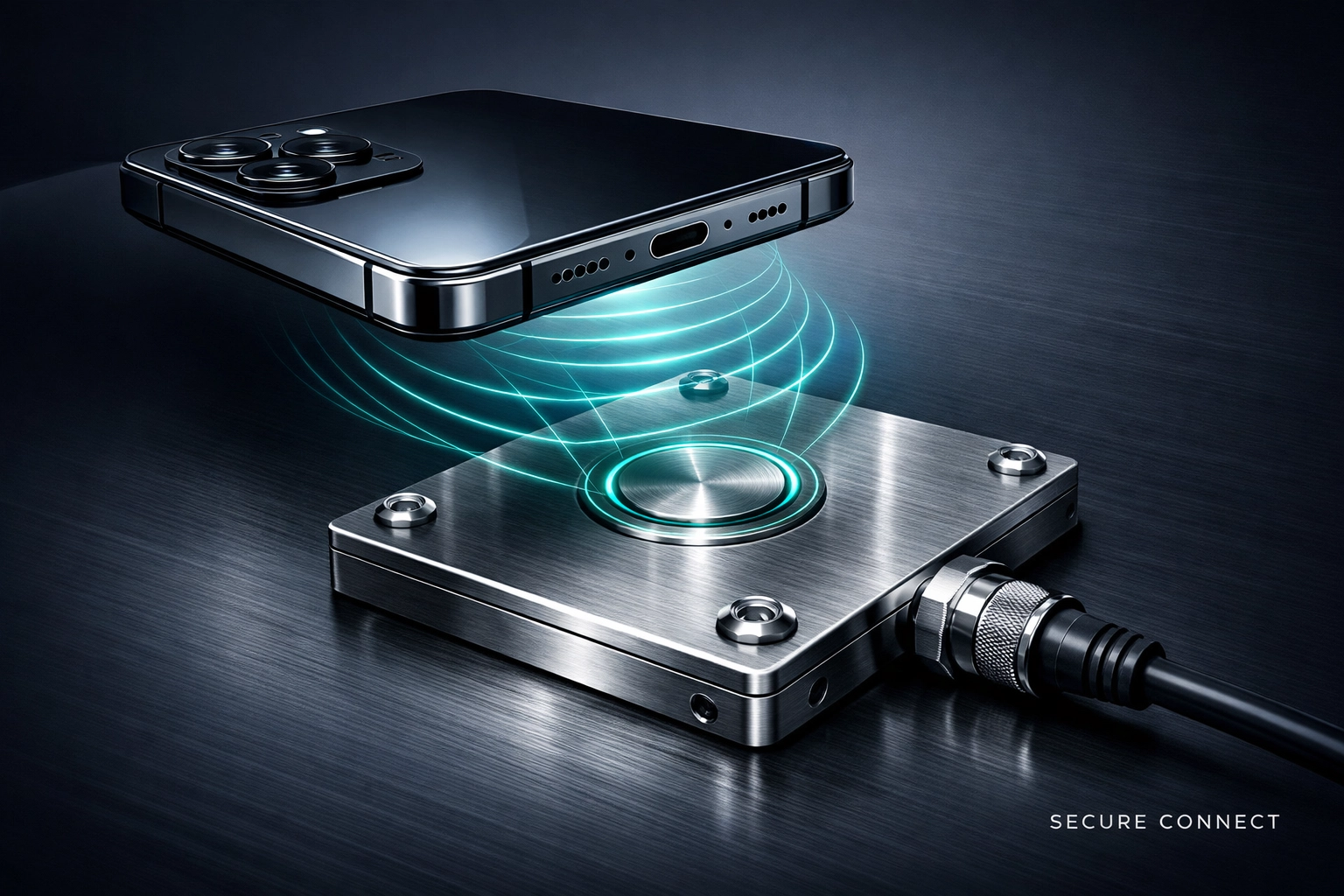
At its core, NFC operates on the principle of electromagnetic induction. Unlike Wi-Fi or Bluetooth, which use radio waves to broadcast data over long distances, NFC uses a magnetic field.
Technical Specifications:
- Frequency: 13.56 MHz (Standardized globally).
- Data Transfer Speed: Ranges from 106 to 424 kbit/s.
- Range: Optimally 4 cm or less (designed for security through proximity).
When two NFC-compatible devices, one active (like a smartphone) and one passive (like an NFC tag), come close together, the active device creates a small magnetic field. This field powers the passive tag, allowing it to send its stored data back to the active device. This "passive" nature of tags is why they don't require batteries, making them incredibly scalable and cost-effective for large-scale digital transformation services.
Key Operating Modes for Business
To leverage NFC in bespoke software development, you must understand the three primary ways it operates:
- Card Emulation Mode: This is the most common mode used in smartphones. The device mimics a contactless smart card, allowing users to make payments or use transit passes.
- Reader/Writer Mode: This allows a device (like a phone) to read information stored on inexpensive NFC tags embedded in posters, labels, or products. This is vital for smart app solutions that require physical interaction.
- Peer-to-Peer (P2P) Mode: Two active NFC devices exchange data. While less common than it was five years ago, it remains a lightning-fast way to swap contact information or bootstrap a faster Wi-Fi/Bluetooth connection.
NFC vs. Bluetooth vs. RFID: The Comparison
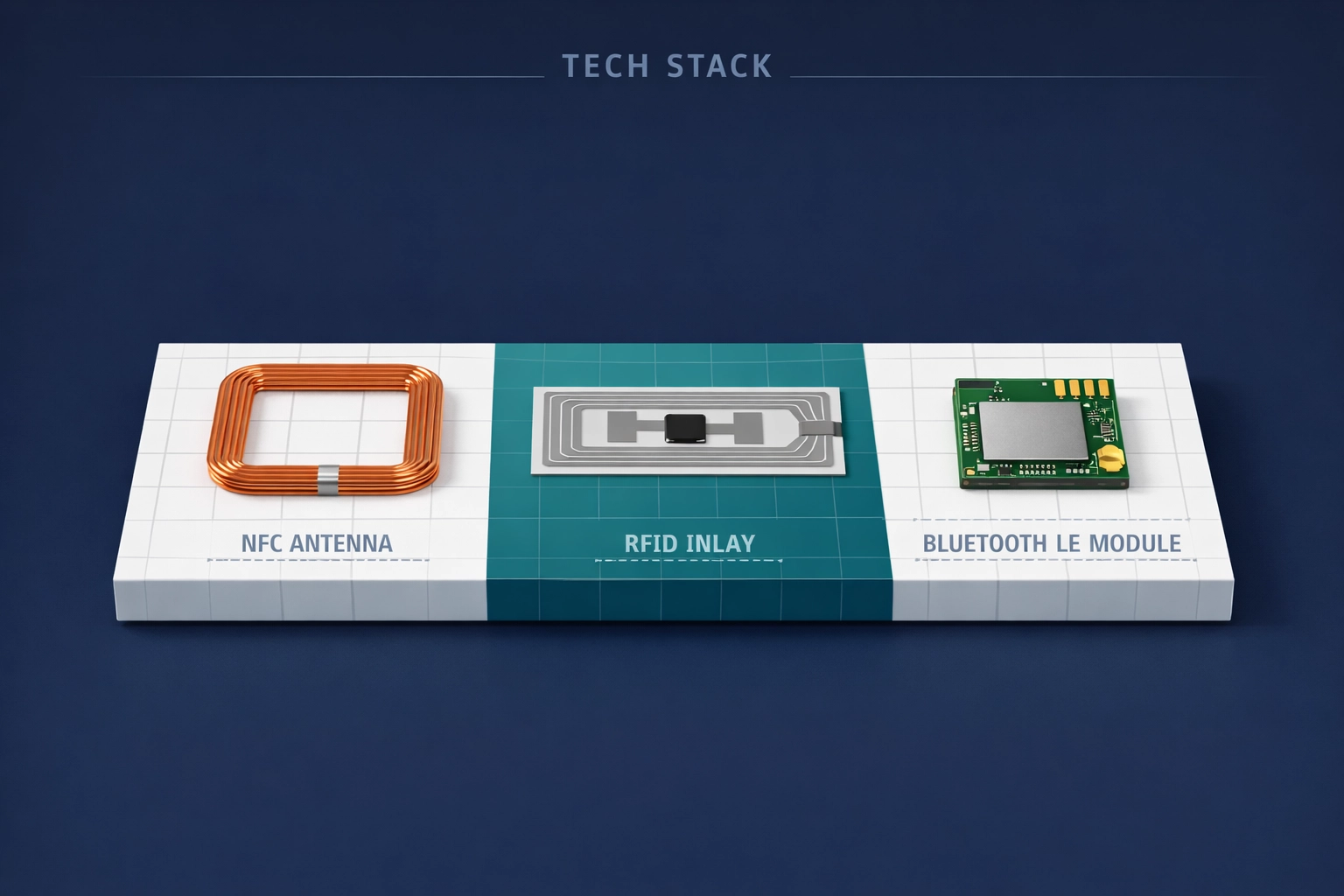
Choosing the right wireless technology is critical for your mobile application development. Here is how NFC stacks up against its peers in 2026:
| Feature | NFC | RFID (Passive) | Bluetooth (LE) |
|---|---|---|---|
| Range | Very Short (<10cm) | Up to 10m+ | Up to 100m |
| Power Consumption | Extremely Low | None (for tags) | Low |
| Setup Time | Instant (<0.1s) | Instant | 1-3 seconds |
| Security | High (Proximity-based) | Low/Moderate | Moderate |
| Bi-directional | Yes | No (usually) | Yes |
| Best Use Case | Payments, Secure Access | Logistics, Inventory | Wearables, Audio |
Transformative Use Cases: Beyond the Payment Terminal
While we often associate NFC with ecommerce stores, the reality in 2026 is far more expansive.
High-Security Access Control
Enterprises are ditching plastic badges for NFC-enabled smartphone credentials. This integrates seamlessly with enterprise software development to provide real-time logs of who enters which zone, enhancing security without sacrificing employee convenience.
Healthcare & Patient Safety
NFC tags on patient wristbands ensure that medical staff can "tap" to see real-time medication schedules. We’ve explored similar engineering challenges in our Kindheart study, where tech is used to improve care delivery for charities and healthcare providers.
Industrial Intelligence and Logistics
By embedding NFC into machinery, technicians can tap their devices to instantly pull up maintenance manuals or report a fault. This turns static hardware into a node of industrial decision intelligence.
Luxury Brand Authentication
Counterfeiting is a trillion-dollar problem. In 2026, luxury brands use bespoke software development to embed encrypted NFC tags in handbags or watches. Customers tap the product to verify authenticity via the brand's official app.
Problem: Counterfeit goods erode brand trust and lead to millions in lost revenue.
Solution: Encrypted NFC tags provide a tamper-proof digital twin for physical products, ensuring 100% authenticity for the end consumer.
NFC Tags: The Silent Drivers of Smart App Solutions
NFC tags are the "software" of the physical world. These tiny stickers or inlays can be programmed to perform almost any action on a smartphone.
- Actionable Marketing: A tap on a retail display opens a specific product page or applies a discount code.
- Smart Home Integration: Tapping a tag on your nightstand can trigger an "All Lights Off" routine.
- Ticketing and Events: NFC tags in wristbands allow for cashless spending and instant entry at large-scale festivals.
When considering how much app development costs in the UK, it is important to factor in the backend infrastructure required to manage thousands of unique NFC interactions.
Security in the Tap-and-Go Era
Security is the number one question we receive at Chimpare regarding NFC. Because NFC requires extreme proximity, "eavesdropping" is incredibly difficult. However, the software layer must be equally secure.
We recommend following a Zero Trust Blueprint for all NFC integrations. This means:
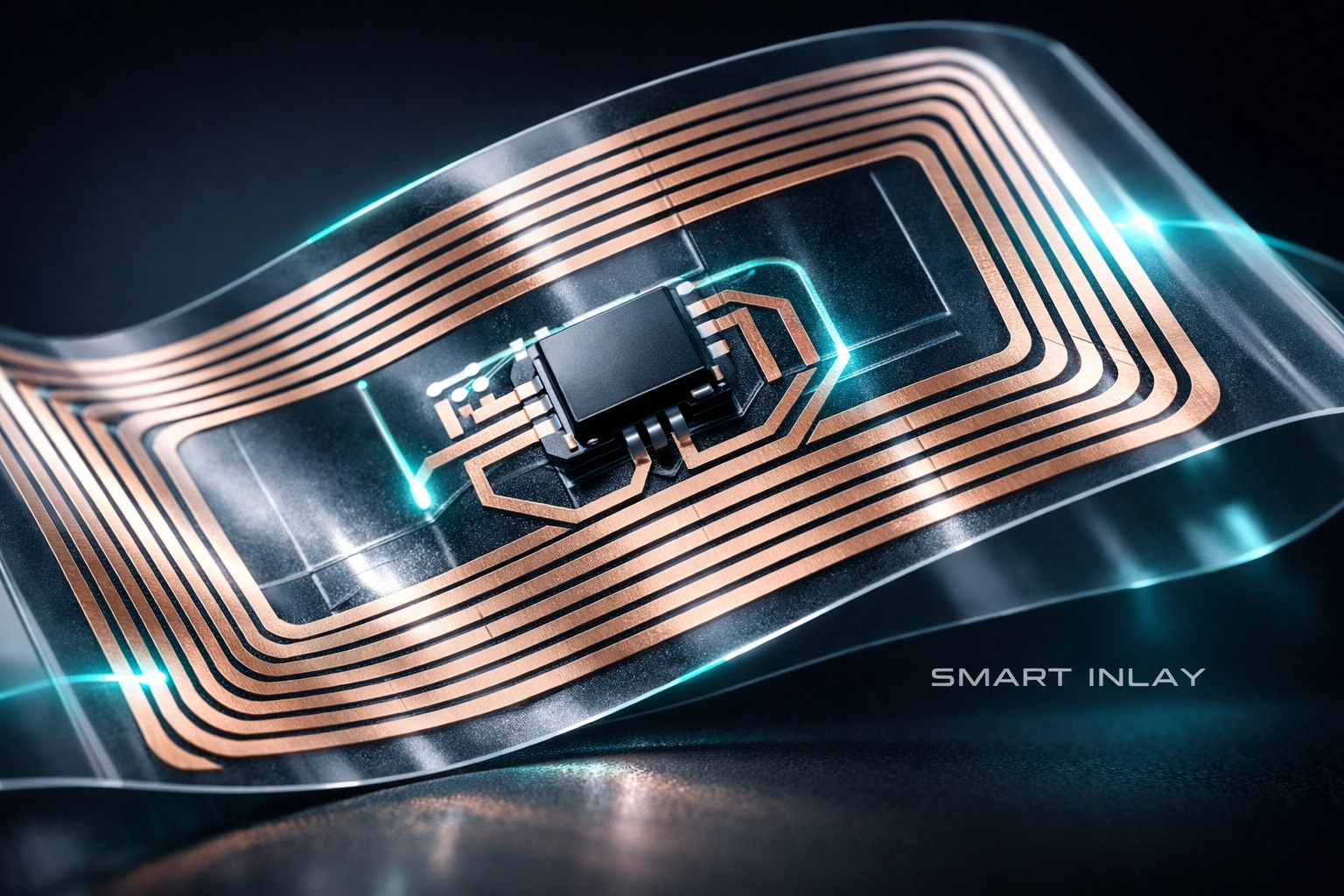
- Encryption: Data on the tag should be encrypted so it cannot be cloned or read by unauthorized devices.
- Tokenization: In payment scenarios, sensitive card data is never shared; instead, a one-time "token" is used.
- Dynamic Tagging: Using tags that generate a new URL or code for every tap to prevent "replay" attacks.
Visual Data: NFC Adoption Growth 2022-2026
To understand the scale of this technology, let's look at the projected growth of NFC-enabled devices and transactions.
NFC Market Penetration and Transaction Volume (Projected)
| Year | NFC-Enabled Devices (Billions) | Contactless Transaction Volume ($ Trillion) |
|---|---|---|
| 2022 | 3.4 | 4.6 |
| 2023 | 3.9 | 6.1 |
| 2024 | 4.5 | 8.2 |
| 2025 | 5.2 | 10.5 |
| 2026 (Est) | 6.1 | 13.4 |

Common Mistakes in NFC Implementation
In our years of providing digital transformation services, we have seen several recurring pitfalls that can sink an NFC project.
- Ignoring Hardware Diversity: Not all NFC chips are created equal. Some older Android devices may struggle with certain tag types (e.g., NTAG213 vs. NTAG424 DNA). Always test across a broad spectrum of hardware.
- Poor UX Placement: If a user has to "hunt" for the NFC sweet spot on a poster or device, they will give up. Visual cues are essential.
- Neglecting Security: Using "open" tags for sensitive data is a recipe for disaster. Always implement server-side validation.
- Overcomplicating the Action: NFC should be a shortcut. If tapping a tag leads to a 10-step registration form, you’ve lost the benefit of the technology.
Developing Your NFC Strategy with Chimpare
At Chimpare, we don't just "build apps." We create digital transformation frameworks that solve real-world problems. Whether you need iOS and Android development or a complex ERP integration, NFC can be the catalyst for your next breakthrough.
Our team of experts can help you navigate:
- Selection of the right NFC tag hardware.
- Secure mobile app integration using modern frameworks.
- Backend systems to track and analyze NFC interactions.
- Scaling your solution to handle millions of taps.
Frequently Asked Questions
Q: Is NFC safer than traditional credit cards?
A: Yes. Traditional cards with magnetic stripes can be easily cloned. NFC uses tokenization and requires proximity, making it significantly more secure. For enterprise-level security, we recommend looking into scaling microservices to handle secure authentication.
Q: Do I need an internet connection for NFC to work?
A: The NFC "tap" itself does not require the internet. However, most smart app solutions will need a data connection to process the information received from the tap (e.g., to load a webpage or process a payment).
Q: Can NFC work through phone cases?
A: Generally, yes. Most plastic, leather, or silicone cases are thin enough for the magnetic field to pass through. However, very thick "rugged" cases or those containing metal can interfere with the signal.
Q: What is the difference between NFC and QR codes?
A: QR codes require the user to open their camera, frame the code, and ensure good lighting. NFC is faster (one tap) and works in the dark. NFC is also more secure, as the data on a tag can be encrypted, whereas a QR code is just a visual string of data.
The Future is a Tap Away
As we move deeper into 2026, the businesses that succeed will be those that remove every possible barrier between their services and their customers. NFC is the ultimate tool for friction reduction. It is seamless, lightning-fast, and when combined with bespoke software development, it is a powerful driver of ROI.
Ready to transform your business with a custom mobile app development strategy that leverages the latest in NFC and IoT? Explore our work to see how we’ve helped other UK tech leaders innovate, or contact Chimpare today to start your journey.
Quick Guide: NFC for Our Global Readers
For UK readers, NFC is already part of everyday life. It is the technology behind contactless bank cards, Apple Pay and Google Pay tap-to-pay experiences, and Oyster card taps on the London Underground. In practical terms, NFC is what makes those fast, familiar "tap and go" moments work so smoothly across retail, transport, and mobile payments.
Whether you are using a debit card at a supermarket, tapping your phone at a café, or moving through the Tube with Oyster, NFC is the invisible layer that makes the experience fast, secure, and convenient.