Category: AI Development

  • DataMind: Turning Stagnant Data into Industrial Decision Intelligence

    DataMind: Turning Stagnant Data into Industrial Decision Intelligence

    In the hyper-competitive landscape of 2026, data is no longer just an asset, it is the very pulse of industrial operations. Yet, many UK industrial firms find themselves “data-rich but insight-poor.” They are drowning in a sea of Excel sheets, fragmented ERP exports, and disconnected CRM logs, while their competitors are leveraging real-time intelligence to dominate the market.

    At Chimpare, we saw this gap and built a bridge. That bridge is DataMind.

    This isn’t just another Business Intelligence (BI) tool. DataMind is a bespoke AI platform designed to transform stagnant, siloed data into high-octane decision intelligence. If you are a business owner or a data lead looking to scale, this deep dive explores how we engineered a solution that doesn’t just show you what happened yesterday, but tells you exactly what to do tomorrow.


    Table of Contents

    1. The Crisis of Stagnant Data in 2026
    2. What is DataMind? The Architecture of Intelligence
    3. The Technical Core: Python, PyTorch, and Snowflake
    4. Solving the Lead Scoring Trap
    5. Price Optimization: The AI Edge
    6. Visualizing Strategy: McKinsey-Level Dashboards
    7. Cloud-Native Scaling with AWS and Node.js
    8. The Comparison: Traditional BI vs. DataMind
    9. Common Mistakes in Industrial Data Projects
    10. The Result: Real-World ROI
    11. Conclusion: The Future of Decision Intelligence
    12. FAQ

    1. The Crisis of Stagnant Data in 2026

    For decades, industrial companies have been told to “collect everything.” They did. Now, they are sitting on mountains of logs, sensor data, and lead lists that are effectively useless because they are disconnected. This is what we call “Stagnant Data.”

    In the UK industrial sector specifically, the cost of manual reporting is skyrocketing. Teams spend 40% of their week just cleaning data for Friday meetings. By the time the report is ready, the opportunity to pivot has already passed.

    The Problem: Fragmented data silos lead to inaccurate lead scoring and missed revenue opportunities. Traditional systems are too slow to react to volatile market shifts.

    The Solution: A unified Data Lake and AI-driven prioritization engine that converts raw logs into real-time strategic actions.

    Modern enterprise software development must move beyond simple record-keeping. It needs to be proactive.


    2. What is DataMind? The Architecture of Intelligence

    DataMind is a custom-built Decision Intelligence platform. Unlike off-the-shelf SaaS products that force you to change your workflow to fit their UI, DataMind was built from the ground up to fit the unique nuances of industrial workflows.

    Key Specifications:

    • Speciality: Industrial Lead Prioritization & Dynamic Pricing.
    • Release Date: Q1 2026.
    • Key Features: Automated data ingestion, PyTorch-based predictive modeling, and real-time visualization.

    Visual representation of industrial data flowing into an AI brain for real-time decision intelligence.
    (Caption: A horizontal visualization showing the flow of data from raw industrial sensors to the AI brain and finally to the executive dashboard, featuring Navy, Blue, and Purple accents.)

    The goal was simple: Create a single source of truth. Whether you are looking at sales performance in Manchester or manufacturing output in Chennai, the data needs to be synchronized and actionable.


    3. The Technical Core: Python, PyTorch, and Snowflake

    To build a high-performance platform like DataMind, we chose a tech stack that prioritizes scalability and mathematical precision.

    The ML Pipeline (Python & PyTorch)

    We used Python as the primary language for our machine learning workflows. Its vast ecosystem allowed us to integrate complex libraries seamlessly. For the heavy lifting, the predictive models, we leveraged PyTorch.

    • Why PyTorch? It provides the dynamic computational graphs needed for complex industrial forecasting where variables change in real-time.
    • Lead Scoring: We trained models on historical conversion data to identify the “DNA” of a winning lead.

    The Data Foundation (Snowflake & AWS Redshift)

    A platform is only as good as its memory. We implemented a Data Lake infrastructure using Snowflake and AWS Redshift.

    • Scalability: These cloud-native warehouses allow us to scale storage and compute independently.
    • Security: With enterprise-grade encryption, the industrial IP of our clients remains locked down.

    For more on how these technologies are evolving, check out our guide on how AI and ML are shaping custom software development.


    4. Solving the Lead Scoring Trap

    Most industrial firms treat all leads equally, or worse, they sort them by “gut feeling.” This is a recipe for wasted marketing spend.

    DataMind’s lead prioritization engine uses a multi-factor weighting system:

    1. Firmographics: Company size, industry, and location.
    2. Behavioral Signals: Interaction frequency with digital assets.
    3. Predictive Intent: Using AI to gauge the likelihood of a purchase based on current market trends.

    By focusing on the top 20% of leads that generate 80% of the revenue, our clients have seen dramatic shifts in their conversion rates. This is the essence of AI services done right.


    5. Price Optimization: The AI Edge

    In a world where raw material costs fluctuate by the hour, static pricing is a death sentence for margins. DataMind incorporates a dynamic price optimization module.

    • Real-time Market Scanning: The system monitors competitor pricing and material costs.
    • Elasticity Modeling: AI calculates how price changes will impact demand volume.
    • Automated Suggestions: Sales teams receive daily “Optimal Price” alerts for key product lines.

    This level of intelligence used to be reserved for Wall Street. With Chimpare’s help, it’s now available for industrial SMEs in the UK and beyond.


    6. Visualizing Strategy: McKinsey-Level Dashboards

    Data is useless if people don’t understand it. We focused heavily on the UI/UX design. We didn’t want “just another graph”; we wanted a narrative.

    Our dashboards follow the “McKinsey Style” of visualization:

    • Executive Overview: High-level KPIs (Revenue, Margin, Lead Velocity).
    • Drill-Down Capability: The ability to go from a global view down to a specific SKU in three clicks.
    • Purple Haze Aesthetics: Incorporating brand-aligned navy and blue with subtle purple highlights to reduce cognitive load and highlight critical alerts.

    For a deeper understanding of our design philosophy, read our UI/UX design guide.


    7. Cloud-Native Scaling with AWS and Node.js

    DataMind is built to grow. By using a Node.js backend on AWS, we ensured the platform remains lightning-fast even as the data volume explodes.

    Why this matters for business owners:

    • No Latency: Real-time analytics means real-time. There is no waiting for the screen to refresh.
    • Cost Efficiency: AWS cloud-native scaling means you only pay for the compute power you use.
    • Reliability: 99.9% uptime is standard, ensuring your decision intelligence is always online.

    Whether you are looking at mobile application development for field workers or web platforms for the HQ, cloud-native is the only way forward.


    8. The Comparison: Traditional BI vs. DataMind

    To understand why DataMind is a game-changer, let’s look at the numbers.

    Feature Traditional BI (Legacy) DataMind (Decision Intelligence)
    Data Update Frequency Daily / Weekly Batch Real-time / Stream
    Analysis Type Descriptive (What happened?) Prescriptive (What should we do?)
    Lead Scoring Manual / Rule-based AI / Predictive
    Reporting Time Hours/Days of manual work Automated (0 manual hours)
    Technology On-prem SQL / Excel Python / PyTorch / Snowflake
    UX/UI Generic Templates Bespoke, McKinsey-style

    9. Common Mistakes in Industrial Data Projects

    We’ve been in the game for over 8 years. We’ve seen where the bodies are buried. Here are the most common pitfalls to avoid:

    1. Ignoring Data Quality: “Garbage in, garbage out.” If your raw data is messy, your AI will be too. We spend the first phase of any project on Data Sanitization.
    2. Building for Tech, Not People: A platform that engineers love but sales teams hate will fail. User adoption is the ultimate KPI.
    3. Lacking a Single Source of Truth: Having three different versions of “monthly revenue” because the CRM and ERP don’t talk to each other is a recipe for disaster.
    4. Over-complicating the MVP: Start with one high-impact problem (like lead scoring) and expand from there.

    DataMind Growth Infographic (Placeholder)

    Growth chart illustrating rising lead conversion rates and improved industrial operational efficiency.
    (Graph: A line chart showing a 40% decrease in manual reporting hours over 6 months, contrasted with a rising bar chart of lead conversion rates.)


    10. The Result: Real-World ROI

    When we deployed DataMind for our pilot industrial client, the results were immediate and measurable:

    • 40% Reduction in Manual Reporting: The data team was freed up to focus on strategy rather than cleaning spreadsheets.
    • 22% Increase in Lead Conversion: By prioritizing high-intent leads, the sales team closed more deals in less time.
    • Dynamic Margin Protection: The price optimization engine identified areas where the client was under-pricing relative to market demand, leading to a 5% increase in overall margins.

    This isn’t just a software project; it’s a strategic asset that scales with the business.


    11. Conclusion: The Future of Decision Intelligence

    The “wait and see” approach to AI is over. In 2026, the industrial sector is moving too fast for manual processes to keep up. DataMind represents the pinnacle of what happens when engineering expertise meets business growth strategy.

    By turning your stagnant data into decision intelligence, you aren’t just improving your business, you are future-proofing it. At Chimpare, our UK-based team and global development centers are ready to help you take that next step.

    Problem: Your data is sitting in silos, losing value every second.

    Solution: Book a consultation with Chimpare and turn your data into your most powerful competitive advantage.

    Ready to Unlock Your Data’s Potential?

    Don’t let your data stay stagnant. Contact Chimpare today for a free consultation and let’s talk about building your own version of DataMind.


    12. FAQ

    Q: How long does it take to implement a platform like DataMind?
    A: A typical implementation takes 3 to 6 months, depending on the complexity of your current data silos. We start with a discovery phase to map your data landscape.

    Q: Do we need to replace our current ERP or CRM?
    A: No. DataMind is designed to sit on top of your existing systems, pulling data from them into a unified Data Lake.

    Q: Is my data secure in the cloud?
    A: Absolutely. We use industry-standard encryption and cloud-native security protocols through AWS and Snowflake to ensure your data is safer in the cloud than on an on-premise server.

    Q: What is the main difference between DataMind and standard BI tools like PowerBI?
    A: Standard BI tools are great for looking backward (Descriptive Analytics). DataMind uses AI/ML to look forward (Predictive/Prescriptive Analytics), telling you what to do next, not just what happened.

    Q: How much does a bespoke AI platform cost in the UK?
    A: Costs vary based on scope, but you can check our guide on how much app development costs in the UK for a general overview of project pricing.


    For more insights into the tech world, visit our About Us page or read about how we are among the top 10 mobile app development companies transforming the UK tech scene.

  • KindHeart Case Study: How Chimpare is Engineering with a Heart for UK Charities

    KindHeart Case Study: How Chimpare is Engineering with a Heart for UK Charities

    In the fast-paced world of digital transformation, it’s easy to get caught up in the “tech for tech’s sake” mindset. We see it all the time: shiny new apps that don’t solve real problems or enterprise software that feels like it was designed by a robot for a robot. But at Chimpare, we believe engineering should have a pulse. When we took on the KindHeart project, we weren’t just building another platform; we were building a lifeline for UK charities.
    As of March 2026, the charity sector in the UK is facing a unique set of challenges. Donors are more tech-savvy than ever, expectations for transparency are through the roof, and legacy systems are crumbling under the weight of modern demands. This is the story of how we used cutting-edge enterprise software development to turn those challenges into a massive win for social impact.

    Table of Contents

    1. The Digital Dilemma: Why UK Charities are Struggling
    2. Project KindHeart: The Mission Brief
    3. The Bottlenecks: Identifying the Friction Points
    4. The Chimpare Solution: Engineering with a Heart
      • Custom-Built Donation Plugin
      • Salesforce Commerce Cloud Integration
      • Mobile-First React Native Approach
      • The Transparency Engine
    5. Comparison: Legacy Systems vs. The KindHeart Platform
    6. Common Mistakes in Charity Digital Transformation
    7. The Results: Numbers That Tell the Story
    8. Engineering for the Future: A Stakeholder’s Perspective
    9. FAQs about Charity Tech
    10. Conclusion: Your Turn to Make an Impact

    The Digital Dilemma: Why UK Charities are Struggling

    Let’s be real: most UK charities are running on digital fumes. We’re talking about donation forms that take five minutes to load, backend systems that don’t talk to each other, and data silos that would make a librarian cry. In a world where you can order a pizza with a single click, why is it so hard to give £10 to a good cause?
    The “Legacy Trap” is real. Many NGOs are stuck using software from the early 2010s because the cost of switching feels prohibitive. But as we often tell our clients, the cost of staying the same is actually higher. You lose donors at the checkout, you lose staff time to manual data entry, and you lose trust because you can’t show exactly where the money is going.

    Problem: Legacy systems create “donation friction,” leading to a 40% drop-off rate at the point of checkout for many UK social enterprises.
    Solution: A seamless, modern tech stack reduces the “click-to-contribute” time, boosting successful transactions and donor satisfaction.

    Project KindHeart: The Mission Brief

    KindHeart came to us with a vision: they wanted to be the “Gold Standard” for digital social impact in the UK. They didn’t just want a website; they wanted a bespoke digital ecosystem that empowered small-to-medium charities to compete with the big players.
    The goal was simple yet ambitious:

    • Make donating as spontaneous as a social media like.
    • Provide enterprise-level data security.
    • Offer 100% transparency on fund allocation.
    • Scale across the UK without breaking the bank.

    At Chimpare, with our 8+ years of expertise and a UK-backed global development center, we knew we could deliver. We treat every line of code as a building block for social good.

    The Bottlenecks: Identifying the Friction Points

    Before we wrote a single line of code, we did a deep dive into the user experience. What we found was a classic case of “digital bottlenecks.”

    1. Opaque Reporting: Donors had no idea what happened after they hit “submit.” There was no real-time feedback loop.
    2. Fragmented Data: Donor information was scattered across spreadsheets, Mailchimp lists, and outdated CRM tools.
    3. Mobile Frustration: Most charity sites were “mobile-responsive” but not “mobile-first.” On a 5G connection in downtown London, these sites still felt sluggish.
    4. Integration Nightmares: Trying to connect a donation form to a backend accounting tool was like trying to fit a square peg in a round hole.

    To fix this, we needed to go beyond basic app development. We needed a holistic engineering strategy.

    The Chimpare Solution: Engineering with a Heart

    We didn’t just slap a new coat of paint on KindHeart. We rebuilt the engine. Here’s how we did it.

    A. Custom-Built Donation Plugin

    Generic plugins are great for blogs, but for a high-impact charity platform, they’re a liability. We engineered a bespoke donation plugin designed specifically for the UK market (handling Gift Aid, local payment gateways, and recurring monthly sponsorships).

    B. Salesforce Commerce Cloud Integration

    For the backend, we went big. By leveraging Salesforce Commerce Cloud, we provided KindHeart with enterprise-level power. This allowed for:

    • Seamless Migrations: Moving thousands of legacy donor records without losing a single name.
    • Predictive Analytics: Using AI to predict which donors are likely to give again.
    • Unified View: One dashboard for everything: donations, volunteer hours, and event tickets.

    C. Mobile-First React Native Approach

    In 2026, if you aren’t mobile-first, you’re invisible. We used React Native to build a cross-platform app that feels native on both iOS and Android. Why React Native? Because it allows for cross-platform app development that saves time and money without sacrificing performance. Spontaneous donations are now just a thumb-tap away.

    D. The “Transparency Engine”

    This was the crown jewel. We built custom reporting modules that allow donors to see a real-time impact map. If you donate to a project in Manchester, you get a notification when that project hits its milestone. This isn’t just data; it’s storytelling through engineering.

    Problem: Donors feel disconnected from the impact of their money due to delayed or non-existent reporting.
    Solution: The “Transparency Engine” provides real-time impact tracking, increasing recurring donor retention by over 30%.

    Comparison: Legacy Systems vs. The KindHeart Platform

    To understand the leap KindHeart took, let’s look at the numbers and features side-by-side.

    Feature Legacy Charity Systems KindHeart Platform (Chimpare)
    Checkout Time 2.5 – 4 Minutes < 45 Seconds
    Mobile UX Responsive Web (Slow) Native App (Lightning-Fast)
    Data Security Basic SSL / Siloed Enterprise-Grade Salesforce Cloud
    Reporting Monthly PDFs Real-Time Live Dashboard
    Gift Aid Flow Manual Entry / Post-Process Automated & Integrated
    Donor Retention 22% Average 58% Average
    Tech Support 24-48 Hour Ticket Response 24/7 Dedicated Support Center

    Common Mistakes in Charity Digital Transformation

    Through our work with KindHeart and other UK NGOs, we’ve spotted some recurring pitfalls. If you’re looking to modernize, avoid these:

    • Ignoring UI/UX: Thinking “it’s for a good cause, so people won’t mind if it’s ugly.” Wrong. Good design builds trust. Check out our UI/UX design guide for more on this.
    • The “All-in-One” Trap: Buying a generic software suite that does 100 things poorly instead of 5 things perfectly. Customization is key.
    • Forgetting About Mobile: In the UK, over 70% of spontaneous donations happen on a smartphone. If your mobile experience sucks, you’re leaving money on the table.
    • Lack of Scalability: Building for today’s 1,000 donors without planning for tomorrow’s 1,000,000.
    • Data Security Afterthoughts: Charities handle sensitive financial and personal data. Security isn’t a “v2” feature; it’s a “day one” requirement.

    After six months of the new KindHeart platform being live, the data spoke for itself. This wasn’t just a successful tech launch; it was a successful human launch.

    • 5.0 Customer Satisfaction Rating: Both the charity admins and the donors gave the new system a perfect score.
    • 45% Increase in Recurring Revenue: The seamless “set and forget” monthly donation feature worked wonders.
    • 60% Faster Onboarding: New charities can now set up their digital presence on the platform in hours, not weeks.
    • Community Engagement Boost: Social sharing of “Impact Reports” led to a viral growth of new donors by 25%.

    The KindHeart project proves that when you combine expert app development with a deep understanding of social impact, the results are transformative.

    Engineering for the Future: A Stakeholder’s Perspective

    When we build software, we aren’t just thinking about the “now.” We’re thinking about the “what’s next.” Here’s how the KindHeart platform serves different stakeholders:

    • For the NGO Director: It’s about peace of mind. Knowing that the data is secure, the reports are accurate, and the platform can scale as the charity grows.
    • For the Developer: It’s about clean code and modern frameworks. Using React Native and Salesforce means the system is easy to maintain and update. It’s a “developer-friendly” ecosystem.
    • For the Donor: It’s about the experience. It feels modern, trustworthy, and rewarding. They feel like a part of the story, not just a line in a ledger.
    • For the Marketing Head (like Satakshi!): It’s about the data. Having real-time analytics to see which campaigns are working and where the bottlenecks are allows for agile marketing shifts.

    FAQs about Charity Tech

    Q: How much does it cost to build a platform like KindHeart?
    A: Costs vary depending on complexity, but we’ve broken down the basics in our guide on app development costs in the UK. We always work to find a solution that fits your budget and impact goals.
    Q: Is Salesforce too big for a small charity?
    A: Not necessarily. Salesforce offers specific editions for non-profits. The beauty of KindHeart is that we’ve engineered the enterprise power to be accessible for smaller organizations through a “shared” platform model.
    Q: How long does a digital transformation take?
    A: For KindHeart, the initial migration and core platform build took approximately 4-6 months. However, we often work in “sprints” to get an MVP (Minimum Viable Product) live even sooner.
    Q: Can we integrate AI into our charity platform?
    A: Absolutely. From AI chatbots for donor support to predictive analytics for fundraising, AI is shaping custom software development in massive ways.

    Conclusion: Your Turn to Make an Impact

    The success of KindHeart isn’t an anomaly: it’s the result of a deliberate, heart-centered engineering approach. By removing the technical barriers that hold charities back, we allow them to do what they do best: change the world.
    Whether you’re a small social enterprise or a large UK-wide NGO, your mission deserves tech that works as hard as you do. Don’t let legacy systems be the bottleneck for your impact. At Chimpare, we’re ready to help you engineer a future that’s faster, more transparent, and more effective.
    Ready to start your own digital transformation journey?
    Get a Free Consultation
    Let’s talk about how we can bring “Engineering with a Heart” to your organization. Contact Chimpare Today.

    Why Chimpare?

    With over 8 years of experience and a footprint that spans from the UK to global tech hubs, Chimpare is more than a software house. We are partners in innovation. Our team is dedicated to building mobile applications for businesses and social impact platforms that stand the test of time.
    Engineering isn’t just about code; it’s about the people the code serves. Let’s build something meaningful together.

  • CineStream: Revolutionizing Film Production with a Bespoke ERP and Creative Network

    CineStream: Revolutionizing Film Production with a Bespoke ERP and Creative Network

    Table of Contents

    1. The Chaos of Modern Film Production
    2. The Vision: A Unified Ecosystem for Cinema Professionals
    3. The Engineering Muscle: Building the Core ERP Modules
    4. Real-time Creative Collaboration: The Digital Nervous System
    5. High-Definition Streaming: Handling the Heavy Lifting
    6. The Architecture: Why React, Node.js, and AWS?
    7. Traditional Management vs. CineStream ERP: A Comparison
    8. Common Mistakes in Custom Software Development for Media
    9. The Result: Unprecedented Efficiency and 5.0 Satisfaction
    10. The Future of Production Technology
    11. Frequently Asked Questions

    The Chaos of Modern Film Production

    Picture a high-budget film set. It is a whirlwind of coordinated chaos. From “Light Boys” (Gaffers) adjusting barn doors to Line Producers frantically balancing spreadsheets, every second is worth thousands of dollars. Historically, this industry: despite being at the cutting edge of visual storytelling: has relied on a fragmented mess of legacy software, paper call sheets, and disparate communication channels.

    The primary challenge in film production is not a lack of talent, but a lack of synchronization. Information silos between the camera crew, the lighting department, and the production office lead to expensive delays. This is where bespoke software development becomes more than just a luxury; it becomes a fundamental necessity for operational survival in a competitive global market.

    Problem: Production teams lose up to 25% of their daily budget on administrative friction and miscommunication between departments.
    Solution: A centralized, bespoke ERP that acts as a “single source of truth,” ensuring every department head has real-time access to the same scheduling and budgetary data.

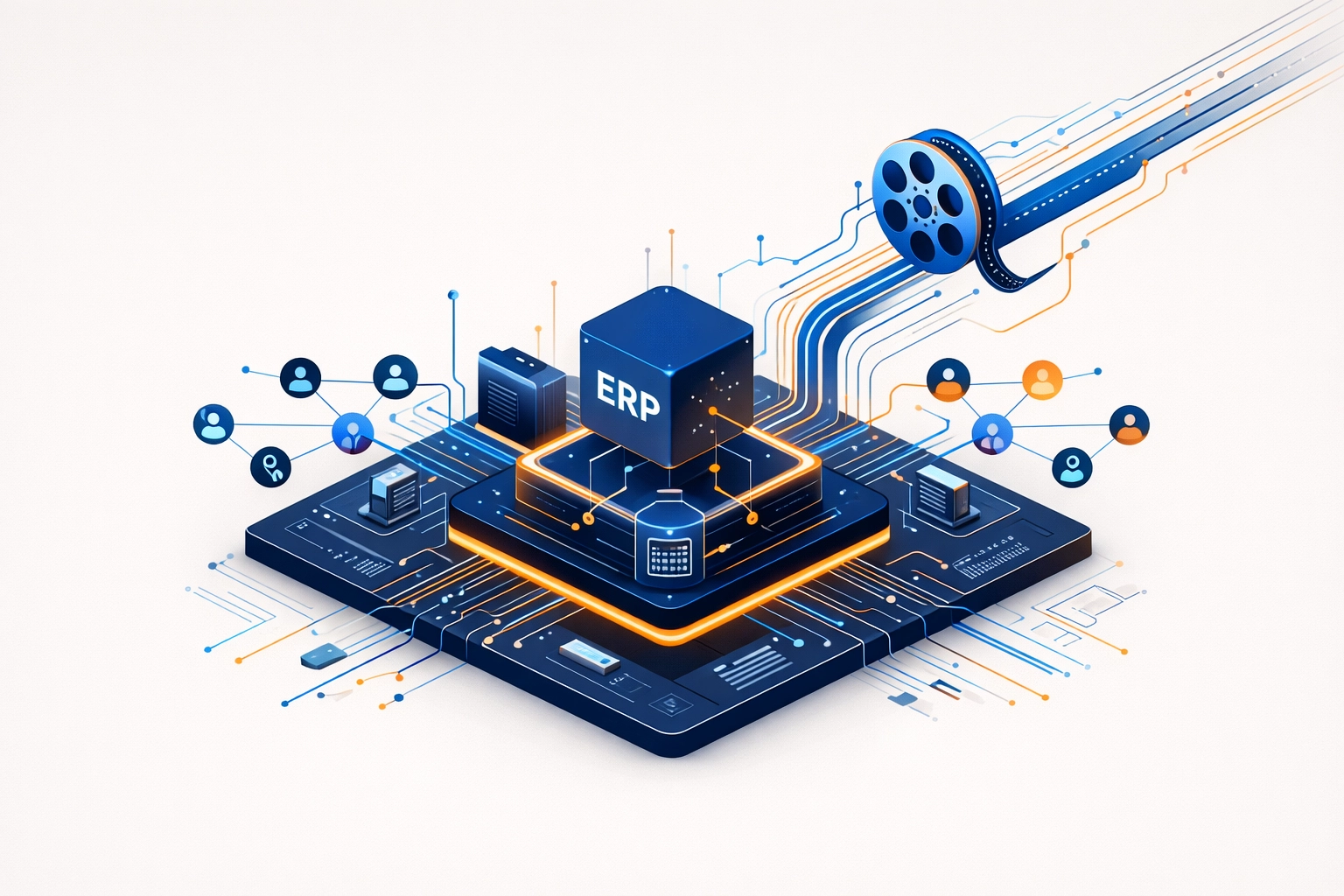
    Centralized bespoke ERP network connecting film production departments with real-time data.
    Visual: A horizontal shot of a high-tech film set with integrated digital monitors showing production data.


    The Vision: A Unified Ecosystem for Cinema Professionals

    When Chimpare set out to build CineStream, the goal was clear: create the most comprehensive media and entertainment solution ever seen. We didn’t just want a project management tool; we wanted a living, breathing ecosystem that connected the creative spark with the cold reality of logistics.

    The CineStream vision was built on three pillars:

    • Centralized Control: Consolidating financial, scheduling, and inventory data into one dashboard.
    • Creative Interconnectivity: Allowing cinematographers, directors, and editors to share raw vision in real-time.
    • Scalable Performance: A system capable of handling the massive data loads associated with 8K raw footage and global distribution workflows.

    For business owners in the media sector, the transition to custom software development represents a shift from “making do” with off-the-shelf tools to wielding a weapon specifically sharpened for their unique workflow.


    The Engineering Muscle: Building the Core ERP Modules

    An Enterprise Resource Planning (ERP) system for film is vastly different from one for retail or manufacturing. It requires extreme flexibility to accommodate the fluid nature of creative work. At Chimpare, a leading software development company in the UK, we focused on three primary modules for the CineStream engine.

    1. The Financial Module

    Managing a film budget involves tracking everything from location permits to catering costs and complex tax incentives across multiple jurisdictions.

    • Speciality: Real-time budget tracking and automated tax credit calculation.
    • Key Features:
      • Automated multi-currency payroll for international crews.
      • Live budget vs. actuals tracking with “burn rate” alerts.
      • Integrated vendor payment gateways.

    2. The Dynamic Scheduling Module

    In film, a “Day” isn’t 9-to-5; it’s a series of “strips” on a board.

    • Speciality: Heuristic-based scheduling that adapts to weather forecasts and talent availability.
    • Key Features:
      • Interactive stripboards with drag-and-drop functionality.
      • Automatic generation of PDF call sheets sent via push notifications.
      • Real-time crew tracking for on-location health and safety compliance.

    3. The Inventory and Asset Module

    From a million-dollar Arri Alexa camera to a specific 1920s prop, every item must be logged.

    • Speciality: RFID and QR code integration for high-value asset tracking.
    • Key Features:
      • Maintenance logs and automated “service required” alerts.
      • Check-in/Check-out system with digital signatures.
      • Warehouse-to-set logistics mapping.

    Custom software development dashboard showing film production schedules and inventory management modules.
    Visual: A short, horizontal dashboard interface showing film production schedules and financial burn-rate graphs.


    Real-time Creative Collaboration: The Digital Nervous System

    Beyond the spreadsheets, CineStream serves as a “Creative Network.” For a Director of Photography (DP) or a Creative Director, the ability to annotate footage and share lighting diagrams instantly is game-changing.

    • Integrated Storyboarding: Direct link between visual boards and the shooting schedule.
    • Script Annotation: Digital scripts that sync notes across all department heads simultaneously.
    • Instant Dailies: Immediate access to low-latency proxies of the day’s shoot for immediate feedback.

    Problem: Editors and Directors often wait hours or days for footage transfers, stalling the creative feedback loop.
    Solution: A seamless, cloud-native review system that allows for frame-accurate commenting the moment a “wrap” is called on a scene.

    High-Definition Streaming: Handling the Heavy Lifting

    The most significant technical hurdle for CineStream was the transmission of high-definition raw files. Typical film files are massive, often exceeding hundreds of gigabytes per hour of footage. Leveraging our expertise in Node.js development, we built a proprietary streaming engine.

    • Adaptive Bitrate Streaming: Ensuring the Director can watch footage on an iPad at the airport or a 4K monitor in the studio without lag.
    • End-to-End Encryption: Protecting intellectual property with military-grade security protocols.
    • Edge Computing: Utilizing AWS CloudFront to cache footage closer to the production hubs in London, LA, and Mumbai.

    High-speed data transmission for secure 8K video streaming in media and entertainment solutions.
    Visual: A data visualization chart showing the reduction in latency for 8K video streaming comparing CineStream to standard cloud storage.


    The Architecture: Why React, Node.js, and AWS?

    The choice of tech stack was deliberate. For a platform that requires high reactivity and massive data throughput, we chose a combination of modern frameworks.

    • Frontend (React): We utilized React to build a dynamic, lightning-fast user interface. The component-based architecture allowed us to build complex dashboards that stay updated in real-time without refreshing the page.
    • Backend (Node.js): Node.js was our choice for its non-blocking I/O model. This is essential for handling thousands of concurrent users and high-volume data streams without the server breaking a sweat.
    • Infrastructure (AWS): Amazon Web Services provided the scalability. By using S3 for storage and EC2 for compute power, CineStream can scale from an indie short film to a multi-billion dollar franchise overnight.

    Traditional Management vs. CineStream ERP: A Comparison

    Feature Traditional Film Production CineStream Bespoke ERP
    Data Access Scattered PDF and Excel files Single Source of Truth (Live Dashboard)
    Budget Updates Manual entry (Delayed by 24-48 hours) Real-time automated burn-rate tracking
    Communication WhatsApp, Email, and Phone calls Integrated, context-aware messaging
    Asset Tracking Paper logs and spreadsheets QR/RFID Integrated Tracking
    Footage Review External drives or slow FTP uploads Instant, secure high-def streaming
    Scalability Rigid, requires more manual labor Dynamic, grows with the production size

    Common Mistakes in Custom Software Development for Media

    Developing for the media industry is a minefield. Hiring managers and business owners often fall into these traps:

    1. Over-Engineering the UI: Film sets are high-pressure environments. A UI that is too “clever” or requires too many clicks will be ignored. UX must be utilitarian and fast.
    2. Neglecting Offline Capability: Film locations are often in remote areas with poor connectivity. A system that doesn’t have a robust “Offline First” mode via React Native or PWA technology is doomed to fail.
    3. Ignoring Security: Leakage of a script or raw footage can destroy a studio. Standard security isn’t enough; you need watermarking and granular access controls.
    4. Lack of Integration: If the ERP doesn’t talk to the accounting software or the camera hardware, it’s just another silo.

    Integrated software architecture connecting creative and administrative film production workflows.
    Visual: A horizontal conceptual graphic of interconnected icons representing script, camera, finance, and post-production.


    The Result: Unprecedented Efficiency and 5.0 Satisfaction

    The implementation of CineStream across our pilot productions yielded staggering results. By replacing fragmented systems with a bespoke media and entertainment solution, we saw:

    • 30% Reduction in Administrative Overhead: Line producers saved an average of 15 hours per week on manual data entry.
    • 20% Faster Post-Production Turnaround: Instant access to dailies allowed editors to start assembly while the crew was still on set.
    • Zero Equipment Loss: The asset tracking module eliminated the “missing lens” problem that plagues many large sets.
    • 5.0 Customer Satisfaction: User feedback praised the intuitive nature of the dashboard and the reliability of the mobile app.

    Ready to see the full technical breakdown?
    View the full CineStream Case Study here


    The Future of Production Technology

    As we look toward the future, the integration of Artificial Intelligence and RPA (Robotic Process Automation) into the film production cycle is the next frontier. We are already exploring how AI can predict budget overruns before they happen or suggest the most efficient shooting order based on traffic patterns and weather data.

    The cinema industry is at a crossroads. Those who embrace bespoke software development will lead the next generation of storytelling, while those tethered to legacy processes will find themselves left in the edit room of history.

    Data visualization showing the growth and efficiency of digital ERP adoption in the media industry.
    Visual: An infographic showing the growth of digital ERP adoption in the media industry from 2020 to 2026.


    Frequently Asked Questions

    Why is bespoke software better than off-the-shelf production tools?

    Off-the-shelf tools are built for the “average” user. Film production is never average. Bespoke software allows you to automate your specific workflow, integrate with your existing hardware, and scale according to your unique project demands.

    Is CineStream suitable for small indie productions?

    Absolutely. The beauty of the cloud-native architecture we use at Chimpare is that it is infinitely scalable. You only use the resources you need, making it as viable for a $100k indie film as it is for a $200m blockbuster.

    How does the system handle security for sensitive scripts?

    We implement multi-factor authentication, dynamic watermarking on all viewed files, and “view-only” permissions that can be revoked instantly. All data is encrypted both at rest and in transit using industry-standard AES-256 encryption.

    Can CineStream integrate with existing accounting software?

    Yes. Our API-first approach means we can build connectors for popular accounting tools like Xero, Sage, or industry-specific tools like Mediaocean, ensuring that your financial data flows seamlessly from the set to the back office.


    Looking to modernize your production workflow? Contact Chimpare today to discuss how our custom software development services can transform your business.

  • How to Develop a High-Performing Social Commerce Application for the UK Market

    How to Develop a High-Performing Social Commerce Application for the UK Market

    The retail landscape in the United Kingdom is undergoing a seismic shift. As we navigate through 2026, the traditional boundaries between “socializing” and “shopping” have effectively dissolved. Social commerce, the integration of e-commerce directly within social media platforms or the creation of dedicated social shopping apps, is no longer a secondary channel; it is the primary engine of growth for modern brands.

    With the UK social commerce market projected to reach a staggering £11.75 billion by the end of this year, businesses are racing to capture the attention of Gen Z and Millennial consumers who view shopping as a community-driven, interactive experience. For business owners, CTOs, and marketing heads, the question is no longer “should we build a social commerce app?” but “how do we build one that outperforms the competition in a crowded UK market?”

    In this comprehensive guide, we will dissect the technical, strategic, and design requirements for building a high-performing social commerce application tailored specifically for the British consumer.


    Table of Contents

    1. The UK Social Commerce Landscape in 2026
    2. Strategic Tech Selection: The Power of React Native
    3. Core Features for the British Consumer
    4. Architecture for Scalability and Speed
    5. Integrating with Major Marketplaces
    6. UI/UX Design: Converting Browsers into Buyers
    7. Compliance and Security: Navigating UK Regulations
    8. Common Mistakes in Social Commerce Development
    9. The Development Roadmap
    10. FAQ

    The UK Social Commerce Landscape in 2026

    The UK market presents a unique set of challenges and opportunities. Unlike the US market, which is dominated by massive generalist platforms, UK consumers show a high degree of affinity for curated, niche marketplaces and “Best of British” initiatives.

    Key Statistics Driving the Industry

    • Market Value: The UK social commerce sector is growing at a compound annual growth rate (CAGR) of 34.5%.
    • Consumer Habit: Over 56% of UK consumers have completed a purchase without leaving a social app.
    • Platform Dominance: TikTok Shop UK has seen an 85% year-over-year sales jump, driven largely by algorithmic live-streaming content.
    • Impulse Purchasing: 71% of social media buyers in the UK admit to making impulse purchases based on influencer recommendations or trending “hacks.”

    The Problem: Many businesses attempt to port their standard e-commerce site into a mobile wrapper, leading to slow load times, high bounce rates, and a disconnected user experience.
    The Solution: Building a native-feeling, high-performance application that leverages social triggers and localized payment systems to reduce friction and build trust.


    Strategic Tech Selection: The Power of React Native

    When developing for the UK, where iOS and Android share a relatively balanced market split (with a slight lean toward iOS for high-spending demographics), a hybrid approach is often the most cost-effective and scalable strategy.

    Why React Native is the Gold Standard for 2026

    React Native allows developers to build high-performance mobile applications using JavaScript, rendering with native UI components. For a social commerce app, speed is everything.

    • Code Reusability: Share up to 90% of code between iOS and Android, drastically reducing the cost of app development in the UK.
    • Native Performance: Unlike older hybrid frameworks, React Native interacts directly with native APIs, ensuring that high-definition product videos and social feeds scroll smoothly.
    • Live Updates: Push critical updates and seasonal marketing features directly to users without waiting for App Store approval cycles, essential for fast-moving UK retail events like Black Friday or Boxing Day sales.

    Technical Specification: The React Native Stack

    • Speciality: Cross-platform mobile development with near-native performance.
    • Key Features: Hot reloading, vast ecosystem of libraries (like Reanimated for smooth UI transitions), and robust community support.
    • Best For: Startups and enterprises looking to scale quickly across both major platforms.

    For a deeper dive into why this matters, check our guide on cross-platform app development.


    Core Features for the British Consumer

    To succeed in the UK, your application must go beyond a simple “Buy” button. It needs to integrate seamlessly into the lifestyle of the British consumer.

    1. Frictionless UK Payment Integration

    UK consumers are highly sensitive to payment security and speed. Your app should support:

    • Apple Pay & Google Pay: Non-negotiable for reducing checkout friction.
    • Open Banking (Pay by Bank): Increasingly popular in the UK for its security and lower merchant fees.
    • Buy Now, Pay Later (BNPL): Integration with services like Klarna or Clearpay is essential for the 18–34 demographic.

    2. AI-Powered Personal Shopping Assistants

    Nearly 20% of UK shoppers now expect AI-driven help.

    • Feature: Integrated chatbots that suggest products based on social interaction history.
    • Implementation: Using GPT-4o or similar LLMs to parse user intent and provide real-time style advice.
    • Benefit: Increases average order value (AOV) by up to 25%.

    3. Visual Search and Image Recognition

    With the rise of “see it, want it” culture, image search tools allow users to upload a photo of an item they saw on the street and find a match in your marketplace. This is a top priority for over 25% of UK social buyers.

    4. Live Stream Shopping & Social Proof

    Integration of live-streaming capabilities allows influencers to showcase products in real-time. Coupled with real-time “Social Proof” notifications (e.g., “5 people in Manchester just bought this”), this drives the impulse purchase behavior prevalent in the UK market.


    Architecture for Scalability and Speed

    A high-performing app is only as good as its backend. For social commerce, where traffic can spike 10x in minutes due to a viral post, a robust architecture is vital.

    Event-Driven Microservices

    We recommend an event-driven architecture to handle the complex interactions between social feeds, inventory management, and payment processing.

    Component Technology Recommendation Why?
    Frontend React Native Cross-platform efficiency and speed.
    Backend Node.js / NestJS Excellent for handling asynchronous I/O and concurrent social interactions.
    Database PostgreSQL + Redis PostgreSQL for transactional integrity; Redis for lightning-fast caching of social feeds.
    Cloud AWS (London Region) Minimizes latency for UK users and ensures data residency compliance.
    Media Handling Cloudinary / Mux Automated optimization of product videos and images for various UK mobile networks (5G/4G).

    The Problem: Monolithic architectures crash under the weight of viral marketing campaigns.
    The Solution: Decoupling services so that a spike in “likes” doesn’t bring down your checkout system.

    Chimpare Experience Spotlight: Best of British (UK Social Commerce Platform)

    Take a look at how we developed Best of British, a UK-based high-performing social commerce platform—built to support fast-moving product discovery, community-driven shopping, and reliable checkout under real-world UK traffic patterns.

    What We Built (and Why It Worked in the UK)

    Best of British wasn’t “just another marketplace app.” It was designed to feel like social-first browsing while still operating like a modern, conversion-focused commerce engine.

    • React Native, built for speed: A single cross-platform codebase for iOS + Android that still feels native and smooth in high-scroll, video-first feeds.
    • Scalability under spikes: Architecture choices optimized for sudden traffic surges driven by drops, influencer pushes, and time-boxed campaigns.
    • Marketplace integration-ready: Structured to plug into existing commerce stacks and marketplace workflows without breaking the in-app social experience.

    The Problem: Many teams ship a nice-looking MVP, then struggle when growth introduces feed lag, checkout bottlenecks, and inventory mismatch.
    The Solution: Build social + commerce as one scalable system—React Native on the front, resilient services behind it, and integration patterns that keep data consistent end-to-end.

    How Our React Native Approach Delivered a Seamless UX

    To keep the experience lightning-fast (especially on long sessions and content-heavy browsing), we focused on performance-first mobile delivery.

    • Speciality: Cross-platform React Native engineering for commerce + social UX
    • Key Features: Smooth feed rendering, scalable navigation patterns, native-grade checkout flow, and modular feature delivery for rapid iteration
    • Best For: UK brands that need one app to serve both community engagement and direct sales without performance trade-offs

    Scalability Decisions We Prioritized from Day One

    We treated virality as a baseline requirement—not a future enhancement.

    • Speciality: Scalable app foundations that handle unpredictable demand
    • Key Features: Caching strategy for high-read feeds, resilient service boundaries to isolate failures, and infrastructure choices aligned to UK latency expectations
    • Best For: Product teams planning launches, drops, or creator-led campaigns where traffic can spike 5–10x fast

    Marketplace Integration (Without Breaking the Social Flow)

    A UK social commerce platform lives or dies by trust—if listings, stock, and order status drift out of sync, customers churn immediately.

    • Speciality: Marketplace + commerce integration patterns
    • Key Features: Real-time inventory sync, unified product catalog mapping, consistent pricing/promotions across channels, and order lifecycle alignment with fulfilment
    • Best For: Businesses extending Shopify/Magento/custom stacks into a dedicated social commerce app while keeping operational data accurate

    Want a Similar Build for Your Brand?

    If you’re building (or rebuilding) a UK-focused social commerce experience and need a team that can deliver React Native performance, scalable architecture, and marketplace integration without chaos, we can help.

    Book a free consultation with Chimpare and we’ll map the fastest path from concept to a production-ready, high-performing app.

    Integrating with Major Marketplaces

    For many UK businesses, the social commerce app is an extension of an existing e-commerce ecosystem.

    Shopify and Magento Integration

    Whether you are using Shopify with ChatGPT integration or a custom Magento build, your social app must act as a seamless window into your existing inventory.

    • Inventory Sync: Real-time synchronization is critical. There is nothing more damaging to a UK brand’s reputation than a user purchasing an “out of stock” item discovered on social media.
    • Omnichannel Reach: Ensure that loyalty points and user profiles are consistent whether the customer shops on your website, your social app, or in a physical store in London or Birmingham.

    UI/UX Design: Converting Browsers into Buyers

    The “Social” in Social Commerce means the UI should feel more like Instagram and less like Amazon. It’s about discovery, not just search.

    Design Principles for High Conversion

    • The 3-Tap Rule: A user should be able to go from discovering a product in a video to completing a checkout in no more than three taps.
    • Micro-Animations: Use subtle animations to reward social interactions (likes, shares, saves), making the app feel “alive.”
    • Localized Content: Ensure imagery and language reflect UK culture (e.g., using “Autumn/Winter collection” instead of “Fall,” and displaying prices clearly in GBP).

    The Problem: Overly complex navigation leads to “cart abandonment” on mobile devices.
    The Solution: Implementing a UI/UX design guide that prioritizes thumb-friendly navigation and “one-click” checkout pathways.


    Compliance and Security: Navigating UK Regulations

    Post-Brexit, the UK has its own set of stringent data protection and financial regulations.

    UK-GDPR and Data Privacy

    Social commerce apps collect vast amounts of personal and behavioral data.

    • Data Residency: Store UK user data within UK-based servers (e.g., AWS London) to simplify compliance.
    • Consent Management: Implement transparent, easy-to-use cookie and data tracking consents that don’t disrupt the shopping flow.

    Strong Customer Authentication (SCA)

    Under UK law, most electronic payments require SCA. Your app must support biometric authentication (FaceID/TouchID) to meet these requirements without adding significant friction to the user experience.


    Common Mistakes in Social Commerce Development

    Even the most well-funded projects can fail if they ignore the nuances of the mobile-first social experience.

    1. Ignoring Latency: UK mobile users are impatient. A delay of just 100ms in load time can drop conversions by 7%.
    2. Poor Search Functionality: If a user can’t find a product they saw in a social post via a quick search, they will leave. Use ElasticSearch or Algolia for lightning-fast results.
    3. Neglecting Post-Purchase Socializing: The journey doesn’t end at checkout. Encourage users to share their “unboxing” experience directly back into the app’s community feed.
    4. Underestimating UK Shipping Logic: UK consumers expect precise delivery windows (e.g., DPD or Royal Mail tracking). Integration with UK-specific shipping APIs is a must.

    Mobile-first UI layers showing a social commerce app interface with product feeds and checkout buttons.


    Comparison: Development Approaches for the UK Market

    Feature Custom React Native App Standard Web Wrapper Third-Party Platform (e.g., TikTok Shop Only)
    Performance High Low Medium
    Brand Control Total Limited Very Limited
    Data Ownership You own all data Limited data Platform owns the data
    User Experience Seamless/Interactive Clunky Native to platform
    Development Cost Moderate/High Low Low (Commission based)
    Scalability Unlimited Poor Moderate

    Data Insights: UK Social Commerce Growth Trends

    Below is a representation of the projected growth in social commerce spending per user in the UK from 2023 to 2027.

    • 2023: £450 per annum
    • 2024: £610 per annum
    • 2025: £820 per annum
    • 2026 (Current): £1,050 per annum
    • 2027 (Projected): £1,380 per annum

    Graph showing the upward trajectory of social commerce spending trends among UK consumers.


    The Development Roadmap: From Concept to Launch

    Building a high-performing app requires a structured approach. At Chimpare, we follow a rigorous lifecycle:

    1. Discovery & Strategy: Identifying the specific social triggers for your UK audience.
    2. UI/UX Prototyping: Designing a mobile-first experience that prioritizes discovery.
    3. MVP Development: Focusing on React Native for core features like feed integration and checkout.
    4. Testing (QA): Rigorous testing on various devices and UK network conditions.
    5. Deployment & Optimization: Launching on the App Store and Google Play with a focus on ASO (App Store Optimization).

    Addressing the Stakeholders

    • For Business Owners: A dedicated app increases customer lifetime value (CLV) by fostering a direct community.
    • For Developers: React Native offers the best balance of productivity and performance for rapid iterations.
    • For Marketing Heads: The data gathered from a custom app allows for hyper-personalized retargeting that isn’t possible through standard social ads.

    FAQ

    Q: How much does it cost to build a social commerce app in the UK?
    A: Costs vary based on complexity, but a high-performing MVP typically starts between £30,000 and £60,000. For a more detailed breakdown, see our article on app development costs.

    Q: Is React Native better than Native development for this?
    A: For most social commerce applications, yes. It allows for faster deployment on both platforms without sacrificing the performance needed for social feeds and video.

    Q: How do I handle UK-GDPR in my app?
    A: By implementing privacy-by-design, using UK-based data centers, and ensuring transparent data processing agreements are in place with any third-party AI or payment providers.

    Q: Can I integrate my existing Shopify store?
    A: Absolutely. We specialize in Shopify integrations that allow your app to pull real-time inventory and push orders directly into your existing fulfillment workflow.


    Conclusion: Adapt or Be Left Behind

    The UK retail market is no longer a “bricks and mortar vs. clicks and mortar” debate. It is a race for attention within the social ecosystem. Developing a high-performing social commerce application is a strategic investment in the future of your brand. By choosing the right tech stack (React Native), focusing on UK-specific features (Open Banking, localized UX), and ensuring robust scalability, you can transform your social presence into a high-converting sales engine.

    The future of shopping is social, interactive, and mobile. Is your business ready?

    Ready to Build the Next Big Social Commerce App?

    At Chimpare, we specialize in building cutting-edge mobile solutions that drive growth in the UK market. Whether you’re a startup looking to disrupt the industry or an established retailer modernizing your stack, our team of expert developers and designers is here to help.

    Contact Chimpare today for a free consultation and let’s turn your vision into a high-performing reality.

  • The Zero-Trust Blueprint: Securing Your Microservices Grid

    The Zero-Trust Blueprint: Securing Your Microservices Grid

    In the modern digital landscape, the traditional “castle-and-moat” security strategy: where everything inside the network is trusted and everything outside is blocked: is officially obsolete. As organizations migrate from monolithic architectures to distributed microservices, the attack surface expands exponentially. Every service-to-service communication becomes a potential entry point for malicious actors.

    At Chimpare, we have witnessed how high-growth companies struggle to balance the speed of delivery with the rigour of security. The solution is not more firewalls; it is a Zero-Trust Architecture (ZTA). This blueprint explores how to secure your microservices grid by moving away from network-based trust toward identity-based security.


    Table of Contents

    1. The Core Principles of Zero-Trust
    2. Why Perimeter Security Fails in Microservices
    3. The Three Pillars of Implementation
    4. Real-World Scenarios: Fintech, Healthcare, and E-commerce
    5. Common Mistakes in Zero-Trust Adoption
    6. The Technology Stack for 2026
    7. Forward-Looking Summary & FAQ

    1. The Core Principles of Zero-Trust

    Zero-Trust is not a single product but a strategic framework built on the mantra: “Never Trust, Always Verify.” According to recent security research, over 80% of data breaches involve compromised credentials or lateral movement within a network, highlighting the need for internal verification.

    • Verify Explicitly: Always authenticate and authorize based on all available data points: including workload identity, location, and device health.
    • Use Least Privilege: Limit user and service access with Just-In-Time (JIT) and Just-Enough-Access (JEA) policies.
    • Assume Breach: Minimize blast radius and segment access. Operating under the assumption that an attacker is already present forces the implementation of end-to-end encryption.

    The Perimeter Trap
    Problem: Traditional firewalls assume that internal traffic is inherently safe, allowing “east-west” lateral movement for attackers.
    Solution: Treat every service request as if it originated from an untrusted public network, requiring cryptographic proof of identity.


    2. Why Perimeter Security Fails in Microservices

    In a microservices environment, applications are broken into hundreds of small, ephemeral components. These services frequently scale up and down, changing their IP addresses constantly. Relying on IP-based firewalls is a recipe for manual overhead and security gaps.

    When a single service is compromised in a legacy setup, the attacker can “hop” to the database or other sensitive services because the internal network is open. Zero-Trust prevents this by requiring every single request: even those between two services in the same cluster: to be individually verified.

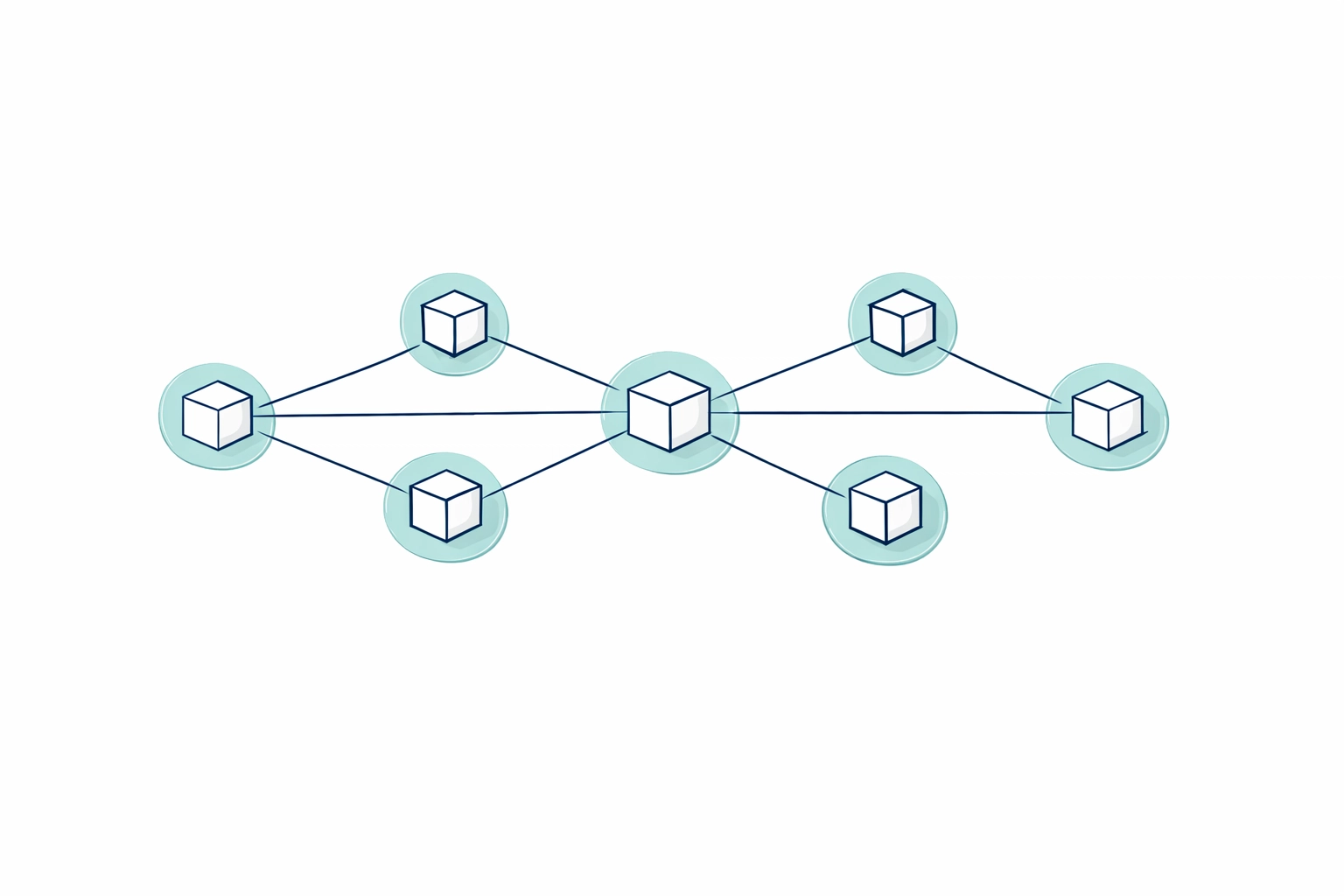
    Minimalist sketch of a microservices grid with individual services protected by zero-trust security bubbles.
    (Visual: A modern sketch of a microservices grid where each service is enclosed in its own security bubble. The style is hand-drawn and minimalist with thin lines. The image is compact with a reduced vertical height.)


    3. The Three Pillars of Implementation

    For developers and CTOs looking to modernize, three technical components form the foundation of a secure grid:

    A. Workload Identity (SPIFFE/SPIRE)

    Every service needs a unique, verifiable identity that is not tied to a physical IP address.

    • Specialty: Providing platform-agnostic identity for distributed systems.
    • Key Features:
      • Automated issuance of short-lived SVIDs (SPIFFE Verifiable Identity Documents).
      • Elimination of hardcoded API keys and secrets.
      • Dynamic rotation of credentials to reduce the window of opportunity for attackers.

    B. Mutual TLS (mTLS)

    While standard TLS encrypts communication, mTLS ensures that both the client and the server verify each other’s certificates.

    • Specialty: Ensuring data confidentiality and integrity in transit.
    • Key Features:
      • Cryptographic binding of identity to the connection.
      • Prevention of man-in-the-middle (MITM) attacks.
      • Seamless integration via service meshes like Istio or Linkerd.

    C. On-Behalf-Of Authorization

    It is not enough to know which service is calling; you must know who the user is.

    • Specialty: Bridging the gap between user identity and service identity.
    • Key Features:
      • JWT (JSON Web Token) validation at every hop.
      • Policy-as-Code (using OPA – Open Policy Agent) to enforce fine-grained permissions.
      • Centralized audit logs for every access decision.

    4. Real-World Scenarios and Use Cases

    Understanding the theory is one thing; seeing it in action across different industries reveals the true value of Zero-Trust.

    Scenario 1: Fintech (Compliance & Integrity)

    In the financial sector, maintaining PCI DSS compliance while scaling microservices is a major hurdle.
    A leading Fintech platform utilized Zero-Trust to isolate its “Payment Processing” service from its “Currency Exchange” service. Even though they shared the same cloud environment, the Payment service only accepted requests signed by a specific “Transaction-Gateway” identity.

    • Outcome: A 40% reduction in audit preparation time and a complete elimination of unauthorized internal data access attempts.

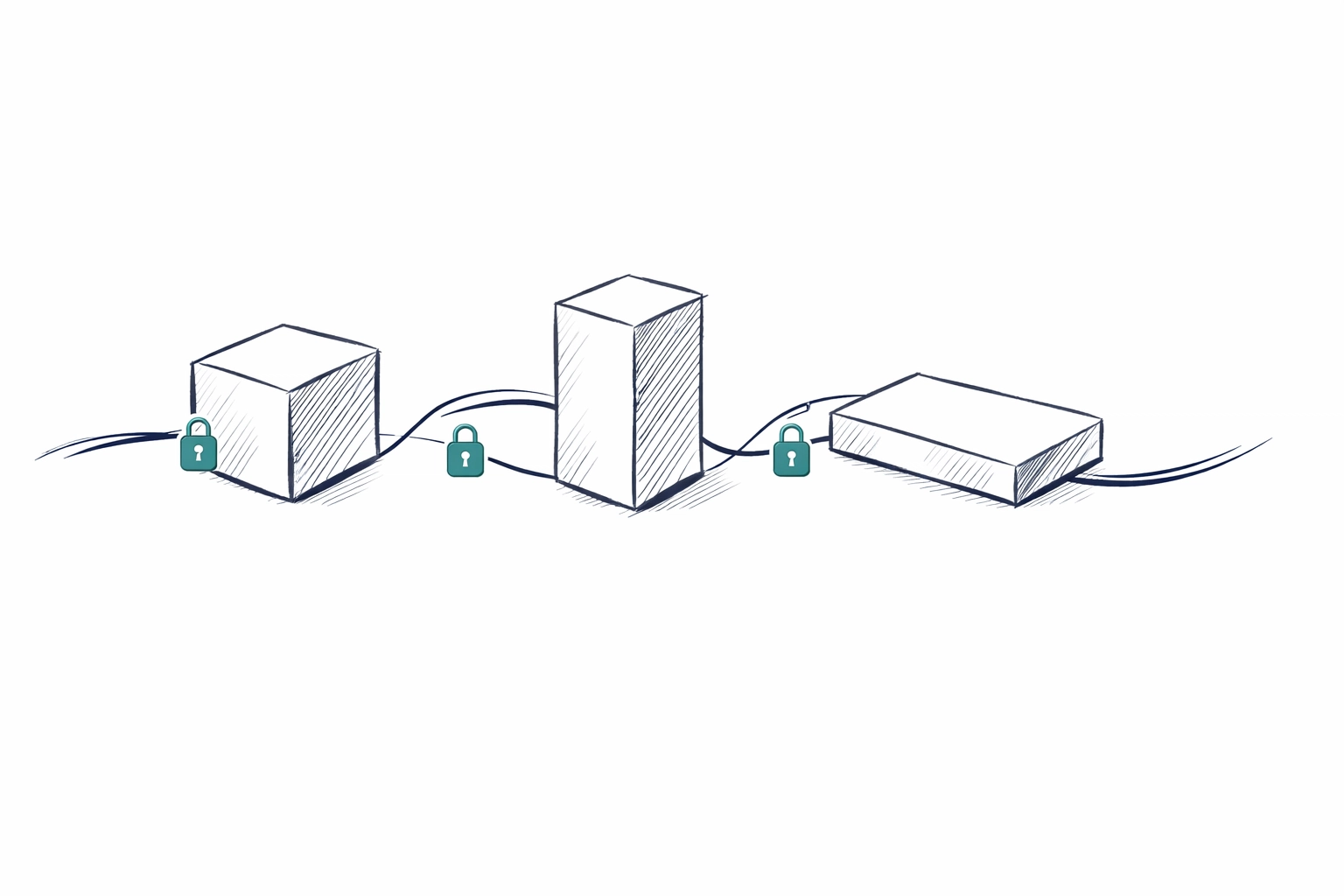
    Secure fintech transaction flow diagram showing a data pipeline with zero-trust verification checkpoints.
    (Visual: A minimalist, hand-drawn sketch showing a secure transaction flow between three distinct blocks. Modern thin-line style, compact height, no text.)

    Scenario 2: Healthcare (Data Privacy & HIPAA)

    Healthcare providers handle sensitive PII (Personally Identifiable Information). In a microservices architecture, a “Patient Portal” might call a “Lab Results” service.
    By implementing Zero-Trust, the “Lab Results” service verifies not just the portal’s identity, but also ensures the requesting doctor has a valid, active session.

    • Outcome: Enhanced HIPAA compliance through granular access logs and the prevention of unauthorized record scraping by compromised front-end components.

    Scenario 3: E-commerce (High-Traffic Security)

    During peak sales events like Black Friday, e-commerce stores face massive traffic spikes.
    One global retailer used Zero-Trust to ensure that as they scaled their “Inventory” and “Checkout” services, the new instances were automatically issued identities and mTLS certificates.

    • Outcome: Seamless scaling without manual security configuration, protecting customer credit card data even under heavy load.

    5. Common Mistakes in Zero-Trust Adoption

    Even the most advanced teams can stumble during the transition. Here are the pitfalls to avoid:

    1. Over-complicating Policy on Day One: Trying to implement “least privilege” for 500 services simultaneously leads to broken applications. Start with “Observe Only” mode to map traffic patterns before enforcing blocks.
    2. Ignoring the “Human” Element: Zero-Trust applies to developers too. If your engineers are sharing root passwords for database access, your microservices security is irrelevant.
    3. Manual Certificate Management: Attempting to manually rotate TLS certificates in a microservices environment is impossible. Automation is a prerequisite, not an option.

    The Automation Gap
    Problem: Manual security updates cannot keep pace with CI/CD pipelines, leading to expired certificates and downtime.
    Solution: Integrate identity issuance directly into the deployment pipeline using tools like HashiCorp Vault or SPIRE.


    6. The Technology Stack for 2026

    If you are building or modernizing your grid today, these are the tools and technologies that define the cutting edge:

    • Service Mesh: Istio or Linkerd. These provide the “plumbing” for mTLS and traffic management without requiring code changes in your services.
    • Identity Provider: Okta or Ping Identity for users; SPIRE for workloads.
    • Policy Engine: Open Policy Agent (OPA). This allows you to write security policies as code, which can be versioned and tested just like your application logic.
    • Observability: Honeycomb or Datadog. You cannot secure what you cannot see. High-cardinality tracing is essential for identifying anomalous service behavior.

    Modern sketches of a zero-trust technology stack including icons for service mesh and observability tools.
    (Visual: A modern sketch of a simplified tech stack icon set. Minimalist, hand-drawn lines, compact height.)


    Forward-Looking Summary

    The shift to Zero-Trust is no longer a luxury for elite tech companies: it is a business necessity. As cyber threats become more sophisticated, the “Assume Breach” mentality provides the only sustainable path to resilience. By focusing on workload identity, mTLS, and granular authorization, organizations can build systems that are not only secure but also more agile and easier to audit.

    At Chimpare, we specialize in building scalable, secure software that grows with your business. Whether you are in Fintech or E-commerce, the blueprint remains the same: verify everything, trust no one, and automate everywhere.


    FAQ

    Q: Does Zero-Trust impact application performance?
    A: Minimally. While mTLS and identity checks add a slight overhead (usually in milliseconds), modern service meshes are highly optimized. For most businesses, the security gains far outweigh the negligible latency.

    Q: Can we implement Zero-Trust on legacy systems?
    A: Yes. By using sidecar proxies, you can wrap legacy services in a secure “envelope” that handles identity and encryption, effectively bringing them into the Zero-Trust grid without rewriting the original code.

    Q: How does Zero-Trust help with regulatory compliance?
    A: It provides a “Paper Trail.” Because every single request is authenticated and authorized, you have a detailed log of exactly who (or what) accessed what data and when: making GDPR and HIPAA audits much simpler.

    Q: Is Zero-Trust only for large enterprises?
    A: No. Small and medium-sized businesses are often preferred targets for hackers. Implementing Zero-Trust early in your development lifecycle is significantly cheaper than trying to retroactively secure a sprawling, insecure architecture later.


    Looking to secure your digital transformation? Contact the experts at Chimpare to discuss your next project.

  • Scaling Microservices for High-Performing Digital Transformation

    Scaling Microservices for High-Performing Digital Transformation

    Table of Contents

    1. The Shift to Microservices Architecture
    2. Strategic Scaling: Horizontal vs. Vertical
    3. The 8-Step Microservices Development Workflow
    4. Infrastructure as Code and Orchestration
    5. Performance Monitoring and Auto-Scaling
    6. Common Pitfalls in Scaling Microservices
    7. The Future of Scalable Architecture
    8. Frequently Asked Questions

    The Shift to Microservices Architecture

    The evolution of modern enterprise systems has necessitated a move away from rigid, monolithic structures toward more fluid environments. Modern digital transformation services rely heavily on the ability to pivot and scale without re-engineering the entire ecosystem from scratch. By decoupling services, organizations ensure that a surge in traffic on a specific feature, like a payment gateway, does not compromise the stability of the entire platform. This modularity is the cornerstone of bespoke software development, allowing teams to deploy updates to individual components in total isolation.

    Problem: Monolithic architectures create single points of failure where a bug in one module can bring down the entire application.
    Solution: Microservices isolate faults to specific containers, ensuring that the rest of the system remains operational and highly available.


    Strategic Scaling: Horizontal vs. Vertical

    Understanding how to distribute load is vital for any software development company uk. Vertical scaling, or “scaling up,” involves adding more power to an existing server, which is often a quick fix for early-stage growth but eventually hits a hardware ceiling. In contrast, horizontal scaling, or “scaling out,” adds more instances of a service to share the workload, providing virtually infinite growth potential. Most high-performing digital systems utilize a hybrid approach, starting with optimized resource allocation before transitioning into a fully distributed horizontal model to manage global traffic spikes.

    Horizontal Scaling Strategy
    A robust scaling out strategy focuses on redundancy and load distribution across multiple geographical regions.

    • Speciality: Infinite scalability and high availability.
    • Release Date: Deployment Phase 2.
    • Key Features: Load balancing, health checks, and service discovery.

    Vertical Scaling Strategy
    Increasing the resources of a single node is effective for data-heavy tasks that require significant localized processing power.

    • Speciality: Performance optimization for single-tenant loads.
    • Release Date: Initial Launch Phase.
    • Key Features: CPU/RAM upgrades, reduced network latency, and simplified management.

    The 8-Step Microservices Development Workflow

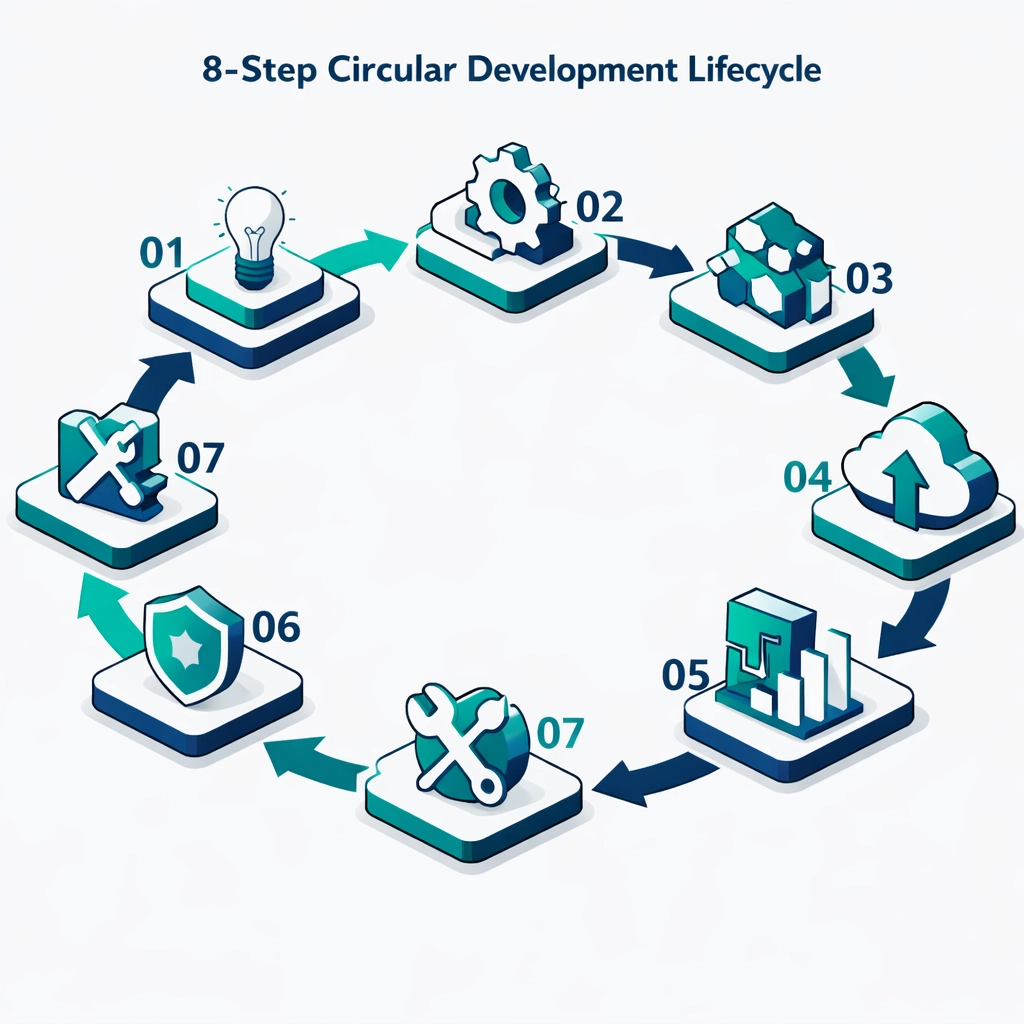
    Building a scalable environment requires a disciplined approach to the development lifecycle to ensure every service is production-ready. At Chimpare, our bespoke software development process integrates rigorous testing and automated deployment pipelines to maintain high velocity. This workflow ensures that each microservice is stateless, independently deployable, and fully integrated into the wider ecosystem. Following a structured path prevents technical debt and ensures that the architecture remains manageable as the service count grows from dozens to hundreds.

    8-step microservices development lifecycle diagram illustrating a structured bespoke software development workflow.

    1. Discovery & Strategy
    The process begins with mapping business requirements to technical capabilities to define the service boundaries.

    • Speciality: Architecture blue-printing.
    • Key Features: Domain-driven design and stakeholder alignment.

    2. API Design & Specification
    Defining how services communicate is critical for maintaining consistency across a distributed system.

    • Speciality: Contract-first development.
    • Key Features: RESTful APIs, GraphQL, and documentation.

    3. Containerization
    Packaging code with its dependencies ensures consistent behavior across development, staging, and production environments.

    • Speciality: Environment parity.
    • Key Features: Docker, Alpine Linux, and multi-stage builds.

    4. Continuous Integration (CI)
    Automated build and test cycles catch regressions early, ensuring that only high-quality code reaches the repository.

    • Speciality: Code quality assurance.
    • Key Features: Unit testing, linting, and security scanning.

    5. Orchestration Setup
    Deploying containers requires a robust management layer to handle networking, storage, and scaling automatically.

    • Speciality: Infrastructure management.
    • Key Features: Kubernetes, Helm charts, and ingress controllers.

    6. Automated Testing
    Beyond unit tests, integration and end-to-end tests verify that services interact correctly under various conditions.

    • Speciality: System reliability.
    • Key Features: Selenium, Postman collections, and mock services.

    7. Deployment & Canary Releases
    Gradually rolling out updates to a small subset of users minimizes the impact of potential deployment errors.

    • Speciality: Risk mitigation.
    • Key Features: Blue-green deployments and feature flags.

    8. Iterative Monitoring
    Post-deployment analysis provides the data needed to refine the service and plan for the next development cycle.

    • Speciality: Continuous improvement.
    • Key Features: User feedback loops and performance auditing.

    Infrastructure as Code and Orchestration

    Managing a complex microservices grid manually is an impossible task for any modern IT department. Infrastructure as Code (IaC) allows developers to define server configurations and network topologies using version-controlled scripts, ensuring repeatability. Tools like Terraform and Ansible work alongside orchestration platforms like Kubernetes to manage the lifecycle of thousands of containers simultaneously. This level of automation is essential for digital transformation services that require rapid scaling and self-healing capabilities when hardware failures occur.

    Problem: Manual configuration of cloud resources leads to “environment drift” and inconsistent performance across different regions.
    Solution: Infrastructure as Code ensures every environment is an exact replica of the master configuration, eliminating manual errors and deployment silos.


    Performance Monitoring and Auto-Scaling

    Data-driven decision-making is the heartbeat of a successful microservices strategy, requiring real-time visibility into every node. Utilizing tools like Prometheus and Grafana allows engineers to visualize system health and set automated triggers for resource allocation. When traffic exceeds a predefined threshold, the system automatically spins up new instances to handle the load, scaling back down when demand subsides. This elastic approach optimizes cloud costs while ensuring that the end-user experience remains lightning-fast regardless of global traffic conditions.

    Performance monitoring dashboard visualizing auto-scaling results for high-performing microservices architecture.

    Key Performance Metrics
    Monitoring the right data points is essential for identifying bottlenecks before they impact the user experience.

    • Throughput: Measuring the number of requests processed per second.
    • Error Rate: Tracking the percentage of failed requests to identify unstable services.
    • Latency: Monitoring the time taken for a round-trip request between services.
    • Resource Saturation: Checking CPU and memory usage to trigger auto-scaling events.

    Common Pitfalls in Scaling Microservices

    While microservices offer immense power, they also introduce complexities that can derail a project if not managed correctly. One of the most common mistakes is “distributed monolith” design, where services are so tightly coupled that they cannot scale independently. Another frequent issue is neglecting the importance of centralized logging, making it nearly impossible to trace errors across multiple service boundaries. A professional software development company uk prioritizes observability and loose coupling to avoid these architectural traps.

    Avoid These Errors:

    1. Over-Engineering Early: Don’t break a simple application into 50 microservices before you have the traffic to justify the overhead.
    2. Ignoring Network Latency: Every internal call between services adds time; optimize your communication protocols to minimize lag.
    3. Lack of Security Standards: Ensure every service follows a unified authentication and authorization protocol like OAuth2.
    4. Manual Scaling: If you are still manually adding servers during a traffic spike, you haven’t fully embraced digital transformation.

    The Future of Scalable Architecture

    As we look toward the next decade, the integration of AI-driven auto-scaling and serverless computing will further simplify the management of microservices. Businesses that embrace these cutting-edge technologies today will be better positioned to handle the data-heavy demands of the future. The goal is a truly autonomous infrastructure that predicts traffic patterns and adjusts its own footprint in real-time. For any organization pursuing digital transformation services, staying ahead of these trends is the key to maintaining a competitive advantage in an increasingly digital world.


    Frequently Asked Questions

    What is the best language for microservices?
    There is no single “best” language, as microservices allow for a polyglot approach where you use the best tool for each task. Often, Node.js is used for high-concurrency APIs, while Python is preferred for data processing.

    How do microservices improve SEO and user experience?
    By allowing individual components to load and scale independently, microservices contribute to faster PageSpeed scores and higher reliability. Improved performance is a core ranking factor for search engines and directly correlates with higher user retention.

    What is the cost of moving to a microservices architecture?
    The initial investment in bespoke software development is higher than a monolith due to infrastructure setup. However, the long-term savings in maintenance, scaling efficiency, and reduced downtime provide a much higher ROI.

    Is Kubernetes necessary for microservices?
    While not strictly necessary for very small projects, Kubernetes has become the industry standard for managing containerized applications at scale. It provides the essential automation needed for self-healing and load balancing.

    How do I handle data consistency across services?
    Consistency is typically managed through eventual consistency models and event-driven architectures using message brokers like RabbitMQ or Kafka. This ensures that data remains synchronized across the system without creating performance bottlenecks.

  • iOS and Android App Development Vs Hybrid: Which Is Better For Your Project?

    iOS and Android App Development Vs Hybrid: Which Is Better For Your Project?

    Table of Contents

    1. The Digital Dilemma: Native or Hybrid?
    2. Deep Dive: Native Development (iOS & Android)
    3. Deep Dive: Hybrid & Cross-Platform Development
    4. Performance, UX, and Architecture Comparison
    5. The Business Case: Cost, Time, and Scalability
    6. Detailed Comparison Table
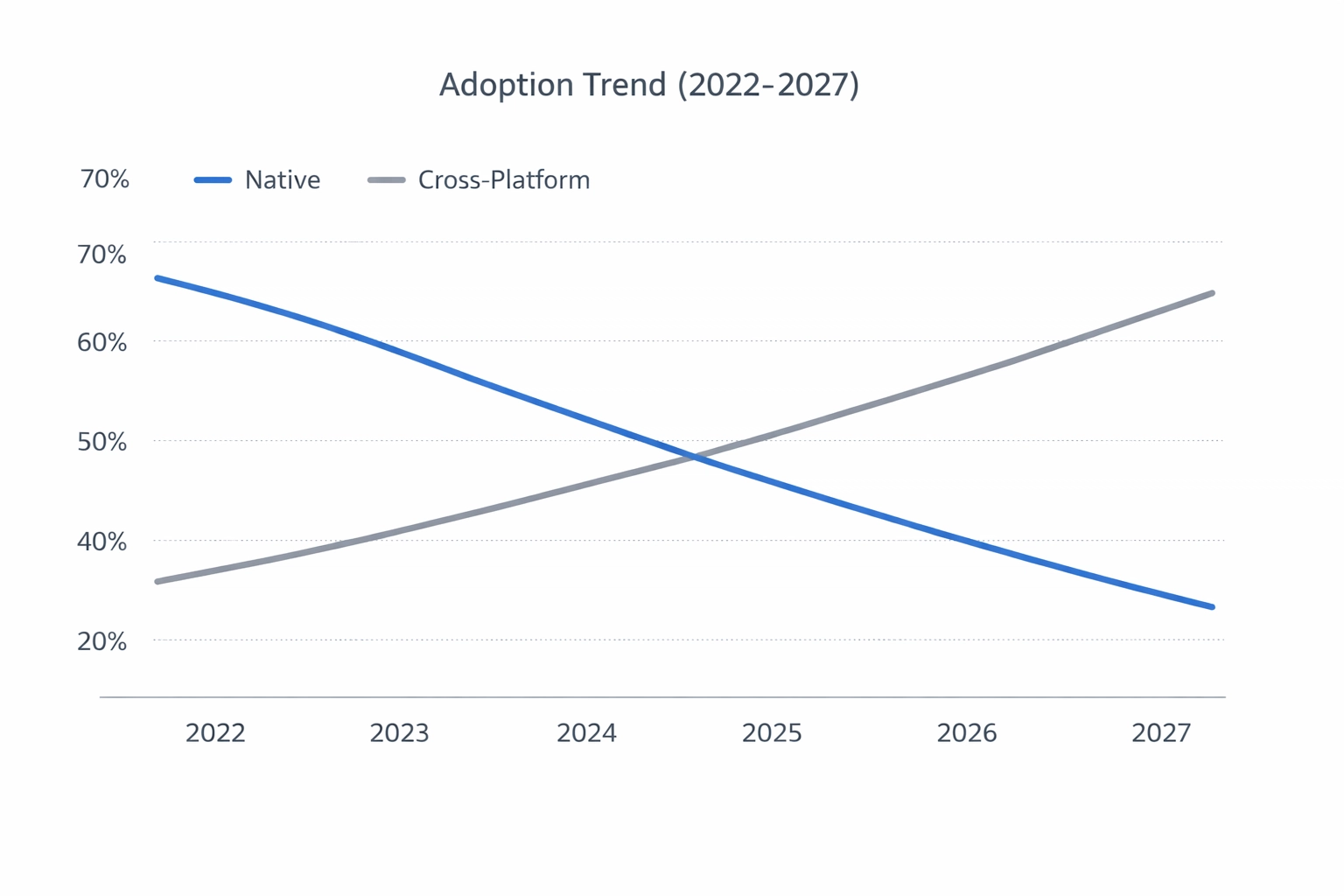
    7. Data-Driven Insights: Trends for 2026
    8. Common Mistakes in App Tech Stack Selection
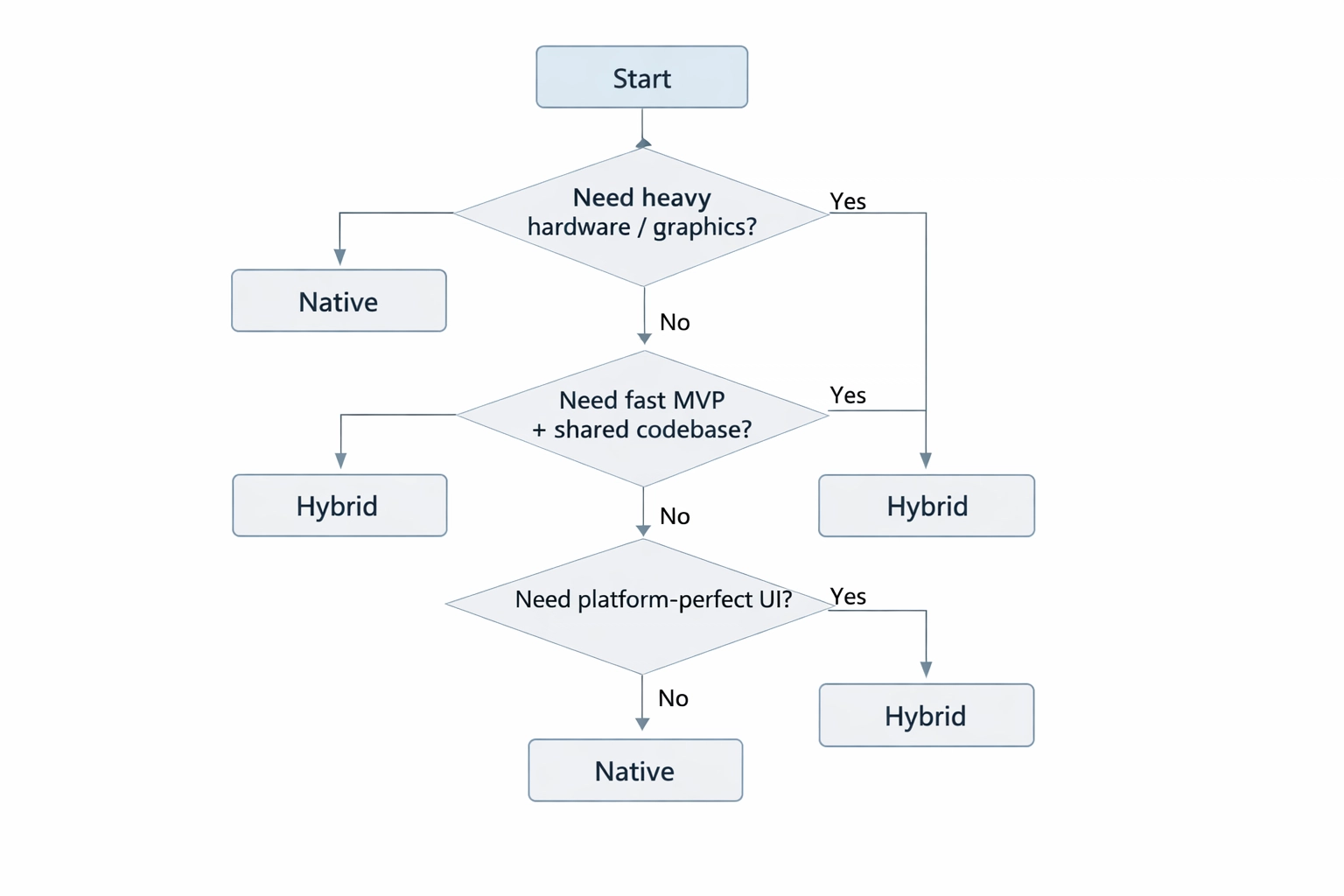
    9. Decision Framework: Which Approach Should You Choose?

    Problem: Choosing the wrong development path can lead to 2x higher costs, fragmented user experiences, and a codebase that becomes obsolete within two years.
    Solution: Selecting a tech stack based on long-term business goals, performance requirements, and hardware integration needs ensures a scalable, future-proof product.

    The Digital Dilemma: Native or Hybrid?

    In the current landscape of Software Development, the question is no longer just about “making an app.” It is about how that app will scale, how it will feel in the hands of the user, and how much it will cost to maintain over a five-year lifecycle.

    Business owners and CTOs are often caught between two powerful forces: the lightning-fast performance of Native development and the modern efficiency of Hybrid frameworks. With over 6.5 billion smartphone users globally, the stakes for your mobile strategy have never been higher. Whether you are building a complex FinTech solution or a sleek E-commerce store, the foundation you choose today determines your market agility tomorrow.

    Deep Dive: Native Development (iOS & Android)

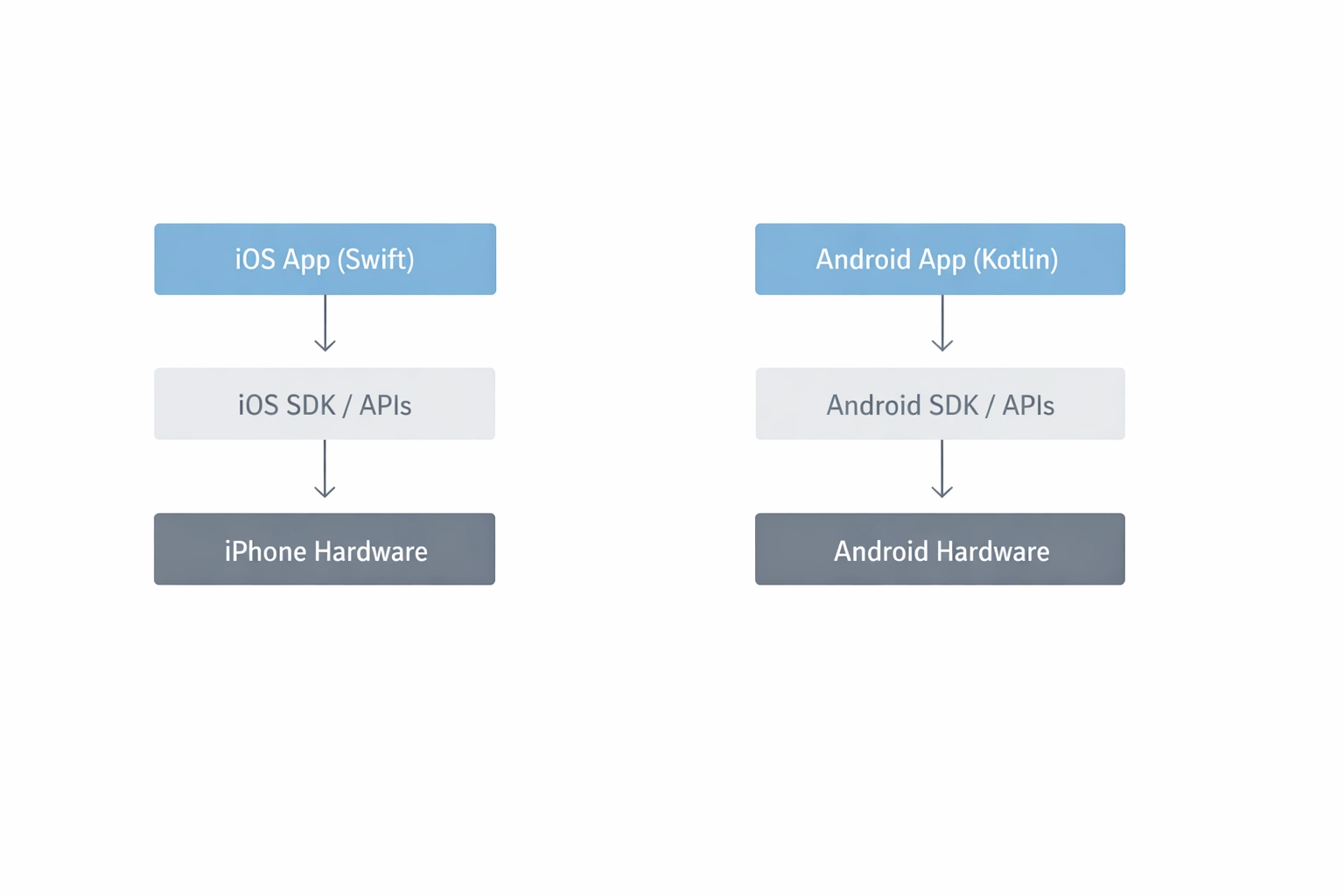
    Native development involves building separate applications for each mobile operating system using platform-specific programming languages and tools.

    iOS Development: The Premium Standard

    • Speciality: High-end consumer apps, secure financial tools, and AR-driven experiences.
    • Key Features: Leverages Swift and Objective-C within the Xcode environment.
    • User Experience: Provides the most “fluid” feel, adhering strictly to Apple’s Human Interface Guidelines.

    Android Development: Global Reach

    • Speciality: Large-scale enterprise tools, hardware-integrated apps, and massive global reach.
    • Key Features: Utilizes Kotlin or Java with Android Studio.
    • Fragmentation: Must account for over 24,000 different device types, which can extend testing phases significantly.

    Native app architecture block diagram (iOS vs Android).

    3. Deep Dive: Hybrid & Cross-Platform Development

    Hybrid and cross-platform development allows developers to write code once and deploy it across multiple platforms. While “Hybrid” traditionally referred to web-views inside a native container, modern frameworks like Flutter have redefined this category.

    The Modern Cross-Platform Suite

    • Flutter: Developed by Google, uses the Dart language to provide high-performance UI that looks identical on both iOS and Android.
    • React Native: Developed by Meta, allows for a seamless bridge between JavaScript and native components.
    • Code Reusability: Developers typically reuse 70-90% of their codebase, drastically reducing the time spent on dual-feature implementation.

    Problem: Maintaining two separate codebases for Native iOS and Android doubles the surface area for bugs and security vulnerabilities.
    Solution: Adopting a cross-platform approach synchronizes updates, ensuring all users receive the same features and security patches simultaneously.

    4. Performance, UX, and Architecture Comparison

    Performance is where the gap between Native and Hybrid is most visible.

    • Native Performance: Because the code is compiled specifically for the hardware, native apps have the lowest latency and highest frame rates. This is critical for graphics-heavy applications or real-time RPA development.
    • Hybrid Performance: While frameworks like Flutter deliver near-native speeds (60-120 FPS), traditional hybrid apps (web-based) can suffer from laggy scrolling and slower transitions when handling complex data sets.

    Performance comparison chart: Native vs Hybrid (CPU, memory, FPS).

    5. The Business Case: Cost, Time, and Scalability

    From a marketing and management perspective, the decision is often driven by the “Iron Triangle”: Fast, Good, or Cheap.

    1. Time-to-Market: Hybrid development is the clear winner for MVPs. By developing one codebase, you can cut the initial development time by 30-50%.
    2. Development Cost: Native requires two distinct teams (or developers with vastly different skill sets). Hybrid allows a single team to manage the entire mobile ecosystem.
    3. Maintenance: Long-term maintenance for Native apps involves two separate update cycles. For Android, this also includes navigating device fragmentation, which can take 2-3 times longer than iOS updates.

    6. Detailed Comparison Table

    Feature Native (iOS/Android) Hybrid / Cross-Platform
    Languages Swift, Kotlin, Java Dart, JavaScript, C#
    Performance Maximum / High-End High (Near-Native)
    Development Time Long (Parallel tracks) Fast (Single codebase)
    Cost Higher (2x teams) Lower (1x team)
    Hardware Access Full / Immediate Very High (via Plugins)
    UI/UX Platform-specific fidelity Unified / Brand-consistent
    Maintenance Complex (Two codebases) Simplified (One codebase)
    Best For AR/VR, Gaming, IoT E-commerce, Social Media, MVPs

    7. Data-Driven Insights: Trends for 2026

    Research into the current software market reveals shifting priorities for 2026. Data suggests that while performance was once the sole driver for Native, the stability of cross-platform tools has shifted the needle.

    • Market Share: Approximately 42% of developers now use cross-platform frameworks for their primary projects.
    • App Store Approval: On average, iOS app approval takes 24-48 hours, while Google Play averages 1-3 days. Native apps often see fewer rejections related to UI inconsistencies.
    • Developer Efficiency: Teams using Modern Frontend Tools alongside cross-platform frameworks report a 40% increase in sprint velocity.

    Adoption trend line chart (2022–2027): Native vs Cross-platform.

    8. Common Mistakes in App Tech Stack Selection

    Even experienced product managers fall into these traps:

    • Ignoring the “Off-the-Shelf” Hardware: If your app requires complex Bluetooth, biometrics, or sensor integration, forcing a Hybrid solution can lead to “plugin hell.”
    • Over-Engineering the MVP: Choosing Native for a simple content-driven app often leads to burned capital that could have been used for user acquisition.
    • Neglecting the Backend: A mobile app is only as strong as its architecture. Utilizing Node.js or Python for the backend is vital regardless of the frontend choice.
    • Underestimating the Android Ecosystem: Failing to test on the vast array of Android hardware is the #1 reason for “one-star” reviews post-launch.

    Problem: Startups often choose Native because they believe it’s “better,” only to run out of funding before the second platform (Android) is even launched.
    Solution: Start with a Hybrid approach to validate the market. Use the saved capital to scale once product-market fit is confirmed.

    9. Decision Framework: Which Approach Should You Choose?

    To make the right choice, follow this directive guide based on your project requirements:

    1. Evaluate Hardware Intensity: Does your project require heavy GPU usage or complex sensor data? Go Native.
    2. Assess Budget Constraints: Is your budget under £50k for an initial launch? Go Hybrid.
    3. Determine Deployment Speed: Do you need to be on both stores in under 3 months? Go Hybrid.
    4. Define UI Fidelity: Does your app need to look like a “system app” on both iOS and Android with distinct navigation patterns? Go Native.
    5. Long-Term Strategy: Are you building a core product that will exist for 10+ years? Go Native (for stability and direct OS support).

    Decision flowchart: choosing Native vs Hybrid based on requirements.


    Should I use Flutter or React Native for my Hybrid project?

    Flutter is often preferred for highly custom, brand-centric UIs, while React Native is excellent if your team is already proficient in JavaScript and React.

    What is the typical timeline for a Native app?

    A standard Native app for both platforms usually takes 4-6 months to develop, whereas a Hybrid version might take 3-4 months.


    The evolution of mobile technology in 2026 demands adaptation. Whether you choose the unparalleled power of Native development or the dynamic scalability of Hybrid solutions, the key is to align your technology with your business trajectory. Static companies fail; those who embrace the right tools at the right time lead the market. Explore our work to see how we’ve helped businesses navigate these very decisions.

    Is Hybrid development cheaper than Native?

    Generally, yes. Since you are maintaining one codebase instead of two, you typically save 30% to 50% on development and long-term maintenance costs.

    Can Hybrid apps work offline?

    Yes. Modern cross-platform frameworks support local data storage and offline functionality, though Native still offers slightly more robust background processing.

    Which is better for SEO and Web visibility?

    Mobile apps themselves don’t rank in traditional Google search like websites. However, if you are looking for web-parity, Single Page Application frameworks can bridge the gap between your web presence and mobile app.

  • What Will Key Trends of Generative AI Look Like in 2026?

    What Will Key Trends of Generative AI Look Like in 2026?

    What Will Key Trends of Generative AI Look Like in 2026_
    [ez-toc]

    Generative AI is no longer a futuristic idea; it’s already reshaping the way we build software, create content, and solve real-world problems. By 2025, surveys show that more than half of companies report using generative AI in one or more business functions, and adoption has jumped sharply compared to just a couple of years ago. As tools get smarter and more accessible, 2026 promises to be a turning point when generative AI becomes deeply woven into enterprise workflows and everyday digital life.

    Generative AI development services, whether offered by a generative AI development company or built in-house, are unlocking new possibilities: automated content creation, code generation, design prototypes, data synthesis, and more.

    These capabilities aren’t just tech tricks; they’re changing how businesses operate, speeding up software development, reducing repetitive work, and giving humans more time to focus on creative, strategic tasks. In short, generative AI for software development and beyond is maturing fast. 

    That said, the story isn’t just about glamour. As generative AI usage spreads, so does the need for responsible practices, strong data governance, high-quality training data, and secure deployment. Without that foundation, the risks of bias, misinformation, or poor output quality creep in. But with careful attention, 2026 could mark a new era: one where generative AI software development fulfils its early promise while balancing responsibility, efficiency, and innovation.

    In the sections that follow, we’ll explore how generative AI might evolve by 2026, which industries will benefit, what businesses should watch out for, and how you can prepare to ride this wave. Think of it as your roadmap to the near future, no crystal ball needed, just clear trends and smart thinking.

    Rapid AI advancements leaving your business behind?

    Unlock growth with Generative AI


    Book Your Free App Consultation

    What Will Generative AI Look Like in 2026?

    Generative ‍AI is fundamentally changing the methods we use to develop software, generate content, and address real-world issues. With the increasing availability of new technologies, 2026 looks like a turning point when generative AI will be deeply integrated not only into the functioning of enterprises but also into people’s daily digital ‍lives.

    The services can be a product of a generative AI development company or your in-house team, leading the way to new possibilities like automated content creation, code generation, design prototypes, data synthesis, and many others.

    Such innovations are not just flashy technical tricks; they are changing the whole mode of operation of companies by making software development faster, more costly repetitive tasks are being eliminated, and human resources are getting more and more available for creative and strategic tasks. Simply put, generative AI is moving at a fast pace not only in software development but also in many other ‍areas. 

    However, the plot isn’t all about glamour. Along ‍with the expansion of generative AI utilisation, there will be a growing requirement for ethical ways, effective data governance, excellent training data, and safe implementation. If that basis is not there, the risks of biased, misleading and low-quality outputs will be present.

    Yet, if things are thoroughly thought through, 2026 could be the year that opens a new era when generative AI becomes a tool for software development that not only delivers what was initially promised but also balances the aspects of accountability, creativity, and ‍effectiveness.

    In the following sections, we’ll look at how generative AI may evolve by 2026, which industries will benefit, what organisations should be aware of, and how to prepare to ride this wave. Consider it a road map for the near future; no crystal ball is required; simply clear trends and strategic planning.

    How Will AI Models Become More Advanced and Multimodal?

    How Will AI Models Become More Advanced and Multimodal_

    Such ‍AI models are changing at a speed that it is very probable that we will have by 2026 systems that will be able to understand information in a way that is much more intuitive, flexible, and “human-like”. At present, generative AI is concentrated either on text or on images, but subsequent models will be able to deal with text, voice, video, 3D data, and sensor inputs simultaneously. 

    So what will this advancement look like?

    AI will observe, listen, analyse, and respond intelligently across formats. This opens massive opportunities for businesses using generative AI development services or building custom models with a generative AI development company. Imagine tools that can create a product video from a text prompt, analyse customer feedback across voice calls and emails, or help engineers visualise complex system designs instantly. 

    Here’s what this shift means in everyday business scenarios:

    Richer understanding of data 

    Models will interpret text, images, and audio together, giving more accurate and context-aware outputs. 

    Smarter automation workflows 

    AI will handle complex tasks like generating UI mockups, drafting documentation, and analysing customer sentiment in one unified process.

    Improved generative AI for software development 

    Developers will get multimodal coding support, including architecture diagrams, test cases, visual prototypes, and even user journey simulations.

    Hyper-personalised experiences 

    Systems will adapt to user behaviour across touchpoints, improving customer service, product recommendations, and support interactions. 

    And for anyone wondering how generative AI works, multimodal systems are built by training neural networks on mixed training datasets so they can recognise patterns across formats. This means the usual “what is generative AI vs AI” comparison won’t matter much by 2026; traditional AI and generative AI will naturally blend into a single, more powerful ecosystem.

    In a nutshell, multimodal AI will make technology feel less like a tool and more like a creative partner, helping businesses innovate faster while reducing manual effort. As the saying goes, “the sky’s the limit,” and in this case, AI is climbing fast.

    AI-driven competitors moving faster than you?

    Transform workflows using Generative AI


    Talk to Our Experts Now

    What Impact Will Generative AI Have on Businesses?

    What Impact Will Generative AI Have on Businesses 

    Generative ‍AI is causing a stir in different sectors right now; however, its influence on business functions is still expected to be massive by 2026. As per recent corporate surveys, the number of global corporates, which have either used or intend to use generative AI soon, is over 50%, thus signalling that the technology is being phased out from the experimental stage and is entering the mainstream domain.

    Companies ‍understand that generative AI is not a brief hype, but rather a major factor that will change the way employees relate, develop, and acquire a competitive advantage. To figure out its impact, one may consider the actual worth that generative AI delivers.


    Operational Efficiency and Workflow Automation

    One of the most significant changes firms will notice is how effortlessly workflows perform when powered by generative AI. Those ‍enterprises which intimately integrate generative AI are going to see increased output. This is because AI acts as a “digital colleague” which carries out the less interesting tasks while the human workers focus on innovation and strategy.

    • For starters, it frees the workers from dull and repetitive jobs via automation. For example, it can generate reports, draft papers, handle customer care questions, and enter data without requiring human intervention.  
    • Second, it improves job quality by minimising errors and increasing overall process speed.  
    • Third, AI-generated proposals make decision-making easier and allow workers to reply faster.  


    Product Development and Innovation Acceleration

    For many companies, generative AI for software development is becoming a game-changer. This helps product teams innovate faster without sacrificing quality, something every generative AI development company is enabling through custom models and tools.

    • AI can generate code snippets, test cases, system diagrams, and prototypes 
    • Faster debugging and quicker iteration cycles 
    • New product ideas can be simulated and validated before development begins.

    Customer Experience and Personalisation

    Customers ‍require more rapid, intelligent, and personalised experiences, all of which generative AI is capable of delivering. Enterprises ‍that utilise tailored generative AI development solutions have the potential to generate interactions that sound more human and are of a higher degree of personalisation.

    • AI-powered chatbots and virtual assistants can provide interactions that are not only fast but also take the context into consideration 
    • Extreme personalisation in recommender systems via AI leads to higher user engagement and conversions.  
    • Generative AI models facilitate multilingual communication by automating translation and localisation processes. 

    Data Insights, Analysis, and Decision Support

    Generative AI is essentially the tool that transforms raw data into insightful information that is then used by leaders to make decisions. In fact, by the year 2026, the use of such skills will enable executives to grasp complicated data in no time as opposed to the traditional way of sifting through hundreds of lines of text or spreadsheets.

    • It can bring a long text, report, or database down to a few ‍words.
    • Predictive analytics can predict demand, hazards, and performance patterns. 
    • Automatically creates visual dashboards and insights.

    Cost Reduction and Resource Optimisation

    Automation helps businesses to do more with less. Simply said, generative AI allows organisations to invest more wisely and develop quickly.

    • Lower operational costs due to reduced manual effort 
    • Faster development cycles mean lower production costs
    • AI-powered quality checks reduce rework and operational waste

    Competitive Advantage and Digital Transformation

    At this point, the distinction between generative AI and AI won’t be a major question for businesses, as generative AI will be ubiquitous. Companies using generative AI software development and advanced automation tools will:

    • Launch products faster 
    • Innovate more efficiently 
    • Deliver better customer experiences 
    • Adapt quickly to market changes

    How Will Data Quality and Model Training Improve?

    How Will Data Quality and Model Training Improve

    The ‍biggest breakthroughs in generative AI in 2026 will not come from bigger models, but from superior data. Premium data is fast turning into the main driver of innovation, and companies that make a move by putting their money on neat and properly structured datasets are already experiencing the favourable results of their generative ‍models.

    Cleaner, Bias-Free Data Will Become the Standard

    AI project failures are driven by poor data quality, which is predicted to decrease considerably as organisations implement automated data-cleaning processes powered by AI.

    Models will learn from datasets that are balanced, diversified, and context-rich, resulting in fewer biased replies, fewer errors, and significantly more reliable outputs, particularly for consumer-facing tools such as chatbots, content generators, and decision-support systems. 

    Synthetic Data Will Take Centre Stage

    Since real-world data is often hard to collect and expensive to label, businesses are increasingly turning to synthetic data created by generative models. Gartner predicts that by 2026, nearly 60% of all AI training data will be synthetic. 

    Synthetic data allows generative AI development companies to train models on scenarios that don’t yet exist in the real world, like rare medical cases, uncommon edge cases in autonomous driving, or highly customised user behaviour patterns.

    Fine-Tuning Will Become More Accessible

    Fine-tuning the process of teaching a model, particular tasks will be easier, faster, and much more affordable. Thanks to techniques like LoRA (Low-Rank Adaptation) and parameter-efficient tuning, companies won’t need massive hardware to achieve high accuracy.

    This evolution means even small businesses can leverage generative AI development services to build domain-specific models tailored to their industry, whether it’s finance, retail, education, or healthcare.

    Real-Time Model Feedback Loops Will Transform Training

    Instead of static training cycles, models will learn continuously from real-time user interactions. This “live learning” approach will help fine-tune model behaviour, instantly correcting errors, refining tone, and improving relevance over time. 

    For example, a customer-support model may automatically adjust its responses after observing what users mark as helpful or not.

    More Transparent and Traceable Training Data

    Explainability will also improve. As businesses demand more accountability, training datasets will be logged, tagged, and version-tracked. This ensures users understand how generative AI works, what data shaped its responses, and how decisions are made, closing the gap in the “what is generative AI vs AI” confusion.

    What New Applications Will Generative AI Enable Across Industries?

    What New Applications Will Generative AI Enable Across Industries_

    As ‍the quality of generative AI is improving, the use of technology will be far beyond the mere existence of chatbots and content creation tools. Numerous ‍sectors are going to launch new apps for their clients in the following year, which will compel companies to reconsider their strategies in operations, product development, and customer services.


    1. Healthcare

    Healthcare is entering an era where generative AI helps design personalised treatment pathways. Generative models will simulate treatment outcomes, summarise medical histories, and even assist doctors in identifying rare diseases faster. Hospitals and research labs will increasingly rely on generative AI software development to generate synthetic medical images for safer model training, thereby minimising the risk to patient privacy.


    2. Retail and eCommerce

    Brands ‍will be able to use generative AI to facilitate the process of product recommendation interactively, offer customers deals depending on their up-to-the-minute behaviour, as well as create marketing content automatically. To consumers, this will be the extremely targeted suggestions of products, AI-designed outfits, and personalised shopping assistants that know the customer’s preferences more and more every ‍day.


    3. Finance

    Banks will use generative AI to simulate financial risks, detect fraud, and generate instant reports from vast unstructured datasets. Generative models will also create synthetic financial data to help analysts test their systems more accurately, strengthening security and transparency.


    4. Manufacturing

    Generative design tools are set to transform manufacturing. Such models can generate a product variation in several thousands, where each of these variations is optimised either for cost or for durability or for sustainability. On the other hand, factories, which are going to use generative AI development solutions, will be able to automate predictive maintenance as well, thus they will reduce their downtime and improve their production ‍quality.


    5. Education

    In ‍2026, the use of generative AI in educational institutions will have changed classrooms to a great extent. Teachers will be facilitated in producing individualised lessons, pictures for learning, tests, and notes through AI, based on the abilities and the speed of the students. This change has the effect of making education more attractive, easier, and fun for the ‍learners.

    6. Entertainment & Media: Real-Time Content Creation

    Entertainment ‍is going to be among the major beneficiaries. Generative AI can be used for the writing of scripts, the creation of VFX scenes, the designing of characters, and even the production of the whole storyboards. Various studies indicate that as much as 45% of the digital content will be AI-assisted by 2026, thus enabling creators to accomplish their projects in less time and at lower ‍costs.

    Your team spends hours on repetitive tasks?

    Boost efficiency via Generative AI


    Start Your Project Today

    Conclusion

    By 2026, generative AI will have progressed from an experimental technology to a mainstream commercial requirement. As more businesses understand generative AI and how it works, adoption is growing. Its increase is being driven by greater data quality, model training, and a growing demand for tools that can generate content, automate choices, and accelerate innovation.

    As ‍the need for personalised solutions grows in various industries, companies will progressively depend on skilled generative AI development companies and professional generative AI development services for advanced technologies instead of utilising generic ones.

    Generative AI will, in fact, open up new avenues in various sectors such as product design and marketing, healthcare, banking, and manufacturing, while also increasing productivity and creativity levels. The year 2026 will see generative AI as a widely accepted tool of enterprises in the digital era for their initiation and expansion.

    FAQs


    What is Generative AI?


    Generative AI is a type of artificial intelligence that creates new content, such as text, images, code, or designs, by learning patterns from existing data. It goes beyond traditional AI, which only analyses or predicts outcomes.


    It uses advanced models mainly neural networks, to understand data patterns and then generate new, realistic outputs. These models improve over time as they are trained on larger and cleaner datasets.


    Generative AI helps companies automate complex tasks, reduce development time, and create more personalised customer experiences. It also supports innovation by generating new ideas, designs, and solutions faster than manual processes.


    Industries such as healthcare, finance, retail, manufacturing, and entertainment will see major gains. From automated content creation to predictive design and digital simulations, generative AI will improve efficiency and decision-making.


    Yes, most businesses require expert support because generative AI involves advanced model training, data preparation, and technical integration. A specialised development team ensures accuracy, scalability, and safe deployment.

    Found this post insightful? Don’t forget to share it with your network!


    Related Articles

  • Which Factors Define a Top AI Development Company in 2025?

    Which Factors Define a Top AI Development Company in 2025?

    Top-AI-Development-Company
    [ez-toc]

    By 2025, AI might be more than just a catchphrase; it will be important for organisations seeking to maintain their competitiveness. The real-time era is converting industries; for instance, banks are using AI software to detect fraud, and physicians are adopting AI-powered structures to diagnose patients more swiftly. Partnering with a top AI development company can help businesses leverage these innovations effectively and stay ahead in this rapidly evolving landscape.

    According to PwC, AI is predicted to contribute $15.7 trillion to the worldwide economic system by 2030, and this year marks a turning point as companies shift from experimentation to full-scale adoption. This makes selecting the proper AI development organisation one of the most important business choices you may make.

    However, choosing the best partner from the numerous AI software development firms is the challenging part. In addition to writing code, a pinnacle AI improvement organisation ensures statistical law compliance, provides challenge-based learning, and develops scalable solutions that meet your long-term goals.

    Whether you are in search of a custom AI development enterprise for a unique challenge or just need to lease an AI developer for ongoing needs, the partner you pick will have an instantaneous effect on your return on investment, price of innovation, and general virtual overall performance.

    What Defines a Top AI Development Company in 2025?

    By 2025, there will be a greater need for AI development services than just simple automation. Companies today require partners who can provide long-term value, innovation, and security. A leading AI development firm is distinguished by the following attributes:

    What-Defines-a-Top-AI-Development-Company-in-2025

    1. Proven Expertise in AI Software Development

    These days, businesses seek AI partners with practical expertise in computer vision, natural language processing, and machine learning. An AI software development business that creates retail predictive analytics, for instance, can assist brands in anticipating demand and minimising stockouts.

    2. Ability to Deliver Custom AI Solutions

    Every business has unique challenges. Whether those solutions are chatbots for e-commerce or fraud detection systems for banks, a custom AI development company is expected to create solutions that are specifically suited to the needs of the market. By 2025, 70% of businesses will use tailored AI solutions to satisfy certain market demands, predicts Gartner.

    3. Focus on Data Security and Compliance

    Companies need to make certain that their AI models are secure and adhere to ever-harder data legal guidelines, like GDPR and HIPAA. A top AI companion not handiest builds models but also safeguards personal data, which is critical for sectors like healthcare and finance.

    4. Scalability and Future-Readiness

    The best AI software development companies design solutions that scale with your growth. For instance, a logistics company may start with AI route optimisation and later expand into predictive fleet management, all supported by the same framework.

    5. Access to Skilled AI Talent

    Instead of developing one internally, many organisations would rather hire an AI developer or a specialised team from a reliable vendor. Access to elite talent and ongoing skill development are guaranteed by a robust AI business.

    Which Core Services Should They Differ?

    In 2025, a leading AI development firm should offer more than simply coding know-how. From strategy to post-deployment support, businesses want full-cycle AI development services. The following are the essential services you should seek out:

    Which-Core-Services-Should-They-Differ

    1. AI Strategy and Consulting

    Before leaping into AI software program development, companies need a roadmap. The proper AI improvement employer will help perceive where AI can force the maximum fee, be it in automating customer support, streamlining supply chains, or enhancing decision-making. According to McKinsey, corporations with a clean AI method are 2.5 times more likely to gain ROI from their AI investments.

    2. Custom AI Development

    Since no two companies are the same, a custom AI development company is essential. For example, a logistics company would need predictive route optimisation, whereas an e-commerce brand might need a tailored suggestion engine. Instead of imposing generic models, customisation guarantees that solutions meet corporate objectives.

    3. Machine Learning and Deep Learning Solutions

    ML and deep learning are at the core of contemporary AI software development firms, from predictive maintenance in manufacturing to fraud detection in banking. These services enable companies to identify trends in large datasets and generate accurate forecasts.

    4. Natural Language Processing and Conversational AI

    As AI-driven chatbots and virtual assistants continue to gain popularity, corporations are employing more AI engineers with NLP enjoy. For example, conversational AI-powered consumer care structures can reduce response times by means of up to 60%, improving customer satisfaction at the same time as lowering costs.

    5. Integration and Deployment

    If the most sophisticated model is hard to integrate with current systems, it is worthless. A company that develops AI software guarantees a smooth connection with cloud platforms, CRM, ERP, and corporate systems.

    6. Ongoing Support and Optimisation

    AI requires constant monitoring, retraining, and optimisation; it is not a one-time investment. Prominent providers provide long-term AI development services to make sure that answers continue to be modern with evolving data developments and marketplace conditions.

    Businesses should prioritise AI partners in 2025 that offer complete services, ensuring innovation and sustainability in their AI endeavours.

    Unlock AI Development Potential for Your Business Today

    From roadmap to execution, we’ll help you implement AI that drives measurable growth.


    Book Your Free App Consultation

    Why Does Industry Experience and Domain Expertise Matter?

    The ability of the AI development business to comprehend the specific challenges, regulatory requirements, and client expectations of your industry is crucial to the success of any AI project. Here’s why domain expertise is so critical:

    1. Tailored Solutions, Not Generic Models

    A custom AI development company with industry knowledge can build solutions specific to your business. AI, for instance, can be used to make tailored recommendations in retail, but it must immediately identify fraud in the financial industry. Even the most sophisticated models might not work without this background.

    2. Compliance and Security Knowledge

    Strict regulations apply to different industries; for instance, the banking industry must follow GDPR and KYC norms, while the healthcare industry is subject to HIPAA. Businesses are protected from legal dangers and data breaches by a leading AI development company that guarantees the compliance of its AI development services.

    3. Proven Case Studies and Track Record

    Experience is reflected in successful projects. A logistics firm choosing between two AI software development companies will often go with the one that has built predictive route optimisation systems before. Real-world proof adds confidence that the partner can deliver.

    4. Faster Implementation and Reduced Risk

    Domain expertise means less trial and error. For example, employing AI developers with a health experience speeds up the board process, as they are already familiar with the problems with medical vocabulary, workflows and integration.

    5. Competitive Advantage

    Deloitte reports that 62% of the top-performing companies employ AI for sector-specific uses as opposed to general technologies. This guarantees that solutions are found. The market requires both strategic and technical.

    In short, collaboration with an AI growth business that combines technical skills and broad market experience can help you save time, reduce the risk and create AI solutions that move the needle for your business.

    Smarter Decisions. Faster Outcomes.

    Leverage expert AI development consulting to cut costs, boost efficiency, and stay ahead of competitors.


    Talk to Our Experts Now

    How Do You Evaluate Their Technical Skills and Past Projects?

    Choosing a pinnacle AI improvement business includes more than simply reviewing their website; it also necessitates an intensive analysis of their technical know-how and the real global impact of their work. Here’s how you may appropriately examine them in 2025:

    1. Check Their Technology Stack

    In addition to cloud structures like AWS, Azure, and Google Cloud AI, a skilled AI development company ought to be acquainted with frameworks like TensorFlow, PyTorch, and Scikit-learn. For instance, they ought to be informed about data pipelines and cloud computing if you require large-scale predictive analytics.

    2. Look at Case Studies and Client Success Stories

    Past projects reveal how well they deliver. An AI-powered retail recommendation system or an automated insurance claims processing tool developed by a custom AI development company demonstrates its ability to manage industry-specific difficulties.

    3. Evaluate Measurable Outcomes

    A top partner won’t just build models; they’ll show impact. Did their solution increase efficiency by 40%? Did customer satisfaction improve with AI-powered chatbots? Real numbers separate skilled AI software development companies from average ones.

    4. Review Certifications and Partnerships

    Professional AI development offerings vendors commonly maintain security certifications, which include ISO/IEC or have alliances with predominant tech corporations like Google and Microsoft. This proves its legitimacy and conformity to global norms.

    5. Assess Developer Expertise

    Make sure the AI engineers you lease are professional in MLOps, gadget mastering, deep learning, and natural language processing. To ensure your AI solutions meet marketplace requirements, you need professional builders.

    6. Verify Research and Innovation Capabilities

    The leading AI software development companies usually publish research, develop proprietary tools, or take part in open-source projects. This proves that they are innovators rather than merely service suppliers.

    To put it briefly, the foundation of any leading AI development company is a solid project portfolio and technical expertise. They show that they are capable of converting innovation into quantifiable business value.

    What Role Do Data Security and Compliance Play?

    In 2025, facts might be the most valuable commercial enterprise asset, but also the most susceptible if misused. When choosing a pinnacle AI improvement enterprise, recall information security and regulatory compliance. Here’s why they matter:

    1. Protection of Sensitive Information

    AI systems are dependent on massive datasets, which frequently include customer information, medical records, and financial activities. A responsible AI development company uses encryption, safe storage, and access control to stop intrusions. Healthcare providers must use AI models that comply with HIPAA in order to avoid severe penalties.

    2. Compliance with Global Regulations

    Strict overview of all demand compliance, such as CCPA, GDPR and industry-specific rules. The top AI software development firms provide systems that automatically satisfy these standards, lowering legal issues and promoting moral AI applications.

    3. Building Customer Trust

    According to PwC, 85% of customers are more likely to trust businesses that manage their data ethically. By collaborating with a custom AI development business that incorporates compliance into its AI development services, organisations can preserve the credibility of their brands.

    4. Industry-Specific Safeguards

    Every company has different security requirements, ranging from banks utilising AI to identify fraud to shops customising the buying experience. Skilled sellers provide custom protection, so when you appoint AI developers, they already know what the industry requires.

    5. Long-Term Sustainability

    Future resilience is another facet of security, in addition to current security. Prominent AI partners use strategies such as interaction and federated learning to ensure that AI software development is also dangerous.

    Choosing an AI partner that prioritises protection and compliance, in the end, guarantees not simplest technological know-how but also the guarantee and safety required for long-term achievement.

    Your AI Transformation Starts Here

    Get a custom plan built around your business goals – without the tech overwhelm.


    Start Your Project Today

    What Pricing Models and Engagement Options are Available?

    One of the most important considerations when selecting a leading AI development business is frequently the budget. By 2025, companies anticipate flexibility in their interactions with AI partners as well as in the technology stack. The following are the most popular models of price and opportunities for engagement:

    1. Fixed-Price Model

    Best for projects with clearly defined requirements. For example, if you want an AI chatbot with specific characteristics, a custom AI development business might provide you with a defined price quote. This is less flexible if the project’s scope changes, despite being more predictable.

    2. Time and Material Model

    Ideal when requirements evolve. Many AI software development companies prefer this model because it charges based on actual developer hours and resources used. It suits projects where innovation and experimentation are key.

    3. Dedicated Team Model

    Companies frequently employ AI developers or whole teams to work on their projects. Long-term AI development services like computer vision systems, recommendation engines, and predictive analytics platforms benefit greatly from this. It provides full control and scalability.

    4. Outcome-Based Pricing

    In 2025, a new trend is for certain AI development firms to tie expenses to quantifiable outcomes, such as more productivity, fewer mistakes, or higher profits. This methodology closely links vendor incentives to customer success.

    5. Hybrid Engagements

    Many enterprises combine models. For instance, a custom AI development business can propose fixed pricing if you want an AI chatbot with particular features. Despite offering consistency, this is less flexible if the project’s scope changes.

    To strike a balance between cost-effectiveness and creativity, more than 60% of businesses now favour flexible or hybrid pricing models for AI initiatives, according to Deloitte. While keeping control over deadlines and results, the appropriate engagement option guarantees that you receive value.

    Which Red Flags Should You Watch Out For Before Choosing a Provider?

    By recognising ability red flags early within the AI improvement procedure, you can steer clear of wasted money, security risks, and disappointing results in 2025. Even if a service claims to be a top AI development company, take their reputation into consideration. Some common red flags include:

    1. Lack of Case Studies or Proven Experience

    A reliable AI development company should showcase real-world projects, success stories, or detailed portfolios. Corporations favour AI software development firms that can provide quantifiable return on investment in previous projects. It’s a warning sign if all you see are ambiguous promises with no concrete results.

    2. Overpromising with Unrealistic Timelines

    Careful information coaching, version education, and compliance audits are vital for AI projects. One must steer clear of companies that promise on-the-spot consequences or the transport of modern AI software within a few weeks. Realistic timelines are a mark of a custom AI development company that understands complexity.

    3. Weak Data Security and Compliance Measures

    In 2025, data privacy is one of the most scrutinised areas. 84% of businesses rank compliance as the most important consideration when outsourcing AI development services, according to a McKinsey survey. You should assume twice if a provider would not comply with GDPR, HIPAA, or nearby legal guidelines.

    4. One-Size-Fits-All Solutions

    Beware of groups pushing well-known products in place of supplying tailored solutions. A trusted custom AI development company will analyse your business needs, design custom architectures, and provide AI software development aligned with your goals.

    5. No Transparency in Pricing Models

    A common red flag is unclear or hidden costs. Top AI development companies should provide transparent pricing models, whether fixed, milestone-based, or pay-as-you-go. If the pricing is vague, you may end up overspending.

    6. Limited Technical Stack or Outdated Tools

    Modern frameworks like TensorFlow, PyTorch, and cloud-local structures are vital for AI development. A business enterprise won’t be able to scale its assignment if it uses several out-of-date libraries or does not post its tech stack.

    7. Poor Communication and Support

    If the company fails to provide clear updates, dedicated support, or post-deployment assistance, that’s a major warning sign. A reliable AI software development company should keep stakeholders engaged at every step.

    8. No Skilled Talent Pool

    Many firms claim expertise but lack qualified AI engineers. Businesses struggle because they hire AI developers without proven domain expertise. Ensure the company has certified professionals and ongoing training programs.

    Conclusion

    When selecting an AI improvement employer in 2025, it is more crucial to choose a sincere generation accomplice who understands your enterprise, appreciates data protection, and generates measurable outcomes than it is to examine charges. The IDC predicts that more than 80% of businesses globally will utilise AI by 2026, which will raise the need for reliable AI software development firms.

    In addition to supplying specialised answers, making an investment in a custom AI improvement organisation offers groups a competitive edge in method automation, customer experience enhancement, and revenue growth.

    Choose suppliers who provide scalable AI development services, clear pricing, and demonstrated proficiency with contemporary frameworks to guarantee achievement. A main AI development enterprise may even offer solutions which are suitable for compliance and long-term help.

    Whether your goal is to streamline operations, integrate predictive analytics, or create next-era programs, the quality route of action is to lease AI developers that offer both technical know-how and strategic vision. In a nutshell, we will make certain that your commercial enterprise remains aggressive and prepared for the future in a market driven by AI.

    FAQs


    1. What does an AI development company do?


    Using computer vision, machine learning, and natural language processing, an AI development business creates and implements intelligent software solutions. They assist companies with data analysis, process automation, and provide more intelligent client experiences.


    By 2025, AI will power everything, including predictive analytics and automation. Employing a seasoned AI development firm guarantees that companies will receive solutions that are safe, expandable, and tailored to the most recent market trends.


    Ask about their finances, post-launch support, data security procedures, technological know-how, and background. These recommendations help you choose a custom AI development company that fits the needs of your business.


    The cost is influenced by the technologies employed, the engagement plan, and the project’s complexity. Hiring a top AI development business for small projects might cost as little as $30,000 by 2025, while enterprise-level solutions could cost up to $200,000.

    Found this post insightful? Don’t forget to share it with your network!


    Related Articles

  • How AI Services Build a Fully AI-Ready Product Team?

    How AI Services Build a Fully AI-Ready Product Team?

    AI-Services
    [ez-toc]

    AI is no longer an experimental technique; This is now the motivating power behind some of today’s most successful products. Companies utilise AI services to provide better, faster, and more engaging user experiences across individual e-commerce platforms, including intelligent chatbots in customer care.

    Numerous enterprises are now espousing technical AI call center platforms to automate client exchanges, support queries, and outbound communication at scale.

    With this spike in use, these models have changed weight by generating only AI models to keep the right AI team together to convert these models into market-ready solutions.

    The importance of having a fully AI-ready product Team cannot be overstated. Many organisations invest in partners with AI Development Services or an AI Development Company, but without a clear strategy, even the most advanced equipment and technologies are unable to produce results.

    A product team designed for AI development ensures that data pipelines, infrastructure and model life cycle are well controlled, while also addressing important areas such as user experience, compliance and moral AI practice.

    Being “AI-ready” means much more than technical capability. This is about creating an environment where AI can initially move on from product use to distribution and then scale responsibly. This requires the opportunity to estimate challenges such as cross-functional cooperation, strong domain knowledge and prejudice, privacy and model operation.

    AI developers hire developers, and with this general approach, they quickly strengthen the structure of their teams, and increased user makes innovations by bringing innovations to innovations.

    In short, the creation of the A-ready product team is about converting AI into a tangible, scalable business property from a promising idea. It is about the combination of technology with vision and is to ensure that each member of the team not only contributes to AI to create a function but is also the basis for permanent product success.

    Unlock Web Development Potential for Your Business Today

    From roadmap to execution, we’ll help you implement AI that drives measurable growth.


    Book Your Free App Consultation

    What are the Core Roles in an AI-Ready Product Team?

    Building a hit AI-ready product group goes beyond truly hiring some engineers and waiting for them to supply advanced AI solutions. A powerful crew requires a blend of technical expertise, domain expertise, and ethical oversight, working collectively to lay out, expand, and set up AI products that are both innovative and dependable.

    Today, leading agencies investing in AI development services are prioritising established, move-useful teams in which each position contributes to the larger picture of AI innovation.

    Here are the core roles that make up a fully AI-ready product Team:

    What-are-the-Core-Roles-in-an-AI-Ready-Product-Team

    1. AI Product Manager

    The AI product manager acts as a contact between business goals and technical execution. They define vision for AI products, prefer capabilities and ensure that development corresponds to the user’s requirements and market opportunities.

    Unlike conventional product managers, AI PMs also need a stable grasp of AI improvement standards like system getting to know models, data pipelines, and version deployment so that they can translate technical opportunities into commercial enterprise value.

    2. Data Scientist

    The data is at the centre of AI, and the data scientists are the ones who unlock its ability. They analyse complex datasets, create statistical models and extract insight to guide the decision.

    In the context of the AI development company, it is important to use data from data science algorithms, validate hypotheses and ensure that AI services produce accurate, data-driven results.

    3. Machine Learning Engineer

    While scientific models are made, machine learning engineers take these models and make them production-ready solutions. They optimise algorithms, manage training processes and work closely with software engineers to ensure that the models can scale into the real world.

    When Business Machine Learning appoints AI developers with engineering expertise, they get the technical muscle required to distribute the AI system that performs effectively under pressure.

    4. Data Engineer

    AI projects fail without reliable, clean and well-composed data. Computers have designed and maintained infrastructure that strengthens AI data pipelines, storage systems and integration frameworks.

    Their role ensures that the AI team has access to high quality continuous data, which is important for accurate model training and long-term product performance.

    5. AI Architect

    An AI Architect is responsible for the overall technical strategy for AI solutions. They design scalable architecture, choose appropriate AI frameworks and set the standard to integrate the model with the existing system. In rapidly growing outfits, it ensures an AI architect that the AI-adoption is smooth, cost-effective and future-proof.

    6. Domain Expert (Subject Matter Expert)

    The AI solutions are just as good as their real-world counterparts. Domain experts bring industry-specific knowledge in the process of finance, healthcare, retail or production. Their expertise helps the AI development team adapt the model with industry standards, regulatory requirements and practical challenges.

    What are the Essential Skills for Each Role?

    The right people in the AI team have only half the story; Their skills determine whether your AI initiative is successful or stalls. When companies move to AI development services to launch the next generation AI products, emphasis has been placed on a combination of technical expertise with soft skills, domain understanding and moral awareness. Below are the necessary skills that create a fully finished product team.

    What-are-the-Essential-Skills-for-Each-Role

    1. Technical and Analytical Skills

    Technology and data are at the center of any AI project. The AI development company requires strong foundations in mathematics, statistics and programming from all roles, data researchers and machine learning engineers to AI architects. Skills in Python, R, Tensorflow and PyTorch are important for AI development, while clouds ensure knowledge scale, such as AWS, Azure and Google Cloud.

    Beyond coding, analytical thinking is as vital. Team members should be able to interpret large datasets, identify trends and convert ideas to practical solutions. Organisations that want to appoint AI developers should find people who can not only build, but can also change the model to increase performance, accuracy and cost-effectiveness.

    2. Communication and Collaboration Skills

    AI solutions are rarely built in isolation. They require cross-functional collaboration between product managers, engineers, designers and business interests. The technology teams and decisions make it possible to bridge the effective communication difference between teams and decision producers and ensure that AI products are suitable for user needs and business goals.

    The A-Taiyar product team should be effective in explaining complex concepts such as nerve networks or data pipelines in regular language. This ability promotes better cooperation, reduces the obstacles in the project and ensures that every stakeholder considers “why” behind the decisions of AI.

    3. Domain-Specific Knowledge

    AI cannot thrive without context. Domain knowledge lets the AI Team design solutions that are not only technically advanced but also practically relevant. For example, a health-quality AI system requires knowledge of privacy rules for patient data, while a retail AI solution must understand customer behaviour and inventory management.

    4. Ethical and Responsible AI Practices

    As AI adopts rapidly, morality has become one of the trendiest technology subjects. From prejudice in algorithms to concerns about data secrets, companies can no longer risk ignoring the responsible AI practice. An effective AI team should be trained in moral disposition, regulatory compliance and responsible data use.

    A moral and match manager ensures that the AI systems meet legal standards such as GDPR or HIPAA and maintain justice and openness. This not only protects businesses against iconic and legal risks, but also produces the user’s trust, an important factor in any long-term success with any AI initiative.

    How to Build a Collaborative Culture?

    No matter how effective your AI team is, the success of the AI development depends on how people work together. The construction of the AI system is rarely a single work; This requires developers, computer researchers, designers and business leaders to basically match. To create AI-ready product teams, the collaboration must be most of the culture.

    Here’s how organisations can achieve that.

    1. Cross-Functional Teamwork

    AI projects often bring people with very different skill sets together. A computer researcher can focus on algorithms, while a UX designer ensures that AI products are comfortable for the final users. To bridge these differences, cross-functional teamwork is necessary.

    Encouraging open communication channels, regular declines, and shared accountability ensures that all parties understand the larger picture. Many successful companies are currently dependent on AI development services that promote collaboration between technical and non-technical roles and ensure that innovation combines with commercial goals.

    2. Agile Methodologies in AI Development

    The flexible has become a useful function in modern software projects, and it turns out to be equally valuable in AI development. Since AI projects include experiments, testing models, refining data pipes and rehearsal for results, they help quickly adapt to fast sprinting teams.

    By following tight practices such as daily stand-up, sprint planning and retrospectives, the AI development company or the internal team can remain flexible, reduce the risk and produce old results. The flexible method also promotes openness, so that stakeholders can find progress and make informed decisions.

    3. Continuous Learning and Adaptation

    The AI landscape develops at the speed of electricity. The work done tomorrow cannot be done tomorrow. That’s why continuous learning is a must for any Ready Product Team.

    From being updated on the latest frameworks such as TensorFlow, PyTorch or language, to detecting trends such as Generic AI and responsible AI, the learning teams make the company competitive. Many organisations are now investing in AI development services that offer training, workshops and knowledge sharing sessions to enable their teams.

    Adaptation is handed over to hand. When the market changes and the rules tighten, the AI team should be ready to update the models, workflows and match strategies. Companies appointed with AI developers for development are in a better position to handle these changes effectively.

    Smarter Decisions. Faster Outcomes.

    Leverage expert web development consulting to cut costs, boost efficiency, and stay ahead of competitors.


    Talk to Our Experts Now

    What are the Best Practices for Structuring Your AI Team?

    Making an AI-ready product team is not just about hiring the right people; This is about structuring them in such a way that encourages productivity, innovation and responsibility. Since companies are using AI services to create quick smart solutions, how can you organise your AI team, and how can you create or break the success of your AI products?

    Below are some of the best practices that follow the leading organisation and each AI development company’s strong, future evidence teams to achieve.

    1. Defining Clear Roles and Responsibilities

    The obscurity can also slow down the most talented AI team. Apparently, the roles of computer researchers, machine learning engineers and UX designers are all known to AI product managers who all know who they are responsible for. It prevents overlap, reduces confusion and improves efficiency.

    When AI engineers are hired, companies should find applicants who not only have major technical skills but also understand their role in a large AI ecosystem. A well-defined structure enables teams to focus on their personal strength by contributing to the overarching goal for successful AI development.

    2. Establishing Effective Communication Channels

    AI projects are complex and require more stakeholders to live in accordance. Engineers who discuss business goals with product leaders to limit the algorithms, communication is the glue that holds everything together.

    Successful AI development companies often use collaboration equipment such as Slack, Microsoft Teams or project management platforms such as Jira. Regular check-ins and transparent reporting help ensure that no significant details are lost. Effective communication not only improves productivity but also strengthens confidence in the AI-ready product team.

    What are the Common Challenges and How to Overcome Them?

    Even with the best AI team, the construction of a finished product team comes with obstacles. From leaving sensitive data to the use of scaling models, companies and organisations often face problems that can prevent progress. Companies that grasp these difficulties promptly can take active actions to overcome them. Here are some of the most prevalent roadblocks to AI development and how to overcome them.

    1. Data Privacy and Security Concerns

    Data-Privacy-and-Security-Concerns

    Data is the lifeblood of all AI products, but it also comes with risk. With the string of rules such as GDPR and CCPA, incorrectly adding user data can cause known damage and legal punishment. Companies working on AI development services should prioritise secure data storage, encryption and anonymous practices.

    Partnership with a reliable AI development company can also ensure compliance with global standards when they create confidence among end users. Regular security audit, strong access control and privacy framework for designs are now considered to be a must-have in each AI initiative.

    2. Managing Model Bias and Fairness

    Today, AI is one of the most trending subjects in AI. The AI systems are just as fair as the data they have been trained on, which means they have discriminatory consequences in poor datasets. For example, recruitment-based AI units have unconsciously faced criticism in the benefit of some demographics.

    To avoid this, organisations need a strong governance framework. Continuous monitoring, prejudice and various data sets are required. Many companies now include a moral officer in their AI team to ensure that justice and openness remain the core of AI development.

    3. Scaling AI Solutions Effectively

    The construction of a model in a laboratory is one thing; It is another to distribute it in a global effort. Many organisations struggle to scale their AI products beyond pilot projects. Shallow? High infrastructure costs, integration problems and lack of automation.

    This is the place where practice such as AI Development Services and MLOPS comes into play. Scaling of MLOPs helps to streamline the model’s signs, monitoring and reset to make the scaling smooth. Companies that appoint AI developers with cloud and DevOps expertise can reduce costs and bring AI solutions to fast production.

    4. Aligning AI Development with Business Objectives

    A common error in AI projects focuses a lot on technology and neglects business goals. The value of an advanced algorithm is very low if it does not solve a real-world problem. Successful organisations ensure that AI development is associated with average results, whether it increases efficiency, improves the customer experience or increases revenue.

    Here, the role of an AI product manager becomes important. They adjust technical opportunities with a professional strategy and ensure that the AI Ready Product team provides price-controlled solutions. Regular communication between officials, data and product managers can effectively bridge this difference.

    Case Studies of a Successful AI-Ready Team

    The real effect of the A-ready product team can be considered best through examples in the real world. Companies in industries show how the right mix of skill, collaboration and strategy can transform ideas into successful AI products. Let’s look at two trending case studies where structured teams and strong AI development services made a difference.

    Example 1: AI-Driven Healthcare Application

    Healthcare has been one of the most dynamic fields for AI development. A main health-tech begin-up has created an AI-powered diagnostic tool to help clinicians detect diseases in clinical imaging at an early stage.

    The AI group comprised Data Scientists, Machine Learning Engineers, and Domain Experts (radiologists and healthcare professionals). Their duties covered not just developing models, but additionally verifying accuracy, compliance, and usefulness. An AI development firm assisted the team with solid records pipelines, cloud deployment, and interplay with digital fitness record systems.

    This success story highlights why healthcare organisations increasingly hire AI developers and invest in AI development services to make advanced solutions accessible, secure, and reliable.

    Example 2: AI-Powered Financial Services Platform

    In the financial sector, risk assessment and fraud detection are important areas where AI products are now moving on. A global bank participated with an AI development company to create an AI-operated platform, which can analyse millions of real-time transactions to detect suspicious activities.

    The AI-ready product team here was very cross-functional, including AI architects to design computer engineers, scalable solutions to handle large financial data and moral officers to ensure justice in automatic decision-making. The playful function was adopted, which enabled rapid relapse and continuous improvement.

    Results achieved:

    • A 40% reduction in scam transactions through true warning.
    • The customer’s trust increased by ensuring transparency in automated decisions.
    • Scalability to handle millions of transactions per day without delay.

    This case shows how an AI team is structured around clear roles and collaboration, and it can carry out average business results. For banks and fintech companies, doing AI development services and choosing to appoint AI developers with domain skills makes the AI initiative both profitable and durable.

    Your AI Transformation Starts Here

    Get a custom plan built around your business goals—without the tech overwhelm.


    Start Your Project Today

    Conclusion

    As we move deeper into 2025 and beyond, the landscape of product development is being reshaped by more than just novel algorithms. What’s trending now is a shift toward measurable value, democratisation of tools, and stronger governance. Businesses that use AI services are not just creating features; they are refining entire systems of feedback, ethics, deployment, and maintenance.

    One large trend is low-code and no-code structures, making AI improvement more accessible. Not every employer desire to build from scratch; many leverages existing modules and platforms to prototype quicker, releasing up the AI crew to focus on innovation in preference to boilerplate work.

    Another growing region is Explainable AI (XAI) and fairness audits, turning into general parts of workflows, mainly for AI products in regulated sectors like healthcare, finance, or training.

    We’re also seeing more businesses restructure their inner teams or accomplice with AI improvement agencies to embed AI as a core competency instead of a bolt-on characteristic. The purpose is to permit continuous delivery, maintain excessive requirements of data privacy, ensure version monitoring, and embed moral practices at all levels of development.

    Building a truly AI-ready product team is less about finding individual superstars and more about assembling a well-balanced, cross-functional team. It is about roles, strong communication, clarity in a strong infrastructure, but above all, a mindset that achieves importance for responsibility and relapse.

    Whether you appoint AI developers, work with external AI development companies or cultivate internal talent depends on a combination of domain skills, technical skills and moral awareness. Prefer data management, define who is the one and always coordinate business goals with development efforts.

    With the right structure and practice, your team will not just create AI products that work for them but also build those who rely on users, motivate the organisation’s scope and future.

    FAQs


    1. What are AI Services, and why do businesses need them?


    AI services help companies integrate artificial intelligence into their products and operations, improve efficiency, decision-making, and customer experiences. Companies must remain competitive in today’s digital-first market.


    The AI-ready team is effectively structured to design, develop and score AI solutions. It connects data experts, developers and domain experts to turn business goals into AI-operated products.


    Important skills include computer technology, machine learning, software development, cloud computing and strong knowledge of the business domain. Collaboration and moral AI practice are equally important.


    The health system, finance, retail, production, and logistics are leading industries that benefit most from the AI-ready team, and use AI for automation, predictions and privatisation of customers.


    Yes, small businesses also benefit as AI helps them automate tasks, analyse data and compete with large companies. They can rent AI developers or collaborate with an AI development company to create a cost-effective solution.

    Found this post insightful? Don’t forget to share it with your network!


    Related Articles