Category: AI Development

  • Beyond the Chatbot: Why Agentic AI is the Future of Travel Booking

    While chatbots talk, AI Agents act. They don’t just suggest a route; they cross-reference visa regulations, secure the booking, and manage real-time logistics. They are digital employees, not just interfaces.

    Strategic. Autonomous. Built for conversion.

    For UK SMEs, this isn’t just an upgrade: it’s the engineering muscle required to reclaim market share from global giants. Transitioning from conversation to execution is the only way to eliminate booking bottlenecks and drive genuine ROI.

    Table of Contents

    1. The Paradigm Shift: From Conversation to Action
    2. What is Agentic AI? The Technical Evolution of 2026
    3. Beyond Search: The Four Pillars of Agentic Travel
    4. The Engine Room: Model Context Protocol (MCP) & Data Integration
    5. Agent-to-Agent Commerce: The New B2B Reality
    6. Strategic Implementation: A Guide for Travel Enterprises
    7. Data Insights: Efficiency Gains in Agentic Systems
    8. Common Mistakes in AI Travel Integration
    9. Comparison: Traditional Chatbots vs. Agentic AI
    10. Securing the Journey: Privacy in the Age of Autonomous Booking
    11. The Future of Travel: Digital Transformation with Chimpare
    12. Frequently Asked Questions

    1. The Paradigm Shift: From Conversation to Action

    For over a decade, the travel industry has been chasing the “seamless journey.” We moved from physical travel agents to online booking engines, and eventually to the first generation of AI chatbots. However, those early chatbots were often little more than glorified FAQ search bars dressed up in shiny UX. They could tell you the weather in Mallorca or confirm your flight time, but when it came to actually getting the job done, they fizzled out fast.

    In 2026, the industry has reached a genuine tipping point. The era of passive assistance is fading into the background. We have entered the age of Agentic AI.

    Unlike a standard chatbot, an Agentic AI system has the autonomy to execute complex tasks with lightning-fast precision. It doesn’t just suggest a hotel; it checks your corporate travel policy, cross-references your loyalty points, applies a discount code, and completes the reservation while you sleep. That is the difference between advice and action—and it is a seriously powerful leap for businesses chasing scalable growth, smoother UX, and standout customer satisfaction.

    Problem: Customers are tired of AI tools that talk a big game, then dump the real work back in their lap.
    Solution: Agentic AI takes ownership of the task, transforming a polite conversation into a seamless execution engine.


    2. What is Agentic AI? The Technical Evolution of 2026

    To understand why this is a game-changer, we must define what Agentic AI actually is in the context of bespoke software development. At its core, an AI Agent is an autonomous system powered by a Large Language Model (LLM) that has been granted “tools”, APIs, browsing capabilities, and database access, to interact with the world.

    Key Technical Characteristics:

    • Reasoning and Planning: The agent breaks down a high-level goal (e.g., “Get me to the conference in Tokyo on a budget”) into sub-tasks.
    • Memory: It retains context across long-term interactions, remembering that you prefer aisle seats and have a nut allergy.
    • Tool Use: It can interact with external software, such as GDS (Global Distribution Systems), payment gateways, and CRM systems.
    • Self-Correction: If a booking fails due to a timeout, the agent doesn’t just error out; it tries an alternative route or a different provider.

    As UK enterprises build custom AI agents, the focus has shifted from “How do we make the AI sound human?” to “How do we make the AI reliable and autonomous?”


    AI booking


    3. Beyond Search: The Four Pillars of Agentic Travel

    Agentic AI transforms the travel lifecycle through four distinct pillars of execution. Each pillar marks a bold shift away from clunky manual steps and toward smooth, automated resolution that actually feels futuristic.

    I. Autonomous End-to-End Booking

    The “search-and-click” model is dying. In an agentic workflow, a user provides a prompt, and the agent executes the rest.

    • Specialty: Multi-modal transaction handling.
    • Key Features:
      • Synchronized flight, hotel, and car rental bookings.
      • Automated seat selection based on historical preferences.
      • Instantaneous application of loyalty credentials across multiple platforms.

    II. Proactive Disruption Management (Rebooking)

    This is where Agentic AI proves its ROI. When a flight is canceled, a traditional app sends a push notification. An Agentic AI agent, however, identifies the next three available flights, checks their prices, ensures they fit your schedule, and asks, “I’ve found a flight leaving in two hours that gets you there on time. Should I book it?”

    • Specialty: Real-time problem solving.
    • Key Features:
      • Automatic luggage tracking updates.
      • Seamless re-routing of ground transportation.
      • Instant hotel voucher generation during delays.

    III. Dynamic Price Tracking and Automated Refunds

    Instead of users manually checking for price drops, agents monitor fares 24/7.

    • Specialty: Financial optimization.
    • Key Features:
      • “Cancel and Rebook” logic to capture lower rates post-purchase.
      • Automated filing of “Price Match” guarantees.
      • Tracking of delayed flight compensation (EU261/UK261) and filing claims automatically.

    IV. Hyper-Personalized Itinerary Curation

    Itineraries are no longer static PDFs. They are living documents managed by an agent that adjusts based on real-time data, such as weather shifts or local events.

    • Specialty: UX-driven personalization.
    • Key Features:
      • Integration with local NFC-enabled services for seamless entry to attractions.
      • Real-time restaurant reservations based on live availability and user taste profiles.

    Problem: Travel disruptions cost the industry billions and lead to massive customer churn.
    Solution: Agentic AI provides 24/7 proactive monitoring, resolving issues before the customer even realizes there is a problem.

    4. The Engine Room: Model Context Protocol (MCP) & Data Integration

    One of the biggest hurdles in AI development has always been the “silo” problem. Data lives in scattered systems, airlines use one API, hotels use another, and your personal calendar is off in its own little universe.

    In 2026, the Model Context Protocol (MCP) has emerged as the gold standard for solving this mess elegantly. MCP is an open standard that enables AI models to quickly and securely connect to data sources and tools. At Chimpare, we use MCP to ensure that our enterprise software development projects are not just powerful, but deeply interoperable, scalable, and ready for real-world execution.

    Why MCP Matters for Travel:

    1. Standardized Data Access: Agents can pull real-time inventory from any provider supporting the protocol without custom, brittle integrations.
    2. Contextual Awareness: By connecting to a user’s work calendar and email via MCP, the agent understands the purpose of the trip, allowing for smarter decision-making.
    3. Security: MCP allows for granular control over what data an agent can see and “act” upon, which is vital for high-performing digital transformation.

    5. Agent-to-Agent Commerce: The New B2B Reality

    We are rapidly moving toward a world of Agent-to-Agent (A2A) Commerce. In this next-gen scenario, your personal AI travel agent doesn’t just browse a website like a digital tourist; it communicates directly with a “Supplier Agent” at an airline or hotel chain.

    How A2A Commerce Works:

    • Negotiation: Your agent can negotiate a late checkout or a room upgrade by communicating the value of your loyalty to the hotel’s agent.
    • Frictionless Payments: Using secure tokens, agents can execute payments without the user having to re-enter credit card details for every micro-transaction.
    • Instant Settlement: Transactions happen in milliseconds, reducing the overhead of traditional booking funnels.

    This level of automation requires a robust backend. Developers must focus on scaling microservices to handle the surge in automated API traffic that A2A commerce generates.


    6. Strategic Implementation: A Guide for Travel Enterprises

    For business owners and CTOs, the transition to Agentic AI is not an “all-or-nothing” move. It requires a smart, tiered approach to mobile application development rather than a chaotic leap into the deep end.

    Step 1: Audit Your Data Infrastructure

    Before an agent can act, it needs clean data. If your current systems are fragmented, your AI will be unreliable. Ensure your APIs are robust and follow modern standards like REST or GraphQL.

    Step 2: Define “Guardrails”

    Autonomy must be controlled. Businesses need to define what an agent cannot do. For example, an agent might have the authority to rebook a flight within a 10% price variance but must ask for permission for anything higher.

    Step 3: Choose the Right Architecture

    Deciding between native iOS/Android development and hybrid models is crucial. Agentic AI requires low latency and high reliability, often making native development the preferred choice for performance-heavy AI features.

    Step 4: Focus on User Trust

    The UI/UX must clearly communicate what the agent is doing. Users should see a “Reasoning Log” or a summary of actions taken to build confidence in the system.

    7. Data Insights: Efficiency Gains in Agentic Systems

    To visualize the impact of moving from a chatbot-led system to an agentic-led system, consider the following performance metrics based on 2026 industry benchmarks. The numbers paint a pretty vivid picture: less friction, faster bookings, and a far more polished customer journey.

    Comparison of Travel Tech Efficiency

    Metric Traditional Search/Web LLM Chatbot (v1) Agentic AI (Current)
    Time to Complete Booking 22 Minutes (avg) 12 Minutes (avg) < 45 Seconds
    Customer Touchpoints 15+ Clicks 5-8 Chat Exchanges 1 Initial Prompt
    Disruption Resolution Manual (Hours) Assisted (30 Mins) Automated (< 2 Mins)
    User Satisfaction (CSAT) 62% 74% 91%

    Infographic Data: The Cost of Manual Intervention

    A line graph would illustrate the following trend over a 12-month period:

    • Operational Costs: Decreases by 40% as AI agents handle 80% of routine rebookings and refund requests.
    • Booking Volume: Increases by 25% due to the reduced friction in the “impulse booking” phase.
    • Error Rates: Human entry errors drop from 4% to 0.01% with automated data synchronization.

    8. Common Mistakes in AI Travel Integration

    As an expert software development partner, we’ve seen plenty of brands stumble during digital transformation. Here are the pitfalls to avoid before your sleek AI vision turns into a clunky operational headache:

    1. Treating AI as a “Plugin” rather than a Core Architecture: You cannot just “bolt on” an AI agent to a 10-year-old legacy system and expect it to work. It requires a fundamental rethink of your data flow.
    2. Neglecting Latency: If your agent takes 30 seconds to “think” before responding, the user will leave. High-performing apps require optimized Android development tools and efficient backend scaling.
    3. Lack of Human-in-the-Loop (HITL): For high-value transactions (e.g., luxury travel or complex group bookings), there must be an easy way for a human agent to take over the conversation.
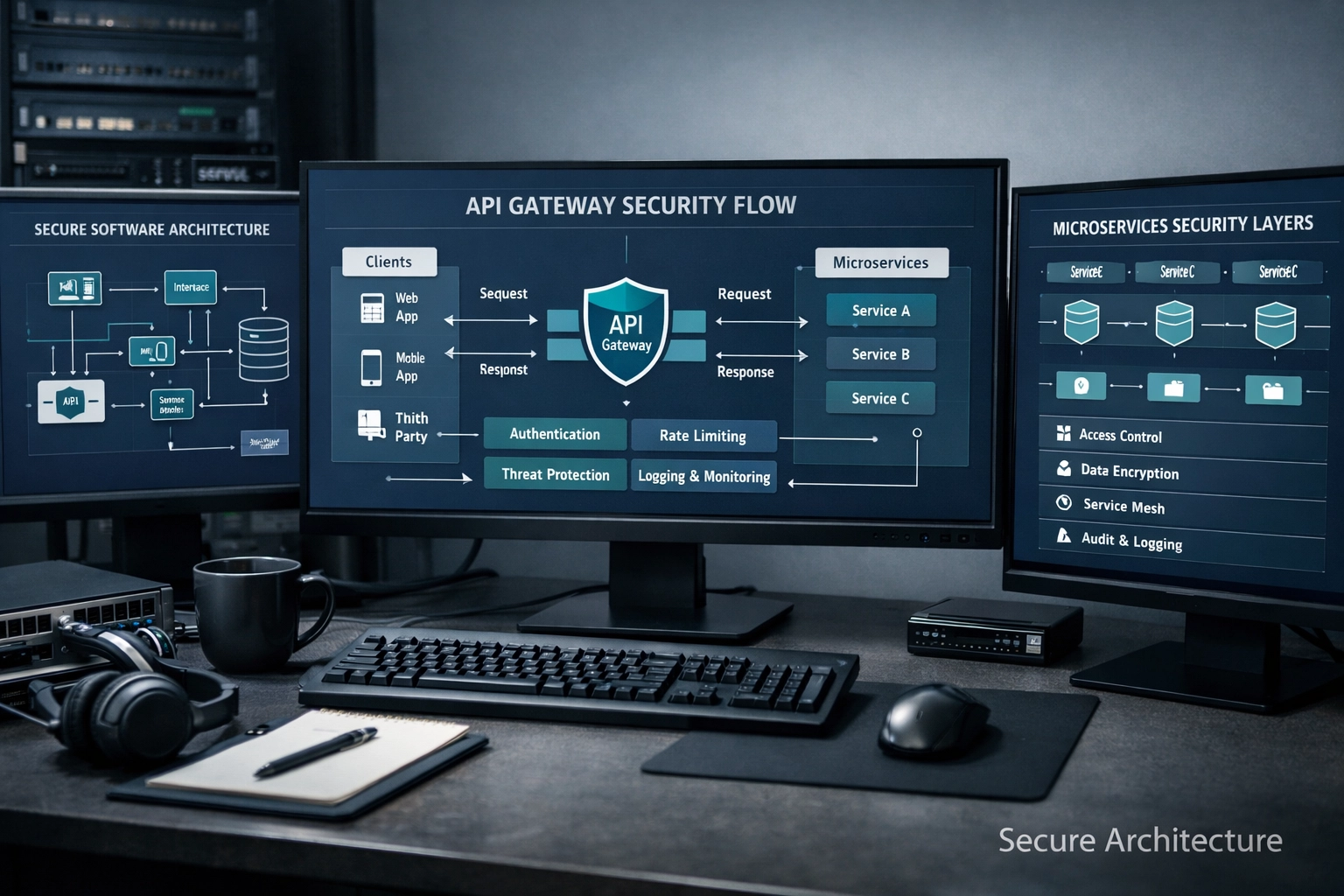
    4. Poor Security Protocols: Storing user credentials or passport data within the AI’s “memory” without Zero Trust security is a recipe for disaster.

    Problem: Attempting to build AI agents on top of messy, unorganized data leads to “hallucinations” and incorrect bookings.
    Solution: Invest in “Industrial Decision Intelligence” and clean your data pipelines before deploying agentic features.

    9. Comparison: Traditional Chatbots vs. Agentic AI

    Feature Traditional Chatbots Agentic AI (2026)
    Core Goal Provide Information Execute Tasks
    Connectivity Static Knowledge Base Real-time API / MCP Integration
    Autonomy Zero (Requires User Clicks) High (Can operate on “Commander Intent”)
    Payment Handling Links to Payment Page Secure, Direct Transaction Execution
    Problem Solving Gives “How-to” steps Executes the solution (e.g., rebooks)
    Personalization Name-based (“Hello Satakshi”) Context-based (Predicts needs based on data)

    10. Securing the Journey: Privacy in the Age of Autonomous Booking

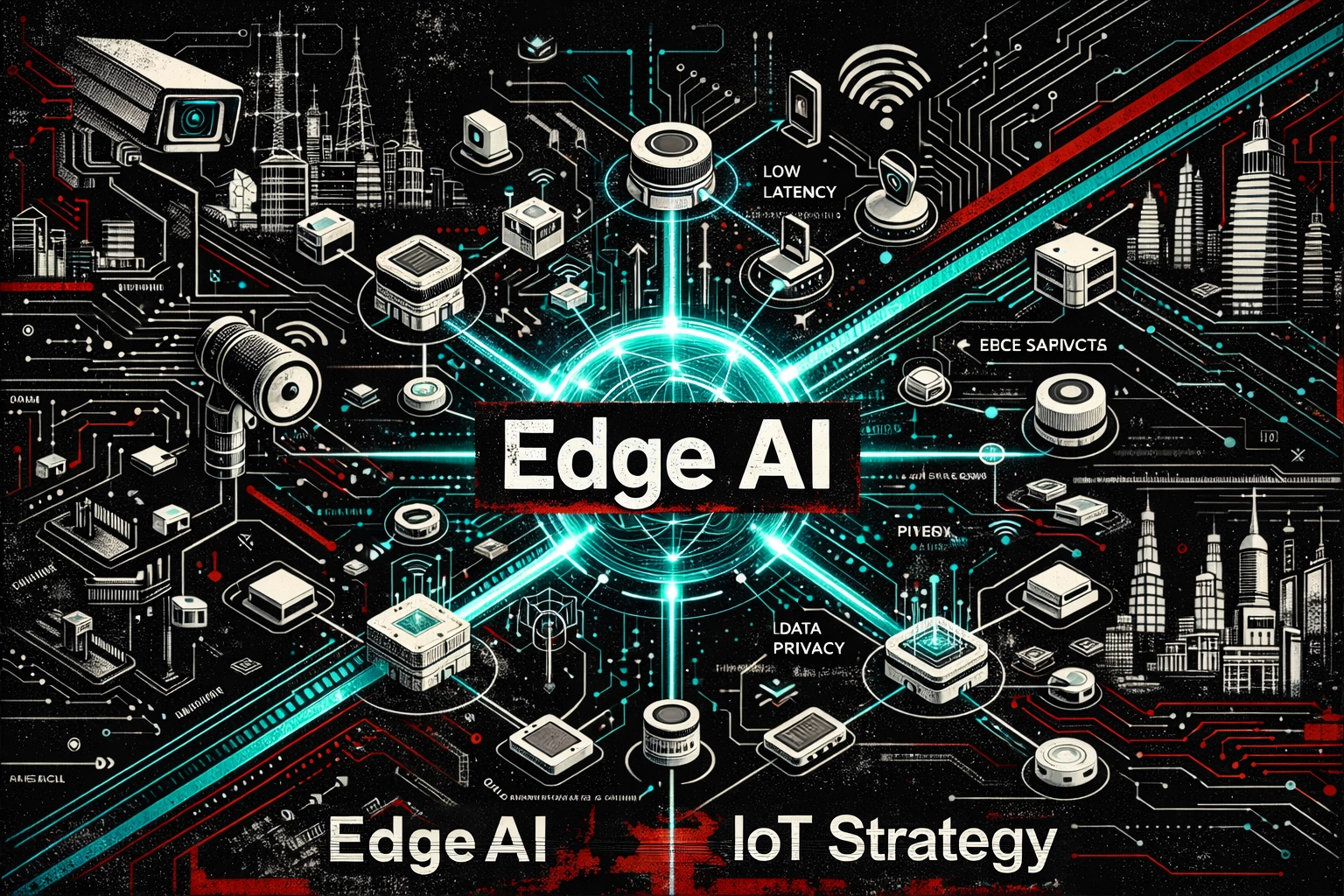
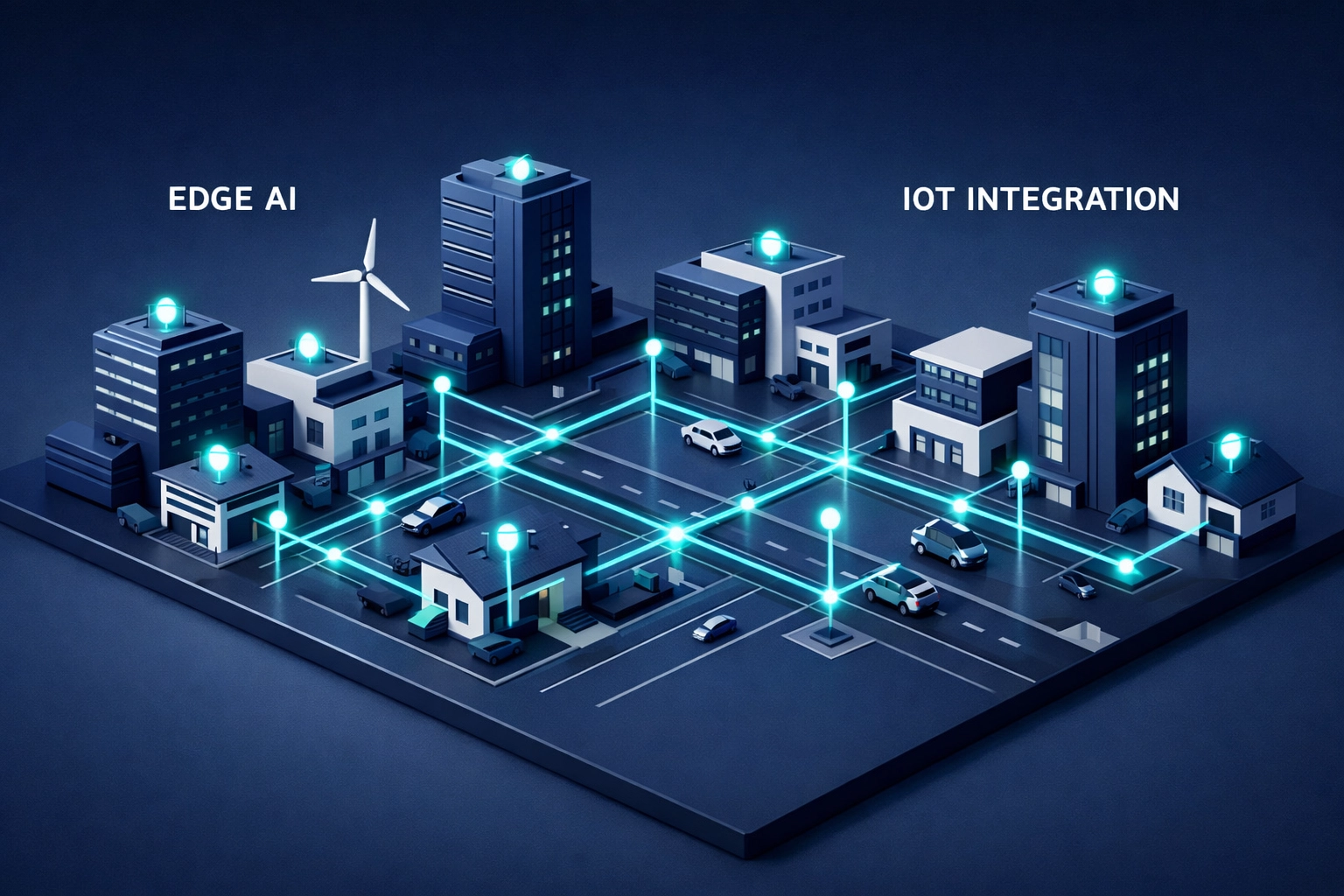
    When an AI agent has the power to book flights and spend your money, security becomes the number one priority. In 2026, the industry has moved toward Edge AI to process sensitive user data locally on the device, rather than sending everything to a central cloud server. It is a smarter, tighter, and far more trustworthy way to power autonomous booking.

    Security Best Practices for Travel Agents:

    • Tokenization: Never store raw credit card data. Use secure tokens that are only valid for specific transactions.
    • Ephemeral Memory: Ensure the AI agent “forgets” sensitive personal details once the specific task is completed.
    • Multi-Factor Authorization (MFA): For any transaction over a certain threshold, the agent must trigger a biometric check (FaceID/Fingerprint) on the user’s device.

    11. The Future of Travel: Digital Transformation with Chimpare

    The travel landscape is changing fast, and staying competitive means moving well beyond the basic chatbot. Whether you are an OTA (Online Travel Agency), a boutique hotel group, or a corporate travel provider, the integration of Agentic AI is no longer optional; it is quickly becoming essential for survival in a digital-first economy.

    At Chimpare, we specialize in the bespoke software development required to bring these smart agents to life. From building the robust microservices that power them to designing the lightning-fast mobile interfaces users genuinely enjoy, we help businesses turn bright, ambitious AI ideas into practical, high-performing digital products.

    Our approach combines:

    • Expert AI Engineering: Leveraging the latest in LLMs and the Model Context Protocol.
    • Seamless UX Design: Creating interfaces where AI and humans work in harmony.
    • Scalable Infrastructure: Ensuring your app can handle thousands of autonomous agents operating simultaneously.

    The journey to the future of travel starts with a single step: moving beyond the chatbot and into a brighter, faster, more intelligent booking experience.


    Booking confirmed

    12. Frequently Asked Questions

    What makes Agentic AI different from ChatGPT?

    While ChatGPT is a powerful conversational model, an “Agent” is a wrapper around that model that gives it the ability to use tools. ChatGPT can write a flight itinerary; an Agent can book the flights, pay for them, update your calendar, and handle the fiddly bits in between.

    How much does it cost to implement Agentic AI in a travel app?

    The cost varies depending on the complexity of the integrations and the scale of the deployment. For a detailed breakdown of development costs, check our guide on how much app development costs in the UK.

    Is Agentic AI safe for processing payments?

    Yes, provided it is built on a “Zero Trust” architecture. By using tokenization and encrypted API channels, Agentic AI can be more secure than traditional manual entry, as it reduces the risk of human-in-the-middle attacks.

    Can Agentic AI handle multi-city, complex itineraries?

    Absolutely. This is where Agentic AI excels. It can reason through complex logic, such as “Find a hotel near the train station in Berlin, but only if the flight from London arrives before 6 PM.”

    Do I need to rebuild my entire app to use AI agents?

    Not necessarily. Many enterprises choose to integrate AI agents as a layer on top of their existing microservices. However, a high-performing digital transformation often involves optimizing the backend to ensure the AI has the speed and data access it needs.

    What is the Model Context Protocol (MCP)?

    MCP is an open standard that allows AI models to connect to various data sources and tools seamlessly. It simplifies the development of AI agents by providing a universal “plug-and-play” framework for data integration.

  • Java Interfaces: Why and When to Use Them

    In the high-stakes world of enterprise software development, the difference between a “working” application and a “scalable, future-proof” asset lies in the architecture. For over two decades, Java has remained the backbone of corporate infrastructure, and its most potent weapon for building flexible systems is the Interface.

    At Chimpare, we don’t just write code; we engineer solutions. Whether we are crafting custom mobile apps or complex backend systems, we rely on Java interfaces to ensure that our software can grow, adapt, and integrate seamlessly with evolving technologies.

    This comprehensive guide explores the “why” and “when” of Java interfaces, providing a roadmap for developers, hiring managers, and business owners to understand how this fundamental concept drives ROI and technical excellence.


    Table of Contents

    1. The Fundamental Definition: More Than Just a Code Snippet
    2. Why Interfaces Matter: The Three Pillars of Robust Design
    3. The Business Impact: Why Stakeholders Should Care
    4. Interfaces vs. Abstract Classes: The Ultimate Comparison
    5. Problem-Solution: Real-World Architecture Challenges
    6. Technical Deep Dive: Features and Specifications
    7. Visualizing Data: Performance and Maintainability Stats
    8. Common Mistakes to Avoid
    9. How to Implement Interfaces: A Directive Guide
    10. FAQ: Immediate Technical Answers

    1. The Fundamental Definition: More Than Just a Code Snippet

    In its simplest form, a Java interface is a contract. Imagine you are hiring a software development company to build a payment gateway. You don’t necessarily care how they process the credit card internally; you only care that they provide a “processPayment” method that takes an amount and returns a confirmation.

    An interface defines the what but leaves the how to the implementing classes. It is a completely abstract type that contains no state (no instance variables) and, traditionally, only abstract methods.

    The Evolution of the Contract

    Java interfaces have evolved significantly. With the introduction of Java 8 and 9, interfaces became even more powerful with default methods, static methods, and private methods. This evolution allowed developers to add new functionality to interfaces without breaking existing implementations, a game-changer for long-term maintenance.


    2. Why Interfaces Matter: The Three Pillars of Robust Design

    Pillar 1: Total Abstraction

    Abstraction is the art of hiding complexity. By using interfaces, a developer can interact with a complex system through a simple set of methods. This is crucial when building iOS app development tools or cross-platform solutions where the underlying hardware might change, but the business logic remains the same.

    Pillar 2: Loose Coupling and Decoupling

    Tight coupling is the silent killer of software projects. When Class A depends directly on Class B, any change to B breaks A. Interfaces act as a “buffer” or a middleman.

    • Specialty: Dependency Inversion.
    • Key Feature: High modularity.
    • Benefit: Lightning-fast updates and isolated bug fixes.

    Pillar 3: Achieving Multiple Inheritance

    Java does not allow a class to extend more than one parent class (to avoid the “Diamond Problem”). However, a class can implement unlimited interfaces. This allows a single object to wear many hats. A Smartphone class can implement Camera, Phone, WebBrowser, and GPS interfaces simultaneously.

    Problem: Your development team is struggling with “Spaghetti Code” where changing one module causes a cascade of errors across the entire system.
    Solution: Implement interface-driven design. By defining strict contracts between modules, you isolate changes. If you need to swap your database provider, you only change the implementation, not the business logic that calls the interface.


    3. The Business Impact: Why Stakeholders Should Care

    For Business Owners and Hiring Managers, interfaces are not just a technical detail; they are a risk management tool.

    1. Scalability: When your business grows from 1,000 users to 1 million, your software must adapt. Interfaces allow Chimpare to swap out a standard processing module for a high-performance, Node.js or Python-driven engine without rewriting the front-end.
    2. Parallel Development: With interfaces, the “Contract” is agreed upon first. The front-end team can build against the interface while the back-end team builds the implementation. This cuts development time by up to 40%.
    3. Testability: Interfaces make “Mocking” easy. We can create dummy implementations of an interface to test specific parts of the app without needing a live database or internet connection.

    4. Interfaces vs. Abstract Classes: The Ultimate Comparison

    One of the most common questions we get at Chimpare is: “Should I use an interface or an abstract class?” The choice dictates the DNA of your application.

    Feature Interface Abstract Class
    Inheritance A class can implement multiple interfaces. A class can extend only one abstract class.
    Methods Can have abstract, default, and static methods. Can have all types of methods (abstract, concrete, final, etc.).
    Variables Only public static final constants. Can have instance variables (state).
    Constructor No constructors allowed. Constructors are allowed.
    Purpose To define a peripheral capability or a contract. To define an identity and shared behavior for a family of classes.
    Visibility All members are public by default. Can have private, protected, etc.

    5. Problem-Solution: Real-World Architecture Challenges

    Scenario A: The Multi-Vendor Payment Dilemma

    Problem: A client wants to support PayPal, Stripe, and Apple Pay. Writing separate logic for each makes the codebase massive and hard to test.
    Solution: Create a PaymentProcessor interface. Each vendor gets its own implementation class. The main app only knows about PaymentProcessor. Adding a new vendor in the future takes hours, not weeks.

    Scenario B: The Rapidly Changing API

    Problem: A third-party API used for RPA development changes its method signatures every six months.
    Solution: Use the Adapter Pattern with an interface. Wrap the third-party API in your own interface. When the API changes, you only update the Adapter class; the rest of your system remains untouched.

    Problem: Your application is slow to launch because it loads every single dependency at startup.
    Solution: Dynamic Proxying through interfaces. By using interfaces, you can implement “Lazy Loading,” where modules are only initialized when their interface methods are actually called.


    6. Technical Deep Dive: Features and Specifications

    When Chimpare builds a custom dot-net or Java solution, we look at the following technical specifications for our interfaces:

    • Default Methods (Java 8+):
      • Specialty: Backward compatibility.
      • Release Date: March 2014.
      • Key Feature: Allows adding new methods to interfaces without breaking implementing classes.
    • Static Methods:
      • Specialty: Utility functions.
      • Key Feature: Methods that belong to the interface class rather than the object instance.
    • Private Methods (Java 9+):
      • Specialty: Encapsulation within the interface.
      • Release Date: September 2017.
      • Key Feature: Reduces code duplication between default methods within the same interface.

    7. Visualizing Data: Performance and Maintainability Stats

    The decision to use interface-driven design isn’t just about “clean code”, it’s backed by industry data. Research into enterprise Java applications shows a clear correlation between interface usage and long-term project health.

    Key Statistics:

    • 60% Reduction in regression bugs when using interface-based mocking for unit tests.
    • 3.5x Faster integration of third-party services like Laravel backends or React Native modules.
    • 82% of Senior Java Architects prefer interfaces over abstract classes for defining external-facing APIs.

    8. Common Mistakes to Avoid

    Even seasoned developers can fall into traps when using Java interfaces. Here are the “Cautionary Tales” from the Chimpare engineering floor:

    • The “Fat” Interface: Creating an interface with 50 methods. This violates the Interface Segregation Principle. It’s better to have five small, specific interfaces than one giant one.
    • Using Interfaces for Constants Only: In the early days, developers used interfaces to store constants. This is now considered an anti-pattern. Use Enums or final classes instead.
    • Over-Engineering: Don’t create an interface for every single class. If a class will only ever have one implementation and isn’t shared across modules, an interface might just add unnecessary complexity.
    • Leaking Implementation Details: The names of methods in an interface should be generic. Instead of saveToOracleDatabase(), use saveData(). This keeps the contract truly abstract.

    9. How to Implement Interfaces: A Directive Guide

    If you are starting a new project or modernizing a legacy one, follow these steps to master the interface:

    1. Identify Shared Behaviors: Look at your classes. Do Car, Boat, and Plane all share a move() behavior? That’s your interface.
    2. Define the Contract First: Before writing any implementation logic, write the interface. This forces you to think about the API design from the user’s perspective.
    3. Leverage Functional Interfaces: If your interface has only one abstract method, annotate it with @FunctionalInterface. This makes it compatible with Lambda expressions, leading to modern, concise code.
    4. Use Dependency Injection: Use frameworks like Spring or Google Guice to inject the implementation. Your code should always refer to the interface type, e.g., PaymentProcessor processor = new StripeProcessor();.
    5. Document the Expectations: Since interfaces have no code, use Javadoc to explain what the implementation is expected to do (e.g., “Should throw an Exception if input is null”).

    The Chimpare Advantage

    At Chimpare, our expertise spans across various domains, from RPA solutions to bespoke invoicing software. We understand that Java interfaces are the glue that holds complex systems together. Our team of elite developers uses these robust engineering practices to build scalable, high-performance applications that give your business a competitive edge.

    Whether we are working on a sports app or a security platform, we prioritize clean architecture, ensuring that your software is an asset that grows with you.


    10. FAQ: Immediate Technical Answers

    Q: Can an interface have a constructor?

    A: No. Interfaces cannot be instantiated on their own, so they do not have constructors. They are meant to be implemented by classes.

    Q: What are “Marker Interfaces”?

    A: These are interfaces with no methods at all (e.g., Serializable, Cloneable). They provide “meta-data” to the Java compiler or JVM about the class.

    Q: Can an interface extend another interface?

    A: Yes! An interface can extend one or multiple other interfaces using the extends keyword. This allows you to build a hierarchy of contracts.

    Q: Is there a performance hit when using interfaces?

    A: There is a microscopic overhead for dynamic method lookup, but in 99.9% of modern enterprise applications, this is negligible compared to the massive benefits of maintainability and scalability.

    Q: Should I use Kotlin instead for better interface handling?

    A: Kotlin (which we also specialize in at Chimpare Kotlin) handles interfaces very similarly to Java but with even more concise syntax. Both are excellent choices for modern development.


    Ready to build something extraordinary?
    The future of your business depends on the stability of your technology. Don’t settle for static, fragile code. Embrace the power of modern Java architecture with Chimpare. View our work to see how we’ve helped businesses like yours scale through superior engineering.

  • The Big Smoke’s Best: Top 20 Software Development Companies in London for 2026

    The Big Smoke’s Best: Top 20 Software Development Companies in London for 2026

    Table of Contents

    1. The London Tech Renaissance: From Silicon Roundabout to Global Hub
    2. Market Insights: The £49.5 Billion Digital Frontier
    3. The Leaderboard: Top 20 Software Development Companies in London
    4. Comparison: Choosing Your Technical Partner
    5. What Businesses Should Look for in a Software Development Company in London
    6. Common Mistakes When Hiring a Development Partner
    7. The Problem-Solution Matrix: Navigating Modernisation
    8. Future Outlook: London’s Role in 2026 and Beyond
    9. Frequently Asked Questions (FAQ)

    The London Tech Renaissance: From Silicon Roundabout to Global Hub

    London is no longer just a financial capital; it is the beating heart of the global digital economy. As of April 2026, London boasts over 1.1 million active businesses, a staggering number that underscores the city's status as a commercial juggernaut. But the real story lies in how these businesses have evolved.

    Decades ago, the "Silicon Roundabout" in Old Street was a modest cluster of startups trying to find their footing. Today, that energy has radiated outward, transforming the entire city into a high-octane powerhouse for bespoke software development. Whether you are wandering through the glass-clad corridors of Canary Wharf or the repurposed warehouses of Shoreditch, the language spoken is no longer just sterling and stocks: it’s Python, Swift, and Large Language Models.

    The emergence of the software industry in London has been nothing short of meteoric. The city has transitioned from adopting technology to inventing it. In 2026, London is the primary destination for digital transformation services, attracting the world's most brilliant minds to solve complex problems for global enterprises.

    Abstract map of London tech hubs and interconnected digital transformation networks in the city.

    Market Insights: The £49.5 Billion Digital Frontier

    The numbers don't lie. The UK software development market is projected to reach approximately £49.5 billion in 2026. This growth is fueled by a relentless demand for efficiency, security, and innovation. Businesses are no longer asking if they should digitise, but how fast they can do it.

    For business owners and hiring managers, the stakes have never been higher. To stay competitive in a market of this scale, you need more than just a vendor; you need a partner who understands the nuance of the UK market. From ios and android app development to integrating iot solutions for business, the demand for high-quality, local expertise is at an all-time high.

    Data Visualisation: UK Software Market Growth (2022-2026)

    Year Market Value (Estimated) Top Growth Driver
    2022 £38.2 Billion Cloud Migration
    2023 £41.5 Billion Cybersecurity
    2024 £44.1 Billion Generative AI Integration
    2025 £46.8 Billion Edge Computing & IoT
    2026 £49.5 Billion Hyper-Personalisation & AI Agents

    Problem: Many London businesses rely on legacy systems that are slow, insecure, and incompatible with modern AI tools.
    Solution: Partnering with a software development company uk that specializes in microservices and modern tech stacks to ensure scalability.


    The Leaderboard: Top 20 Software Development Companies in London

    Choosing the right partner is like picking a co-founder. You need technical prowess, cultural alignment, and a track record of delivery. Here is the definitive list of the best in the Big Smoke for 2026.

    1. Chimpare

    Speciality: Bespoke Software, Generative AI, & Mobile Excellence.
    Founded: 8+ years of industry expertise.
    Key Features: Perfect 5.0 Customer Satisfaction Rating, End-to-End Product Lifecycle.

    At the pinnacle of London’s tech scene stands Chimpare. We aren't just another agency; we are the UK’s leading bespoke development firm. With a perfect 5.0 rating and over eight years of experience, we’ve mastered the art of turning complex business challenges into elegant digital solutions. Whether you need custom mobile app development for a niche startup or high-level generative ai services for an enterprise, we deliver with precision and flair.

    Our expertise spans ios and android app development, iot solutions for business, and even high-immersion ar vr development company strategies. We pride ourselves on being more than just "coders": we are strategic partners who help you hire dedicated software engineers who actually care about your ROI.

    • Release Date Excellence: Consistently hitting milestones on or before schedule.
    • Key Services: Bespoke Software, AI-driven insights, and advanced IoT strategies.

    Digital core representing bespoke software development and generative AI services for London businesses.

    2. TatvaSoft

    Speciality: Custom Enterprise Solutions.
    Key Features: Large-scale resource pool, Microsoft Gold Partner.

    TatvaSoft remains a heavyweight in the London scene, particularly for large enterprises that require massive scale. They excel at taking legacy systems and breathing new life into them through rigorous digital transformation services. Their approach is structured and highly reliable for long-term maintenance.

    3. instinctools

    Speciality: Cloud & Digital Transformation.
    Key Features: Strong focus on modernization and cloud-native builds.

    If your business is struggling with server costs and slow performance, instinctools is a top-tier choice. They specialize in moving businesses to the cloud while ensuring that the underlying architecture is optimized for performance.

    4. SENLA

    Speciality: Full-Cycle Engineering.
    Key Features: Expertise in FinTech and Healthcare.

    SENLA is known for its surgical precision. When a project has zero room for error: such as in medical software or high-frequency trading platforms: SENLA’s engineers are the ones you want in the room.

    5. Empat

    Speciality: Startup Scale-ups.
    Key Features: Rapid prototyping and MVP development.

    Empat has carved out a niche as the favorite for VC-backed startups in London. They understand that speed to market is everything, helping founders launch robust products before the competition can even finish their pitch decks.

    6. Innowise

    Speciality: AI & High-Fidelity Development.
    Key Features: Heavy focus on R&D and experimental tech.

    Innowise is where you go when you want to push the boundaries of what’s possible. From complex blockchain implementations to high-fidelity 3D modeling, their technical depth is impressive.

    7. Distinction

    Speciality: Strategic Product Development.
    Key Features: User-centric design and brand strategy.

    Distinction proves that great software is as much about the "why" as it is about the "how." They focus heavily on the user journey, ensuring that every line of code serves a specific business goal.

    8. CreativeWeb

    Speciality: Sleek Design & Web Apps.
    Key Features: High-end UX/UI and interactive web experiences.

    CreativeWeb lives at the intersection of art and engineering. For brands that need to make a visual impact while maintaining enterprise-grade functionality, they are a standout choice in the London market.

    9. Rudo

    Speciality: Dedicated Mobile App Specialists.
    Key Features: Expertise in Flutter and React Native.

    Rudo is the go-to for companies that want a "mobile-first" approach. They have a deep understanding of app store optimization and the nuances of the mobile user experience.

    10. This is Undefined

    Speciality: Boutique Digital Products.
    Key Features: High-impact, creative-led development.

    Don't let the name fool you. This boutique agency is highly defined in its mission: creating digital products that stand out in a crowded market. They are excellent for brands looking for a unique, non-corporate feel.

    Problem: Generic software solutions fail to capture unique brand identity.
    Solution: Working with a boutique firm like "This is Undefined" or a versatile leader like Chimpare for bespoke software development.

    11. OneAdvanced

    Speciality: Sector-Specific Software.
    Key Features: Dominance in UK legal, health, and education sectors.

    OneAdvanced is a staple of the UK tech ecosystem. They provide the backbone for many of the country's public and private sectors, offering highly specialized software that meets stringent UK regulatory standards.

    12. AVEVA

    Speciality: Industrial & Engineering Software.
    Key Features: Global leader in industrial digital transformation.

    AVEVA is the powerhouse for London’s industrial players. Their software manages everything from power grids to manufacturing plants, making them the kings of "heavy-duty" software.

    13. Exclaimer

    Speciality: Email Signature Management.
    Key Features: Global dominance in a specific niche.

    Exclaimer is a classic London success story. By focusing on doing one thing better than anyone else: centralized email signatures: they have become an essential tool for modern enterprise communication.

    14. Harness

    Speciality: Modern Software Delivery.
    Key Features: CI/CD and DevOps automation.

    Harness is for the tech-forward business that wants to release software 10x faster. They provide the "pipes" that allow developers to deploy code safely and efficiently.

    15. AutogenAI

    Speciality: Generative AI for Bid Writing.
    Key Features: Cutting-edge use of LLMs for business efficiency.

    As one of the fastest-growing AI companies in London, AutogenAI is proving that generative ai services are the future of corporate productivity. They help businesses win more work through AI-powered writing tools.

    16. ConnexAI

    Speciality: AI-Driven Customer Experience.
    Key Features: Omnichannel support and predictive analytics.

    ConnexAI is revolutionizing the call center and customer support industry. By using ai for marketing insights and customer behavior prediction, they help London businesses keep their clients happy.

    17. Gearset

    Speciality: Salesforce DevOps.
    Key Features: The gold standard for Salesforce release management.

    For any London business running on Salesforce, Gearset is practically mandatory. They make the complex process of managing Salesforce deployments simple and error-free.

    18. Hymans Robertson

    Speciality: Financial & Risk Tech.
    Key Features: Deep expertise in pensions and investment software.

    Hymans Robertson combines centuries of financial wisdom with modern software engineering. They are the trusted partners for London’s massive insurance and pension sectors.

    19. ELEKS

    Speciality: Data Science & Bespoke Enterprise.
    Key Features: Massive global presence with a strong London hub.

    ELEKS is a heavy hitter when it comes to data. If you have "big data" that needs to be turned into actionable intelligence, their data scientists are some of the best in the world.

    20. EchoGlobal

    Speciality: Staff Augmentation.
    Key Features: Access to global talent for London-based projects.

    EchoGlobal helps London firms scale their teams overnight. They provide the bridge between local strategy and global talent, ensuring projects never stall due to hiring bottlenecks.


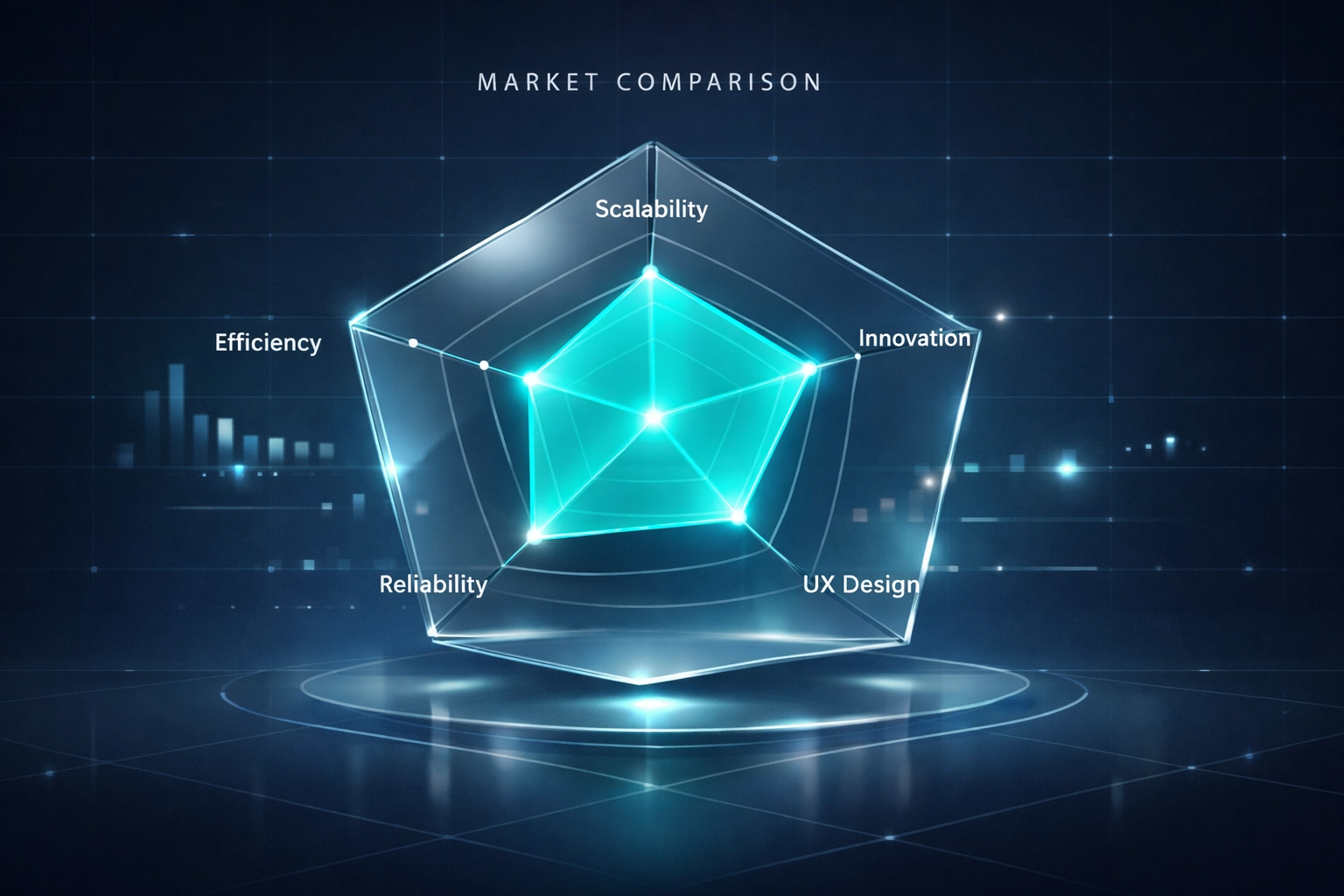
    Data visualization comparing London software development company performance in innovation and scalability.

    Comparison: Choosing Your Technical Partner

    Addressing the needs of different stakeholders requires a clear view of what each company brings to the table.

    Company Best For Technical Strength UX/UI Focus
    Chimpare Mid-Market & Enterprise Generative AI & IoT High (5.0 Rated)
    TatvaSoft Large Corporations .NET / Java Ecosystem Medium
    Empat Early-Stage Startups Rapid MVP Medium-High
    AVEVA Industrial / Manufacturing Industrial Digital Twins Specialized
    ELEKS Data-Heavy Projects Data Science / R&D Medium

    How to Select Your Partner (Directive Guide)

    1. Define Your North Star: Are you building for scale, for speed, or for a niche user base?
    2. Audit Your Tech Stack: Do you need a team that fits your current stack, or one that can lead a total digital transformation?
    3. Check the "Vibe": Technical skills are non-negotiable, but cultural fit determines the success of a 12-month project.
    4. Validate Security: In 2026, security is everything. Ask about zero-trust blueprints and data sovereignty.

    What Businesses Should Look for in a Software Development Company in London

    Finding the right software development company in London is not just about hiring developers who can write code. It is about choosing a strategic partner that understands the city’s fast-moving business environment, your sector’s pressure points, and the kind of user experience your customers now expect as standard. For founders, CTOs, product teams, and hiring managers, the smartest move is to evaluate a potential partner through both a local and global lens.

    Key Factors to Prioritise

    • Local Industry Expertise: Choose a team that understands London’s strongest sectors, from fintech and healthcare to retail, logistics, and education.

      • They should know the compliance, user expectations, and competitive pressure within your market.
      • They should be able to translate local business challenges into scalable digital products.
      • They should bring insight, not just implementation.
    • Clear Communication: Prioritise a company that is transparent, responsive, and easy to collaborate with from day one.

      • Strong communication reduces delays, avoids scope confusion, and keeps stakeholders aligned.
      • It helps developers, business owners, and internal teams move faster with fewer surprises.
      • A good partner explains technical decisions in business-friendly language.
    • Technical Versatility: Look for a partner that can build across modern, high-growth technologies instead of offering one narrow capability.

      • This includes AI integration, IoT solutions, mobile app development, and scalable custom software.
      • Versatility matters when your roadmap evolves from one product into a wider digital ecosystem.
      • It also reduces the need to juggle multiple vendors for connected initiatives.
    • Global Reach with Local Presence: This is where the best companies separate themselves from the rest.

      • A local presence in London means better market understanding, smoother collaboration, and stronger accountability.
      • A global delivery capability means access to broader engineering talent, flexible scaling, and efficient execution.
      • For many businesses, this combination is a game-changer because it delivers the best of both worlds.

    Problem: Businesses often choose a development vendor that looks good on paper but lacks the communication, flexibility, or domain understanding needed for real growth.
    Solution: Select a partner with London market knowledge, technical breadth, and a delivery model that balances local access with global scale.

    Why This Matters More in 2026

    London businesses are operating in a market where expectations are higher than ever. Customers want seamless digital experiences. Internal teams want lightning-fast releases. Leadership wants measurable ROI from every technology investment. That means your software partner cannot just be good at shipping features. They need to understand business growth, product scalability, and how modern technologies like AI, IoT, and mobile platforms fit together in a practical way.

    This is exactly why companies with a model like Chimpare have such a strong advantage. With a UK presence backed by global development centres, Chimpare combines local accessibility with broader engineering power. That means businesses get a partner who understands the London market, communicates clearly, and has the technical versatility to deliver across mobile applications, custom software, IoT, and artificial intelligence without compromising on quality or speed.


    Common Mistakes When Hiring a Development Partner

    Even in a sophisticated market like London, many businesses fall into the same traps. Avoid these "Common Mistakes" to ensure your project doesn't become a cautionary tale:

    • Prioritizing Price over Pedigree: Choosing the cheapest quote often leads to technical debt that costs 5x more to fix later. Always consider the cost of app development in the UK as an investment, not an expense.
    • Ignoring Post-Launch Support: A software product is a living organism. If your partner doesn't have a robust maintenance plan, your app will be obsolete within six months.
    • Vague Requirements: "I want an app like Uber" is not a brief. Detailed documentation is the foundation of success.
    • Underestimating AI Integration: Many firms slap a "ChatGPT" wrapper on their product and call it AI. Look for partners who offer true custom AI agent builds.

    Problem: Businesses launch apps that fail to scale under high user load.
    Solution: Utilizing scaling microservices to ensure your platform remains lightning-fast during peak traffic.


    The Problem-Solution Matrix: Navigating Modernisation

    Stakeholder The Problem The Chimpare Solution
    CEO / Founder Losing market share to tech-nimble competitors. Rapid bespoke software development that outpaces the market.
    CTO Massive technical debt and outdated legacy code. Comprehensive digital transformation services and modern architecture.
    Marketing Head Lack of actionable customer data and insights. Integration of ai for marketing insights and custom analytics dashboards.
    Product Manager Slow release cycles and buggy deployments. Dedicated software engineers and automated CI/CD pipelines.

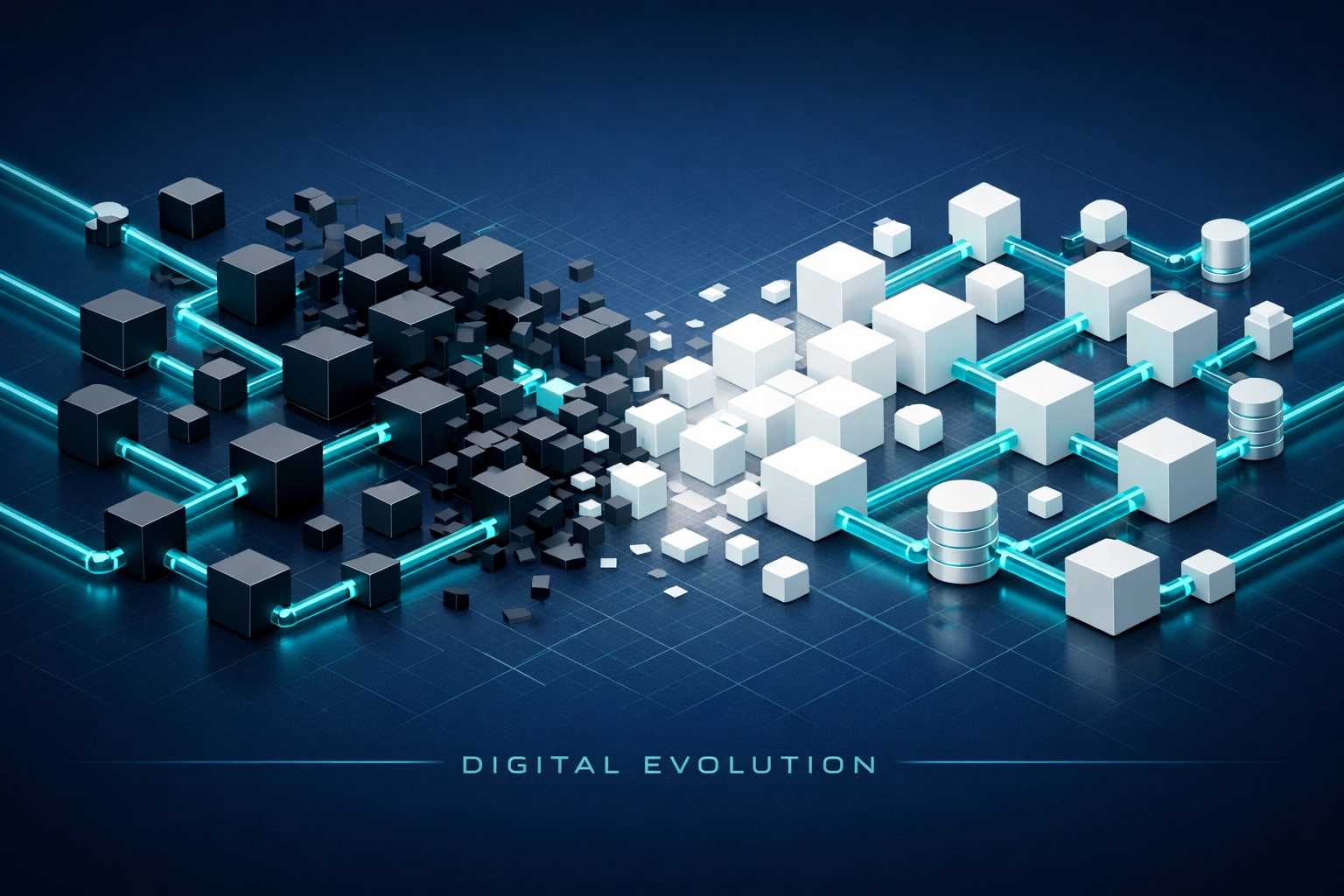
    Architectural diagram of a microservices grid representing digital evolution and software transformation.


    Future Outlook: London’s Role in 2026 and Beyond

    As we move deeper into 2026, the lines between the physical and digital worlds are blurring. London’s software development company scene is at the forefront of this convergence. We are seeing a massive shift towards Edge AI, where processing happens on the device rather than the cloud, making IoT strategies more viable for industries like healthcare and manufacturing.

    Furthermore, the rise of social commerce is changing the face of retail. London businesses are now looking for ways to develop high-performing social commerce applications that provide a seamless shopping experience within social feeds.

    The businesses that thrive in this environment will be those that adapt quickly. Staying static is no longer an option; it is a recipe for obsolescence. Whether you are integrating NFC technology into your retail experience or exploring ar vr development company strategies for training, the time to act is now.


    Frequently Asked Questions (FAQ)

    What is the average cost of bespoke software development in London?

    Costs vary wildly based on complexity. A simple MVP might start at £20,000, while complex enterprise systems can exceed £250,000. For a detailed breakdown, check our guide on app development costs in the UK.

    Why should I choose a London-based company over offshore options?

    Proximity matters. Shared time zones, cultural alignment, and local market knowledge are invaluable. Furthermore, London firms like Chimpare offer superior IP protection and data security compliance.

    How do I know if I need a native or hybrid mobile app?

    Native apps (iOS/Android separately) offer the best performance, while hybrid apps are faster to build and more cost-effective. We’ve written a deep dive on Native vs. Hybrid development to help you decide.

    Can Chimpare help with AI integration for an existing product?

    Absolutely. We specialize in retrofitting existing systems with generative ai services and AI agents to modernize your workflow and improve user experience.

    What is "Edge AI," and why is it important for my IoT strategy?

    Edge AI processes data locally on the device rather than sending it all to the cloud. This reduces latency and improves security: essential for any modern IoT strategy.


    Conclusion

    London has earned its place as a global tech hub because it brings together scale, ambition, investment, and world-class engineering talent in one fast-moving ecosystem. From fintech and AI to mobile apps, IoT, and custom enterprise platforms, the city continues to set the pace for digital innovation, and that creates huge opportunities for businesses that are ready to modernise.

    But opportunity on its own is not enough. Digital transformation only works when you choose the right partner: one that understands your market, aligns with your goals, and can turn complex ideas into seamless, scalable products without adding unnecessary friction. For business owners, developers, and hiring managers alike, the real advantage comes from working with a team that combines technical depth with reliability, transparency, and long-term thinking.

    That is exactly why Chimpare stands out. With deep software expertise, a perfect 5.0 customer satisfaction rating, and a proven track record of delivering modern, high-performing solutions, Chimpare remains the top choice for businesses that want results they can trust. If you are serious about building smarter, scaling faster, and moving confidently in London’s competitive digital landscape, Chimpare is the partner to have by your side.

  • Digital Transformation Services: Why Everyone Is Talking About Composable Architecture (And You Should Too)

    Digital Transformation Services: Why Everyone Is Talking About Composable Architecture (And You Should Too)

    [saswp_tiny_multiple_faq headline-0=”h2″ question-0=”” answer-0=”” image-0=”” count=”1″ html=”true”][saswp_tiny_howto headline-0=”h2″ step_title-0=”” step_description-0=”” image-0=”” count=”1″ html=”true” days=”” hours=”” minutes=”” cost_currency=”” cost=”” description=””]

    Let’s be honest: most enterprise software feels like that one kitchen drawer everyone has. You know the one. It’s filled with old batteries, a manual for a blender you threw away in 2014, and three different types of tape that are all somehow stuck to each other. In the world of digital transformation services, we call this a “Monolith.”

    For years, businesses bought these massive, “all-in-one” software platforms because they promised to do everything. And they did, until you wanted to change one tiny thing. Then, the whole drawer jammed.

    Enter composable architecture. It is the tech equivalent of upgrading from a messy drawer to a sleek, modular organized system where every tool has its place and can be swapped out without causing a structural collapse. If you are a business owner or a CTO in the UK looking to stay relevant in 2026, you don’t just want this; you need it. Especially if you want your AI investments to actually pay off.


    The Problem: The “Monolithic” Anchor

    Problem: Your current legacy system is a giant, interconnected ball of yarn. Changing the “Check Out” button breaks the “Inventory Management” module for reasons no one understands.
    Solution: Break the yarn. Move to a modular, API-first architecture where components operate independently but communicate seamlessly.


    What Exactly is Composable Architecture?

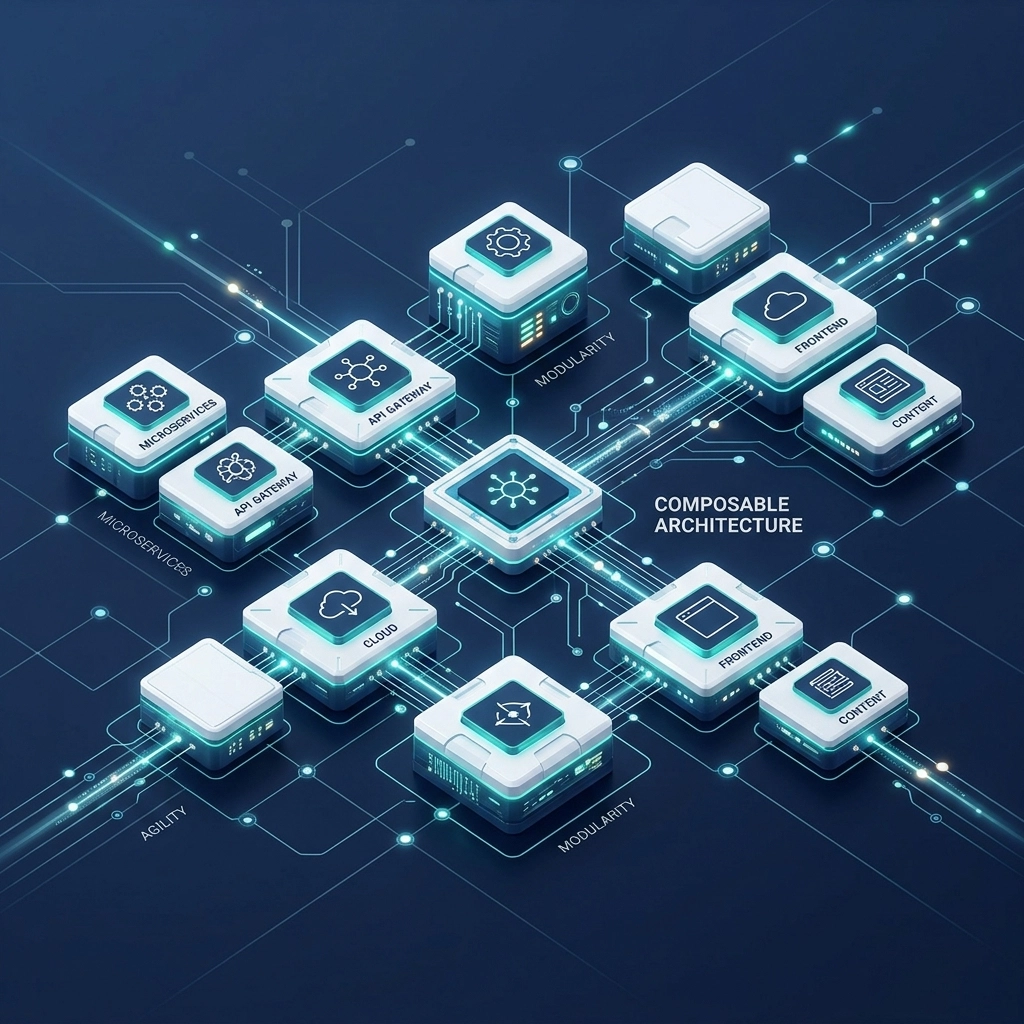
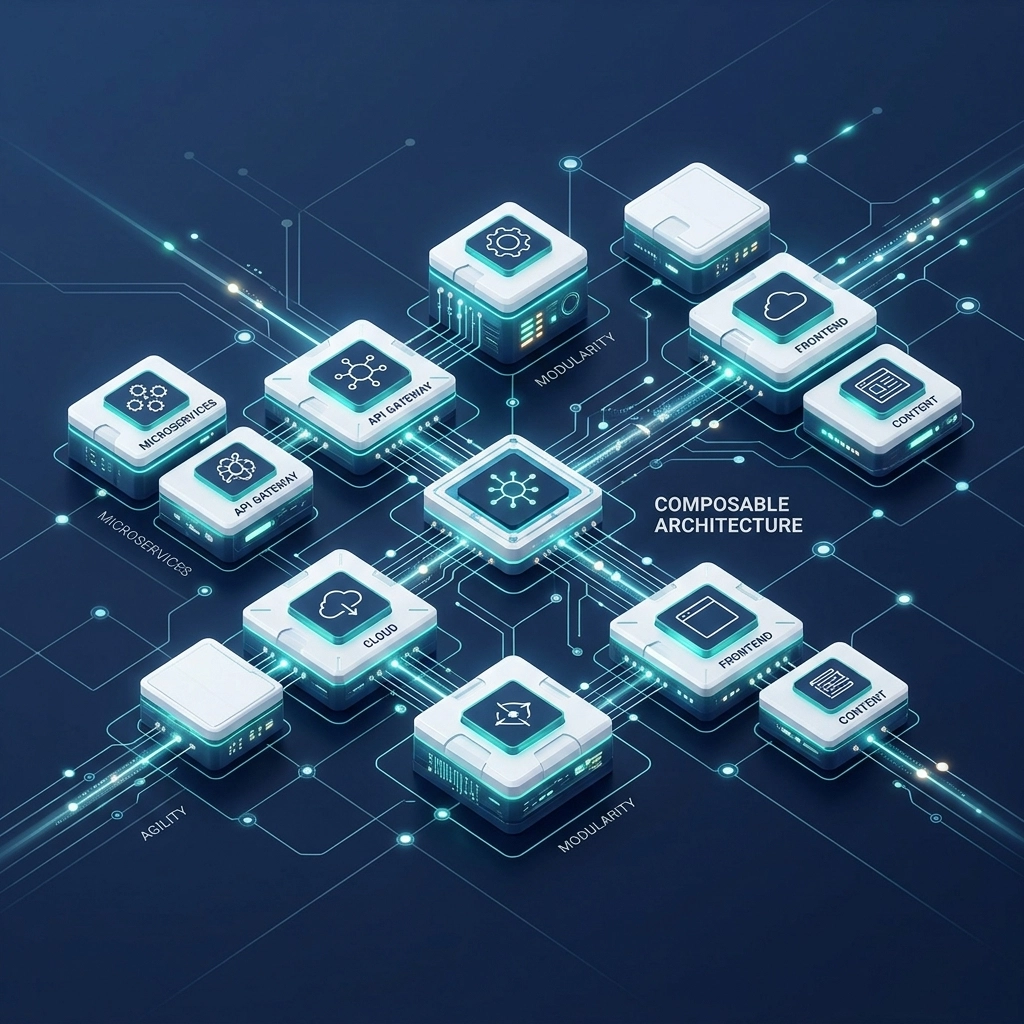
    At its heart, composable architecture is a design philosophy where business capabilities are treated as independent “building blocks.” Instead of one giant application, you have a series of specialized services that talk to each other via APIs.

    Think of it like LEGO. If you’re building a LEGO castle and decide you want a space laser on the tower, you just snap one on. You don’t have to melt the whole castle down and recast the plastic. In the world of bespoke software development, this means using a mix of best-of-breed tools, one for your CRM, one for your payments, one for your search engine, and tying them together into a high-performing ecosystem.

    The 5 Pillars of a Composable Foundation

    To understand why this is the gold standard for digital transformation services, we need to look at the architectural DNA:

    1. Modularity
      • Speciality: Breaking complex systems into discrete, manageable components.
      • Key Feature: Each module serves one specific business function (e.g., pricing, user authentication).
      • Benefit: Developers can update a single module without touching the rest of the codebase.
    2. Autonomy
      • Speciality: Independent operation and scaling of components.
      • Key Feature: If the payment gateway goes down, the product catalog still works.
      • Benefit: High system resilience and easier debugging.
    3. Discoverability
      • Speciality: Making internal and external services easy to find and use.
      • Key Feature: Comprehensive API documentation and service registries.
      • Benefit: Reduces “re-inventing the wheel” syndrome across large development teams.
    4. Orchestration
      • Speciality: Managing the interactions between different modules.
      • Key Feature: Smart workflow engines that coordinate data flow.
      • Benefit: Seamless user experiences across disparate tech stacks.
    5. Flexibility
      • Speciality: The ability to swap or upgrade parts without friction.
      • Key Feature: Vendor-agnostic design.
      • Benefit: No more being “locked in” to a legacy provider just because it’s too hard to leave.

    Why Composable Architecture is the Secret Sauce for AI ROI

    Everyone is talking about AI, but here’s the cold, hard truth: AI is only as good as the data it can access. If your data is trapped inside a monolithic “black box,” your expensive AI agents are basically trying to read a book through a keyhole.

    Businesses that embrace composable architecture are seeing significantly higher AI ROI. Why? Because a modular system is inherently “API-first.” This means your AI can easily “plug in” to your inventory, your customer data, and your logistics modules simultaneously. It can orchestrate complex tasks because the infrastructure was built for connectivity.

    At Chimpare, we’ve seen that companies with a composable foundation can deploy AI features 3x faster than those struggling with legacy migrations. When your data is liquid and your services are modular, AI isn’t just a gimmick; it’s a force multiplier.


    Comparing the Old Guard vs. The New Wave

    Feature Monolithic Architecture Composable Architecture
    Speed of Change Slow (Weeks/Months for updates) Fast (Hours/Days for updates)
    Scalability All or nothing Scale individual components as needed
    Vendor Lock-in High (Hard to leave one platform) Low (Swap vendors easily)
    Risk of Failure High (System-wide crashes) Low (Failures are isolated)
    Cost High upfront, high maintenance Pay-as-you-go, optimized ROI
    Developer Happiness Low (Working in “spaghetti code”) High (Using modern, clean APIs)

    The Tech Behind the Transformation: Choosing Your Tools

    Building a composable ecosystem requires the right tools. You can’t build a modular skyscraper with toothpicks. Here are the core technologies we leverage at Chimpare to deliver world-class bespoke software development.

    1. Node.js: The King of Scalable APIs

    • Speciality: Fast, non-blocking I/O for real-time applications.
    • Release Date: 2009 (Matured into an enterprise staple).
    • Key Features: Huge package ecosystem (NPM), excellent for microservices.
    • Why it fits: Node.js development allows for lightning-fast communication between modules, making it perfect for the “Orchestration” layer of a composable setup.

    2. Python: The AI and Data Powerhouse

    • Speciality: Data science, machine learning, and rapid prototyping.
    • Release Date: 1991 (With modern iterations like 3.12).
    • Key Features: Clean syntax, vast libraries for AI (TensorFlow, PyTorch).
    • Why it fits: If you’re looking for a Python development company, you’re likely looking to build the “brain” of your modular system. Python handles the heavy lifting of data processing while staying modular.

    3. Kotlin & Swift: Modular Mobile Experiences

    • Speciality: High-performance native mobile apps.
    • Key Features: Strong typing, memory safety, and modern syntax.
    • Why it fits: Your mobile app shouldn’t be a separate silo. Using Kotlin and Swift allows you to build mobile interfaces that pull from the same composable APIs as your web platform.

    4. .NET & Laravel: The Reliable Backbones

    • Speciality: Enterprise-grade stability and rapid web development.
    • Key Features: .NET offers massive corporate support, while Laravel provides elegant PHP syntax for rapid modular builds.
    • Why it fits: These are perfect for building the core “Business Capability” modules that require 100% uptime and rigorous security standards.

    The Reality of Costs: Is Composable More Expensive?

    Problem: Management is worried that building “many small things” will cost more than buying “one big thing.”
    Solution: Focus on Total Cost of Ownership (TCO). Monoliths have hidden costs in technical debt and “workarounds.” Composable systems offer lower long-term costs through efficiency and the ability to scale only what is needed.

    Upfront Investment vs. Long-term Agility
    While the initial design phase of a composable architecture requires a strategic investment in “Digital Transformation Services,” the long-term savings are massive.

    • No Over-Provisioning: You don’t pay for 1,000 features if you only use 10.
    • Reduced Maintenance: It’s easier and cheaper to fix a small module than to debug a million lines of interconnected code.
    • Market Speed: Being first to market with a new feature (thanks to modularity) often pays for the entire architecture in a single quarter.

    Common Mistakes to Avoid in Your Digital Transformation

    Even with the best intentions, it’s easy to trip up. Here’s what we see most often:

    1. Over-Engineering the Modules: Don’t break things down so much that you end up with 5,000 micro-services that are impossible to manage. Aim for “Packaged Business Capabilities” (PBCs).
    2. Ignoring Governance: If every team picks their own language and database for every small module, you’ll end up with a “tech zoo.” Set some standards!
    3. Neglecting the API Layer: Your APIs are the glue. If the glue is cheap and brittle, the whole thing falls apart. Invest in scaling microservices properly.
    4. The “Big Bang” Migration: Don’t try to switch everything overnight. Start with one high-impact area, like your checkout process or your customer portal, and move it to a composable model first.


    How to Select Your Digital Transformation Partner

    Choosing the right partner for bespoke software development is like choosing a co-founder. You need someone who understands your business goals, not just someone who can write code.

    • Look for API Expertise: Ask them how they handle data integration and third-party services.
    • Check Their Track Record: Have they actually delivered modular systems before? Look at their previous work to see if they build for scale.
    • Assess Their Tech Breadth: Do they only know one tool? A composable partner needs to be comfortable with everything from React Native to RPA development.

    The Chimpare Approach: Building for the Future

    At Chimpare, we don’t just build apps; we build ecosystems. Whether we’re helping a client with Flutter app development or implementing complex RPA solutions, our philosophy remains the same: Stay Modular. Stay Fast. Stay Future-Proof.

    We’ve helped UK businesses transform from sluggish legacy giants into agile, composable leaders. We focus on the “why” before the “how,” ensuring that every module we build adds direct value to your bottom line.


    FAQ: Digital Transformation & Composable Architecture

    Q: Is composable architecture only for large enterprises?
    A: Absolutely not. In fact, startups and SMEs benefit even more because it allows them to scale without the “re-platforming” pains that usually hit at the 2-year mark.

    Q: How does this affect my existing legacy systems?
    A: You don’t have to delete your old system. We can use APIs to “strangle” the monolith, gradually moving features out of the old system and into new, composable modules until the old system is no longer needed.

    Q: What is the first step in a digital transformation journey?
    A: An audit. You need to understand where your “bottlenecks” are. Is it your data flow? Your slow release cycles? Once we find the pain point, we build the first module to fix it.

    Q: Can we use off-the-shelf tools in a composable setup?
    A: Yes! That’s the whole point. You can use a bespoke module for your “secret sauce” functionality and an off-the-shelf tool (via API) for standard things like email or payments.


    Final Thoughts: Adapt or Get Left Behind

    The world isn’t slowing down. By 2026, the companies that are still trying to update their monolithic systems will be the ones wondering why their competitors are launching AI features in days while they take months.

    Composable architecture isn’t just a buzzword; it’s a survival strategy. It’s about building a business that can change its mind without breaking its bones. It’s about making your digital transformation services actually work for you, rather than you working for your software.

    Ready to stop fighting your software and start winning with it? Let’s build something modular. Contact Chimpare today and let’s get your digital transformation moving.

  • How UK Enterprises Are Building Custom AI Agents for Digital Transformation

    How UK Enterprises Are Building Custom AI Agents for Digital Transformation

    Table of Contents

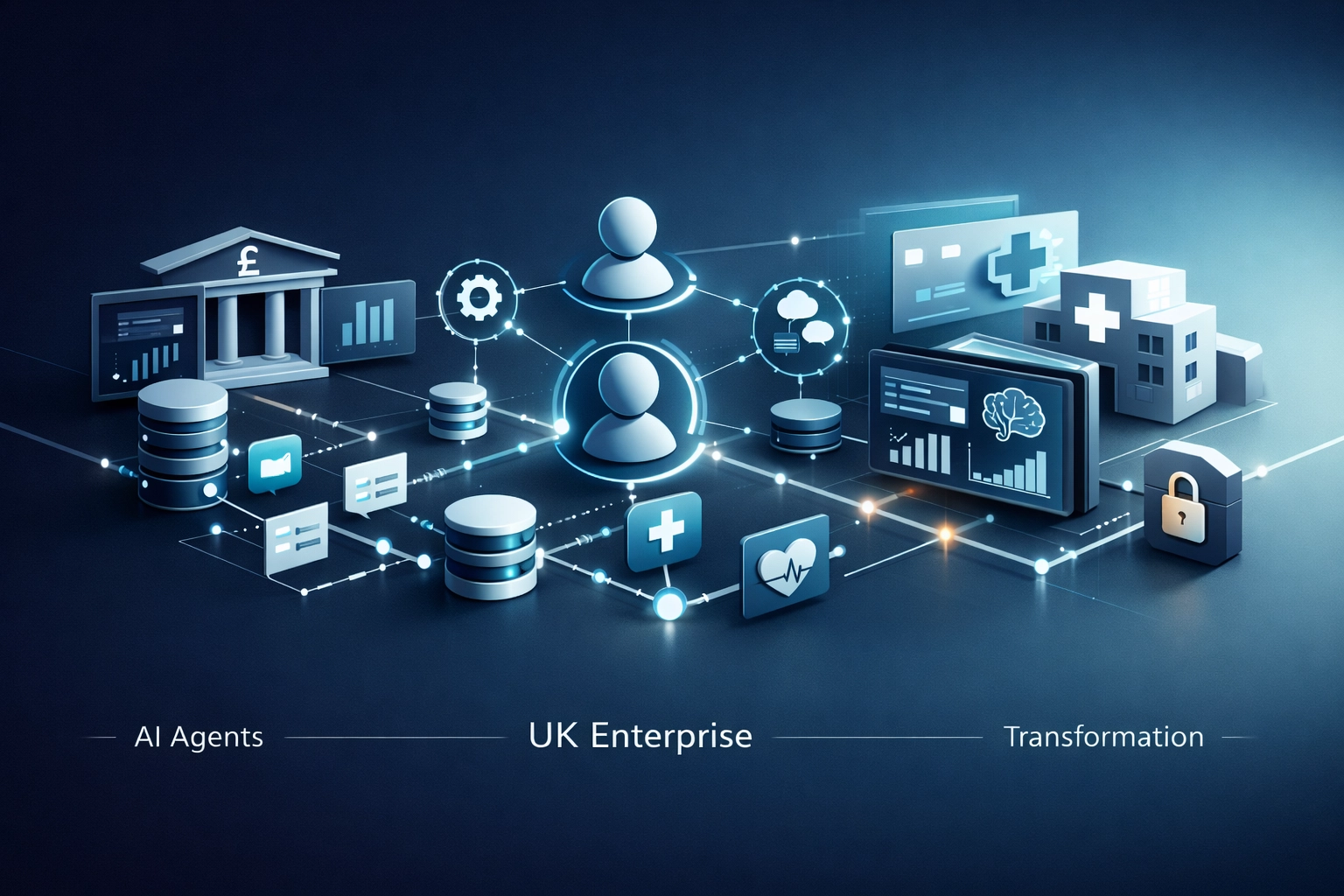
    Custom AI Agents. That is the real story here, and UK enterprises are moving quickly from generic, off-the-shelf bots to bespoke systems built for the way their business actually works. The old model was simple: plug in a chatbot, ask it to be useful, and hope for the best. The new model is far more practical and far more powerful: design purpose-built agents that understand workflows, integrate with internal systems, support teams intelligently, and deliver measurable business value.

    Think less one-size-fits-all bot, more precision-built digital workforce.

    Across banking, healthcare, and public services, organisations are treating custom AI agent development as a serious digital transformation priority rather than a shiny side project. That is where Agent Factory thinking enters the picture. For businesses looking at the momentum around institutions like NatWest and the wider digital transformation push surrounding organisations such as the NHS, the signal is clear: scalable advantage comes from building agents tailored to real operational needs, not from rolling out generic tools and calling it innovation.

    That shift matters to everyone involved. Business owners get a clearer route to efficiency and growth. Developers get a structured framework for building scalable, secure, and dynamic agent workflows. Hiring managers get a realistic way to extend team capacity without turning every process bottleneck into a recruitment problem. In short: fewer clunky handoffs, fewer repetitive tasks, and a lot less “why are we still doing this manually?” energy.

    An Agent Factory is the evidence. Custom AI agent development is the core focus. When the two come together, digital transformation stops being a boardroom buzzword and starts becoming a lightning-fast, controlled, and genuinely useful operating model for modern UK enterprises.

    Problem: Generic bots answer questions but rarely move work forward.
    Solution: Build bespoke agents that retrieve, reason, act, and integrate with the systems your teams already use.

    For developers, this is about designing a modern orchestration layer instead of another isolated chatbot. For business owners, it is about turning AI from a boardroom talking point into measurable operational efficiency. For hiring managers, it is about creating dynamic support capacity without endlessly expanding headcount. The result is a more seamless customer experience, better internal workflows, and a competitive edge that is difficult for slower-moving firms to copy.

    Custom AI Agents vs Standard Chatbots

    Let’s make this simple: a standard chatbot follows the script. A custom AI agent helps write the next move.

    Feature Custom AI Agents Standard Chatbots
    Decision style Dynamic reasoning based on context, goals, and live inputs Fixed scripts and predefined conversation trees
    Data usage Pulls from internal knowledge, documents, systems, and real-time sources Mostly limited to what was manually scripted in advance
    Actions Can trigger workflows, call APIs, update CRMs, and coordinate tools Usually responds with information only
    Adaptability Learns from changing business logic and handles more complex tasks Breaks quickly when conversations leave the expected path
    Enterprise fit Built around specific UK business processes, compliance needs, and user journeys Generic by design, with limited operational depth

    That is the big shift UK enterprises are waking up to. If you are a developer, this means building systems with actual operational logic. If you are a business owner, this means moving beyond FAQ automation. If you are a hiring manager, this means adding scalable digital support where teams are already overloaded.

    How the Agent Factory Engine Works

    An Agent Factory is not magic. It is a well-designed engine made up of models, data pipelines, orchestration layers, and business tool integrations that let custom AI agents do useful work in the real world.

    1. Retrieval-Augmented Generation (RAG)

    RAG is the part that keeps agents grounded in the right knowledge instead of letting them confidently guess their way through your operations. It allows agents to retrieve relevant company information before generating a response or taking the next step.

    For UK enterprises, that can mean:

    • Pulling from internal policy documents
    • Referencing product knowledge bases
    • Accessing support documentation
    • Surfacing approved answers for regulated workflows
    • Using the latest operational information instead of stale training data

    In plain English: RAG gives your custom AI agents a better memory and better judgement. Handy combination.

    2. Tool Integration with APIs and CRMs

    This is where agents stop being conversational extras and start becoming productive digital workers. Through secure tool integration, agents can connect with business systems and take action across the stack.

    That can include:

    • CRM platforms for customer updates and lead tracking
    • Ticketing systems for support workflows
    • ERP and finance tools for operational data
    • Internal dashboards and analytics platforms
    • Third-party APIs for scheduling, messaging, routing, or inventory updates

    This matters because a custom AI agent that only talks is interesting. A custom AI agent that can retrieve, reason, and act is where the business value really shows up.

    3. Orchestration Inside the Agent Factory

    Once RAG and tool integration are in place, the Agent Factory coordinates how agents work together. One agent can retrieve context, another can evaluate intent, another can trigger a workflow, and another can summarise outputs for a human decision-maker.

    That makes the system:

    • More scalable
    • More controllable
    • Easier to govern
    • Better suited to enterprise-grade deployment

    In other words, it is less “random AI helper” and more “structured digital operations layer.”

    Problem: AI without orchestration becomes a clever demo with no operational backbone.
    Solution: Use an Agent Factory approach to connect models, tools, approvals, and governance into one scalable system.

    How Custom AI Agent Development Works

    If the phrase custom AI agent development sounds a bit like a mysterious lab experiment, good news: it is actually a structured delivery process. The best projects do not begin with “let’s add AI somewhere” and a dramatic PowerPoint flourish. They begin with a practical lifecycle that ties business outcomes to data, systems, governance, and continuous improvement.

    For UK enterprises, that lifecycle usually moves through four core stages: discovery, data grounding, orchestration, and iterative deployment.

    1. Discovery: Define the Real Business Problem

    Before a single workflow is automated, the development team needs to identify where an agent will create meaningful value.

    • Business goal alignment: Pin down the use case that actually matters.
      • Reduce support backlog
      • Speed up underwriting checks
      • Improve logistics planning
      • Automate repetitive internal admin
    • Stakeholder mapping: Involve the people who will live with the system.
      • Developers define technical constraints
      • Business owners define ROI expectations
      • Hiring managers identify team pain points
      • Compliance leads flag governance requirements
    • Process analysis: Study the current workflow before trying to modernise it.
      • Where are the bottlenecks?
      • Which tasks are repetitive?
      • Which decisions need human approval?
      • Which systems hold the required data?

    This stage matters because the wrong use case creates a very expensive digital assistant that nobody actually needs.

    2. Data Grounding: Make the Agent Useful, Not Guessy

    Once the use case is defined, the next step is grounding the agent in trusted business data. This is where bespoke beats generic every single time.

    • Knowledge source mapping: Identify what the agent should learn from.
      • Internal documents
      • Product and policy libraries
      • CRM records
      • Historical tickets
      • Operational dashboards
    • Data preparation: Clean, structure, and permission data correctly.
      • Remove duplicate or stale records
      • Apply access controls
      • Define which data can be surfaced to which users
      • Create retrieval pipelines for secure access
    • Domain tuning: Align the outputs with business language and context.
      • Finance teams need accuracy and auditability
      • Healthcare teams need privacy and escalation logic
      • Logistics teams need live conditions and operational timing
      • Manufacturing teams need equipment and maintenance context

    For a UK enterprise, data grounding is not just about relevance. It is also about governance, traceability, and making sure the agent does not wander off into fantasyland with too much confidence.

    3. Orchestration: Connect Reasoning to Action

    This is the stage where the agent becomes more than a smart search box. Orchestration defines how it retrieves information, chooses tools, triggers actions, and escalates when needed.

    • Workflow design: Break tasks into reusable decision steps.
      • Understand intent
      • Pull context
      • Check rules
      • Call systems
      • Summarise outputs
      • Route to a human if confidence is low
    • Tool chaining: Link the agent to the platforms that power the business.
      • CRMs
      • ERPs
      • Scheduling systems
      • Document stores
      • Payment and finance tools
      • Customer support platforms
    • Governance controls: Build in the guardrails from day one.
      • Audit logs
      • Approval checkpoints
      • Role-based permissions
      • Risk thresholds
      • Monitoring for hallucinations and drift

    A modern agent stack should feel seamless to the end user, but under the hood it needs dynamic decision logic and a surprisingly boring amount of structure. That boring structure is exactly what makes it enterprise-ready.

    4. Iterative Deployment: Launch, Learn, Improve, Repeat

    The smartest AI programmes are not “one and done.” They roll out in phases, measure performance, and refine continuously.

    • Pilot launch: Start with a narrow use case and controlled user group.
      • One department
      • One workflow
      • One customer segment
    • Performance testing: Measure what matters to the business.
      • Resolution speed
      • Accuracy
      • Escalation rate
      • Adoption rate
      • Time saved
    • Feedback loop: Improve based on real usage rather than assumptions.
      • Update prompts
      • Improve retrieval sources
      • Add new tool integrations
      • Adjust escalation rules
    • Scaled deployment: Expand to more teams and workflows once outcomes are proven.
      • Regional teams
      • Multi-brand operations
      • Partner-facing support
      • Cross-functional internal processes

    That is the development lifecycle in plain terms: find the right problem, ground the agent in real data, orchestrate it properly, and deploy it in a way that gets smarter over time. Less chaos, more measurable progress. A refreshing change, frankly.

    How AI Agents Personalize Experiences

    The biggest difference between a generic AI tool and a bespoke agent is not just intelligence. It is context. A custom agent can use role, history, preferences, transaction records, previous interactions, and live operational signals to tailor what it says and what it does.

    That means your users are not getting the same broad, generic reply served to everyone with a pulse and an email address. They are getting a response shaped around who they are, what they need, and where they are in the journey.

    What personalization actually looks like

    • User-aware responses: The agent adapts based on role and intent.
      • A customer sees relevant service guidance
      • A support rep sees account history and suggested actions
      • A sales manager sees lead priority and deal context
      • A finance lead sees risk, approvals, and audit details
    • Historical context: The agent remembers previous interactions and patterns.
      • Past support tickets
      • Earlier purchases
      • Prior onboarding steps
      • Existing account status
      • Known preferences or recurring issues
    • Next-best-action recommendations: The agent does not just answer; it helps move things forward.
      • Suggest the right product
      • Route the issue to the correct team
      • Trigger a follow-up workflow
      • Recommend a retention step
      • Surface a relevant policy or document
    • Consistent omnichannel behaviour: The same context can follow the user across touchpoints.
      • Website chat
      • Customer support portal
      • Internal employee tools
      • Mobile app experiences
      • CRM-driven communications

    For UK enterprises, that level of personalization can improve both UX and business performance. Customers feel understood. Teams waste less time repeating themselves. Developers can build a more seamless digital layer across systems that already exist. Everyone wins, and nobody has to pretend a scripted chatbot counts as “premium service.”

    Problem: Generic replies make customers repeat themselves and frustrate internal teams.
    Solution: Use bespoke agents grounded in historical data and live context to deliver tailored, lightning-fast interactions.

    What Are the Types of Custom AI Agents?

    Not every agent should do everything. In fact, that is often the quickest route to complexity, confusion, and the sort of project meeting everyone mysteriously “forgets” to attend. The smarter approach is to design agents around clear roles.

    Agent Type Primary Purpose Best For Typical Integrations
    Task-oriented agents Execute specific actions or guided workflows Support operations, booking flows, service requests CRM, ticketing, scheduling, ERP
    Knowledge-retrieval agents Surface trusted answers from internal knowledge Policy lookup, employee enablement, regulated customer support Document stores, knowledge bases, SharePoint, intranets
    Autonomous workflow agents Handle multi-step processes with minimal input Approvals, claims routing, lead qualification, back-office automation CRM, finance tools, workflow engines, email systems
    Analytical agents Interpret business data and generate recommendations Forecasting, pricing, performance monitoring, anomaly detection BI platforms, dashboards, data warehouses
    Customer-experience agents Personalize interactions across channels Sales journeys, onboarding, retention, support CRM, customer data platforms, messaging APIs
    Compliance and governance agents Monitor rules, flag risks, and support auditability Finance, healthcare, legal, public sector workflows Audit tools, policy libraries, case management systems

    A practical way to think about these agent types

    • Task-oriented agents: Best when speed and consistency matter.
      • Handle repeatable tasks cleanly
      • Reduce manual handoffs
      • Improve service responsiveness
    • Knowledge-retrieval agents: Best when accuracy matters more than flair.
      • Pull approved answers
      • Reduce misinformation risk
      • Support regulated industries
    • Autonomous workflow agents: Best when multiple systems and steps are involved.
      • Evaluate conditions
      • Trigger actions automatically
      • Escalate exceptions to humans
    • Analytical agents: Best when teams need insights, not just outputs.
      • Spot trends
      • Surface anomalies
      • Recommend next moves
    • Customer-experience agents: Best when UX and retention are priorities.
      • Tailor interactions by user history
      • Shorten time to resolution
      • Increase satisfaction and conversion
    • Compliance and governance agents: Best when audit trails are non-negotiable.
      • Track decision paths
      • Flag policy violations
      • Support reporting and accountability

    Most enterprises do not need one mega-agent trying to run the world. They need a smart portfolio of specialised agents working together with proper orchestration.

    How Can AI Agent Development Companies Work with Custom AI Agents?

    This is where the partnership model matters. Businesses bring the domain knowledge, operational priorities, and internal systems. An AI agent development company like Chimpare brings the engineering talent, architecture experience, and delivery discipline needed to turn that knowledge into a working product.

    What the partnership usually looks like

    • Discovery workshops: Align the commercial goal with the technical roadmap.
      • Define use cases
      • Prioritise quick wins
      • Identify risk and compliance needs
      • Agree success metrics
    • Solution architecture: Design the right stack for the business.
      • Model selection
      • Retrieval design
      • Workflow orchestration
      • API and data integration
      • Security and access controls
    • Rapid prototyping: Build a pilot before scaling.
      • Validate the UX
      • Test business logic
      • Measure technical fit
      • Reduce delivery risk
    • Full development and integration: Move from pilot to production.
      • Connect systems
      • Deploy secure environments
      • Train and refine the agent
      • Set up governance and monitoring
    • Ongoing optimisation: Improve performance after launch.
      • Tune prompts and workflows
      • Add new capabilities
      • Expand to new departments
      • Measure ROI continuously

    Why this model works for UK enterprises

    • Business owners get a scalable route to innovation without building a specialist AI team from scratch.
    • Developers get access to delivery frameworks, architecture support, and integration expertise.
    • Hiring managers get a way to expand capability without placing every operational challenge on recruitment.

    Chimpare’s role in this kind of engagement is straightforward: help businesses move from concept to deployment with a practical, affordable, engineering-led model. That includes planning, building, integrating, and iterating bespoke AI systems that fit the realities of the business rather than forcing the business to fit the tool.

    What are the Benefits of Building Your Personalized AI Agent?

    A personalized agent is not just a flashy front end. When built properly, it becomes a scalable operational asset.

    Key benefits for modern UK enterprises

    • Scalability: Handle more interactions without linear headcount growth.
      • Support teams can manage higher volumes
      • Sales workflows can qualify more leads
      • Operations teams can automate repetitive decisions
    • Competitive advantage: Build experiences your rivals cannot easily copy.
      • Use proprietary internal data
      • Reflect your exact workflows
      • Deliver faster, more relevant service
    • Internal efficiency: Remove repetitive tasks that drain teams.
      • Draft responses
      • Summarise tickets
      • Route cases
      • Update records
      • Trigger workflows
    • Better customer experience: Make support and service feel more seamless.
      • Faster resolution
      • More relevant responses
      • Less repetition across channels
    • Improved decision-making: Surface context and recommendations in real time.
      • Highlight risk
      • Recommend next steps
      • Reduce delays caused by fragmented systems
    • Stronger governance: Build for oversight from the start.
      • Role-based access
      • Audit trails
      • Human approvals where needed

    Problem: Teams stay trapped in repetitive work while competitors automate smarter.
    Solution: Build a personalized AI agent that scales operations, improves UX, and creates a durable strategic edge.
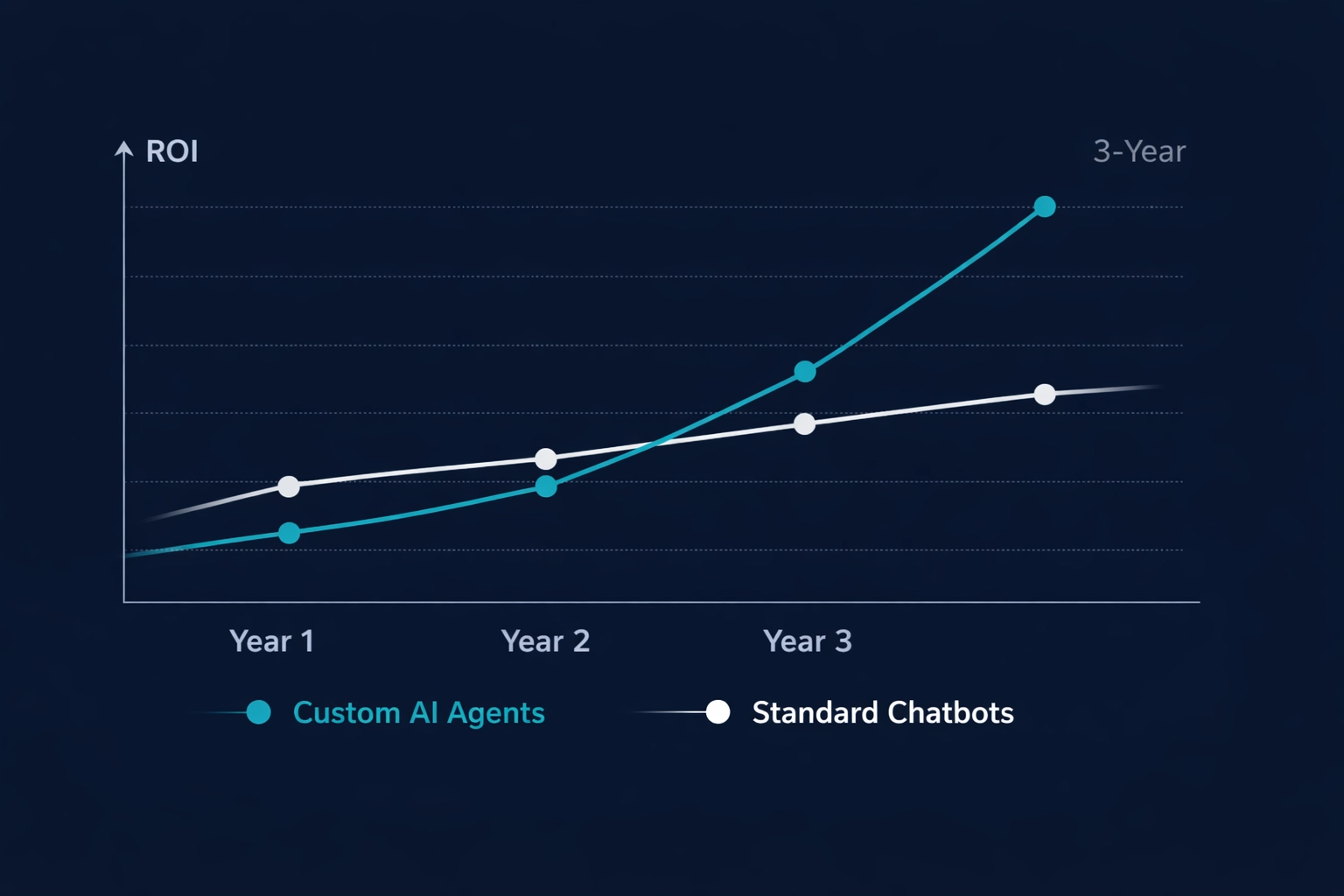
    How to Integrate Custom AI Agents with Existing Systems?

    Integration is where a lot of AI projects either become genuinely useful or quietly drift into demo territory. If a custom agent cannot connect with the systems your business already depends on, it will struggle to deliver real operational value.

    Start with the systems that already drive the business

    • APIs: The fastest route to live business actions.
      • Pull customer information
      • Trigger workflows
      • Update records
      • Send notifications
    • CRMs: Essential for sales, support, and customer context.
      • Retrieve account history
      • Log interactions
      • Score leads
      • Trigger follow-ups
    • ERP and finance platforms: Critical for operational and financial workflows.
      • Order status
      • Inventory visibility
      • Invoice handling
      • Procurement steps
    • Legacy UK business software: Often messy, still important, and absolutely not going anywhere overnight.
      • Older databases
      • On-prem systems
      • Industry-specific tools
      • Custom internal software
    • Document and knowledge systems: Vital for grounded answers.
      • SharePoint
      • Internal wikis
      • Policy libraries
      • Contract repositories

    Practical integration principles

    • Map the workflow first: Do not start with connectors; start with the business journey.
      • What does the user ask?
      • What data is required?
      • What action should happen next?
      • Where should a human step in?
    • Use secure middleware where needed: Not every legacy platform was designed with elegant AI connectivity in mind.
      • Build adapter layers
      • Use service wrappers
      • Apply token-based authentication
      • Log every action
    • Design for permissioning: The agent should only access what the user is allowed to see.
      • Role-based controls
      • Department-level restrictions
      • Data sensitivity labels
      • Approval checkpoints
    • Monitor and iterate: Integration quality improves with usage data.
      • Track failure points
      • Refine prompts and tool calls
      • Improve response logic
      • Expand integrations gradually

    For many UK firms, especially those juggling modern SaaS with legacy infrastructure, integration is not glamorous. It is simply where value gets unlocked. A polished AI front end means very little if it cannot speak to the CRM, update a case, pull the latest pricing, or interact with that strangely ancient but business-critical platform nobody dares to touch.

    Wider UK Use Cases for Custom AI Agents

    The momentum is not limited to banking and healthcare. UK enterprises across sectors are finding that custom AI agent development works best when it is tied to clear operational use cases.

    Predictive Maintenance in UK Manufacturing

    For manufacturers, custom AI agents can monitor machine data, maintenance logs, and performance signals to identify patterns before a breakdown turns into an expensive mess.

    A purpose-built agent can:

    • Flag unusual equipment behaviour
    • Pull maintenance history through connected systems
    • Recommend next-best actions based on risk patterns
    • Escalate issues to engineering teams before downtime spreads

    That creates a more seamless maintenance model, reduces disruption, and improves asset utilisation without relying entirely on reactive firefighting.

    Route Optimisation for Logistics

    For logistics and supply chain businesses, custom AI agents can combine live delivery conditions, route data, order volume, and fleet constraints to improve planning and execution.

    A bespoke agent can:

    • Analyse delivery routes in real time
    • Recommend faster or more cost-efficient schedules
    • Adjust planning based on traffic, delays, or demand shifts
    • Feed updates into operational systems and customer workflows

    That is especially valuable for UK logistics operators balancing cost pressure, customer expectations, and the ongoing need for lightning-fast service delivery.

    Intelligent Patient and Admin Support in Healthcare

    Healthcare organisations and health-tech providers can use bespoke agents to reduce admin overload while supporting safer, better-coordinated service experiences.

    A purpose-built healthcare agent can:

    • Summarise appointment history and admin notes
    • Help patients find the right service path
    • Surface policy-approved guidance for staff
    • Escalate sensitive or urgent scenarios to human teams
    • Support internal admin workflows around documentation and scheduling

    For UK healthcare environments, the value is not about replacing professionals. It is about reducing friction, improving information access, and helping overloaded teams spend more time on care instead of paperwork.

    Risk and Service Automation in Finance

    Financial services firms are already dealing with high volumes of compliance checks, customer queries, and internal decision workflows. That makes them ideal candidates for custom AI agents.

    A finance-focused agent can:

    • Pull account context from secure systems
    • Assist with onboarding and document collection
    • Flag exceptions for manual review
    • Support internal teams with policy and process guidance
    • Personalize service interactions based on account history and intent

    For banks, insurers, and fintech firms, this creates a more dynamic model for customer support and operations while keeping humans in control where risk is higher.

    The Reality of Costs: Investing in Custom AI Agents

    Let’s talk money without wrapping it in too much consultant fog. Yes, bespoke AI agents usually cost more upfront than off-the-shelf bots. That is because you are paying for discovery, solution architecture, custom integration, workflow design, data grounding, testing, and governance. In other words, you are not buying a clever little widget. You are building a modern operational asset.

    The important bit for managers, directors, and anyone preparing for a board meeting with a nervous finance slide is this: upfront cost is only half the story. The more useful question is what the business keeps paying if it does not invest properly.

    Initial Development vs. Ongoing ROI

    Off-the-shelf tools can look wonderfully affordable in the first demo. Then reality arrives wearing a lanyard and carrying a stack of workaround documents.

    Cost View Off-the-Shelf Bots Custom AI Agents
    Upfront investment Lower initial spend Higher initial spend due to discovery, architecture, and integration
    Fit to workflow Generic, often awkward Designed around actual business processes
    Hidden cost risk High due to manual fixes, poor adoption, and seat-based pricing Lower because the system is tailored to business value
    Long-term ROI Often flattens quickly Improves as usage, automation, and integrations expand
    Strategic value Limited and easy to replicate Stronger competitive advantage built around proprietary workflows

    A generic bot may be cheaper on day one, but the hidden costs can pile up fast:

    • Manual workarounds: Teams still copy, paste, chase approvals, and fix broken process gaps.
    • Poor performance: If the bot cannot access the right systems or understand the workflow, staff end up doing the work anyway.
    • Seat-based licensing creep: Pricing can rise as more users, teams, or features get added. Funny how that happens.
    • Low adoption: People ignore tools that are clunky, generic, or unhelpful, which turns “cost-saving software” into shelfware with branding.

    By contrast, custom AI agent development costs more upfront because it tackles the actual job. For a board, that is a much easier budget story to defend: spend more to remove recurring inefficiency, not to create a shinier version of it.

    Key Cost Drivers

    The cost of a bespoke AI agent programme depends on how ambitious the solution needs to be. There is no single flat number, because a lightweight internal support agent is very different from a multi-system autonomous workflow engine.

    The biggest cost drivers usually include:

    • System integrations: The more platforms the agent needs to connect with, the more engineering work is involved.
    • CRM platforms for customer context
    • ERP systems for operations and finance
    • Internal tools, ticketing systems, and legacy databases
    • Workflow complexity: Simple Q&A is cheaper than multi-step decision automation.
    • Approval chains
    • Escalation logic
    • Role-based permissions
    • Multi-agent orchestration
    • Data grounding quality: The agent is only as useful as the data behind it.
    • Cleaning documents and records
    • Structuring knowledge sources
    • Applying permissions and access rules
    • Maintaining fresh, trusted retrieval pipelines
    • Governance and compliance needs: Regulated industries need stronger controls.
    • Audit logs
    • Human-in-the-loop checkpoints
    • Security reviews
    • Policy enforcement

    If you are explaining budget internally, the practical framing is this: cost rises with complexity, but so does value. The goal is not to build the biggest agent imaginable. The goal is to build the right one first.

    Operational Running Costs

    Once the agent is live, there are ongoing running costs, but these are usually far more scalable than adding headcount for every new process bottleneck.

    Operational costs typically include:

    • API and token usage: Costs vary based on how often the agent is used, how much data it processes, and how complex each interaction is.
    • Maintenance and monitoring: Workflows need tuning, integrations need checking, and governance rules need occasional updates.
    • Enhancements over time: As teams adopt the system, businesses often add new workflows, data sources, or departmental use cases.

    The good news is that these costs generally scale with usage. If the agent is doing more useful work, the spend is tied to actual business activity rather than dead software weight sitting untouched in a dashboard no one opens after month two.

    Problem: Cheap-looking AI tools often create expensive hidden inefficiencies later.
    Solution: Invest in a bespoke system that is engineered for ROI, not just for a lower line item on a procurement form.

    The Chimpare Edge

    This is where the delivery partner matters. Working with Chimpare gives UK enterprises a more predictable, engineering-led route into custom AI agent development. Rather than trying to boil the ocean on day one, the focus is on identifying high-impact use cases first, shaping the right architecture, and delivering measurable value quickly.

    That means:

    • Predictable budgeting: Clear scoping around use cases, integrations, and rollout stages.
    • Engineering-led delivery: Practical build decisions grounded in business outcomes, not AI theatre.
    • Fast ROI focus: Start with the workflows most likely to reduce cost, speed up work, or improve service.
    • Scalable expansion: Prove value in one area, then extend to other teams and processes with confidence.

    For managers justifying budget to the board, that is the key message: this is not spend for the sake of innovation theatre. It is a strategic investment in operational efficiency, service quality, and scalable competitive advantage. Or, put more casually, it is the difference between paying once to modernise properly and paying forever for clunky workarounds.

    Common Mistakes UK Enterprises Make with AI Agents

    Even strong businesses can trip over the same avoidable mistakes when rolling out AI initiatives.

    • Starting with technology instead of the problem: Fancy models do not rescue weak use cases.
      • Define the workflow pain first
      • Set measurable success criteria
      • Build around business value
    • Ignoring data quality: Poor grounding creates poor outcomes.
      • Clean knowledge sources
      • Review permissions
      • Remove stale content
    • Skipping governance: Fast deployment without controls is not innovation; it is risk with better branding.
      • Add audit trails
      • Set approval thresholds
      • Define escalation logic
    • Trying to automate everything at once: Start narrow, then scale.
      • Pilot one workflow
      • Validate results
      • Expand incrementally
    • Underestimating integration complexity: The shiny front end is the easy bit.
      • Map systems early
      • Involve technical stakeholders
      • Plan around legacy software realities

    Problem: Enterprises often chase AI hype and end up with disconnected tools, weak adoption, and very expensive disappointment.
    Solution: Focus on grounded use cases, secure integration, iterative rollout, and measurable business outcomes.

    Conclusion

    UK enterprises are no longer asking whether AI belongs in the business. They are asking whether generic tools are enough, and the answer is increasingly obvious: not if you want a real competitive edge.

    Custom AI agent development gives organisations a more modern route to automation, personalization, and operational scale. It turns AI from a generic interface into a structured, dynamic, business-specific capability. For developers, that means building systems that do more than chat. For business owners, it means creating measurable value from internal data and workflows. For hiring managers, it means adding scalable support without relying only on recruitment to solve every bottleneck.

    The shift is already happening across UK manufacturing, logistics, healthcare, and finance. The question is not whether bespoke agents are relevant. The question is whether your business wants to lead, follow, or spend another year watching competitors automate the work you are still doing manually.

    Now is the time to move from experiments to architecture. If your organisation is ready to explore custom AI agents built around real workflows, real systems, and real outcomes, Chimpare can help design and develop the right solution.

    FAQ

    What is custom AI agent development?

    Custom AI agent development is the process of designing, building, integrating, and improving AI agents tailored to a business’s specific workflows, systems, and goals. Unlike off-the-shelf bots, these agents are grounded in company data and can often take action across connected platforms.

    How are custom AI agents different from chatbots?

    Chatbots typically follow predefined scripts and mainly provide information. Custom AI agents can use context, retrieve live knowledge, call APIs, update systems, and support multi-step workflows with more dynamic decision-making.

    Can custom AI agents integrate with legacy systems?

    Yes. With the right middleware, APIs, adapters, and security controls, custom AI agents can integrate with CRMs, ERPs, internal databases, document repositories, and older line-of-business tools often used by UK enterprises.

    Which industries benefit most from bespoke AI agents?

    Manufacturing, logistics, healthcare, finance, retail, and professional services are strong candidates, especially where there are repeatable workflows, fragmented systems, high admin volume, or a need for personalized service.

    How should a UK enterprise start with AI agents?

    Start with one high-value use case. Define the workflow problem, identify the required data and systems, build a controlled pilot, measure results, and then scale gradually once the business case is proven.

  • What is NFC? Everything You Need to Know About Near-Field Communication in 2026

    What is NFC? Everything You Need to Know About Near-Field Communication in 2026

    Welcome to 2026, where the "tap" has become the primary language of global commerce and interaction. If you have touched your phone to a payment terminal, tapped a smart poster to download an app, or used a key fob to enter your office today, you have engaged with Near-Field Communication (NFC).

    But for businesses looking to stay ahead of the curve, NFC is no longer just about "contactless payments." It has evolved into a cornerstone of digital transformation services, enabling smart app solutions that bridge the gap between the physical and digital worlds. At Chimpare, we’ve seen a massive surge in bespoke software development requests that integrate NFC to streamline everything from healthcare logistics to high-end retail experiences.

    In this comprehensive guide, we will break down exactly what NFC is, how it functions under the hood, and why your business needs a robust NFC strategy to remain competitive in today’s hyper-connected landscape.


    Quick Glossary: NFC Full Form and Meaning

    NFC Full Form: Near-Field Communication

    NFC Meaning: NFC is a short-range wireless technology that lets two compatible devices communicate when they are placed very close together, usually within a few centimeters. In everyday terms, it powers quick tap-based actions such as contactless card payments, mobile wallet transactions, access control, and fast device pairing.


    Table of Contents

    What is NFC? A 2026 Perspective
    The Mechanics: How NFC Works
    Key Operating Modes for Business
    NFC vs. Bluetooth vs. RFID: The Comparison
    Transformative Use Cases: Beyond the Payment Terminal
    NFC Tags: The Silent Drivers of Smart App Solutions
    Security in the Tap-and-Go Era
    Common Mistakes in NFC Implementation
    Developing Your NFC Strategy with Chimpare
    Frequently Asked Questions


    What is NFC? A 2026 Perspective

    Near-Field Communication (NFC) is a specialized, short-range wireless connectivity technology that allows two devices to communicate when they are brought within a few centimeters of each other. While it shares roots with Radio Frequency Identification (RFID), NFC is a more sophisticated, bi-directional evolution designed for secure, intentional interactions.

    In the context of custom mobile app development, NFC acts as a physical "handshake." It eliminates the friction of manual data entry or complex pairing processes. Whether you are a business owner looking to automate inventory or a developer building the next generation of social commerce tools, understanding NFC is non-negotiable.

    Problem: High friction in user onboarding or physical-to-digital transitions leads to a 40% drop-off in engagement.
    Solution: NFC-enabled smart app solutions allow for instant, one-tap interactions that keep users within your ecosystem without the need for manual searching or typing.


    The Mechanics: How NFC Works

    At its core, NFC operates on the principle of electromagnetic induction. Unlike Wi-Fi or Bluetooth, which use radio waves to broadcast data over long distances, NFC uses a magnetic field.

    Technical Specifications:

    • Frequency: 13.56 MHz (Standardized globally).
    • Data Transfer Speed: Ranges from 106 to 424 kbit/s.
    • Range: Optimally 4 cm or less (designed for security through proximity).

    When two NFC-compatible devices, one active (like a smartphone) and one passive (like an NFC tag), come close together, the active device creates a small magnetic field. This field powers the passive tag, allowing it to send its stored data back to the active device. This "passive" nature of tags is why they don't require batteries, making them incredibly scalable and cost-effective for large-scale digital transformation services.


    Key Operating Modes for Business

    To leverage NFC in bespoke software development, you must understand the three primary ways it operates:

    • Card Emulation Mode: This is the most common mode used in smartphones. The device mimics a contactless smart card, allowing users to make payments or use transit passes.
    • Reader/Writer Mode: This allows a device (like a phone) to read information stored on inexpensive NFC tags embedded in posters, labels, or products. This is vital for smart app solutions that require physical interaction.
    • Peer-to-Peer (P2P) Mode: Two active NFC devices exchange data. While less common than it was five years ago, it remains a lightning-fast way to swap contact information or bootstrap a faster Wi-Fi/Bluetooth connection.

    NFC vs. Bluetooth vs. RFID: The Comparison

    Choosing the right wireless technology is critical for your mobile application development. Here is how NFC stacks up against its peers in 2026:

    Feature NFC RFID (Passive) Bluetooth (LE)
    Range Very Short (<10cm) Up to 10m+ Up to 100m
    Power Consumption Extremely Low None (for tags) Low
    Setup Time Instant (<0.1s) Instant 1-3 seconds
    Security High (Proximity-based) Low/Moderate Moderate
    Bi-directional Yes No (usually) Yes
    Best Use Case Payments, Secure Access Logistics, Inventory Wearables, Audio


    Transformative Use Cases: Beyond the Payment Terminal

    While we often associate NFC with ecommerce stores, the reality in 2026 is far more expansive.

    High-Security Access Control

    Enterprises are ditching plastic badges for NFC-enabled smartphone credentials. This integrates seamlessly with enterprise software development to provide real-time logs of who enters which zone, enhancing security without sacrificing employee convenience.

    Healthcare & Patient Safety

    NFC tags on patient wristbands ensure that medical staff can "tap" to see real-time medication schedules. We’ve explored similar engineering challenges in our Kindheart study, where tech is used to improve care delivery for charities and healthcare providers.

    Industrial Intelligence and Logistics

    By embedding NFC into machinery, technicians can tap their devices to instantly pull up maintenance manuals or report a fault. This turns static hardware into a node of industrial decision intelligence.

    Luxury Brand Authentication

    Counterfeiting is a trillion-dollar problem. In 2026, luxury brands use bespoke software development to embed encrypted NFC tags in handbags or watches. Customers tap the product to verify authenticity via the brand's official app.

    Problem: Counterfeit goods erode brand trust and lead to millions in lost revenue.
    Solution: Encrypted NFC tags provide a tamper-proof digital twin for physical products, ensuring 100% authenticity for the end consumer.


    NFC Tags: The Silent Drivers of Smart App Solutions

    NFC tags are the "software" of the physical world. These tiny stickers or inlays can be programmed to perform almost any action on a smartphone.

    • Actionable Marketing: A tap on a retail display opens a specific product page or applies a discount code.
    • Smart Home Integration: Tapping a tag on your nightstand can trigger an "All Lights Off" routine.
    • Ticketing and Events: NFC tags in wristbands allow for cashless spending and instant entry at large-scale festivals.

    When considering how much app development costs in the UK, it is important to factor in the backend infrastructure required to manage thousands of unique NFC interactions.


    Security in the Tap-and-Go Era

    Security is the number one question we receive at Chimpare regarding NFC. Because NFC requires extreme proximity, "eavesdropping" is incredibly difficult. However, the software layer must be equally secure.

    We recommend following a Zero Trust Blueprint for all NFC integrations. This means:

    • Encryption: Data on the tag should be encrypted so it cannot be cloned or read by unauthorized devices.
    • Tokenization: In payment scenarios, sensitive card data is never shared; instead, a one-time "token" is used.
    • Dynamic Tagging: Using tags that generate a new URL or code for every tap to prevent "replay" attacks.

    Visual Data: NFC Adoption Growth 2022-2026

    To understand the scale of this technology, let's look at the projected growth of NFC-enabled devices and transactions.

    NFC Market Penetration and Transaction Volume (Projected)

    Year NFC-Enabled Devices (Billions) Contactless Transaction Volume ($ Trillion)
    2022 3.4 4.6
    2023 3.9 6.1
    2024 4.5 8.2
    2025 5.2 10.5
    2026 (Est) 6.1 13.4


    Common Mistakes in NFC Implementation

    In our years of providing digital transformation services, we have seen several recurring pitfalls that can sink an NFC project.

    • Ignoring Hardware Diversity: Not all NFC chips are created equal. Some older Android devices may struggle with certain tag types (e.g., NTAG213 vs. NTAG424 DNA). Always test across a broad spectrum of hardware.
    • Poor UX Placement: If a user has to "hunt" for the NFC sweet spot on a poster or device, they will give up. Visual cues are essential.
    • Neglecting Security: Using "open" tags for sensitive data is a recipe for disaster. Always implement server-side validation.
    • Overcomplicating the Action: NFC should be a shortcut. If tapping a tag leads to a 10-step registration form, you’ve lost the benefit of the technology.

    Developing Your NFC Strategy with Chimpare

    At Chimpare, we don't just "build apps." We create digital transformation frameworks that solve real-world problems. Whether you need iOS and Android development or a complex ERP integration, NFC can be the catalyst for your next breakthrough.

    Our team of experts can help you navigate:

    • Selection of the right NFC tag hardware.
    • Secure mobile app integration using modern frameworks.
    • Backend systems to track and analyze NFC interactions.
    • Scaling your solution to handle millions of taps.


    Frequently Asked Questions

    Q: Is NFC safer than traditional credit cards?
    A: Yes. Traditional cards with magnetic stripes can be easily cloned. NFC uses tokenization and requires proximity, making it significantly more secure. For enterprise-level security, we recommend looking into scaling microservices to handle secure authentication.

    Q: Do I need an internet connection for NFC to work?
    A: The NFC "tap" itself does not require the internet. However, most smart app solutions will need a data connection to process the information received from the tap (e.g., to load a webpage or process a payment).

    Q: Can NFC work through phone cases?
    A: Generally, yes. Most plastic, leather, or silicone cases are thin enough for the magnetic field to pass through. However, very thick "rugged" cases or those containing metal can interfere with the signal.

    Q: What is the difference between NFC and QR codes?
    A: QR codes require the user to open their camera, frame the code, and ensure good lighting. NFC is faster (one tap) and works in the dark. NFC is also more secure, as the data on a tag can be encrypted, whereas a QR code is just a visual string of data.


    The Future is a Tap Away

    As we move deeper into 2026, the businesses that succeed will be those that remove every possible barrier between their services and their customers. NFC is the ultimate tool for friction reduction. It is seamless, lightning-fast, and when combined with bespoke software development, it is a powerful driver of ROI.

    Ready to transform your business with a custom mobile app development strategy that leverages the latest in NFC and IoT? Explore our work to see how we’ve helped other UK tech leaders innovate, or contact Chimpare today to start your journey.


    Quick Guide: NFC for Our Global Readers

    For UK readers, NFC is already part of everyday life. It is the technology behind contactless bank cards, Apple Pay and Google Pay tap-to-pay experiences, and Oyster card taps on the London Underground. In practical terms, NFC is what makes those fast, familiar "tap and go" moments work so smoothly across retail, transport, and mobile payments.

    Whether you are using a debit card at a supermarket, tapping your phone at a café, or moving through the Tube with Oyster, NFC is the invisible layer that makes the experience fast, secure, and convenient.

  • Looking for Bespoke Software Development? Here Are 10 Things You Should Know About Security in 2026

    Looking for Bespoke Software Development? Here Are 10 Things You Should Know About Security in 2026

    Welcome to 2026. If you’re a business owner, a CTO, or a hiring manager, you already know that the digital landscape has shifted beneath our feet. The days of "off-the-shelf" software being "good enough" are long gone. Why? Because generic software comes with generic vulnerabilities. In a world where AI-driven cyber-attacks are the new normal, bespoke software development isn't just about getting a custom UI: it’s about building a digital fortress tailored to your specific needs.

    At Chimpare, we’ve seen the evolution of threats firsthand. Whether you are scaling a fintech app or modernizing an enterprise ERP, security is no longer a checkbox at the end of the project. It is the foundation.

    In this deep dive, we’ll explore the 10 essential security insights you must consider when embarking on a bespoke development journey this year. From quantum-resistant encryption to the psychology of Zero Trust, here is how you stay ahead of the curve.


    Table of Contents

    1. Custom Security Architecture: Building the Skeleton
    2. Industry-Specific Controls: The End of One-Size-Fits-All
    3. Foundational Compliance: GDPR and Beyond in 2026
    4. AI-Enhanced Threat Detection: The Adaptive Shield
    5. Quantum-Resistant Encryption: Future-Proofing Data
    6. Shift-Left Testing: Fixing Bugs Before They Breathe
    7. Hardened Secure Coding Practices
    8. Data Sovereignty and Granular Access Management
    9. Automated Real-Time Compliance Monitoring
    10. The ROI of Security: A Business Necessity
    11. Common Security Mistakes in Bespoke Projects
    12. Bespoke vs. Off-the-Shelf: Security Comparison
    13. FAQ: Technical Security Queries

    1. Custom Security Architecture: Building the Skeleton

    When you choose bespoke software development, you aren't just buying code; you’re designing an ecosystem. In 2026, the most successful projects define their security architecture before a single line of functional code is written. This means integrating access levels, encryption standards, and authentication processes that are unique to your organizational risks.

    Speciality: Architectural Hardening
    Release Date: Q1 2026 (Modern Standards)
    Key Features:

    • Microservices isolation to prevent lateral movement.
    • Customized API gateways with rate limiting tailored to user behavior.
    • Hardware-level security integration for mobile applications.

    Problem: Generic software uses a standard "house" layout that burglars already have the blueprints for.
    Solution: Bespoke architecture creates a custom-designed vault where only you know where the secret passages are.

    Realistic bespoke software security architecture dashboard with secure system design visuals.


    2. Industry-Specific Controls: The End of One-Size-Fits-All

    A healthcare app built with Flutter app development requires vastly different security protocols than a retail loyalty platform. In 2026, bespoke software allows you to implement custom security protocols that match your industry’s specific threat profile.

    • Fintech: Requires multi-layered transaction signing and "man-in-the-middle" protection at every node.
    • Healthcare: Focuses on HIPAA-compliant data masking and immutable audit logs for patient records.
    • Logistics: Needs secure IoT integration to prevent supply chain spoofing.

    By tailoring controls, you avoid the bloat of unnecessary security features that slow down performance while ensuring the critical areas are triple-locked.


    3. Foundational Compliance: GDPR and Beyond in 2026

    Compliance isn't just a legal hurdle; it’s a trust signal. In 2026, data privacy regulations have become more fragmented and stringent. Bespoke software allows you to bake region-specific regulations (like the updated UK GDPR or the EU's AI Act) directly into the foundation of the product.

    Speciality: Regulatory Engineering
    Key Features:

    • Privacy by Design: Data minimization techniques are automated.
    • Right to Erasure: Automated workflows for "Right to be Forgotten" requests.
    • Cross-Border Controls: Software that automatically adjusts data handling based on the user's geolocation.

    If you are looking at Python development for data-heavy applications, building these compliance modules early saves millions in potential fines.


    4. AI-Enhanced Threat Detection: The Adaptive Shield

    Static firewalls are a relic of the past. In 2026, bespoke systems utilize AI-enhanced threat detection. These systems don't just look for known "bad" signatures; they learn your users' "normal" behavior. If a user in London suddenly attempts to download 5GB of data from a 2026 Node.js environment at 3 AM via a VPN, the system doesn't just flag it: it isolates the session instantly.

    Speciality: Behavioural Analytics
    Key Features:

    • Machine learning models that adapt to new attack vectors in real-time.
    • Zero Trust Architecture (ZTA) where every request is verified, regardless of origin.
    • Automated incident response that "self-heals" compromised modules.

    Problem: Traditional security alerts create "notification fatigue," causing teams to miss real threats.
    Solution: AI filters the noise, handling 99% of minor anomalies autonomously so your team can focus on the big picture.


    5. Quantum-Resistant Encryption: Future-Proofing Data

    The "Quantum Apocalypse" might still be on the horizon, but the "harvest now, decrypt later" threat is real today. Hackers are stealing encrypted data now, intending to crack it once quantum computing becomes mainstream.

    In 2026, bespoke software development should prioritize Post-Quantum Cryptography (PQC). This involves using cryptographic algorithms (like lattice-based cryptography) that are thought to be secure against a quantum computer attack. This is especially vital for long-term data storage solutions like those seen in our CS Prime Choice Security projects.

    Realistic quantum-resistant encryption visual for bespoke software security.


    6. Shift-Left Testing: Fixing Bugs Before They Breathe

    Industry data shows that a bug caught during the development phase costs nearly 10 times less to fix than one found after launch. In 2026, we utilize "Shift-Left" testing. This means security testing happens at every stage of the lifecycle: from ideation to deployment.

    Speciality: DevSecOps Integration
    Key Features:

    • SAST/DAST: Static and Dynamic Application Security Testing integrated into the CI/CD pipeline.
    • AI-Augmented Testing: AI agents that generate thousands of "edge case" scenarios to stress-test the code.
    • Peer Reviews: Human-led code audits focused specifically on logic flaws that AI might miss.

    Whether you're building with Swift or Kotlin, continuous testing ensures your software is born secure.


    7. Hardened Secure Coding Practices

    Quality bespoke development relies on developers who speak the language of security. At Chimpare, our engineers follow strict secure coding practices to mitigate common risks like SQL injection, Cross-Site Scripting (XSS), and Broken Access Control.

    Security Specification List:

    • Input Validation: Never trust user input; sanitize everything.
    • Output Encoding: Prevent malicious scripts from executing in the browser.
    • Dependency Management: Regularly auditing third-party libraries (a major vector for attacks in 2026).
    • Secret Management: Using secure vaults (like HashiCorp Vault) rather than hardcoding API keys.

    8. Data Sovereignty and Granular Access Management

    In 2026, where you store your data and who can see it is a major business differentiator. Bespoke software gives you absolute control over data access management. Unlike SaaS platforms where the provider might have "backdoor" access, bespoke systems allow you to define exactly who has the keys to the castle.

    Speciality: Identity and Access Management (IAM)
    Key Features:

    • Role-Based Access Control (RBAC): Users only see what they need for their specific job.
    • Multi-Factor Authentication (MFA): Biometric and hardware-token integration as standard.
    • Just-In-Time (JIT) Access: Granting elevated permissions only for the duration of a specific task.

    For businesses looking to hire dedicated software engineers, ensuring they understand these IAM frameworks is critical for maintaining data sovereignty.


    9. Automated Real-Time Compliance Monitoring

    Manual audits are a thing of 2023. In 2026, bespoke platforms include dashboards that provide real-time regulatory alignment. If a new data privacy law is passed, or if a server configuration drifts from the "secure" baseline, you are notified immediately.

    This is particularly useful for organizations using RPA development to handle sensitive back-office tasks. The bots themselves must be audited in real-time to ensure they aren't inadvertently exposing data.

    Problem: Compliance is often a "once-a-year" snapshot that leaves you vulnerable for the other 364 days.
    Solution: Continuous monitoring provides a 24/7 "heartbeat" of your security posture.


    10. The ROI of Security: A Business Necessity

    Investing in security isn't a cost; it’s an insurance policy with a high ROI. The average cost of a data breach has skyrocketed in the last few years, reaching well over $5 million for mid-sized enterprises in 2026.

    The Business Value of Bespoke Security:

    • Brand Trust: Customers are more likely to stay with a company that has a clean security record.
    • Lower Insurance Premiums: Cyber insurance providers offer better rates for businesses with custom, hardened software.
    • Competitive Advantage: Use your superior security as a selling point to your own clients.

    Common Security Mistakes in Bespoke Projects

    Even with a custom build, things can go wrong if the strategy is flawed. Here are the pitfalls we see most often:

    1. Neglecting API Security: Over 90% of organizations using APIs have suffered an incident. Insecure endpoints are the "unlocked windows" of the software world.
    2. Hardcoding Credentials: It sounds basic, but developers still occasionally leave "admin/admin" or API keys in the code during the rush to launch.
    3. Ignoring Technical Debt: Security requires updates. If you build a Laravel project and don't update the framework for two years, you’re asking for trouble.
    4. Over-Reliance on Third-Party Plugins: Every plugin is a potential vulnerability. Bespoke means building it yourself to keep the attack surface small.
    5. Poor Error Handling: Verbose error messages can give hackers clues about your database structure or server environment.

    Visualizing the Security Landscape: Data Trends 2026

    To understand why bespoke security is vital, let’s look at the projected costs of cybercrime versus the cost of proactive bespoke investment.

    Cybersecurity Investment vs. Potential Breach Costs (2024-2026)

    Year Avg. Cost of Breach (Global) Avg. Bespoke Security Spend ROI (Cost Avoidance)
    2024 $4.45 Million $150,000 29.6x
    2025 $4.85 Million $185,000 26.2x
    2026 $5.30 Million $210,000 25.2x

    Note: Data reflects industry trends in enterprise software sectors.

    Professional security ROI chart for bespoke software investment and breach cost comparison.


    Bespoke vs. Off-the-Shelf: Security Comparison

    Feature Off-the-Shelf (SaaS) Bespoke Software Development
    Vulnerability Profile Publicly known; target of "mass" attacks. Private; requires targeted, expensive effort to breach.
    Compliance General (e.g., standard GDPR). Granular (Industry & Region specific).
    Updates Controlled by the vendor; you wait for them. Controlled by you; patch as soon as a threat is found.
    Data Access Vendor has "super-user" access. Absolute data sovereignty.
    Integration Limited; often requires insecure "middleware." Seamless; security is baked into integrations.

    Choosing the Right Partner for Your 2026 Project

    Selecting a partner for bespoke software development isn't just about finding the best coders. It's about finding a team that understands the 2026 threat landscape. When vetting a partner like Chimpare, ask these questions:

    • Do you use AI in your testing process?
    • How do you handle secrets management and encryption at rest?
    • Can you demonstrate compliance with my specific industry standards (e.g., SOC2, ISO27001)?
    • What is your process for managing third-party dependencies?

    Realistic secure-by-design bespoke software development visual with technical blueprint screens.


    Forward-Looking Summary: Adaptation is Survival

    As we move further into 2026, the gap between secure and unsecure businesses will widen into a canyon. Those who rely on generic, aging software will find themselves constantly playing catch-up with attackers who use the latest AI tools to find exploits.

    Bespoke software development offers a way out. It allows you to build a system that is not only functional and beautiful but inherently resilient. By prioritizing custom architecture, AI-driven detection, and quantum-resistant standards today, you aren't just protecting your data: you’re protecting your future growth.

    At Chimpare, we’re ready to help you build that future. Whether it's a React Native mobile app or a complex .NET enterprise system, we put security at the center of everything we do.


    FAQ: Technical Security Queries

    Q: Is bespoke software really more secure than big-name SaaS?
    A: Yes and no. A poorly built bespoke app is worse than a well-maintained SaaS. However, a professionally developed bespoke app is significantly more secure because its codebase isn't public, making it much harder for automated "script kiddie" attacks to find vulnerabilities.

    Q: How often should we conduct security audits in 2026?
    A: With modern DevSecOps, "auditing" should be continuous. However, a deep-dive third-party penetration test should still be conducted at least twice a year or whenever major features are added.

    Q: Does bespoke development take longer because of these security layers?
    A: It requires more upfront planning, but it actually saves time in the long run. Fixing a security breach post-launch can take weeks of downtime and months of legal recovery. Building it right the first time is always faster.

    Q: Can Chimpare help with migrating legacy data securely?
    A: Absolutely. We specialize in secure data migration, ensuring that legacy vulnerabilities aren't carried over into your new bespoke system. Check out our work with Prime Choice Security for an idea of how we handle high-stakes environments.

    Q: What is the most common entry point for hackers in 2026?
    A: Compromised credentials and insecure APIs remain the top threats. That’s why we emphasize multi-factor authentication (MFA) and hardened API gateways in every project.

  • How to Integrate AR VR Development Company Strategies With Your Existing Apps

    How to Integrate AR VR Development Company Strategies With Your Existing Apps

    The digital landscape is currently undergoing a seismic shift. Static user interfaces, once the gold standard of mobile and web experiences, are rapidly becoming obsolete as users demand more interactive, immersive, and lightning-fast digital interactions. To remain competitive, modern enterprises are looking toward the expertise of a professional ar vr development company to breathe new life into their legacy systems. Integrating Augmented Reality (AR) and Virtual Reality (VR) is no longer a futuristic concept, it is a scalable business necessity for driving deeper engagement and increasing conversion rates.

    In this comprehensive guide, we will explore the strategic roadmap for integrating immersive technologies into your existing applications, ensuring a seamless transition that aligns with your core business objectives.

    Table of Contents


    The Strategic Imperative for Immersive Integration

    Problem: Standard 2D applications are seeing a decline in user retention as competitors adopt more interactive, gamified, and spatial features.
    Solution: Integrating AR/VR strategies allows businesses to provide "try-before-you-buy" experiences, virtual training, and spatial data visualization, leading to a 300% increase in user dwell time.

    The global market for AR and VR is projected to reach unprecedented heights by 2030. According to recent industry statistics, businesses that implement AR features see a 40% reduction in product returns because users can visualize items in their own space before purchasing. For internal operations, VR-based training has been shown to improve learning retention by up to 75% compared to traditional methods.

    For business owners, this shift is not just about keeping up with technology trends. It is about protecting market share in a world where users increasingly expect rich, contextual, and responsive digital experiences. A product catalog that once felt acceptable may now feel flat. A support workflow that once relied on PDFs and video tutorials may now feel slow compared to an AR-guided service experience. For developers, immersive integration opens a path to modernize product architecture with modular features that create visible user value. For hiring managers, it creates a stronger argument for bringing in specialized talent that can accelerate product differentiation without forcing a full rebuild.

    Whether you are a retail giant, a healthcare provider, or an industrial leader, the goal is to transform your current application from a simple tool into a dynamic environment. By partnering with a specialized ar vr development company, you can leverage cutting-edge strategies that turn passive users into active participants.

    A strong immersive strategy also creates a measurable business advantage when deployed with a clear purpose. In retail, AR can reduce hesitation during product evaluation. In healthcare, simulation-based VR can improve training consistency and reduce risk in practice environments. In logistics and manufacturing, spatial overlays can support technicians with faster diagnostics and lower error rates. These are not abstract innovation wins. They are practical outcomes tied to conversion, efficiency, retention, and customer confidence.

    To evaluate whether immersive integration makes strategic sense, ask a few direct questions:

    • Customer Journey Fit: Identify whether users struggle to understand, trust, or interact with a product in a standard 2D interface.
    • Operational Efficiency: Assess whether training, remote assistance, or maintenance workflows would benefit from visual overlays or virtual simulation.
    • Revenue Potential: Determine whether immersive features can increase conversion rates, average order value, subscription retention, or enterprise adoption.
    • Competitive Pressure: Review how quickly competitors are moving toward interactive product experiences and digital-first service models.

    Problem: Many companies adopt immersive features because they look impressive, not because they solve a real business bottleneck.
    Solution: Start with a high-friction use case and attach clear KPIs such as conversion lift, support ticket reduction, or training completion speed.

    The strategic imperative is simple: static apps are losing relevance in user journeys that increasingly reward interaction, clarity, and speed. Companies that act early have more room to test, refine, and scale immersive capabilities before the market treats them as standard expectations.

    Data visualization illustrating the growth and ROI of enterprise AR VR development company strategies.
    Figure 1: Market growth of AR/VR integration in enterprise mobile applications (2023-2027).


    Defining Your AR/VR Objectives

    Before diving into code, a business must identify the specific problem it aims to solve. Immersive technology is most effective when it addresses a friction point in the user journey.

    The biggest mistake teams make at this stage is starting with the technology instead of the outcome. Saying "we want AR" is not a strategy. Saying "we want to reduce product return rates by helping customers understand scale and fit before purchase" is a strategy. The same applies to VR. Saying "we want a virtual environment" is vague. Saying "we want to reduce onboarding time for field engineers by simulating equipment training in a safe, repeatable environment" gives the team something measurable to build toward.

    Speciality: Retail Visualization Summary: Allow users to place 3D models of products in their real-world environment through their smartphone camera.

    • Key Features: Real-time scaling, lighting estimation, surface detection.
    • Release Date: Widely available via ARKit 6.0 and ARCore updates.
    • Best For: Furniture, fashion accessories, home improvement, consumer electronics.
    • Business Impact: Higher purchase confidence, reduced return rates, stronger product engagement.

    Speciality: Industrial Maintenance & Training Summary: Overlay digital instructions onto physical machinery or provide a sandbox VR environment for risk-free training.

    • Key Features: Spatial anchors, hands-free voice commands, multi-user collaboration.
    • Release Date: Evolving rapidly with the launch of high-end headsets like Apple Vision Pro.
    • Best For: Manufacturing, energy, logistics, aviation, heavy equipment.
    • Business Impact: Faster onboarding, lower training risk, fewer operational errors.

    Speciality: Healthcare and Guided Simulation Summary: Deliver immersive procedural learning and context-aware guidance for clinicians, technicians, or support teams.

    • Key Features: 3D anatomical visualization, scenario simulation, gesture or voice interactions.
    • Release Date: Expanding with improved headset fidelity and enterprise adoption.
    • Best For: Medical training, rehabilitation support, guided diagnostics.
    • Business Impact: Better retention, standardized learning, safer practice environments.

    For business owners and hiring managers, it is crucial to audit your existing app's performance. Ask yourself: Where are users dropping off? Could a 360-degree view or an AR overlay provide the clarity they need to complete a transaction? At Chimpare, we focus on aligning these technical capabilities with tangible business growth metrics, especially for teams investing in digital transformation services.

    Use this practical framework to define your objectives before development begins:

    • Map Friction Points: Review analytics, support tickets, abandoned sessions, and customer feedback to pinpoint where users need more context or confidence.
    • Assign a Primary KPI: Choose one lead metric such as conversion rate, training completion, dwell time, return reduction, or support resolution speed.
    • Identify the Right Persona: Clarify whether the feature is for buyers, technicians, patients, employees, partners, or enterprise administrators.
    • Start Narrow: Launch one focused use case before expanding into broader immersive ecosystems.
    • Set Success Thresholds: Decide in advance what outcome would justify further investment.

    Problem: Teams often try to solve too many use cases in a single AR/VR release, creating scope creep and weak adoption.
    Solution: Prioritize one high-impact workflow, validate usage data, and expand only after the initial feature proves business value.

    A well-defined objective also helps technical planning. If the core goal is product visualization, you may prioritize quick-loading 3D assets and camera tracking accuracy. If the goal is collaboration, you may focus more on session synchronization, multi-user persistence, and cloud infrastructure. If the goal is field training, device compatibility and hands-free interaction may matter more than visual complexity. In short, your objective should shape every design, development, and deployment decision that follows.


    The Technical Foundation: Selecting the Right Tech Stack

    Choosing the right development environment is the difference between a scalable, modern app and a glitchy, legacy-burdened one. An expert ar vr development company will typically recommend tools that bridge the gap between your current architecture and the new immersive modules.

    Your tech stack should be selected based on business goals, target devices, performance expectations, and the level of immersion required. Developers should resist the temptation to choose tools solely based on popularity. Instead, evaluate how each component fits into your app lifecycle, content pipeline, analytics stack, and long-term maintenance model. Business owners should ask whether the chosen stack will support future feature expansion. Hiring managers should ask whether the stack is realistic to support with available in-house talent or an external delivery partner.

    Modern Tooling: Unity and Unreal Engine Summary: These game engines serve as the powerhouse for creating high-fidelity 3D environments.

    • Key Features: Cross-platform deployment, advanced physics engines, extensive asset stores.
    • Release Date: Constant monthly updates with new rendering capabilities.
    • Best Fit: Unity is often ideal for mobile-first AR and fast iteration, while Unreal is powerful for visually rich simulations and premium VR environments.
    • Selection Tip: Choose based on performance needs, team familiarity, rendering complexity, and deployment goals.

    Modern Tooling: ARKit and ARCore Summary: Platform-specific SDKs for iOS and Android that enable surface detection and motion tracking.

    • Key Features: Depth sensing, cloud anchors, environmental HDR.
    • Release Date: Annual major version releases aligned with OS updates.
    • Best Fit: Native mobile AR experiences that require deep hardware integration and optimized tracking.
    • Selection Tip: Use native capabilities when precision, performance, and device-level feature access are critical.

    Modern Tooling: WebXR and Browser-Based Frameworks Summary: These frameworks bring immersive experiences to the web with reduced installation friction.

    • Key Features: Browser delivery, lightweight access, wider link-based sharing.
    • Release Date: Rapidly evolving with browser support improvements.
    • Best Fit: Campaign activations, lightweight demos, product previews, and early-stage experimentation.
    • Selection Tip: Use web-based immersion when accessibility matters more than maximum fidelity.

    When integrating these into an existing Flutter app development or React Native development project, developers must utilize specialized plugins that allow the standard app UI to communicate with the 3D rendering engine.

    There are several technical considerations that should shape your stack decision:

    • Rendering Performance: Confirm whether target devices can support your frame rate goals without overheating or draining battery rapidly.
    • Asset Pipeline: Ensure your team can produce, optimize, version, and deliver 3D content efficiently.
    • Backend Compatibility: Verify whether current APIs, authentication models, and content delivery systems can support immersive modules.
    • Analytics Integration: Plan how events from immersive interactions will be captured, structured, and analyzed.
    • Security and Privacy: Review sensor usage, camera access, spatial mapping, and cloud synchronization requirements carefully.

    Problem: Teams often underestimate the complexity of merging 3D engines with mobile app architecture, leading to unstable releases and missed deadlines.
    Solution: Define integration boundaries early, isolate immersive modules, and validate each dependency in a technical proof of concept before full-scale development.

    A practical way to de-risk the stack decision is to run a pilot. Build a small proof of concept that includes one immersive flow, one analytics event pipeline, one asset delivery flow, and testing across a short list of target devices. This pilot will reveal hidden integration constraints far earlier than a full implementation plan on paper.


    Step-by-Step Integration Framework

    Integrating AR or VR into a live application requires a surgical approach to avoid disrupting the current user experience. Follow this directive guide:

    • System Audit: Evaluate your current backend stability. Is your server ready for the high-bandwidth requirements of 3D asset delivery? Consider Node.js development for scalable real-time data handling, especially if your platform also depends on connected-device ecosystems and advanced iot solutions.
    • Asset Creation: Develop optimized 3D assets. High-polygon models will slow down your app; use low-poly models with high-quality textures to maintain a lightning-fast experience.
    • Module Decoupling: Build your AR/VR features as independent modules. This ensures that if the immersive feature fails, the core functionality of the app remains intact.
    • UI/UX Overlay: Design an intuitive "entry point." Users shouldn't feel lost. Use clear call-to-actions (CTAs) like "View in AR" or "Enter Virtual Tour."
    • Rigorous Testing: Test on a wide range of devices. AR performance varies significantly between a flagship iPhone and a mid-range Android device.

    A reliable integration framework starts long before the first immersive scene is published. It begins with architecture planning, asset governance, release sequencing, and fallback logic. The safest way to add immersive capabilities to an existing product is through modular expansion, not deep disruption. That means preserving your current user journey while layering in an optional immersive path that improves the experience for supported devices and use cases.

    Here is a more detailed rollout sequence teams can follow:

    • Audit the Current Stack: Review mobile frameworks, backend services, CDN setup, authentication, analytics, and device support. Identify where immersive modules will connect and where constraints already exist.
    • Define the Entry Flow: Decide exactly how users enter AR or VR mode. This could be from a product page, a help center flow, a dashboard widget, or a dedicated feature tab.
    • Prototype the Critical Interaction: Build the smallest possible immersive flow that still proves the concept. For example, show one product in AR, or one guided maintenance step in a field service workflow.
    • Optimize Asset Delivery: Compress textures, simplify geometry, and configure on-demand loading so users do not wait through long downloads.
    • Establish Fallback UX: If a device does not support AR or if lighting conditions are poor, offer a strong alternative such as a 3D viewer, image carousel, or guided video.
    • Instrument Analytics Early: Track launches, successful placements, session duration, exits, and failure points from the first testing build.
    • Release in Phases: Start with a limited user segment, gather performance data, and scale only after stability and engagement metrics are validated.

    Practical implementation tips can make the difference between a smooth launch and a frustrating one:

    • Use Feature Flags: Roll out immersive capabilities selectively without forcing a full app-wide release dependency.
    • Prioritize Device Tiers: Test and optimize for a short list of high-volume devices first rather than chasing universal perfection immediately.
    • Cache Intelligently: Store repeat-use assets locally when appropriate to reduce reload time and bandwidth usage.
    • Collaborate Across Teams: Product managers, designers, 3D artists, QA engineers, and backend developers must align early because immersive projects are highly interdependent.
    • Document Failure States: Define what happens when tracking is lost, permissions are denied, or assets fail to load.

    Problem: High latency in AR tracking causes user motion sickness and frustration.
    Solution: Utilizing edge computing and optimized spatial anchors ensures cutting-edge tracking precision with sub-millisecond latency.

    Problem: Teams often launch immersive features without a fallback path, creating dead ends for unsupported devices.
    Solution: Build graceful alternatives into the user journey so every visitor still receives a valuable experience, even without full AR/VR capability.

    For developers, the main priority is system reliability. For business owners, the main priority is user adoption without harming the existing funnel. For hiring managers, the main priority is bringing in a delivery team that can handle cross-functional coordination, because immersive integration sits at the intersection of frontend engineering, backend performance, 3D content production, and UX design.


    Comparison: AR vs. VR vs. Mixed Reality for Apps

    To help stakeholders decide which path to take, we have compiled a comparison of the three primary immersive pillars.

    Feature Augmented Reality (AR) Virtual Reality (VR) Mixed Reality (MR)
    User Environment Real-world with digital overlays Fully digital, occluded world Digital objects interact with real-world
    Hardware Required Smartphones, AR Glasses Headsets (Meta Quest, etc.) Advanced Headsets (HoloLens, Vision Pro)
    Typical Use Case E-commerce, Navigation Specialized Training, Gaming Remote Assistance, Design
    Cost of Integration Moderate High Very High
    Accessibility Maximum (billions of phones) Limited (headset owners) Growing (enterprise-focused)
    Scalability High Medium Medium

    Optimizing UX for Immersive Features

    A common pitfall in working with an ar vr development company is focusing too much on "wow factor" and not enough on usability. A scalable UX design must account for physical movement and environmental variables.

    Immersive UX succeeds when it reduces cognitive load instead of increasing it. Users should not need a tutorial just to understand the first interaction. If the experience asks them to scan a floor, move around an object, or interact with hand gestures, the app must guide them clearly and calmly. This is especially important for first-time users, enterprise trainees, and less technical customer segments. A modern immersive experience should feel obvious, responsive, and reassuring from the very first screen.

    • Safety First: In VR, implement "Guardian" boundaries to prevent users from colliding with physical objects.
    • Intuitive Controls: For AR, avoid complex menus. Use natural gestures like pinch-to-zoom and drag-to-rotate.
    • Visual Cues: Provide clear visual feedback when the app is scanning for surfaces. Use a ghosted 3D model to show where an object will be placed.
    • Short Interaction Loops: Keep early interactions simple so users feel immediate progress instead of confusion.
    • Environmental Adaptability: Design for low light, cluttered rooms, reflective surfaces, and interrupted sessions.
    • Accessible Messaging: Use concise microcopy to explain what the system is doing and what the user should do next.

    At Chimpare, our our work highlights how we balance sophisticated technical functionality with a user-centric design language. Whether you're using Swift for iOS or Kotlin for Android, the UX should feel like a natural extension of the device's native ecosystem.

    A few practical UX recommendations help immersive features perform better in production:

    • Show Readiness States: Let users know when the system is scanning, calibrating, loading, or ready for placement.
    • Minimize Interface Clutter: Present only the controls needed for the current step.
    • Offer Undo and Reset: Users need quick ways to correct placement, resize objects, or restart a session.
    • Design for One-Handed Use When Possible: Many mobile AR sessions happen while the user is moving or multitasking.
    • Respect Session Length: Extended immersion can lead to fatigue, so design around short, purposeful interactions.
    • Use Progressive Disclosure: Reveal advanced controls only after the basic action is complete.

    Problem: Some immersive experiences are visually impressive but so confusing that users abandon them within seconds.
    Solution: Prioritize onboarding clarity, predictable controls, and lightweight guidance over excessive interface experimentation.

    For stakeholders, the real UX benchmark is not whether the experience looks futuristic. It is whether users complete tasks faster, understand products better, and feel more confident making decisions. That is the standard that turns immersive features into sustainable product improvements rather than temporary novelty.

    Technical diagram showing the seamless integration of 3D assets into a mobile app user interface.
    Figure 2: Workflow diagram for seamless 3D asset integration into legacy mobile UI.


    Leveraging Data and Analytics in Immersive Environments

    One of the most powerful benefits of immersive integration is the depth of data it provides. Traditional apps track clicks and scrolls; AR/VR apps track spatial movement, gaze duration, and interaction heatmaps.

    This richer data creates a major advantage for product teams and decision-makers. Instead of guessing which visual experiences resonate with users, you can observe how they interact with space, objects, and guided flows in real time. That means your analytics strategy can move beyond vanity metrics and focus on signals that reveal intent, hesitation, engagement quality, and purchase readiness.

    By integrating analytics tools into your AR/VR modules, you can:

    • Identify Popular Products: Track which 3D models are most frequently viewed in the user's space.
    • Optimize Layouts: In VR tours, see where users spend the most time looking to optimize marketing placements.
    • Measure Engagement: Compare the conversion rate of users who interacted with AR versus those who used standard 2D images.
    • Detect Drop-Off Points: Understand whether users exit during scanning, loading, placement, or post-interaction stages.
    • Compare Device Performance: Measure whether certain devices produce weaker session quality or lower completion rates.
    • Evaluate Feature Value: Connect immersive interactions to downstream events like purchase, inquiry, trial signup, or support resolution.

    This data-driven approach allows for the constant refinement of your marketing strategies, ensuring that your investment in an ar vr development company delivers a measurable ROI.

    To make immersive analytics useful, track events that reflect both technical quality and business impact:

    • Launch Metrics: How many users start the immersive feature?
    • Completion Metrics: How many users successfully finish the intended task?
    • Interaction Depth: How long do they engage, and what actions do they repeat?
    • Conversion Metrics: Do immersive users convert at a higher rate than non-immersive users?
    • Quality Metrics: How often do tracking failures, permission issues, or loading delays occur?
    • Retention Metrics: Do users return to the immersive feature over time?

    Problem: Many teams collect immersive interaction data but never connect it to revenue, retention, or operational efficiency.
    Solution: Build dashboards that tie AR/VR events directly to business KPIs so the value of the feature is visible across product, marketing, and leadership teams.

    For developers, analytics can reveal where optimization is needed. For business owners, analytics can confirm whether immersive investment is improving outcomes. For hiring managers, analytics makes vendor or team evaluation much clearer because performance can be measured against agreed objectives. The more structured your measurement framework is, the easier it becomes to justify further investment and continuous iteration.


    Common Mistakes to Avoid During Integration

    Even the most well-funded projects can fail due to simple strategic errors. Be cautious of these common pitfalls:

    • Ignoring Device Battery Life: AR/VR features are power-hungry. Failing to optimize asset loading can drain a user's battery in minutes, leading to immediate uninstalls.
    • Poor Lighting Optimization: If your AR objects don't cast shadows or react to real-world lighting, the "immersion" is broken. Ensure your ar vr development company utilizes environmental HDR.
    • Overloading the UI: Don't clutter the camera view with buttons. Let the 3D content be the hero of the experience.
    • Neglecting Backend Scalability: If 10,000 users try to download a 50MB 3D model simultaneously, your servers will crash. Use a Content Delivery Network (CDN) and optimized Laravel or .NET backends.
    • Skipping Business Validation: Teams sometimes build immersive features before proving there is a meaningful user need.
    • Underestimating Content Operations: 3D assets require ongoing maintenance, updates, and quality control just like any other product content.
    • Testing Too Narrowly: A feature that performs well in a studio environment may fail in real homes, offices, warehouses, or outdoor locations.

    A more detailed view of these risks helps teams avoid expensive delays:

    • Mistake: Treating immersion as a visual add-on only

      • This leads to weak adoption because the feature feels disconnected from the user journey.
      • Fix it by embedding immersive moments exactly where users need more confidence, instruction, or context.
    • Mistake: Launching without real-world testing

      • Controlled demos often hide problems with lighting, connectivity, movement, and interruptions.
      • Fix it by testing in realistic environments with actual end users and target devices.
    • Mistake: Ignoring onboarding friction

      • Even a powerful AR tool can fail if users do not understand permissions, scanning, or controls.
      • Fix it by simplifying the first-run experience and using clear instruction states.
    • Mistake: Overbuilding the first release

      • Trying to ship advanced personalization, multi-user collaboration, and premium visuals all at once creates unnecessary complexity.
      • Fix it by narrowing scope and focusing on one validated use case with strong execution.

    Problem: Many AR/VR launches fail not because the technology is weak, but because the rollout strategy is too ambitious and under-tested.
    Solution: Start lean, test in real conditions, and scale only after technical stability and user value are proven.
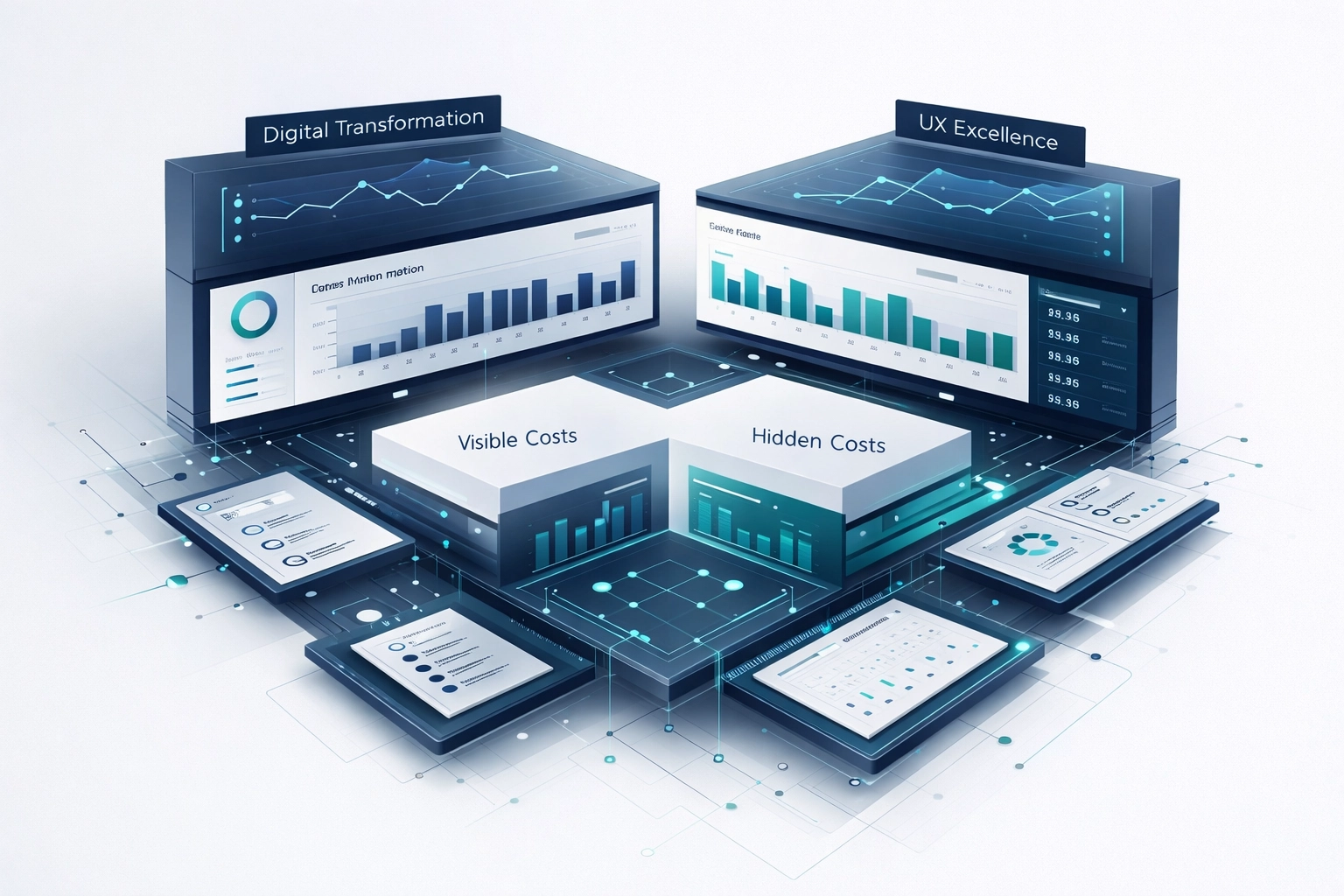
    For developers, avoiding mistakes means planning for edge cases from the beginning. For business owners, it means staying disciplined about ROI and adoption rather than chasing novelty. For hiring managers, it means choosing partners who understand delivery risk, not just creative production. The strongest immersive projects are usually not the flashiest at launch. They are the ones built with clear priorities, scalable architecture, and a realistic understanding of operational complexity.


    The Future of App Development: Agentic AI and Immersive Tech

    As we look toward 2026 and beyond, the convergence of Agentic AI and AR/VR is the next frontier. Imagine an AR shopping assistant that doesn't just show you a product but uses Generative AI to suggest room layouts based on the furniture it "sees" in your living room. For businesses tracking broader AR/VR trends for 2026, this shift signals how quickly immersive experiences are becoming smarter, more contextual, and more commercially valuable.

    The next wave of immersive apps will be defined by adaptability. Instead of offering the same static scene to every user, modern systems will interpret context, recognize intent, and personalize interactions in real time. That means a retail app may recommend product configurations based on room dimensions. A field service app may identify a machine component and surface the next best maintenance action. A learning platform may adjust training difficulty based on performance and gaze behavior. The more intelligence an immersive system gains, the more it shifts from a visual tool to a decision-support environment.

    Integrating Robotic Process Automation (RPA) and AI into your immersive app allows for dynamic, self-evolving environments. This isn't just about visualization; it's about creating intelligent digital twins that can simulate real-world outcomes in real-time.

    Several trends are likely to shape the next generation of immersive application strategy:

    • Agentic Personalization: Experiences will adapt to user behavior, environment, and historical preferences automatically.
    • Context-Aware Assistance: AI copilots will guide users through shopping, diagnostics, training, and onboarding within immersive interfaces.
    • Persistent Spatial Experiences: Users will return to environments that remember prior placements, annotations, and collaborative changes.
    • Enterprise Digital Twins: Companies will connect physical assets to real-time digital simulations for monitoring, maintenance, and planning.
    • Cross-Platform Immersion: More businesses will combine mobile AR, headset VR, and browser-based access into one unified ecosystem.

    Problem: Static AR experiences feel repetitive and lack personalization.
    Solution: Agentic AI integration allows AR content to adapt to the user's specific context and past behavior, creating a unique, cutting-edge experience every time.

    Problem: Some companies wait for the immersive market to feel fully mature before taking action.
    Solution: Begin with a narrow but scalable capability now, so your team gains the workflows, analytics, and technical experience needed before immersive expectations become standard.

    For developers, these trends mean preparing architectures that can support personalization, real-time data exchange, and modular AI services. For business owners, they signal a chance to create differentiated customer value rather than competing on features alone. For hiring managers, they reinforce the importance of building teams that can work across immersive design, intelligent systems, analytics, and product strategy. The future belongs to products that are not only interactive, but aware, adaptive, and continuously improving.


    Frequently Asked Questions (FAQ)

    Q: Do I need to rebuild my app from scratch to add AR features?
    A: No. A professional ar vr development company can integrate AR/VR as a modular library into your existing codebase, whether it's built on Swift, Kotlin, or a cross-platform framework.

    Q: What is the average timeline for an AR integration?
    A: A basic "Product Viewer" AR feature can often be integrated within 4–8 weeks, while complex, multi-user VR environments may take 4–6 months depending on the level of detail and backend complexity.

    Q: Will adding AR make my app size too large?
    A: It can, but this is mitigated by using "On-Demand Resources." Assets are only downloaded when the user enters the AR mode, keeping the initial app download small and lightning-fast.

    Q: Is AR/VR only for mobile apps?
    A: Absolutely not. WebXR technology allows us to bring AR and VR experiences directly to web browsers, though native apps still offer the best performance and access to hardware sensors.

    Conclusion

    Integrating immersive features into an existing application is no longer just an innovation exercise, it is a practical growth strategy for businesses that want to stay relevant in a fast-moving digital market. For developers, this means building modular, scalable experiences that work smoothly with current architectures. For business owners, it means creating more engaging customer journeys that improve retention, reduce friction, and unlock new revenue opportunities. For hiring managers, it means choosing partners and platforms that can support long-term product evolution instead of one-off experimentation.

    The most effective path forward is to start with a clear business objective, choose the right technology stack, and roll out AR or VR features in a controlled, user-focused way. A strong ar vr development company will help you audit your existing systems, identify the highest-impact immersive use cases, and execute integration without disrupting core app performance. That approach keeps the process seamless, modern, and commercially viable.

    Problem: Businesses delay immersive adoption because they assume integration will be expensive, complex, and risky.
    Solution: A phased, modular rollout reduces technical risk, controls cost, and helps teams validate ROI before scaling further.

    As immersive experiences become more intelligent, personalized, and accessible, the gap between early adopters and slow movers will only widen. Companies that act now can build cutting-edge, lightning-fast digital experiences that feel genuinely useful rather than experimental. The opportunity is not simply to add AR or VR for novelty, but to create dynamic products that fit naturally into how users shop, learn, train, and make decisions.

    Final Thoughts

    The transition from static to spatial computing is the defining challenge of this decade. By adopting the strategies of a leading ar vr development company, you can ensure your existing apps don't just survive but thrive in this new era. It is time to move beyond the screen and start building experiences that exist within the user's world.

    If you are ready to modernize your digital assets, explore how our team at Chimpare can help you lead the charge into the future of immersive software development.

  • Why Edge AI is the Missing Piece of Your IoT Strategy in 2026

    Why Edge AI is the Missing Piece of Your IoT Strategy in 2026

    If you feel like your IoT strategy is hitting a glass ceiling, you aren’t alone. As we navigate through 2026, the “Cloud-First” mantra that dominated the last decade is officially showing its age. Between the global semiconductor memory shortage and the sheer volume of data generated by billions of connected devices, sending every single bit of information to a centralized server isn’t just inefficient, it’s becoming a financial liability.

    At Chimpare, we’ve seen a massive shift. Our partners are no longer asking “How do we connect this device to the cloud?” but rather “How do we make this device smart enough to work without it?”

    The answer is Edge AI.

    In this comprehensive guide, we’ll explore why Edge AI is the definitive missing piece of your IoT strategy, how it’s driving digital transformation, and why your business needs to make the leap today to remain competitive in an increasingly autonomous world.


    Table of Contents

    1. The State of IoT in 2026: Why the Cloud is Overloaded
    2. What Exactly is Edge AI?
    3. The Three Pillars of Edge AI Success
    4. Problem-Solution: Navigating the Efficiency Gap
    5. Comparative Analysis: Cloud IoT vs. Edge AI
    6. Industry-Specific Transformations
    7. The Tech Stack: Powering Local Intelligence
    8. Common Mistakes in Edge AI Implementation
    9. How to Build Your Edge AI Roadmap
    10. The Future: Beyond 2026
    11. Frequently Asked Questions

    The State of IoT in 2026: Why the Cloud is Overloaded

    The digital landscape of 2026 is vastly different from that of 2022 or even 2024. We are currently facing a “Cost Crisis” in the IoT sector. Research indicates that the global memory shortage, fueled by the insatiable demand for AI data centers, has restructured the economics of semiconductors. DRAM and NAND production are being diverted to massive LLM (Large Language Model) clusters, leaving IoT manufacturers with higher component costs.

    If your device relies on sending raw, uncompressed data to the cloud for processing, you are essentially paying a “latency tax” and a “bandwidth premium” that your competitors are likely avoiding. Furthermore, enterprise buyers now view “dumb” sensors as commodities. To maintain pricing power and justify subscription models, your hardware must offer immediate, localized value.

    The Problem: Sending raw data to the cloud creates high latency, massive bandwidth costs, and security vulnerabilities.
    The Solution: Edge AI processes data at the source, ensuring lightning-fast responses and keeping sensitive information on-premise.


    What Exactly is Edge AI?

    Edge AI is the deployment of machine learning models directly onto hardware devices (the “edge”) rather than relying on a centralized cloud server. Instead of a camera sending a video feed to a server to detect a person, an Edge AI-enabled camera identifies the person locally and only sends a notification.

    This shift represents a move from Centralized Intelligence to Distributed Autonomy. By empowering individual devices to make decisions, you create a more resilient, scalable, and cost-effective ecosystem.

    Isometric smart city layout showing localized Edge AI data nodes and IoT integration for distributed autonomy.


    The Three Pillars of Edge AI Success

    To understand why Edge AI is transformative for enterprise software development, we look at three core pillars:

    1. Real-Time Decision Making

    • Specialty: Sub-millisecond latency for mission-critical tasks.
    • Release Date: Standardized across industrial sectors in late 2025.
    • Key Features:
      • Instant anomaly detection in manufacturing lines.
      • Real-time collision avoidance for autonomous warehouse robots.
      • Immediate biometric authentication for secure access points.

    2. Enhanced Security and Privacy

    • Specialty: Data localization and reduced attack surfaces.
    • Release Date: Integral to the Zero Trust Blueprint since early 2026.
    • Key Features:
      • Processing PII (Personally Identifiable Information) locally to meet GDPR and CCPA.
      • Eliminating the need for constant data transmission, reducing interception risks.
      • Creating isolated “security cells” within a microservices architecture.

    3. Bandwidth and Cost Optimization

    • Specialty: Drastic reduction in cloud storage and egress fees.
    • Release Date: Widely adopted by SMEs in 2026 to combat rising cloud costs.
    • Key Features:
      • Filtering “noise” data so only relevant insights are uploaded.
      • Lowering the hardware requirements for constant high-speed internet connectivity.
      • Extending the battery life of IoT devices by reducing radio usage.

    Problem-Solution: Navigating the Efficiency Gap

    The Scalability Wall

    • Problem: As your fleet of IoT devices grows from 100 to 10,000, your cloud bills grow exponentially, often outpacing revenue.
    • Solution: Implement Edge AI to handle 95% of data processing locally. This ensures your cloud infrastructure scales linearly (or even stays flat) while your device count explodes.

    The Connectivity Nightmare

    • Problem: Your smart devices are deployed in remote locations (oil rigs, rural farms, or underground mines) where 5G or Wi-Fi is intermittent.
    • Solution: Use Edge AI to ensure the device remains fully functional and “intelligent” even when offline, syncing only high-level summaries when a connection is restored.

    Comparative Analysis: Cloud IoT vs. Edge AI

    When deciding on your next mobile application development or IoT project, understanding these differences is crucial.

    Feature Cloud-Centric IoT Edge AI-Enabled IoT (2026)
    Response Time 100ms – 2s (Latency dependent) <10ms (Immediate)
    Bandwidth Usage High (Raw data streaming) Low (Metadata/Insights only)
    Security Risk High (Data in transit) Low (Data stays at source)
    Operational Cost High (Monthly cloud fees) Low (One-time hardware/Edge maintenance)
    Reliability Depends on internet connection Independent of internet connection
    Scalability Expensive and complex Seamless and distributed

    Industry-Specific Transformations

    Smart Manufacturing and Industry 5.0

    In the factory of 2026, Edge AI is the backbone of industrial decision intelligence.

    • Predictive Maintenance: Sensors on a turbine don’t just record vibration; they analyze the frequency patterns locally to predict a bearing failure before it happens.
    • Quality Control: High-speed cameras use Edge AI to spot microscopic defects on a PCB in real-time, triggering a mechanical arm to remove the item instantly.

    Healthcare and Remote Monitoring

    Patient privacy is paramount. Edge AI allows for:

    • Fall Detection: Smart home sensors for the elderly can detect a fall and call emergency services without ever recording or transmitting video of the person’s private home.
    • Vitals Analysis: Wearables process EKG data locally, only alerting a doctor if an arrhythmia is detected, significantly reducing the data load on healthcare providers.

    Retail and Customer Experience

    Retailers are using Edge AI to bridge the gap between physical and digital storefronts.

    • Heat Mapping: Analyzing foot traffic patterns locally to optimize shelf placement without compromising shopper anonymity.
    • Smart Checkout: Recognizing items in a cart instantly via computer vision at the edge, enabling “Just Walk Out” technology for smaller retailers.

    The Tech Stack: Powering Local Intelligence

    Building an Edge AI solution requires a specialized stack. In 2026, we’ve seen a consolidation of high-performance, low-power hardware.

    • Silicon Pioneers: Companies like MediaTek and Texas Instruments are leading the charge. TI’s latest platforms are specifically designed for cost-sensitive applications, allowing businesses to integrate AI without the “premium” price tag.
    • Software Frameworks: We utilize tools like TensorFlow Lite, PyTorch Edge, and specialized TinyML libraries to compress complex models into footprints that fit on microcontrollers.
    • Connectivity: While the processing is local, the communication often happens via high-performing microservices using MQTT or CoAP protocols for efficiency.

    Common Mistakes in Edge AI Implementation

    Even the most seasoned software development teams can stumble when moving to the edge. Here are the pitfalls to avoid:

    1. Over-Engineering the Model: Trying to run a full-scale LLM on a small sensor.
      • The Fix: Use model quantization and pruning to tailor the AI to the specific hardware constraints.
    2. Neglecting Over-the-Air (OTA) Updates: Assuming the model is “set and forget.”
      • The Fix: Implement a robust OTA strategy to update models as you gather more “ground truth” data from the field.
    3. Ignoring Edge Security: Focusing so much on processing that you forget to secure the physical device.
    4. Data Siloing: Processing everything at the edge but failing to send high-level insights back to the central strategy team.
      • The Fix: Ensure your architecture allows for “Federated Learning,” where local insights improve the global model over time.

    How to Build Your Edge AI Roadmap

    If you’re ready to integrate Edge AI into your digital transformation, follow these imperative steps:

    1. Identify the Latency-Critical Path: Determine which part of your UX or operational process suffers most from delay. This is your first candidate for Edge AI.
    2. Audit Your Data Costs: Look at your cloud storage and transit bills. Pinpoint the “noise” that doesn’t need to be there.
    3. Select Your Hardware Wisely: Don’t just pick the most powerful chip; pick the one with the best power-to-performance ratio for your specific use case.
    4. Develop a Pilot Program: Start with a localized deployment to prove ROI. At Chimpare, we specialize in helping brands move from pilot to production safely.
    5. Focus on UX: Ensure the localized intelligence actually improves the end-user experience. A smart app is only smart if it’s faster and more reliable.

    Data Trends: The Explosion of Edge AI

    Below is a representation of the projected growth of the Edge AI market, highlighting the inflection point we are currently experiencing in 2026.

    Projected Edge AI Market Value (Billions USD)

    Year Market Value (Est.) Growth Driver
    2024 $18.5B Early Adoption/Research
    2025 $24.9B Industrial IoT Pilots
    2026 $36.2B Mass Market IoT Integration
    2028 $62.4B Autonomous Systems Ubiquity
    2033 $118.7B Global Standard Implementation

    Source: Internal Market Analysis and 2026 Industry Reports.


    The Future: Beyond 2026

    As we look past 2026, the distinction between “IoT” and “AI” will likely disappear. We are moving toward a world of Ambient Intelligence, where our environment responds to us in real-time, powered by invisible, localized processing.

    For business owners and hiring managers, this means the demand for developers who understand both hardware constraints and machine learning will skyrocket. For CTOs, it means a fundamental shift in how infrastructure is budgeted, moving from OpEx-heavy cloud subscriptions to strategic CapEx investments in intelligent hardware.

    Adaptation is no longer optional. If your IoT strategy doesn’t include the “Edge,” you’re building for the past.


    Frequently Asked Questions

    Is Edge AI more expensive than Cloud AI?

    Initially, the hardware costs (CapEx) are higher because you need more powerful chips at the edge. However, the long-term operational costs (OpEx) are significantly lower due to reduced cloud fees and bandwidth usage. Most businesses see a return on investment within 12–18 months.

    Can existing IoT devices be upgraded to Edge AI?

    It depends on the chipset. Some devices can be updated with “TinyML” models if they have sufficient processing overhead. However, for a true Edge AI experience, a hardware refresh using 2026-standard NPUs (Neural Processing Units) is usually recommended.

    How does Edge AI impact battery life?

    Counter-intuitively, it often improves battery life. While processing uses power, transmitting data over Wi-Fi or 5G is the biggest battery drain. By processing locally and transmitting less, the overall energy consumption of the device decreases.

    Does Chimpare provide bespoke Edge AI solutions?

    Yes. We specialize in bespoke software development that integrates localized intelligence for various sectors, including retail, charity, and industrial manufacturing.


    Ready to revolutionize your IoT strategy?
    Whether you’re looking for iOS and Android app development or a complete digital transformation, Chimpare is here to help you navigate the future. Contact our team today to start your Edge AI journey.

  • 10 Reasons Your Digital Transformation Services Aren’t Working (And How to Fix It)

    10 Reasons Your Digital Transformation Services Aren’t Working (And How to Fix It)

    Let’s be brutally honest: most digital transformation initiatives are expensive exercises in futility. According to industry research from McKinsey and BCG, between 70% and 84% of digital transformation projects fail to achieve their stated goals. If you are reading this, there is a high probability that your current efforts are stalling, over budget, or simply failing to move the needle on your bottom line.

    At Chimpare, we’ve seen it all. We have stepped in to rescue "sinking ships" where companies spent millions on digital transformation services only to end up with a faster version of a broken process. The problem isn't the technology: the technology is often the easiest part. The problem is execution, strategy, and a fundamental misunderstanding of what "transformation" actually means.

    This is the "tough love" guide to why your digital transformation is failing and exactly how you can pivot before you burn through the rest of your capital.


    Table of Contents

    1. The Strategy Void: Buying Tools Instead of Solving Problems
    2. Cultural Resistance: Your People Are Your Greatest Bottleneck
    3. The Leadership Gap: Delegating the Vision
    4. The IT Silo: Transformation Is Not an "IT Task"
    5. Communication Breakdown: Technical Jargon vs. Business Value
    6. The Speed Trap: Trying to Boil the Ocean
    7. Underestimating the Resource Burden
    8. Data Quality: Garbage In, Garbage Out
    9. Stakeholder Exclusion: Building for Users, Without Users
    10. Legacy Thinking: Automating the Inefficient
    11. The Comparison: Traditional vs. Strategic Transformation
    12. Common Pitfalls and How to Avoid Them
    13. The Future of Transformation: Agentic AI and Edge Solutions
    14. Frequently Asked Questions

    1. The Strategy Void: Buying Tools Instead of Solving Problems

    The Problem: You saw a demo of a cutting-edge AI tool or a seamless ERP system and decided you needed it. You bought the tool before you defined the business problem it was supposed to solve. This "Shiny Object Syndrome" leads to a fragmented tech stack where nothing talks to each other, and your team is more confused than ever.

    The Fix: Stop buying software and start building a roadmap. A successful digital transformation strategy must answer three questions: What are we transforming? Why? How does this increase our market value? If you cannot link a piece of tech to a specific business outcome, do not build it.

    Problem: Investing in generic SaaS platforms that don't fit your workflow.
    Solution: Opt for bespoke software development that mirrors your unique business logic and scales with your specific needs.

    2. Cultural Resistance: Your People Are Your Greatest Bottleneck

    The Problem: Organizations treat change management as a "soft" skill or an optional HR task. In reality, projects with high-quality change management are seven times more likely to exceed objectives. If your staff feels that the new software is a threat to their jobs or a burden on their time, they will subconsciously: or actively: sabotage it.

    The Fix: You need a dynamic change management strategy. This means identifying "Digital Champions" within your departments who can advocate for the change. You must shift the narrative from "We are replacing your tasks" to "We are elevating your capability."

    Data visualization showing the link between high employee adoption rates and digital transformation ROI.

    3. The Leadership Gap: Delegating the Vision

    The Problem: The CEO or Board of Directors signs the check and then hands the project off to the CTO or an external software development company in the UK. Leadership remains detached, only checking in when budgets are exceeded. This lack of active sponsorship causes alignment to collapse the moment a roadblock appears.

    The Fix: Transformation is a boardroom priority, not a basement priority. Leadership must model the commitment. When the CEO uses the new mobile application development platform to check KPIs, the rest of the company follows. Leadership's role is to clear the political and financial roadblocks that always emerge during deep-level changes.

    4. The IT Silo: Transformation Is Not an "IT Task"

    The Problem: You’ve siloed the transformation within the IT department. While IT is critical for implementation, they don't always understand the nuances of customer service, HR, or on-the-ground operations. When IT builds in a vacuum, you end up with technically sound software that is practically useless for the business.

    The Fix: Build cross-functional "Squads." A team should consist of developers, UI/UX designers, business analysts, and: most importantly: the actual end-users from the operations side. This ensures that enterprise software development serves the business, not the other way around.

    5. Communication Breakdown: Technical Jargon vs. Business Value

    The Problem: The messaging surrounding your project is either too vague ("We're going digital!") or too technical ("We are migrating our legacy monolith to a scalable microservices architecture"). Neither of these resonates with the people who need to use the tools.

    The Fix: Speak in terms of value. Don't tell a sales manager that you are implementing a "centralized data lake." Tell them they will now be able to close leads 30% faster because all customer history is available on one lightning-fast dashboard. Clear, consistent, and benefit-driven communication is the only way to maintain momentum.

    6. The Speed Trap: Trying to Boil the Ocean

    The Problem: Under pressure to show results, many firms try to transform every department at once. This leads to "Project Fatigue." Teams are overwhelmed, focus is split, and the entire initiative collapses under its own weight.

    The Fix: Think big, but start small. Identify a high-impact, low-complexity use case to prove the concept. At Chimpare, we often suggest starting with a Single Page Application (SPA) or a specific mobile application for business that solves a discrete pain point. Once you have a "win," you can scale.

    Problem: Launching a massive ERP that fails because of complexity.
    Solution: Use scaling microservices to build modular components that can be launched and tested independently.

    7. Underestimating the Resource Burden

    The Problem: You’ve budgeted for the software license or the developer hours, but you haven’t budgeted for the time it takes for your internal team to train, migrate data, and adjust workflows. You’re asking people to do their "day job" while also leading a revolution.

    The Fix: You must allocate dedicated resources. This includes both capital and human time. If you are serious about transformation, you need to backfill positions or hire specialized AI services to handle the heavy lifting.

    Diagram comparing visible surface-level expenses with the hidden costs of digital transformation services.

    8. Data Quality: Garbage In, Garbage Out

    The Problem: You’re building a modern AI-driven analytics engine, but your underlying data is a mess. It's stored in disparate Excel sheets, fragmented databases, and manual logs. AI and automation are only as good as the data they feed on.

    The Fix: Implement rigorous data governance before you implement the "cool" tech. Standardize your formats and clean your datasets. Look at how DataMind turned stagnant industrial data into actionable intelligence: it started with data integrity, not just the algorithm.

    9. Stakeholder Exclusion: Building for Users, Without Users

    The Problem: Decisions are made by a small steering committee in a boardroom. The people who actually have to use the software every day are never consulted. The result? A product that looks great on a slide deck but is a nightmare to use on a factory floor or in a retail environment.

    The Fix: User-centric design is non-negotiable. Engage stakeholders early and often. Conduct "ride-alongs" and observational studies to see how they actually work. If you are building an app for the UK market, understand the specific local nuances of social commerce.

    10. Legacy Thinking: Automating the Inefficient

    The Problem: This is the most common mistake. You take a manual, paper-based process that is inherently flawed and you create a digital version of it. Now, instead of a slow manual mistake, you have a lightning-fast digital mistake.

    The Fix: Reimagine the workflow entirely. Digital transformation is an opportunity to burn the old way of doing things and build something better. For example, CineStream didn't just digitize film production schedules; they reimagined the entire creative network and ERP system to create a holistic production ecosystem.


    The Comparison: Traditional vs. Strategic Transformation

    Feature Traditional "Failed" Approach Chimpare's Strategic Approach
    Primary Goal Modernize IT systems Solve specific business problems
    Architecture Monolithic, rigid Scalable microservices, flexible
    Development Waterfall, slow delivery Agile, iterative, high-impact
    Data Usage Reactive reporting Proactive, Agentic AI insights
    User Focus Compliance-driven UX-driven, high adoption
    Timeline 2-year "Big Bang" release Phased, modular rollouts
    ROI Measurement Vague "efficiency" metrics Concrete revenue and cost-saving KPIs

    Common Pitfalls and How to Avoid Them

    Digital transformation is a minefield. Even with the best intentions, companies often stumble into these traps:

    • Vendor Lock-in: Don't build your entire future on a proprietary platform that you can't leave. Always maintain ownership of your intellectual property.
    • Ignoring Security: In the rush to transform, many neglect the Zero Trust Blueprint. A data breach can end your transformation journey before it begins.
    • Over-complicating the Tech Stack: Just because a framework is "new" doesn't mean it's right for you. Choose single page application frameworks or mobile platforms based on stability and long-term support, not hype.
    • Poor Budgeting: Don't forget the maintenance phase. Transformation isn't a one-time event; it's a new state of being. Always ask: How much does app development cost in the UK over the entire lifecycle, not just the build?

    Professional digital transformation audit dashboard visualizing system performance and technical infrastructure.


    The Future of Transformation: Why Adaptation is Mandatory

    As we look toward 2026 and beyond, the landscape of digital transformation services is shifting. We are moving away from simple "cloud migration" and toward deep integration of Agentic AI and Edge Computing.

    Businesses that successfully transform today are building the foundation for autonomous systems that don't just "store" data but "act" on it. Imagine a supply chain that self-corrects based on real-time weather data or a customer service platform that solves issues before the user even realizes there is a problem. This isn't science fiction: this is the reality of best AI chatbots in 2025 and beyond.

    At Chimpare, we believe that engineering with a heart: much like we did with KindHeart for UK charities: means building technology that empowers people. The companies that will thrive are those that view technology not as a cost center, but as a primary driver of competitive advantage.


    Frequently Asked Questions

    Q: How do we know if our digital transformation is failing?
    A: If you are six months into the project and haven't seen a single measurable improvement in key business metrics (like lead time, customer satisfaction, or operational costs), you are likely off track. High employee resistance and frequent "scope creep" are also major red flags.

    Q: Should we choose iOS and Android development separately or go hybrid?
    A: It depends on your performance requirements and budget. For high-performance, complex transformations, native often wins. For faster, multi-platform rollouts, hybrid might be better. We’ve broken down the pros and cons in our guide on iOS and Android vs. Hybrid development.

    Q: What is the first step to fixing a stalled transformation?
    A: Audit your current processes. Stop all development for one week and talk to your end-users. Find out where the friction is. Often, a few small tweaks to the UI or a better API integration can unblock an entire project.

    Q: Is digital transformation only for large enterprises?
    A: Absolutely not. Small to medium-sized businesses can often transform faster because they have less legacy "red tape." The principles of ecommerce stores and digital tools apply to any business looking to stay relevant in a digital-first economy.

    Q: How much should we expect to spend on a digital transformation?
    A: There is no one-size-fits-all answer, but you should look at it as a percentage of your projected revenue growth. Investing in a partner from the top 15 app development companies in the UK ensures you are getting expertise that prevents costly mistakes later on.


    Ready to stop the bleeding and start transforming?
    Don't let your business become another statistic. At Chimpare, we specialize in high-stakes digital transformation services that deliver actual, measurable results. Whether you need a bespoke ERP, a high-performing mobile app, or a complete overhaul of your legacy systems, we are here to provide the expertise and "tough love" required to succeed.

    Learn more about us and let’s build something that actually works.